
How are electric forklifts changing the way businesses organize their equipment?
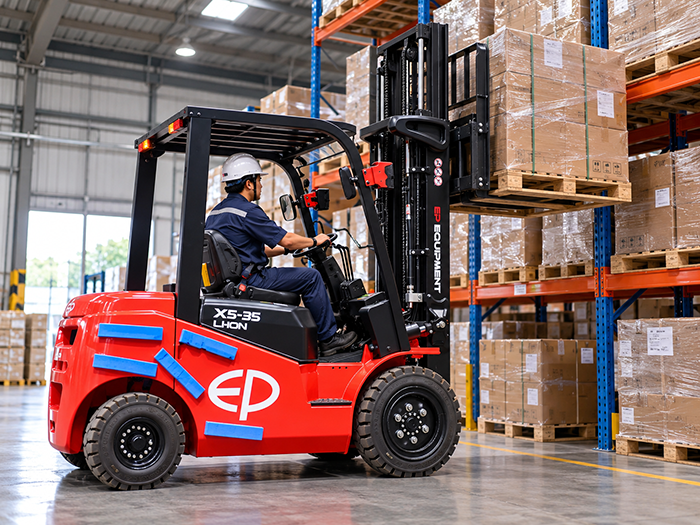
A key shift in warehouse management thinking is that businesses no longer necessarily need one type of forklift for every task. Instead, equipment is selected based on specific areas, load capacity, and frequency of use. In areas requiring frequent pallet movement, electric forklifts can handle lifting and transporting within the warehouse. In areas with narrow aisles or requiring precise handling, choosing the right forklift configuration becomes even more crucial.
This shows that the value of equipment lies not just in capacity. A vehicle with suitable specifications but incompatible with aisles, shelf heights, or pallet types can still create inconvenience during operation. Therefore, warehouse modernization doesn't mean buying the most expensive equipment, but rather building a system of equipment that fits how the business actually operates.
Factors to consider before investing
When researching electric forklifts , lifting capacity is often the first parameter considered. However, this is only part of the equation. Businesses need to determine the type of pallets being used, lifting height, aisle width, frequency of movement, daily working hours, and floor conditions. These factors significantly influence which type of forklift to choose, its configuration, and the appropriate power source.
The power source used for the vehicle is also a point to consider. Some businesses prefer lithium-ion battery solutions due to their operational convenience, while others may opt for lead-acid batteries based on usage conditions and investment budget.
Price is not the only criterion for electric forklifts.
On the market, the price of electric forklifts can vary significantly depending on load capacity, lifting height, operating configuration, battery type, and included features. A business with moderate pallet handling needs in a warehouse will face a different challenge than a factory that requires continuous operation of the equipment. Simply relying on the lowest price might save money at the time of purchase, but it may not optimize costs over the entire lifespan of the forklift.
Conversely, a higher-priced vehicle may not necessarily be the best choice if its capacity exceeds actual needs. A more appropriate approach is to determine the total cost of ownership and operating efficiency: whether the vehicle meets the load requirements, whether the operating time is suitable, how maintainable it is, and whether the equipment is suitable for the working environment.
SUMILIFT is geared towards practical needs.
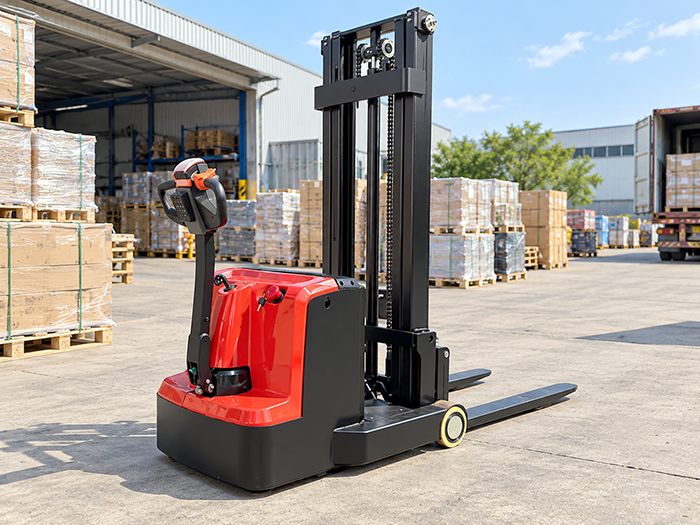
In the field of lifting equipment, SUMILIFT imports electric forklifts to serve the needs of businesses in factories, warehouses, and logistics operations. The brand aims to provide lifting solutions tailored to actual operating conditions rather than focusing on just one segment.
With electric forklifts, factors such as load capacity, lifting height, battery type, and workspace need to be considered simultaneously. This also forms the basis for businesses to choose equipment that better suits their processes, thereby avoiding overinvestment or insufficient capacity during use.
Along with electric forklifts, SUMILIFT's product range also includes many other equipment groups for internal lifting and transportation, giving businesses more options for organizing equipment according to each stage of the process.
Ultimately, the most important thing is to choose based on actual needs. Instead of simply asking " How much does an electric forklift cost? ", businesses should consider what problem the equipment will solve, which processes it fits into, and how much efficiency it will generate throughout its use.
SUMILIFT contact information:
- Website: https://sumilift.vn/
- Address: 36 DC11 Street, Tay Thanh Ward, Ho Chi Minh City, Vietnam
- Hotline: 0919.608.277
- Email: contact@sumilift.vn
Source: https://baocantho.com.vn/xe-nang-dien-and-xu-huong-hien-dai-hoa-van-hanh-kho-hang-a217271.html