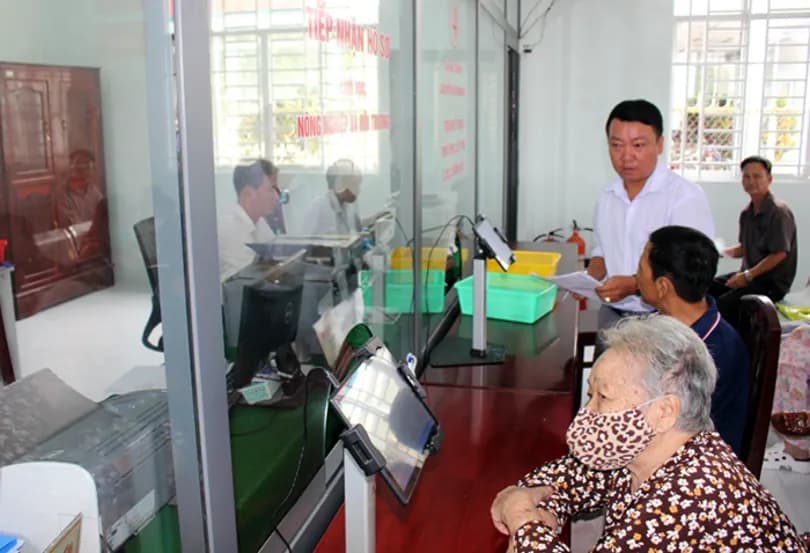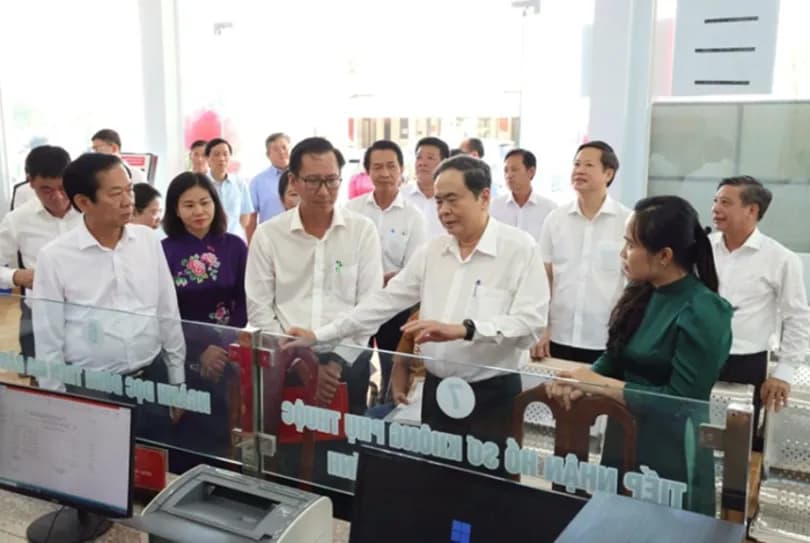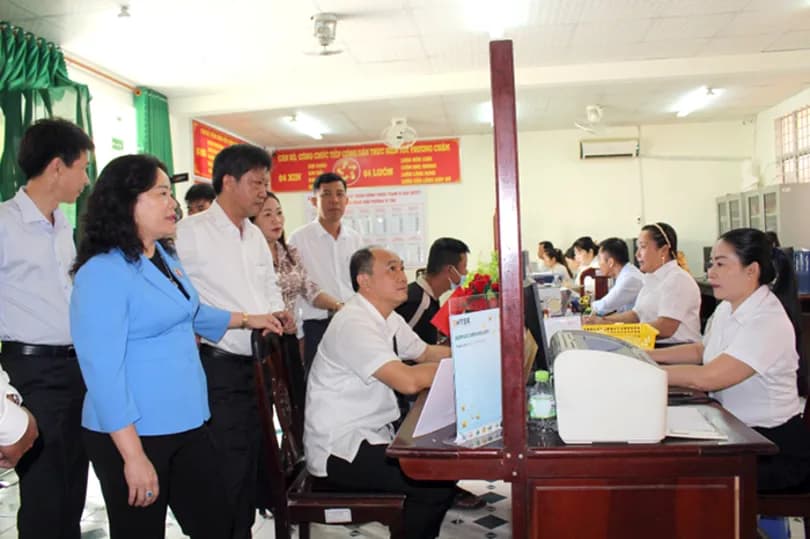

This situation presents the competent authorities with an urgent "problem": how to quickly improve the qualifications, capabilities, and skills of commune-level officials and civil servants to meet the increasingly high demands after the merger.
Capacity gap in the new commune-level administrative apparatus.
Based on practical experience in operating the administrative apparatus at the grassroots level, Mr. Truong Canh Tuyen, Deputy Secretary of the City Party Committee and Chairman of the People's Committee of Can Tho City , once frankly pointed out a thought-provoking paradox: commune-level officials may be "overnumbered, but lacking in quality." Behind this "overnumber" lies a gap in competence, qualifications, and the ability to meet job requirements in the context of communes being assigned more tasks and powers after restructuring.
Based on local experience, a commune-level leader observed a situation where there is an excess of officials and civil servants, but a shortage of competent personnel. Some positions have enough staff according to the allocated budget, but when assigning tasks requiring in-depth expertise, the ability to synthesize information, handle work quickly, or apply technology, it is not easy to find suitable candidates. "Looking solely at the number of allocated staff to say there are enough people doesn't fully reflect the reality. What needs to be considered is whether the officials have the capacity to handle the assigned tasks," this leader shared.
Notably, after the merger, many officials were assigned new areas, tasks, or locations but did not have enough time for systematic training and development. Many had to learn while working, independently researching to adapt to the new requirements. For positions requiring in-depth knowledge, the "learning on the job" approach could help officials gradually adapt, but it also placed considerable pressure and inevitably led to gaps in expertise in the initial stages.
Therefore, the story of improving the quality of commune-level officials cannot simply stop at assigning the required number of personnel to each position. More importantly, it is necessary to identify who truly meets the requirements, who lacks certain skills, and how these skills need to be supplemented. As local governments are given more tasks, powers, and responsibilities, the quality of each official will increasingly directly impact the operational quality of the entire system.
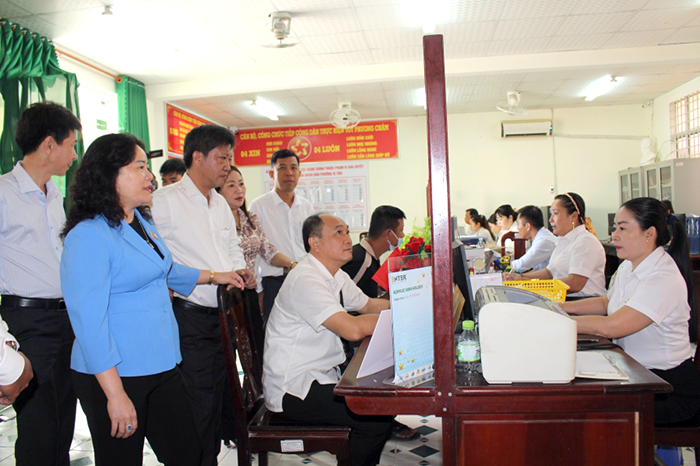
It is necessary to improve the capacity of commune-level officials and civil servants to meet the requirements of new tasks.
Investing wisely in qualified personnel will ensure that commune-level authorities are capable of handling the workload.
Given the above reality, training, developing, and improving the capacity and qualifications of commune-level officials and civil servants is becoming an urgent requirement to help them quickly adapt to new demands.
For officials directly involved in specialized work, the need for training and professional development becomes even more apparent. Mr. Huynh Phuoc Hiep, a specialist at the Party Committee Office of Hoa An Commune, Can Tho City, shared that after the restructuring, the scope of work has broadened, requiring more in-depth research, while regulations, procedures, and requirements for technology application and data exploitation are constantly changing. “Officials urgently need training and professional development tailored to their specific jobs. Simply reading documents and researching while handling tasks might suffice in the short term, but to perform well and specialize, they need training courses closely related to their job positions, with real-world scenarios for discussion and problem-solving,” Mr. Hiep said.
According to Mr. Vo Thanh Chinh, former Deputy Director of the Department of Internal Affairs of Hau Giang province (formerly), the current training and development of officials and civil servants cannot continue in the old way. It's not enough to simply say "strengthen training and development." Instead, we need to answer specifically: which officials need training, what skills are they lacking, what will they learn to do better, and will they work more effectively after training? That's the only way to transform investment in human resources into genuine capacity within the system.
Mr. Vo Thanh Chinh argued that, first and foremost, it is necessary to review capabilities according to each job position, instead of evaluating officials based on a general standard. Even within the same commune-level administration, the requirements for those working in office administration, economics , land management, finance, culture and social affairs, or those directly advising leaders, differ. Some are strong in their specialized field but weak in general skills; some have extensive practical experience but are limited in technology and data; and some are young and tech-savvy but lack experience in handling complex situations. Therefore, it is crucial to correctly identify each "competency gap" in order to provide appropriate training.
Therefore, training needs to shift from "training what is available" to "training what the system is lacking." Economic officials need to be deeply updated on economic, investment, and land policies and mechanisms; office staff need to improve their advisory, synthesis, and document and data processing skills; and leaders need to be equipped with additional management, coordination, implementation, and problem-solving capabilities. When training content is directly linked to daily work, new knowledge has the opportunity to be transformed into the ability to solve problems.
More importantly, training must be accompanied by evaluation and utilization of personnel. After a training program, it is necessary to look at the work results: has the processing speed improved, has the quality of advice increased, and has the ability to handle documents and coordinate work improved? Competent individuals should be placed in suitable positions and given appropriate tasks to utilize their strengths; those with limitations must have their weaknesses clearly identified and receive specific training and support plans. Training that is not linked to utilization and evaluation easily falls into the cycle of "learning and then doing."
According to Vo Thanh Chinh, digital competence should also be considered a new part of the public service competence of commune-level officials. In a work environment increasingly based on data and digital platforms, knowing how to use a new software program is only an initial requirement. Officials need to progress towards the ability to exploit data for advisory purposes, effectively use shared systems, and apply appropriate AI to support repetitive tasks, synthesize information, and improve productivity.
It is clear that what communes need is not just enough people to do the work, but enough people with the capacity to handle it. Therefore, investing in officials should be seen as an investment in the strength of the administrative apparatus itself. This issue has also received special attention from the leaders of Can Tho City.
According to Mr. Do Thanh Binh, Member of the Central Committee of the Communist Party of Vietnam, Secretary of the Can Tho City Party Committee, and Head of the Can Tho City National Assembly Delegation, in the coming period, it is necessary to continue reviewing and improving the organizational structure at the commune level, while simultaneously perfecting the institutions, functions, tasks, and operating mechanisms. This should be linked to reviewing and improving decentralization and delegation of power, along with clearly defining responsibilities, strengthening inspection, supervision, and control of power, and tightening administrative discipline and order. The goal is to ensure that the organizational structure is synchronized, operates stably and smoothly, enhances the effectiveness and efficiency of operations, and serves the people even better.
In particular, the City Party Secretary requested the strengthening of training, fostering, and developing skills and professional expertise, gradually building a team of cadres and civil servants with strong political acumen, moral character, prestige, qualifications, capabilities, and skills to meet the requirements of tasks in the new situation. Along with that, continue to promote comprehensive digital transformation , strongly and effectively apply information technology in performing tasks, resolving issues, and serving the people and businesses; improve the quality of operation of the Public Administrative Service Center, the efficiency of local governance, aiming to build a modern, transparent, and service-oriented administration.
Mr. Do Thanh Binh's demands show that improving the quality of local government is not just about perfecting the organizational model, but more importantly, about making the system operate better and ensuring the staff is capable of handling new tasks. In this regard, investing in staff capacity, along with the effective application of technology, must be considered key solutions to transform a streamlined organizational structure into a powerful one in terms of implementation capacity.
***
The reorganization and merger of administrative units and the streamlining of the organizational structure are only the beginning of a larger process of change. Streamlining is not the destination – the destination must be a stronger local government after the reorganization – strong in organization, sufficient in resources, skilled in personnel, intelligent in operation, and close to the people in every decision. To achieve this, after the "major reorganization," it is not enough to simply perfect a new apparatus; it is necessary to continue building new capabilities for that apparatus: empowering it with responsibility, investing in technology alongside innovation in working methods, policies aligned with task requirements, and training tailored to each job position.
This is also the test for the next stage: after the system has become more streamlined, can we make it stronger, faster, and closer to the people? The answer will not lie in organizational charts, but will be measured by each task solved, each problem resolved, and by the people's trust in the government at the grassroots level.
Text and photos: TRUONG SON
Source: https://baocantho.com.vn/bai-cuoi-bo-may-moi-can-bo-phai-moi-ve-nang-luc-a217276.html