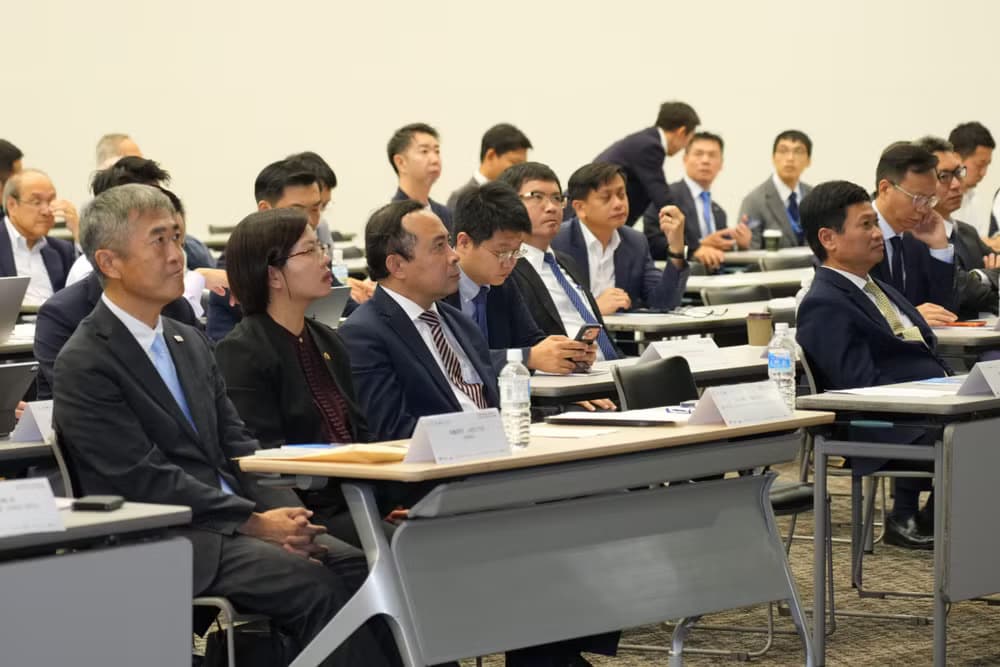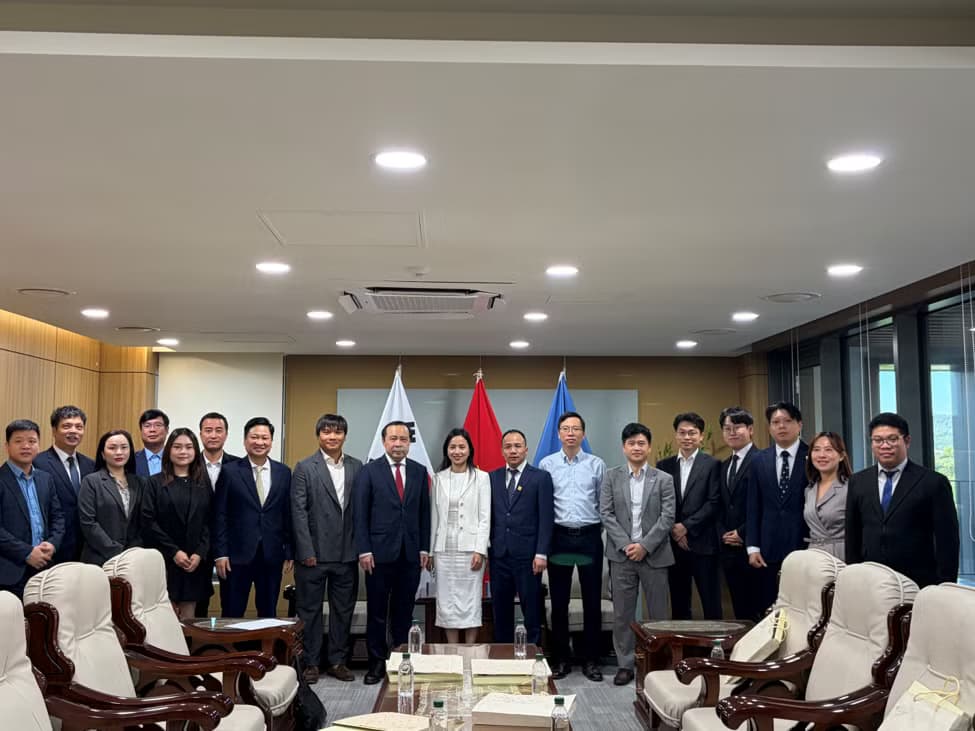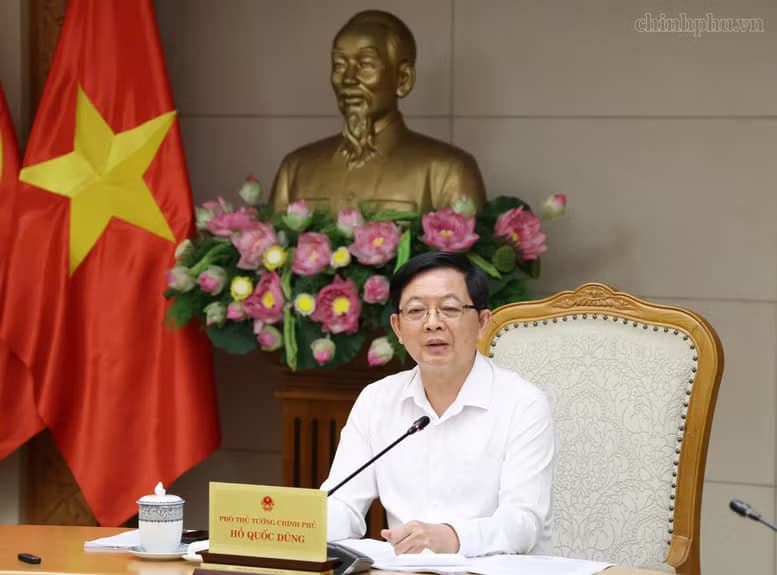

On the afternoon of October 2nd, at the Party Central Headquarters, General Secretary and President To Lam chaired a working session with the Party Committee of the Government, the Party Committee of the Ministry of Culture, Sports and Tourism, and relevant agencies on the implementation of Resolution 08-NQ/TW, dated December 1st, 2011, of the Politburo on strengthening the Party's leadership and creating a strong development in physical education and sports by 2020; and Conclusion No. 70-KL/TW, dated January 31st, 2024, of the Politburo on the development of physical education and sports in the new period.
Also attending were Comrade Tran Cam Tu , Member of the Political Bureau and Standing Secretary of the Central Committee; other members of the Political Bureau, members of the Central Committee, members of the Party Central Committee, leaders of the Government and the National Assembly, and leaders of central committees, ministries, and branches.
At the meeting, leaders of the Ministry of Culture, Sports and Tourism reported on the implementation of Resolution 08-NQ/TW, dated December 1, 2011, of the Politburo on strengthening the Party's leadership and creating a strong development in physical education and sports by 2020; and Conclusion No. 70-KL/TW, dated January 31, 2024, of the Politburo on the development of physical education and sports in the new period.
After listening to the discussions at the meeting, in his concluding remarks, General Secretary and President To Lam highly appreciated the efforts of ministries, departments, localities, social organizations, coaches, athletes, experts, and the entire society in developing physical education and sports in the past period.
Resolution No. 08 of the Politburo has created an important political foundation for the development of physical education and sports over the past 15 years. Conclusion No. 70 of the Politburo further defines important directions for the development of physical education and sports in the new period.
The General Secretary and President pointed out that we are standing at a significant transitional point. The 15-year journey of implementing Resolution No. 08 needs to be fully reviewed, and at the same time, Conclusion No. 70 must be seriously and effectively implemented in the new development context.
Looking ahead, the General Secretary and President suggested that the health and physical fitness of the people should be considered an integral part of national strength. Developing physical education and sports is one of the important ways to build that foundation.
The core spirit of Resolution No. 08 is to develop physical education and sports to improve the health, physical fitness, stature, and quality of life of the people. Therefore, physical education and sports should be viewed not only as a socio-cultural activity, but as a part of the strategy for human development, population quality, and human resources of the country.
The General Secretary and President emphasized the need to pay special attention to school sports, not just to organizing physical education classes; it is necessary to review the conditions of sports fields, equipment, and teaching staff, and to study mechanisms for the shared use of public sports facilities outside of school hours.
The school system must both help each student develop a lifelong habit of physical activity and serve as a place for early discovery of athletic talent. For industrial zones, urban areas, and new residential areas, space for physical activity should be considered in planning as part of the quality of life. Where new investment is not feasible, existing facilities must be utilized more effectively, ensuring that no area lacks training space while public assets in the same area are underutilized.

The Ministry of Culture, Sports and Tourism, in coordination with the Ministry of Health and the Ministry of Education and Training, is researching and developing a set of indicators on physical fitness, activity levels, and access to physical exercise and sports, primarily for children, students, workers, and the elderly. It is necessary to identify which population groups lack physical activity, which areas lack adequate training facilities, and what factors hinder people from maintaining regular physical activity.
Regarding high-performance sports, the General Secretary and President requested a change in investment methods, focusing on key areas and developing talent over a long-term cycle; a continuous chain of talent discovery and development should be established from schools, localities, training facilities to the national team, with each stage linked to the next and responsible for the quality of the output; it is necessary to clearly identify the sports, events, and athletes with the potential to compete internationally in order to focus long-term investment, while simultaneously building a successor force.
SEA Games achievements should not be the sole measure of investment in elite sports. Each cycle needs specific goals, key players, responsible coaches, and a comprehensive plan encompassing science, medicine, nutrition, rehabilitation, psychology, and international competition. It is absolutely crucial to avoid a situation where talent is discovered but forced to fend for itself in terms of basic development. A robust system is needed to ensure that talent receives continuous training, competition, and development to reach its peak. The mechanism for managing athletes and national teams should be reviewed to ensure clarity of roles, responsibilities, and authority.
The General Secretary and President requested the Ministry of Culture, Sports and Tourism to rebuild the model for developing high-performance athletes according to a long-term cycle: early identification, proper selection, systematic training, targeted investment, international competition, comprehensive care, regular evaluation, and building a successor generation.
The goal is to shift from relying on a few exceptional talents to building a system capable of continuously identifying, nurturing, and producing top-level athletes at the continental and global levels. Science, technology, and data must become the foundation of sports training, management, and development.
Hospitals, universities, research institutes, training facilities, and experts need to connect to form a network of science, medicine, nutrition, and sports rehabilitation; promote the application of technology and data in selection, training, performance analysis, load control, injury prevention, and individualized training; and promptly complete a unified database on physical education and sports, connecting data on athletes, coaches, facilities, competitions, and mass movements.

The General Secretary and President emphasized that the Ministry of Culture, Sports and Tourism needs to research and develop Vietnam's sports economy towards forming a complete ecosystem. Regarding investment in infrastructure, the mindset needs to shift from "the State builds and the State operates" to "the State creates, society invests, the market operates, and the State supervises."
For national sports facilities and large-scale projects, a specific investment and operation mechanism needs to be studied. Projects that require direct state management should be professionally managed, while projects where the private sector can invest and operate effectively should be given the opportunity to participate. We must avoid a situation where society has capital but lacks the mechanisms for investment, while the state possesses assets but cannot fully exploit their value.
For sports federations and associations, it is necessary to review and reassess the operational model of national sports federations and associations; it is essential to clarify which roles the State plays and which roles the federations play.
The Ministry of Culture, Sports and Tourism must finalize the development of a code of governance for national sports federations and associations; conduct annual classification and evaluation of the capacity of each federation, publicly announce the results, and aim for professionalization of federations before professionalizing sports.
The General Secretary and President requested that the capacity for implementation be enhanced, translating the orientations of Resolution No. 08 and Conclusion No. 70 into concrete development results; a comprehensive review of all tasks set out in Resolution No. 08, Conclusion No. 70, and related strategies and programs is necessary; tasks that have been completed, those that are behind schedule but still within the scope of authority to handle, and those exceeding the scope of authority that require recommendations to higher authorities must be clearly categorized.
For each key task, the lead agency, coordinating agencies, primary responsible individuals, deliverables, timelines, and implementation conditions must be clearly defined. Issues within the agency's jurisdiction should be proactively addressed, while those exceeding jurisdiction must clearly define the recommendations and the agency responsible for making them. A method for regular monitoring and evaluation of key tasks should be established, rather than waiting until the end of the period for a final summary. The ultimate goal is not simply to complete the required number of tasks, but to create visible, measurable, and sustainable changes in practice.
Source: https://congthuong.vn/tong-bi-thu-chu-tich-nuoc-to-lam-suc-khoe-the-luc-nguoi-dan-la-mot-bo-phan-suc-manh-quoc-gia-475443.html