

The Vietnam- Japan Digital Technology Forum 2026, themed “Vietnam-Japan Digital Synergy: Co-creating the Future with Artificial Intelligence and Advanced Technologies,” was held. (Photo: Organizing Committee)
Speaking at the Forum themed “Vietnam-Japan Digital Synergy: Co-creating the Future with Artificial Intelligence and Advanced Technology,” Minister of Science and Technology Vu Hai Quan stated that Vietnam-Japan technological cooperation has a foundation built over many years. According to data presented at the Forum, more than 300 Vietnamese businesses are providing products and services to the Japanese market, with over 100 having offices in the country. Vietnamese businesses account for approximately 6-7% of the software development outsourcing market share in Japan.

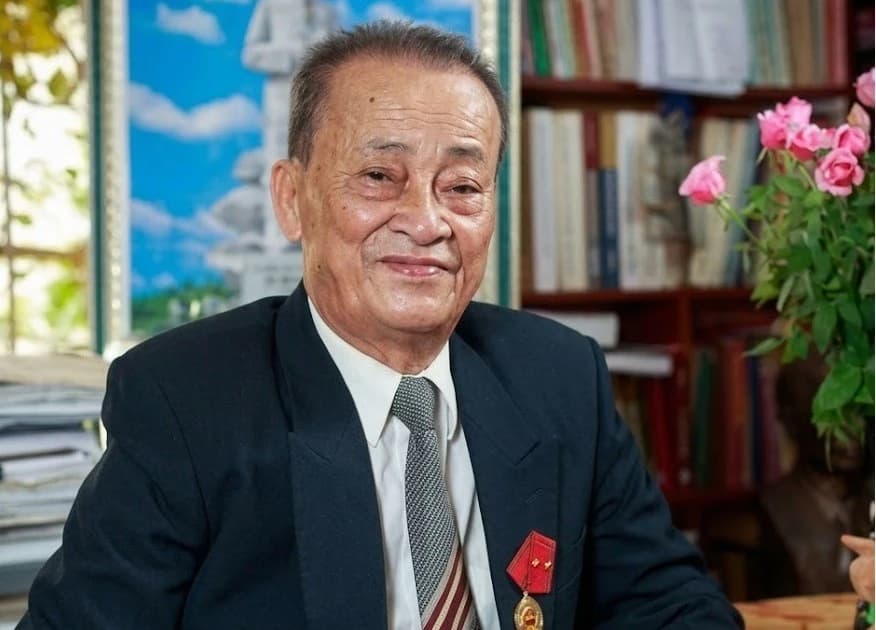
Mr. Vu Hai Quan, Minister of Science and Technology, speaks at the Vietnam-Japan Digital Technology Forum 2026. (Photo: Organizing Committee)
The above results demonstrate that the capabilities of Vietnamese technology companies have been affirmed in the Japanese market. However, according to the direction set at the Forum, the potential for cooperation in the coming period should not only be in providing software services or human resources, but should also expand to research, development, and joint product creation.
Mr. Nguyen Van Khoa, Chairman of the Vietnam Software and Information Technology Services Association (VINASA), believes that Vietnam-Japan cooperation is facing a shift from an outsourcing model to a co-creation model. Businesses from both countries can participate from the initial stages of problem identification, architectural design, technology research, to product development and commercialization.
According to Mr. Khoa, Japan has strengths in precision engineering, management, supply chains, and global markets, while Vietnam has advantages in technological human resources, flexibility, and the ability to develop digital solutions. Combining these strengths can create higher-value products and expand opportunities to access international markets.
Four key areas of cooperation
Based on the forum's content, Minister Vu Hai Quan suggested that businesses from both countries focus on four areas of cooperation.
First and foremost is the modernization of core systems and the enhancement of productivity. Japanese businesses can share the challenges in upgrading outdated technology systems, connecting data, and integrating new technologies. Vietnamese businesses, together with their partners, can survey processes, identify areas for improvement, and develop a suitable roadmap to ensure stable production and business operations.
Regarding AI generation and processes involving AI agents, the Minister noted that evaluation should be based on practical effectiveness, such as time saved, work quality, and operational reliability. The use of data and human oversight responsibilities should be defined from the solution design stage.
This collaboration is also significant given that many Japanese businesses are grappling with the challenge of modernizing their outdated technology systems while simultaneously seeking ways to integrate AI into their production and business operations.
Secondly, joint research and development in specialized technologies such as AI, robotics, drones, and semiconductors have been identified as areas with potential for expanded cooperation.
The Minister suggested that businesses, research institutes, and universities in both countries select specific problems to jointly research, design, and test before expanding. Applications could start in smart manufacturing, equipment testing, infrastructure monitoring, or agriculture .
In the semiconductor field, the two sides can promote cooperation from integrated circuit design and pilot production to application-specific testing. Each project needs clear objectives, partners, and resources, with a feasibility-testing phase before scaling up. The parties also need to agree on intellectual property rights and benefit-sharing mechanisms.
Thirdly, developing AI engineers is crucial to aligning with business needs . As programming tools change rapidly, so do the requirements for engineers. Beyond programming skills, engineers need the ability to analyze problems, design systems, evaluate results, and understand the application domain.
The Minister suggested that businesses from both countries collaborate with universities and research institutes to develop training programs linked to real-world projects. Vietnamese and Japanese experts could jointly mentor young engineers, share research experience, and discuss quality standards.
Fourthly, it's about bringing co-developed products into the market and value chain. According to the Minister, technology demonstrations and business networking activities should help partners clearly assess what problems the product solves, how well it has been tested, and where cooperation is needed.
Products that meet the requirements of the Japanese market will have a stronger foundation for further improvement and access to other markets. Therefore, quality, stability, and responsibility to customers are the cornerstones of building a reputable partnership.

Mr. FUSEDA Hideo, Vice Minister in charge of International Affairs, Ministry of Internal Affairs and Communications of Japan, shared his views at the Forum. (Photo: Organizing Committee)
Transform commitments into concrete projects.
One notable point at the Forum was the call to translate commitments into implementable and measurable projects.
Mr. Nguyen Khac Lich, Director of the Department of Digital Technology and Artificial Intelligence (Ministry of Science and Technology), said the program is designed to create a space for direct dialogue between technology professionals and technology users. In addition to specialized sessions, technology demonstration areas and one-on-one business meetings are held concurrently, facilitating direct presentations of solutions, exchange of needs, and partner search.
Building on a foundation of cooperation established over more than 20 years, Vietnam-Japan technology relations now have ample room to enter a new phase. Co-creation is changing the way cooperation works and opening up possibilities for businesses in both countries to jointly identify problems, develop technologies, create products, and gradually integrate those products into the global value chain.
Pink
Nhandan.vn
Source: https://nhandan.vn/mo-rong-hop-tac-cong-nghe-viet-nam-nhat-ban-theo-huong-dong-sang-tao-post992578.html