
At a sustainable agriculture event held on October 6th in Hanoi, Deputy Minister of Agriculture and Environment Nguyen Hoang Hiep stated that Vietnam is aiming to build a modern, efficient, green, and sustainable agricultural sector.
According to Deputy Minister Hiep, to achieve this goal, the agricultural sector needs to promote science and technology, innovation, efficient resource utilization, and especially reduce emissions and protect the environment.
One of the directions set by the Ministry of Agriculture and Environment is to research and apply solutions that help to use land, water, and resources efficiently, while reducing the use and impact of chemicals in agricultural production, reducing emissions and waste, and improving the quality and safety of agricultural products.
Find ways to reduce the amount of pesticides.
One of the areas currently under research is improving the efficiency of input material utilization, especially pesticides.
According to information released by Kao Vietnam, the company is developing technology to control the interaction between liquids and solid surfaces, aiming to improve contact between pesticide spray droplets and leaf surfaces.
Specifically, the solution uses additives to increase wettability, helping the spray droplets spread evenly and create a thinner coating on the leaf surface. According to the company, this approach can improve coverage and penetration, thereby reducing the amount of pesticides needed while maintaining spray effectiveness.
Another issue that arises is the ability to control pesticide droplets when using drones in agricultural production.
With overhead spraying, the small droplets of pesticide can evaporate or be carried away by the wind from the treatment area. This technology is expected to increase the adhesion of the pesticide to the plants and limit unwanted dispersal.
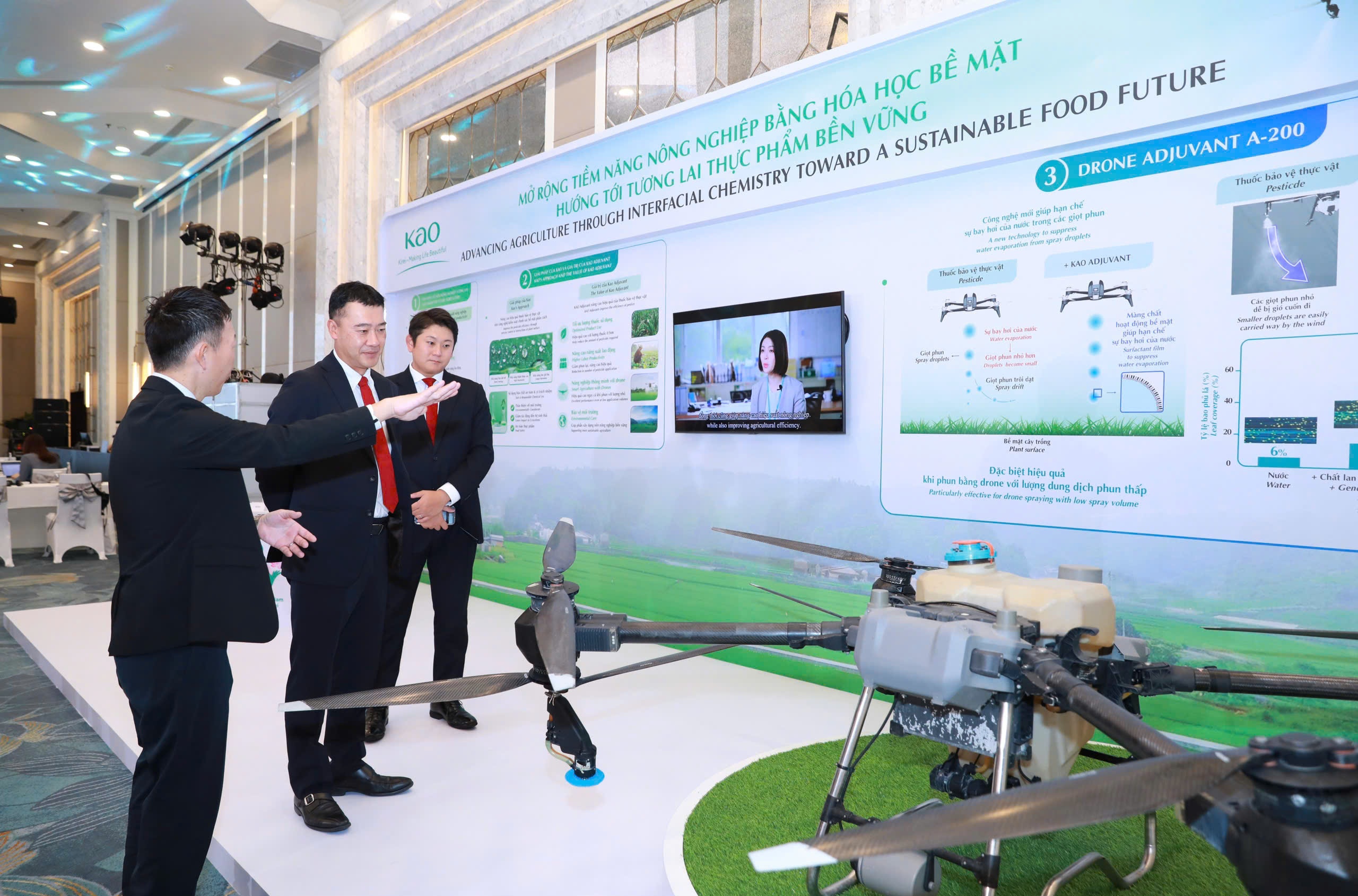 |
New technology can help reduce the amount of pesticides used while maintaining spraying effectiveness. Photo: Organizing Committee. |
However, the introduction of these technologies into production in Vietnam is currently only in the stage of seeking cooperation opportunities and identifying solutions suitable to the actual conditions.
At the event, Kao Vietnam and the Vietnam Sustainable Agriculture Development Partnership (PSAV) announced their intention to establish a cooperation framework in this field.
Mr. Nguyen Do Anh Tuan, Director of the International Cooperation Department (Ministry of Agriculture and Environment), said that some areas the parties could focus on include improving the efficiency of agricultural input use, reducing environmental impact in production, improving food quality and safety, and post-harvest solutions.
In addition to reducing the use and impact of chemicals, the Ministry of Agriculture and Environment also proposed researching the application of technology in preserving, processing, and maintaining the quality and freshness of agricultural products after harvest. The goal is to reduce losses while increasing the added value and competitiveness of agricultural products.
The goal is to increase farmers' income by 30%.
According to Deputy Minister Nguyen Hoang Hiep, the agricultural sector is shifting from an agricultural production mindset to an economic mindset, linking production activities with the market and aiming to increase value.
He argued that the future of Vietnamese agriculture should not only be measured by output but increasingly by added value, farmers' income, the level of application of science and technology, the efficiency of resource use, and the ability to reduce emissions.
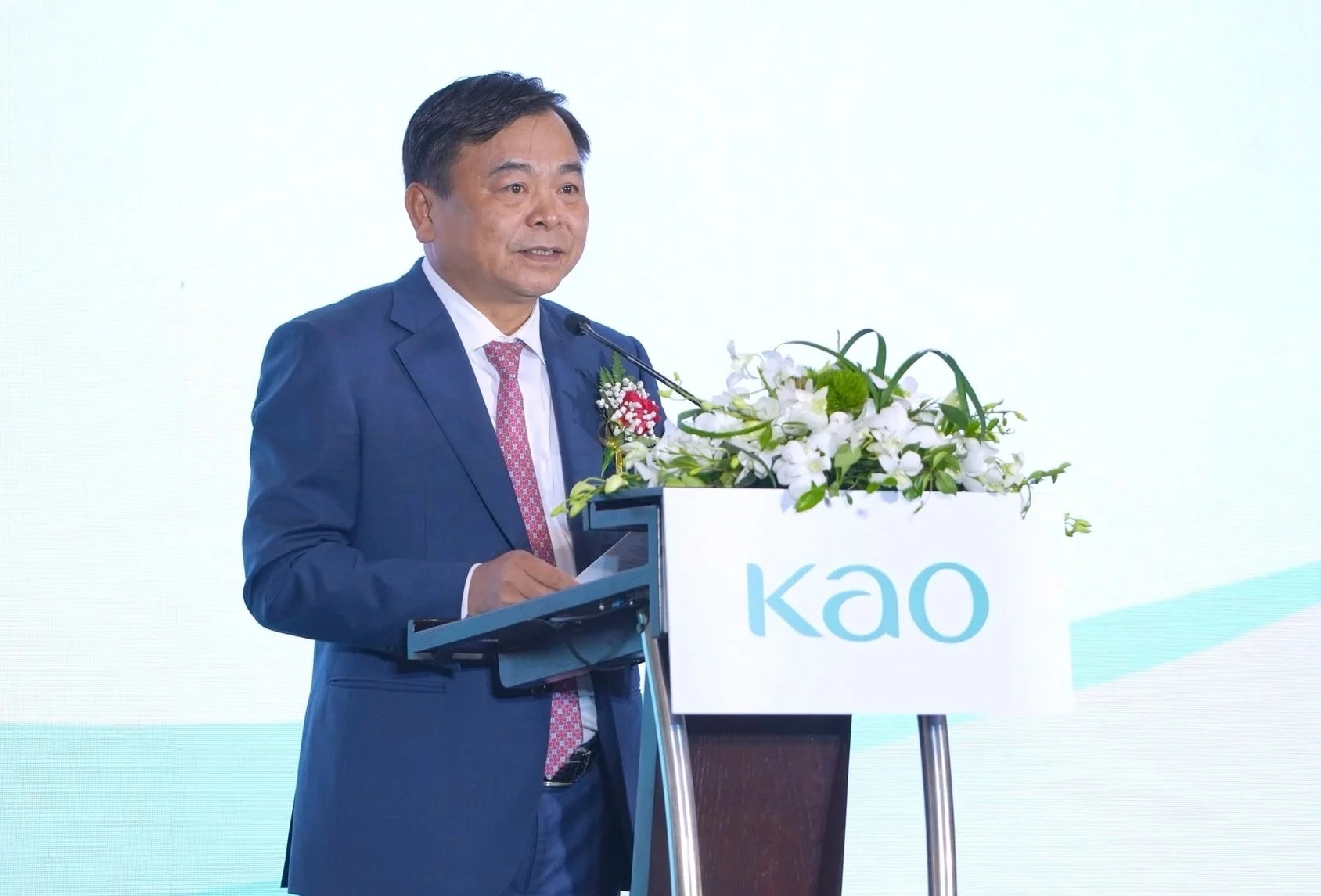 |
According to Deputy Minister of Agriculture and Environment Nguyen Hoang Hiep, Vietnam's agricultural sector is moving towards green transformation and increased value. Photo: Organizing Committee. |
Deputy Minister Nguyen Hoang Hiep outlined three priority groups. The first is the application of science and technology to green production, including research into solutions for efficient land, water, and resource utilization; reducing the use and impact of chemicals; reducing emissions and waste; and improving the quality and safety of agricultural products.
The second group relates to post-harvest preservation and processing technologies. The Ministry recommends increasing research into solutions for maintaining the quality and freshness of agricultural products, thereby reducing post-harvest losses and increasing added value.
Finally, it is necessary to increase public-private partnerships between businesses and specialized agencies, local authorities, cooperatives, research institutes, and universities to move programs from research to practical application.
One of the mechanisms used to mobilize resources for this process is PSAV, a public-private partnership platform aimed at connecting value chains, identifying priority issues, and promoting initiatives in the agricultural sector.
According to Mr. Nguyen Do Anh Tuan, through PPP cooperation groups by industry and PPP for cooperative development, PSAV aims to promote the application of science and technology, increase productivity, and strengthen value chain linkages.
Notably, the previous "20-20-20" target has been updated to "30-30-30," representing a 30% increase in productivity, a 30% increase in farmers' income, and a 30% reduction in emissions.
To realize these goals, the Ministry of Agriculture and Environment wants to increase linkages between businesses and specialized agencies, localities, cooperatives, research institutes, and universities, thereby bringing appropriate technological solutions from research into practical production.
Source: https://znews.vn/tim-ra-cach-giam-luong-thuoc-bao-ve-thuc-vat-tren-cay-trong-post1687946.html