
"Searching desperately" for accommodation.
To find accommodation for her group of friends from Ho Chi Minh City visiting Hanoi this weekend, Ms. Nguyen Viet Ha (Hanoi) contacted more than a dozen hotels in the Old Quarter (Ma May, Ta Hien, Luong Ngoc Quyen, Hang Bac... in Hoan Kiem ward) but was told they were all fully booked. Finally, she found a suitable room, but its location was quite far from the center of the Old Quarter.

Sharing with a reporter from SGGP newspaper about the "fully booked" situation on weekends, Mr. Nguyen Ho Anh, the owner of a hotel in Hoan Kiem ward, said that from mid-September, the number of international tourists coming to Hanoi began to increase again after the low season of summer .
Accommodations conveniently located near pedestrian streets, attractions, and food service areas such as Ta Hien, Ma May, Hang Be, Hang Hanh, Hang Trong, etc., are usually fully booked by mid-week.
In recent weekends, the area around Ho Guom Lake and Hanoi's Old Quarter has been bustling with locals and tourists visiting, strolling, and taking photos. Long lines of visitors stretched along streets such as Dinh Tien Hoang, Hang Bai, Hai Ba Trung, Trang Tien, Cau Go, and Dinh Le.
The areas around the Ho Chi Minh Mausoleum, Hanoi Cathedral, and the railway-side cafes on Tran Phu Street are also crowded with foreign tourists. Many visitors take the opportunity to take photos and explore Hanoi's iconic landmarks.
Along with the increase in visitors, many hotels and guesthouses around Ho Guom Lake and Hanoi's Old Quarter are also fully booked due to the surge in reservations. However, Mr. Nguyen Ho Anh noted that the localized lack of rooms in some hotels does not necessarily mean that the entire Old Quarter area is overloaded.
“Most accommodations in the area are small to medium-sized, mainly boutique hotels or homestays with about 10-25 rooms each. Therefore, some hotels reporting being fully booked is due to limited room capacity. For guests who haven't booked in advance, checking online platforms or booking early will help them be more proactive,” suggested Mr. Nguyen Ho Anh.
Expanding the tourism experience space.
According to Do Minh Duy, a tour guide specializing in English-speaking tours, his schedule for walking tours and street food tours has been almost fully booked for the past two weeks.
"European tourists really enjoy Hanoi's autumn weather, so they prefer walking tours through the alleys, visiting Dong Xuan Market, and enjoying egg coffee and bun cha," Minh Duy shared.
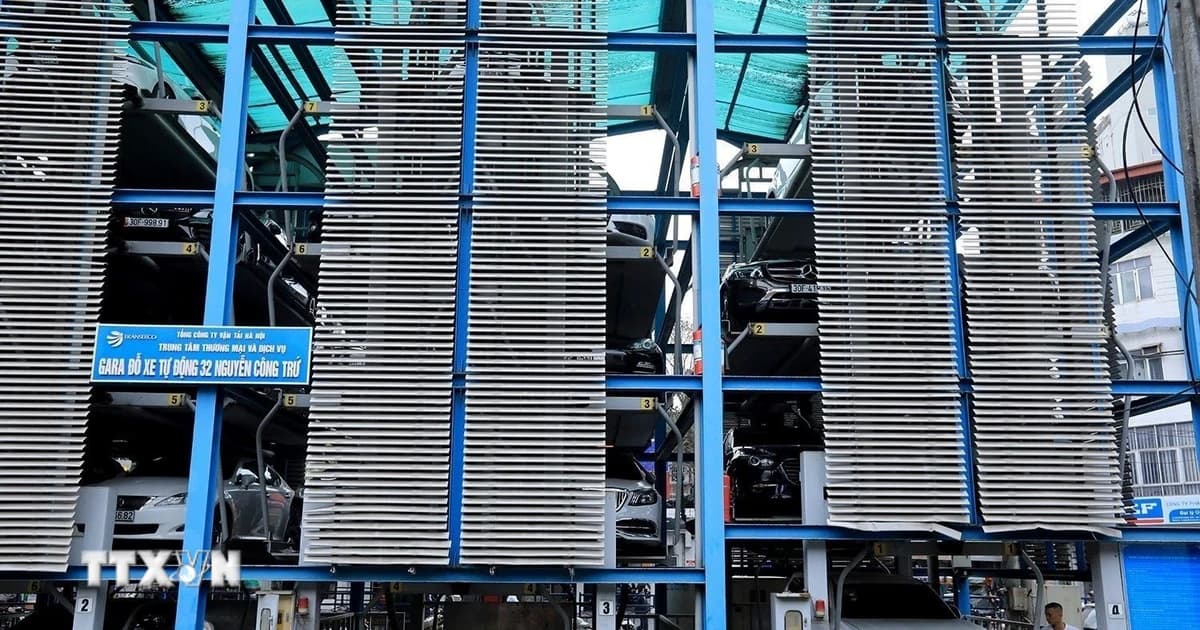
However, according to Mr. Minh Duy, the large concentration of tourists in a short period of time also reveals some limitations in the transportation infrastructure and living space in the Old Quarter, such as: localized traffic congestion at some narrow intersections, lack of parking spaces for vehicles transporting tourists from the Old Quarter to suburban attractions, etc.
Mr. Nguyen Tien Dat, Vice President of the Hanoi Tourism Association, said that from October onwards, it is usually the peak season for foreign tourists visiting Hanoi, lasting until the Lunar New Year in 2027. With such a large number of tourists, the central area is likely to experience pressure on accommodation, transportation, and services.
During peak seasons, businesses can also gain a clearer understanding of customer needs: walking, dining, exploring old streets, admiring architecture, visiting a market, or chatting with locals. Based on this demand, walking tours and food tours in the Old Quarter are attracting more customers.
According to Mr. Dat, these products can also connect with other destinations, so a trip to Hanoi is not just about a few central streets. "Visitors to Hanoi now spend more time on experiences connected with local life," Mr. Nguyen Tien Dat shared.
Dr. Vu Huong Giang (Faculty of Tourism, Hanoi Open University) also believes that what attracts international tourists sometimes comes from very small experiences. A dish, a traditional craft street, an old house, or the way people live can all make tourists remember Hanoi. From the Old Quarter, that journey can connect to a craft village, a museum, a market, or a heritage site.
Visitors can still return to the Old Quarter to enjoy the food, sit in a small cafe, or continue exploring the old streets, but between these stops lies a broader Hanoi with more choices.
According to statistics, in the first nine months of the year, Hanoi welcomed approximately 27.5 million visitors, an increase of over 6% compared to the same period in 2015. Of these, international visitors accounted for over 6.6 million, an increase of 22%, including 4.7 million international overnight stays; domestic visitors reached 20.9 million, an increase of 2%. Total revenue from tourism is estimated at 113,200 billion VND, an increase of over 13% compared to the same period.
Source: https://www.sggp.org.vn/pho-co-ha-noi-chom-mua-cao-diem-nhieu-khach-san-kin-phong-cuoi-tuan-post874690.html