
With only three months left to achieve its 2026 targets, Lao Cai province has identified a key focus for its fourth-quarter operations: a shift from "monitoring progress" to "evaluating results," concentrating resources on tasks capable of generating growth, output, and revenue within the year.
In this context, the overarching goal is to achieve an annual GRDP growth rate of over 10%, along with the requirement to disburse 100% of the planned public investment capital, and to remove bottlenecks related to land clearance, land funds, construction materials, and investment procedures.
These are the requirements set forth by Mr. Nguyen Tuan Anh, Deputy Secretary of the Provincial Party Committee and Chairman of the Provincial People's Committee, at the October 2026 meeting of the Provincial People's Committee members, held on the afternoon of October 2nd, to assess the socio -economic development situation in the first nine months and implement tasks for the remaining months of the year.
According to the Lao Cai Provincial Electronic Information Portal, after nine months, the province's socio-economic situation continues to maintain a positive trend. The estimated GRDP growth rate reached 9.09%, with the third quarter reaching 10.58%. State budget revenue as of October 2nd reached 16,009 billion VND, equivalent to 91.3% of the central government's allocated target; disbursement of public investment capital reached 88.7% of the plan assigned by the Prime Minister .
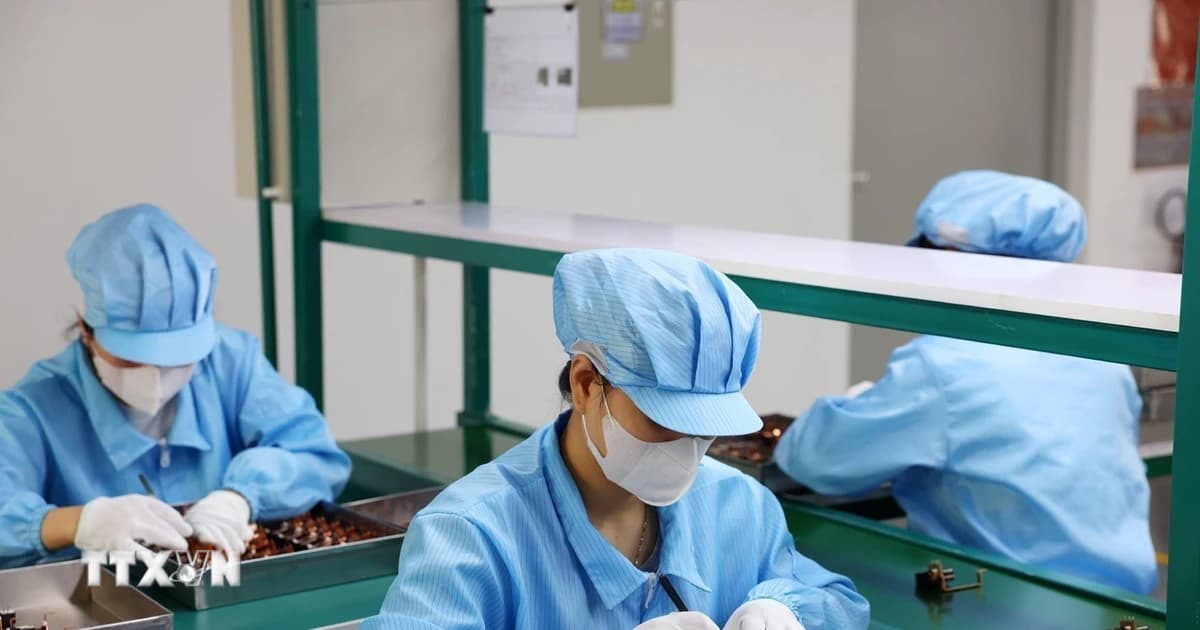
Industrial production continued to play a pivotal role, with the value of production in the first nine months reaching approximately 56,678 billion VND, an increase of 9.9% compared to the same period last year. The resumption of operations at the Quy Xa iron mine, with a capacity of 5 million tons/year, from September 10th, is considered to contribute to ensuring the supply of raw materials for industrial production in the area.
Trade, import-export, and tourism also maintained their growth momentum. The total value of import-export, buying, selling, and exchange of goods through border gates reached approximately US$2,993 million, an increase of 34.83% compared to the same period last year. Total retail sales of goods and social service revenue are estimated at VND 70,000 billion, an increase of 25%. The province is estimated to have welcomed 9.83 million tourists in the first nine months, reaching 87.2% of the annual plan; total revenue from tourism is estimated at VND 40,880 billion.
In addition, investment attraction and business development activities continued to yield positive results, with the province approving 38 new investment projects with a total registered capital of approximately 26,447 billion VND and establishing 1,251 new businesses.
However, the achievements do not necessarily mean that the 2026 targets have been met. Some indicators are lagging behind, including the disbursement of public investment capital, industrial production, budget revenue in some localities, and the development of transportation infrastructure, logistics, and wastewater treatment in industrial zones. The gap in some targets regarding total investment implemented, industrial production, and import-export remains, while bottlenecks related to land clearance, land allocation, land use rights auctions, construction materials, and procedures for implementing large projects have not been resolved in a timely manner.
These issues became the focus of the province's administration in the last three months of the year. The Chairman of the Provincial People's Committee requested that all levels and sectors not be complacent with the results of the first nine months, because the target of over 10% growth for the whole year still faces many challenges. Instead of spreading resources thinly across many tasks, agencies and units must review all assigned goals and targets, clearly identify what is behind schedule, what targets are still lacking, and what bottlenecks need to be addressed.
The guiding principle of governance is clearly defined as "clear responsibilities, clear tasks, clear timelines, clear accountability, and clear results." Directors of departments, heads of agencies and units, and chairpersons of people's committees of communes and wards must be directly responsible for the results of implementing tasks within their assigned scope. Tasks with clear policies and authority must be proactively implemented without delay or shirking responsibility; issues exceeding their authority must be promptly reported for consideration and resolution.
Within the group of tasks that directly stimulate growth, the province aims to disburse 100% of the planned public investment capital. Along with accelerating project progress, the focus is on addressing previously identified bottlenecks, especially land clearance, creating land reserves, ensuring the supply of construction materials, and completing investment procedures.
The Department of Finance is tasked with leading the updating of growth scenarios on a monthly basis, by sector, field, and locality; and closely monitoring the disbursement progress to each investor, advising on the reallocation of funds from slow-moving projects to projects with good disbursement potential. This approach directs capital to areas capable of generating tangible results in the remainder of the year, limiting the situation where capital sits idle while investment needs and growth requirements remain high.
Regarding land clearance, the requirement is placed at the grassroots level. Localities with projects must identify this as a key political task; the Chairman of the People's Committee of the commune or ward directly directs, engages in dialogue, and resolves difficulties within their authority. The province aims to create a minimum of 500 hectares of cleared land, thereby facilitating the commencement of projects that are capable of operating and directly contributing to growth.
In industrial production, the province continues to focus on removing obstacles and creating substantive changes, with an emphasis on exploiting the Quy Xa iron mine and developing industrial zones and clusters. Simultaneously addressing issues related to land, raw materials, and procedures is expected to create more room for industrial production to contribute more significantly to the growth results in the fourth quarter.
Along with industry and public investment, the advantages of border gates, trade, and tourism continue to be exploited to generate additional revenue in the remaining months of the year. The province requires improved customs clearance capacity, increased import and export activities, and the successful organization of year-end cultural and tourism events. The target for the fourth quarter is to welcome over 3 million visitors and exceed the annual tourism revenue target.

In the socio-cultural field, the requirements for governance are also concretized with clear objectives. The province strives to complete free health check-ups and screenings for 100% of the population by 2026; review and ensure sufficient textbooks for the school year; and prepare conditions to take care of people's lives during the Lunar New Year in 2027.
In the context of weather and natural disasters that can still impact life and production, disaster prevention and control continue to be prioritized alongside economic development. This is coupled with the requirement to maintain national defense, security, and social order; to further improve the effectiveness and efficiency of local governments at both levels; to accelerate administrative reforms; and to enhance the quality of services provided to citizens and businesses.
A key requirement throughout the fourth quarter's operations is to track results weekly and monthly, rather than simply updating progress. The Chairman of the Provincial People's Committee emphasized that the results of the fourth quarter's tasks will be a crucial basis for evaluating the completion level of tasks in 2026 for each agency, unit, and its head. Therefore, each task must be linked to specific responsibilities and monitored until the final outcome.
Building on the foundation of the first nine months, Lao Cai enters the final quarter of the year with the requirement to quickly translate existing results into concrete figures on growth, disbursement, production, and revenue. The focus is not on adding more tasks, but rather on concentrating resources on those that can produce tangible results in 2026, resolving bottlenecks within its authority, and promptly reporting issues beyond its jurisdiction.
With this approach, the fourth quarter is identified as a period of acceleration and verification of the effectiveness of governance at each level, sector, and locality. The target of over 10% GRDP growth and the requirement of 100% disbursement of public investment capital will be overarching tasks, while addressing land issues, promoting industry, exploiting the advantages of border gates and tourism will be focused on to create further growth momentum in the last three months of the year.
Source: https://www.vietnamplus.vn/lao-cai-tap-trung-nguon-luc-quyet-tam-hoan-thanh-muc-tieu-tang-truong-tren-10-post1139837.vnp