
Application of technology in production management
These days, members of the An Phu Agricultural Cooperative in Chieng An ward are focusing on tending their dragon fruit orchards, preparing for the new production season. The cooperative has 30 members, linked with 30 households in Ta Hoc, Chieng Coi communes and Chieng An ward, cultivating approximately 50 hectares of fruit trees. Because the production area is spread across many locations, the cooperative guides its members to follow a standardized care process and update production logs on the software.
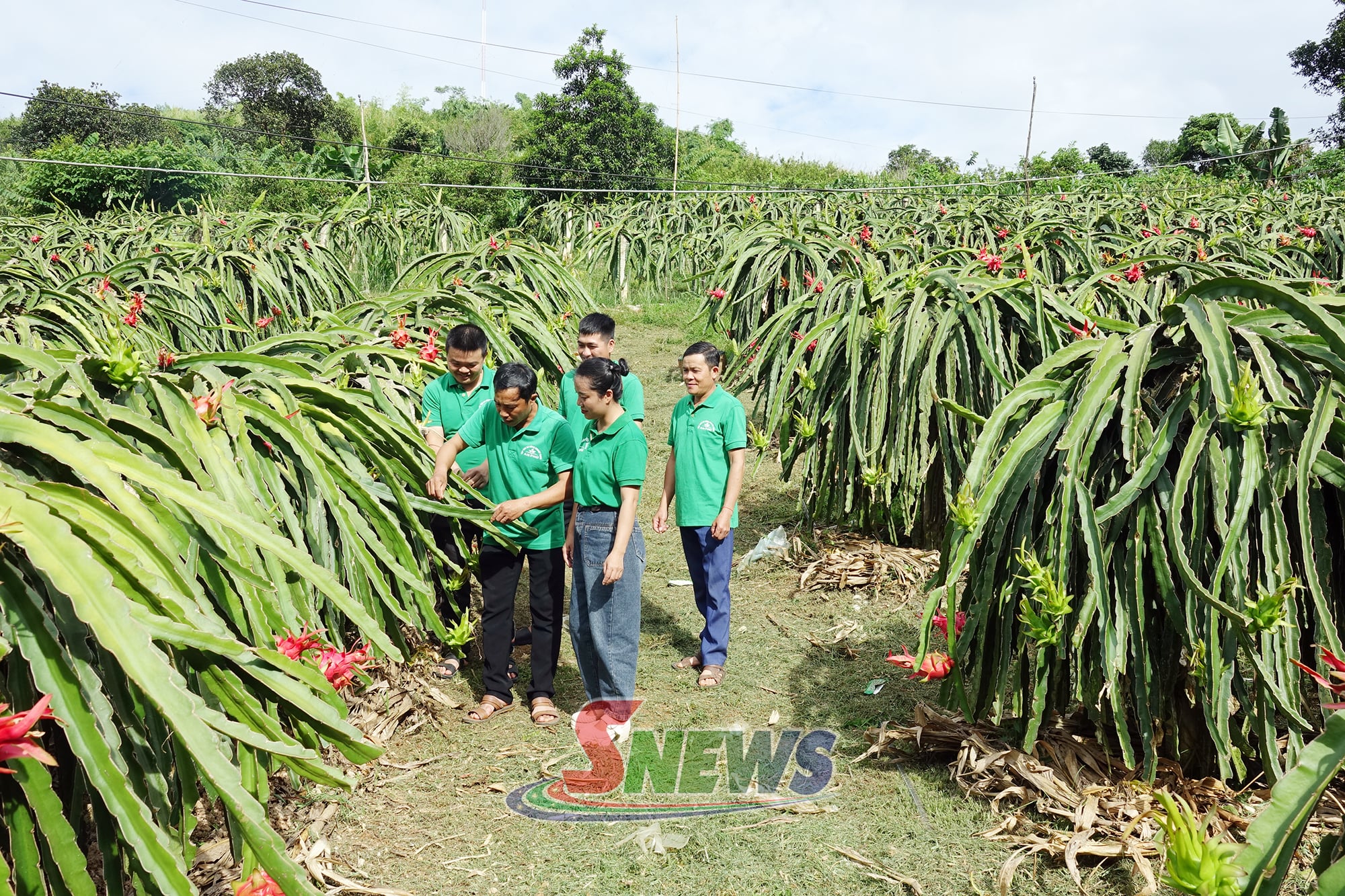
Instead of individual record-keeping as before, information on care, fertilization, pesticide use, and harvesting is updated for each production area. The aggregated data helps the Cooperative Management Board monitor the production process of its members, control the use of input materials, and compile information for affiliated units when needed. Through this, production management is gradually shifting from manual record-keeping to data-driven management, facilitating quality control and product information traceability.
Mr. Quang Van Chung, Director of the Cooperative, said: "Previously, production information was recorded by each household individually, so compiling it for partners took a lot of time. Since using the software, the Cooperative has found it easier to monitor production, compile member data, and facilitate sales linkages. The Cooperative is continuing to guide members to use the software proficiently and update information fully and regularly."
The province has 955 cooperatives, of which 786 are operational, including 684 agricultural cooperatives. Along with expanding production scale and linking along the value chain, the requirements for managing raw material areas, quality, and product origin are increasingly high. Many cooperatives have adopted accounting software, electronic logs, QR codes, and traceability applications, gradually replacing manual methods of recording and compiling information.

Currently, our province maintains 169 registered growing areas, of which 152 are for export. Areas granted these codes must maintain requirements regarding production processes, land management, participating households, and traceability information. Therefore, recording and updating data is increasingly becoming an integral part of the production process, requiring cooperative officials and affiliated households to have the skills to use management tools.
To support cooperatives in applying technology, the province has a policy to support the construction of traceability systems using electronic QR code labels, with a maximum of 20 million VND per cooperative. Specialized units provide guidance on the use of accounting software, production logs, and data management tools, prioritizing solutions that are easy to use and directly serve daily work.
Ms. Hoang Thi Thu Hien, Director of the Provincial Center for Agricultural Extension and Digital Transformation, said: The Center collaborates with localities to guide cooperatives in applying technology according to each product sector. The focus is on improving the skills of officials and members in using digital tools, managing production data, reducing manual work, and enhancing product quality management capabilities.
Enhance skills, expand markets.
Alongside production management, digital technology is becoming a "lever" helping cooperatives break through in the promotion and consumption of agricultural products. Besides traditional channels such as traders, agents, or distribution companies, the emergence of websites, social media, and e-commerce platforms has opened up new business opportunities. Thanks to this, cooperatives can proactively introduce products, close deals, and interact directly with consumers.
For example, the Thanh Cuong Cooperative in Mai Son commune, which previously relied entirely on distributors for its products, is now proactively boosting sales on online platforms. By posting realistic product images and providing transparent product information, the cooperative has expanded its customer base and quickly grasped market trends, allowing it to adjust its business methods accordingly.
Mr. Leo Van Lech, Director of the Cooperative, shared: "Doing business in the digital space helps us reach consumers more directly and effectively. To adapt in the long term, the Cooperative is focusing on improving the digital skills of its management team to maintain the systematic operation of online sales channels."
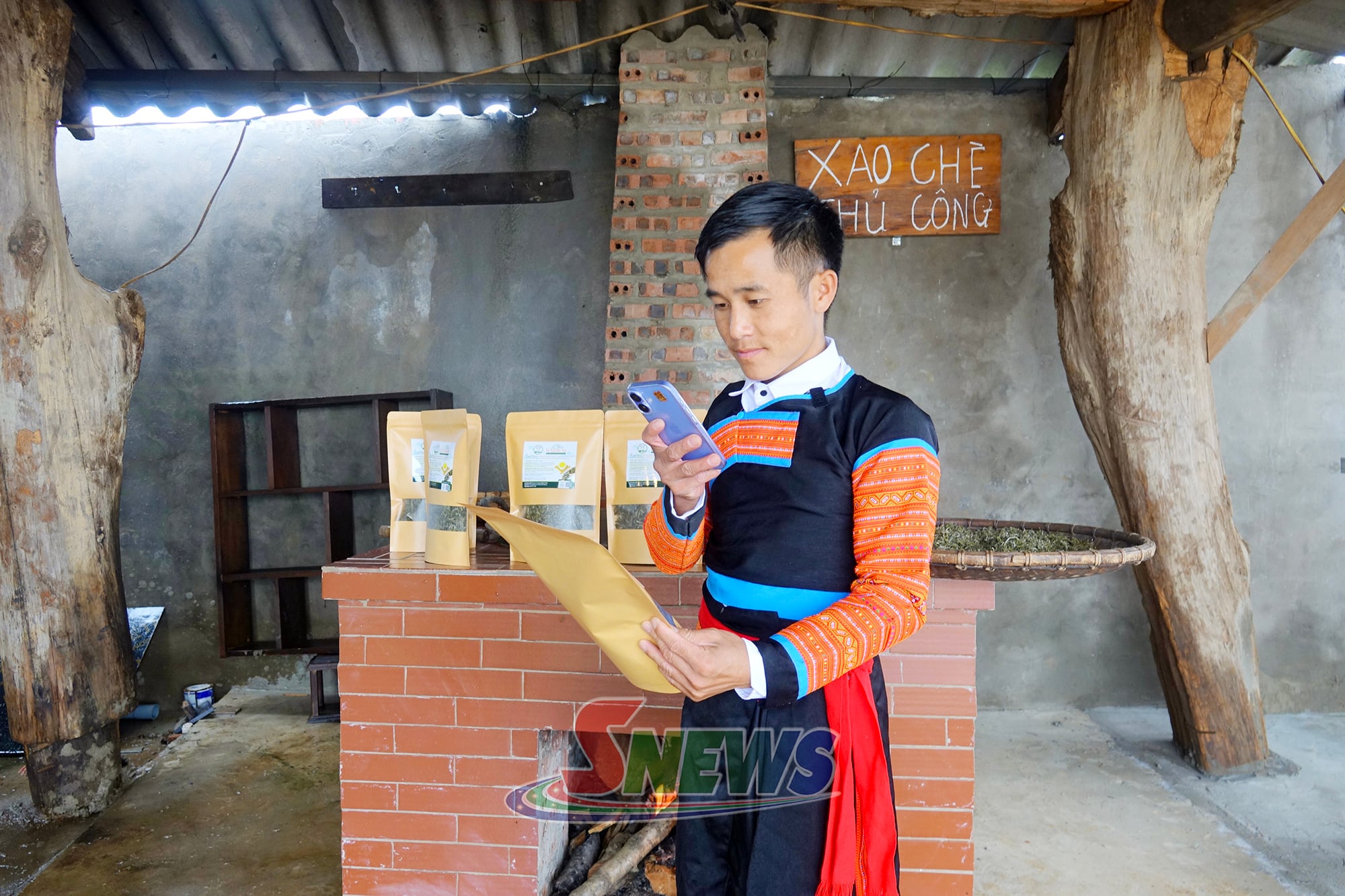
Currently, the province has 70 agricultural products listed on buudien.vn and 60 products participating on sonla.sanviet.vn. In addition, many cooperatives have proactively built websites and fan pages and used social media to promote their products. However, selling in the digital environment is not just about putting products online; it also requires skills in content creation, image editing, order processing, and customer service. While many cooperatives lack dedicated personnel, these tasks are mainly handled by management staff as part-time work.
The need to improve digital skills and choose appropriate technologies was also a key concern for many businesses and cooperatives at the Son La Province Innovation and Digital Transformation Festival 2026. At the event, experts and technology companies provided advice on many practical solutions, such as: warehouse management, customer data management, multi-channel sales, website design, and the application of artificial intelligence (AI) in communication and promotion.
Sharing his company's aspirations, Mr. Doan Dinh Khinh, Director of Van Ho Honey Co., Ltd., said: "Our company currently owns three OCOP-certified honey products. Although we have established a foothold through traditional channels, we still need support in connecting our website with social media and e-commerce platforms, as well as applying sales management software and AI to our communication. For small-scale businesses, the top priority is technology solutions that are easy to operate, cost-effective, and can be immediately applied to our business operations."
Along with providing solutions, equipping personnel directly involved in supporting production at the grassroots level with technology skills is included in training programs. In September, 40 agricultural extension officers at the provincial, commune, and ward levels, as well as members of community agricultural extension teams, received training on market access, agricultural product consumption linkages, digital technology, artificial intelligence, modern distribution channels, and commercial contract management. Following the training, this team will continue to support cooperatives, production groups, and farmers in the area.
Mr. Nguyen Duy Hoang, Deputy Director of the Provincial Department of Science and Technology, said: The Department continues to connect experts and solution providers to support businesses and cooperatives in applying technology according to their needs. The focus is on specific issues in management, production, promotion, and product consumption; selecting solutions suitable to the scale, industry, and usage capacity of each unit.
Digital transformation in agricultural cooperatives needs to start with specific tasks in production, management, and product consumption. Choosing the right technology, along with improving the skills of cooperative officials and members, will help ensure that digital tools are used more frequently and effectively; thereby enhancing production management, quality control, market connectivity, and increasing the value of agricultural products.
Source: https://baosonla.vn/chuyen-doi-so-tinh-son-la-giai-doan-2021-2025-dinh-huong-den-nam-2030/nang-cao-nang-luc-so-cho-htx-nong-nghiep-UKD4DF9vR.html