

When your legs no longer obey your will.
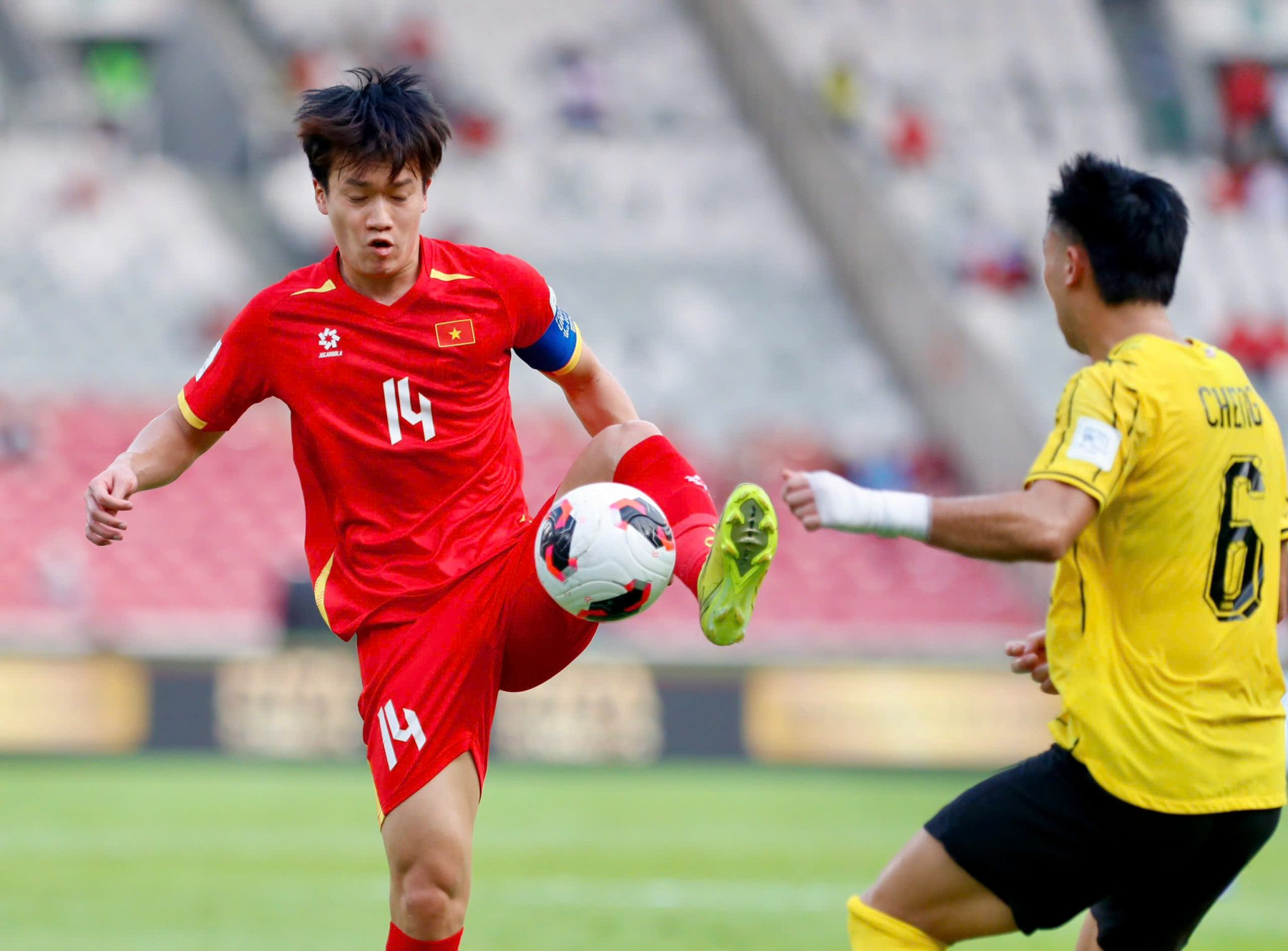
The FIFA ASEAN Cup 2026 third-place match against Malaysia on the evening of October 5th can be seen as a microcosm of the difficulties the Vietnamese national team faced throughout the campaign. When needing to strengthen the attack to find an equalizer, coach Kim Sang-sik had to bring on midfielder Vo Hoang Minh Khoa and central defender Pham Xuan Manh. This shows how the shortage of personnel directly affected the team's performance.
Previously, the Vietnamese team went into the match against Malaysia with only 19 players available. Among them were two reserve goalkeepers, Tran Trung Kien and Nguyen Van Viet, who were almost incapable of playing in other positions. Therefore, coach Kim Sang-sik only had 17 players he could use flexibly.
It's also worth mentioning that, leading up to the FIFA ASEAN Cup 2026, a series of injuries raised considerable concerns about the team's ability to maintain its strength for the tournament. At that time, Nguyen Thanh Chung and Nguyen Quang Hai had to withdraw from the team at the last minute due to injuries sustained from overwork after the ASEAN Cup 2026. After the first round of the FIFA ASEAN Cup, Xuan Son suffered an injury, and Gia Hung returned home to deal with family matters. After the group stage, Hoang Hen and Tai Loc were also unable to play.
More importantly, this isn't just a story of one match. Signs of overwork are appearing in many positions. Hoang Duc didn't play in the match against the Philippines on September 26th and only came on in the second half of the match against Thailand on September 29th. By the end of the match against Malaysia, Hoang Duc, Tien Anh, and several teammates were almost exhausted and unable to maintain the intensity of the exercise.
In top-level football , physical fitness isn't the only factor determining results, but when fitness declines, even the most sound tactical ideas are difficult to execute completely. The final minutes of the match against Malaysia clearly demonstrated this.
Failure helps us see clearly where we stand.
The Vietnamese national team's journey in the FIFA ASEAN Cup 2026 is significantly impacted by the intense match schedule. The most active players for the Vietnamese national team will have to play 12 matches in the ASEAN Cup 2026 and the FIFA ASEAN Cup 2026 over a period of just over two months, from July 24th to October 5th. Interspersed between these matches are club competitions in national leagues and Asian cup tournaments.
If a player plays regularly for both their national team and club, they may have to play around 15-16 matches in 70 days, averaging just over 4 days between games. For players who play fewer matches, the density remains at around 13-14 games in a similar period. With such a high frequency of matches, maintaining consistent form and fitness is a major challenge for players.
It's noteworthy that Southeast Asian rivals also participated in both the ASEAN Cup 2026 and the FIFA ASEAN Cup 2026, but not all teams faced the same pressure. The Philippines and Indonesia were eliminated early in the ASEAN Cup 2026, while Singapore and Malaysia were knocked out in the semi-finals. The squads of Indonesia, Malaysia, and later Thailand in the FIFA ASEAN Cup 2026 also saw many changes compared to the previous tournament. Therefore, their key players didn't have to play continuously from one tournament to another like many Vietnamese players.
However, the fact that the team only finished fourth at the FIFA ASEAN Cup 2026 cannot be fully explained by the factor of overwork. Clearly, this position also helped the coaching staff identify gaps in the squad and expertise. These include squad depth, the ability to maintain playing intensity, alternative options when key players are absent, and, more importantly, cohesion and fluidity in their playing style.
Captain Nguyen Hoang Duc believes the team needs to be more cohesive, coherent, and develop a clearer playing style in order to make a strong comeback. That is also his aspiration for the road ahead.
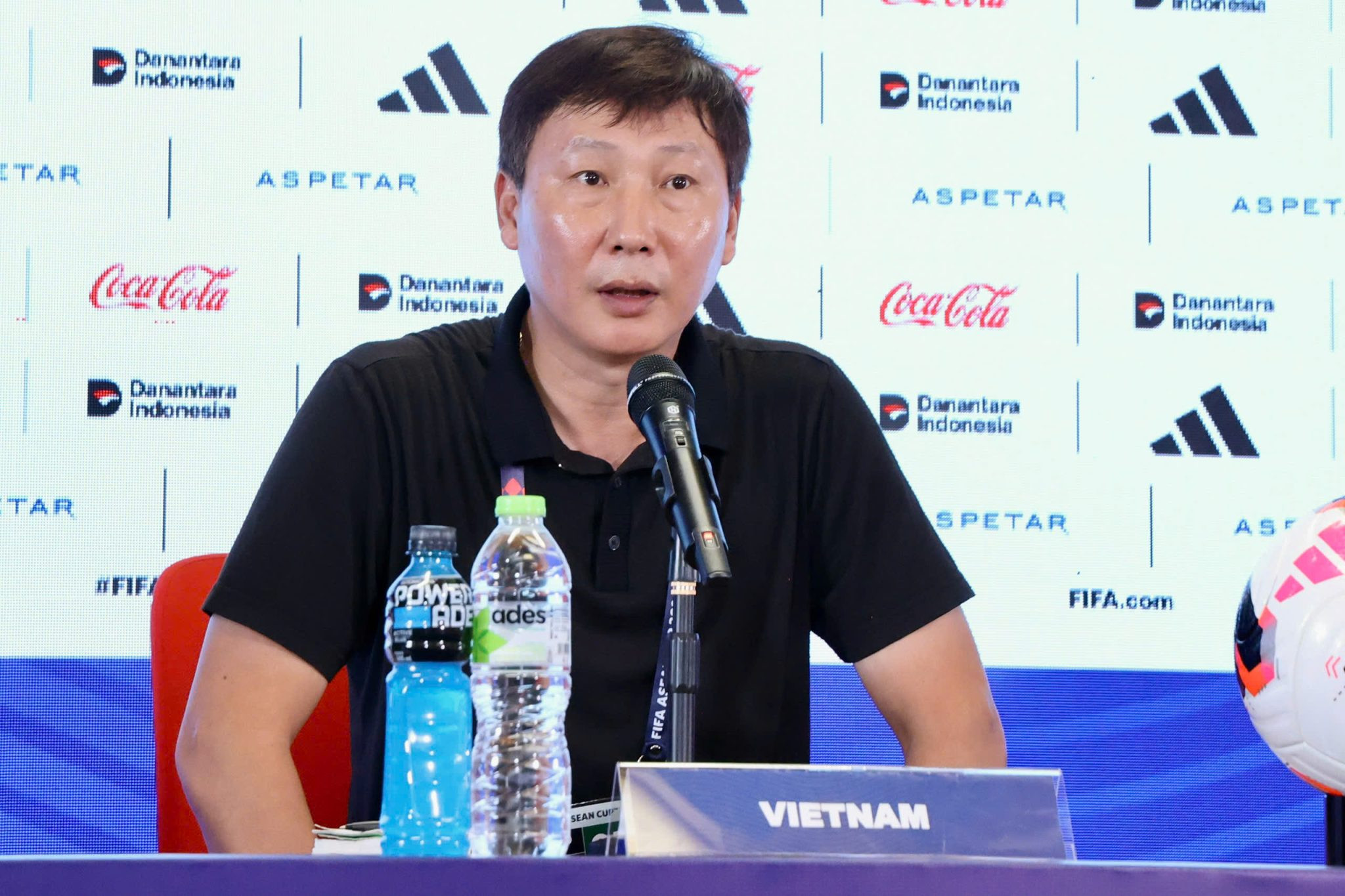
Following the defeat against Malaysia, coach Kim Sang-sik apologized to the fans and took responsibility for the team's result. The South Korean coach also identified the 2027 Asian Cup as the next important goal. He emphasized the task of finding quality players, providing opportunities for young players to compete and develop, and aiming for better intergenerational synergy.
The FIFA ASEAN Cup 2026 shows that the Vietnamese national team not only needs the best players at any given time, but also needs sufficient squad depth to maintain competitiveness throughout an entire tournament cycle. Even with the absence of a few key players, the team must still maintain its playing style, tempo, and ability to make a difference. The FIFA ASEAN Cup 2026 therefore becomes a milestone for the Vietnamese national team to better understand its position in Southeast Asia and, more importantly, to know how to prepare to step onto the big stage in Asia with a different image.
The Vietnamese national team will reconvene in November 2026.
On the afternoon of October 6th, the players returned from Indonesia and prepared to compete with their clubs. During the FIFA Days in November, when club-level leagues take a break to make way for national team matches, the team will reconvene and participate in an international tournament organized by the VFF, with two invited teams: Taiwan (China) and Kyrgyzstan.
This will be an opportunity for coach Kim Sang-sik to continue reviewing the squad, testing new players, and gradually shaping the team for the 2027 Asian Cup.
Source: https://hanoimoi.vn/fifa-asean-cup-2026-ro-hon-vi-the-cua-doi-tuyen-viet-nam-1759759.html