
Demand is increasing rapidly, putting pressure on infrastructure.
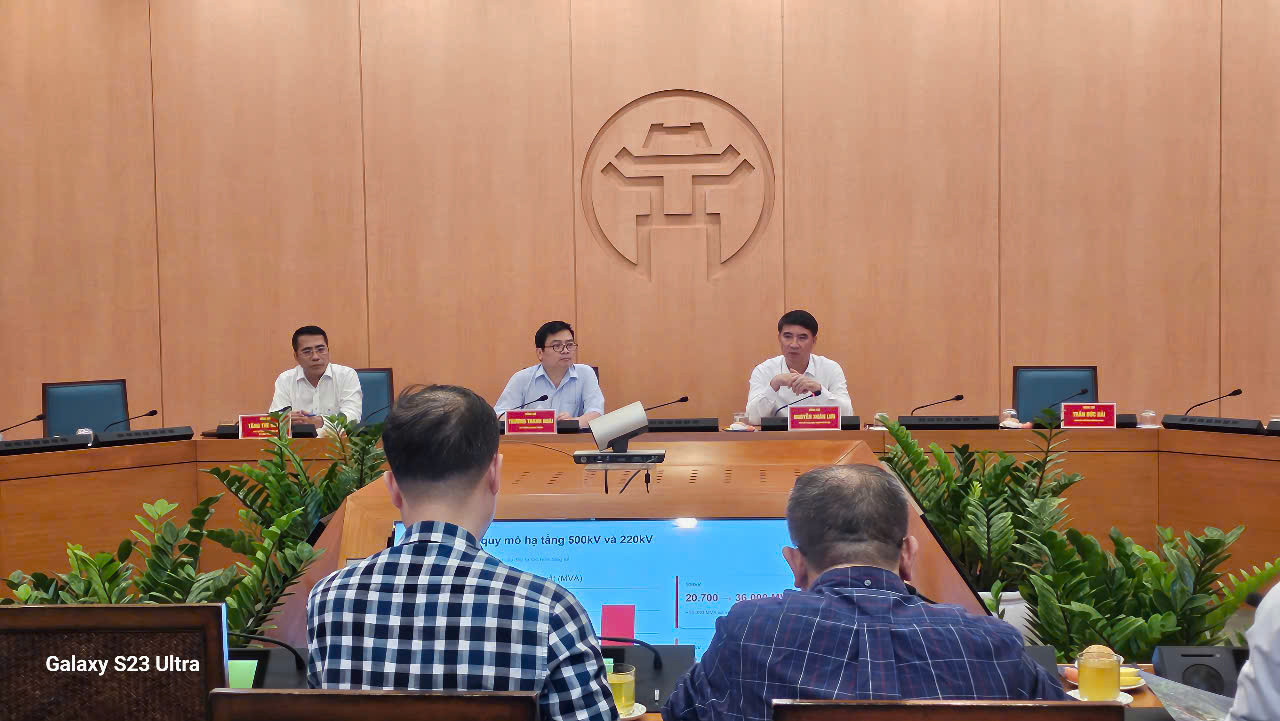
On the afternoon of October 6th, Vice Chairman of the Hanoi People's Committee Nguyen Xuan Luu chaired a working session with the Ministry of Industry and Trade on the situation regarding electricity supply and infrastructure development in the city during the fourth quarter of 2026 and the plan for 2027; the progress of electricity projects under the Power Development Plan VIII and new needs according to the Capital City Master Plan with a 100-year vision.
From the immediate need to ensure electricity supply to the orientation of infrastructure development for the coming decades, the opinions expressed at the meeting revealed a larger issue: if electricity infrastructure is not prepared ahead of the pace of urban and economic development, the very capacity to supply electricity could become a bottleneck to Hanoi's growth.
According to the report, during the 2025-2030 period, Hanoi has 68 power projects to be implemented, including 6 power source projects, 4 500kV substations, 7 500kV transmission lines, 17 220kV substations, and 34 220kV transmission lines. To date, 8 projects have been completed, 9 projects have commenced construction, 40 projects are under investment, 6 projects are under study, and 5 projects have not yet been implemented.
During the meeting, when asked whether completing all 500kV and 220kV substations as planned for the 2026-2030 period would meet demand, representatives from the electricity sector stated that it would still not be enough. The reason given was the continuous emergence of new investment projects, new development areas, and large loads.
Notably, new electricity demand doesn't just come from population growth or residential consumption. New urban areas along the Red River, large-scale manufacturing projects, data centers, and electricity-intensive sectors like high-tech industrial projects cannot operate effectively without sufficient and stable power supply. New urban areas also cannot develop according to plan if energy infrastructure is only considered after construction has already begun.
According to the planning report, Hanoi's electricity demand is projected to be approximately 43,053 MW in 2045 and 49,422 MW in 2065; the total transformer substation capacity is calculated to be approximately 51,664 MVA and 59,306 MVA respectively.
Meanwhile, the Capital City Planning until 2045 requires the establishment of 67 220kV substations with a total capacity of 52,650MVA, along with 11 500kV substations with a total capacity of 58,500MVA. Compared to the current situation of 15 220kV substations with a total capacity of 8,750MVA, the gap in infrastructure scale is enormous.
These figures show that electricity investment cannot be addressed on a project-by-project basis. Hanoi needs a holistic approach in which load forecasting, land planning, transportation, and energy infrastructure must be considered simultaneously.
Untangling the knots to prepare for growth.
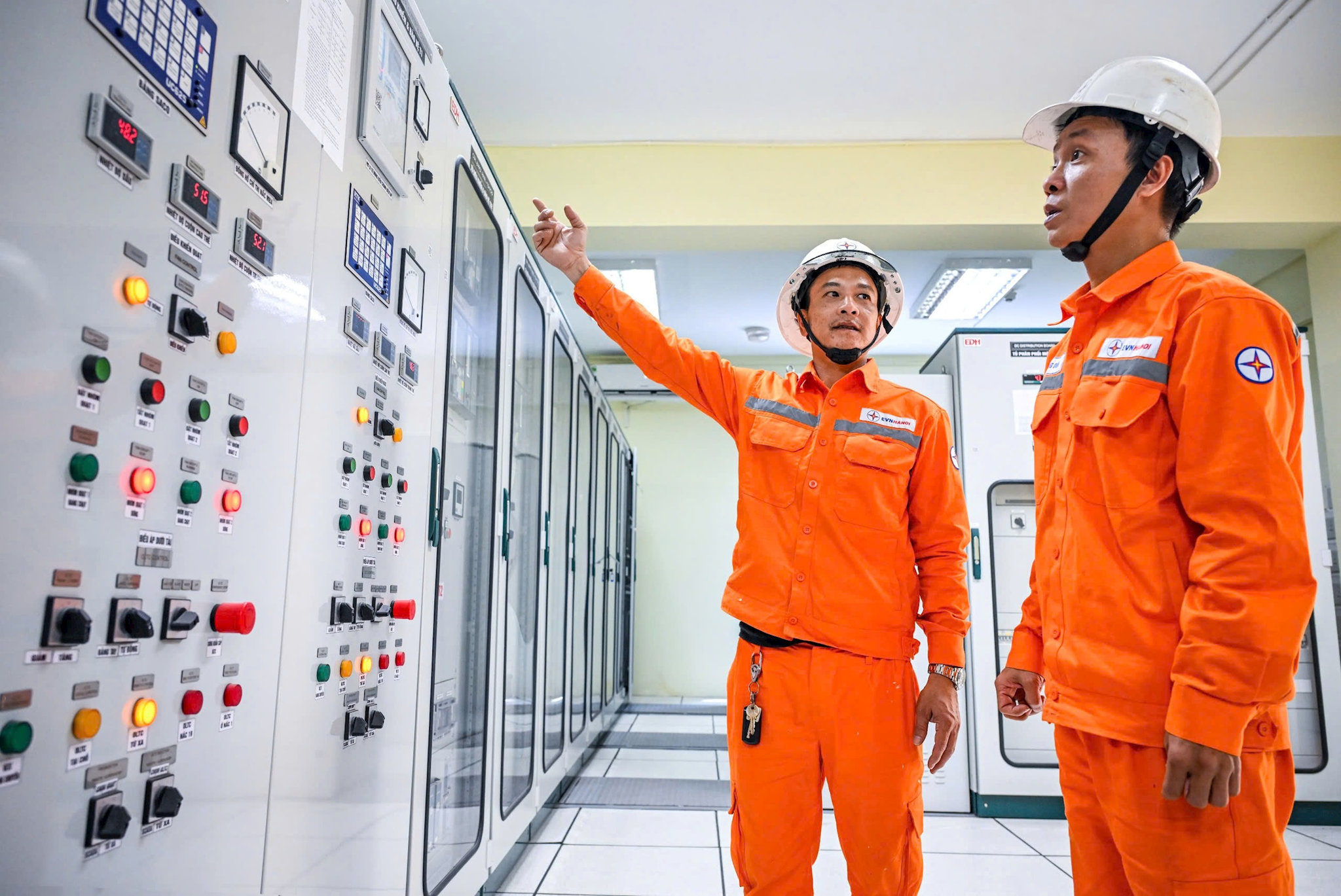
The reality of implementing power projects in Hanoi shows that the major challenges lie not only in funding or investment capacity. Many projects are also hampered by issues related to substation location, route alignment, land, site clearance, planning, and coordination between localities.
Hanoi's unique characteristics make this problem much more complex than in other areas. Limited land, high population density, and increasing demands for protecting urban landscapes and spaces are significant challenges. A power line route passing through an urban area may simultaneously involve multiple different planning schemes.
For example, some 500kV and 220kV power line projects have had their routes adjusted due to local development requirements. Some routes crossing the Red River have had to be re-examined, switching from overhead lines to underground cables to align with regional planning. When the technical plan changes, the investment documents, detailed planning, and route agreements must also be revised.
This is why city leaders require that each project clearly identify the responsible agency, the obstacles, the proposed solutions, and the completion deadline, instead of general reports about the "currently being resolved" status.
This approach is significant not only for the progress of the power industry. A transmission project can only be completed when a series of procedures involving the city, local authorities, and central government agencies are resolved simultaneously.
According to Deputy Director of the Electricity Department (Ministry of Industry and Trade) Tang The Hung, among the approximately 15 projects being monitored, most have basically agreed on location and route; only one project still faces obstacles. The Electricity Department and the Hanoi Department of Industry and Trade need to coordinate more closely to address emerging issues, especially for transmission projects that are crucial to the northern region and the capital city.
In the long term, the more important issue is the synchronization between the Capital City Planning and the power planning. The Capital City Planning has a vision extending to 100 years, while the power planning is phased into shorter periods. If Hanoi's load forecast changes rapidly without being updated in the power planning in a timely manner, a gap will emerge between actual demand and investment plans.
Therefore, it is necessary to study the possibility of bringing some projects scheduled for implementation in the 2031-2035 period forward. The city's report also proposes moving some projects from the 2031-2035 period to the 2026-2030 period, while updating new projects according to the Capital City Planning into the process of adjusting the Power Development Plan VIII.
Deputy Minister of Industry and Trade Truong Thanh Hoai emphasized the need to ensure electricity supply for the North amidst continuously increasing demand, and requested that transmission projects be implemented ahead of demand. This requirement is even more crucial for Hanoi, as it is the political , economic, cultural, and security center of the country.
Another noteworthy direction is the development of electrical infrastructure suitable for modern urban spaces. In areas with high building density, the study of undergrounding 220kV power lines and substations should be considered from the planning stage. Along with this, the electrical infrastructure needs to be designed in conjunction with ring roads, radial roads, urban railways, and major transportation projects.
"If done well, a transportation project can simultaneously create space for electricity, telecommunications, and other technical infrastructure, limiting the need for repeated road digging in the future," Deputy Minister Truong Thanh Hoai affirmed.
This is also a matter of economic efficiency. The investment cost for underground structures may be higher than for above-ground options, but it is necessary to fully consider the value of the land, urban landscape, land acquisition costs, and the long-term benefits of using underground space.
Along with the transmission system, Hanoi also needs to research and develop local energy sources, especially in urban areas, newly developed areas, and areas with high load demand. Rooftop solar power and other suitable energy solutions can help reduce pressure on the system while meeting the increasing demands of investors for clean energy sources.
Hanoi City People's Committee Vice Chairman Nguyen Xuan Luu emphasized that ensuring electricity supply is not only about meeting production and daily life needs, but also linked to social security and order, and the status of the capital city. Therefore, the city must be more proactive in its energy strategy, from ensuring sufficient and stable electricity supply to developing clean power sources, especially in urban areas and newly developed regions. Electricity must be considered from the spatial development planning stage, invested in synchronously with transportation and technical infrastructure, and at the same time ensure increasing stability, cleanliness, and backup capacity.
Source: https://hanoimoi.vn/dien-phai-di-truoc-mot-buoc-de-ha-noi-tang-toc-1759772.html