

Entering university, especially for freshmen, gives young people more time to make their own decisions but also requires them to manage more aspects of their lives, from academics and finances to daily routines and future career paths. Furthermore, frequent social media use can lead students to easily compare themselves to others. When multiple pressures arise simultaneously, if they don't know how to manage and cope appropriately, freshmen can easily become overwhelmed. This stress can sometimes make them want to find a way to get rid of it as quickly as possible.
However, according to MSc. Dr. Tran Thanh Thien Truc, stress isn't always negative. In some situations, it can even be a signal that helps people realize something needs attention and adjustment. The doctor shared: "You can think of stress as a warning signal from the body. For example, the feeling of pain helps us know we are injured so we can protect ourselves in time."
New students and the types of stress they experience.
A common situation for students is knowing they need to study early but still procrastinating. Instead of starting homework or reviewing for exams, they move on to other things. As the exam or deadline approaches, the pressure becomes increasingly apparent.
MSc. Dr. Tran Thanh Thien Truc commented: “Deadlines or exams are stressors. However, how we perceive the problem and prepare to cope also affects the level of stress. Falling into a state of overload doesn't necessarily mean someone is weak; perhaps their current preparation methods aren't suitable, and they need to adjust.”
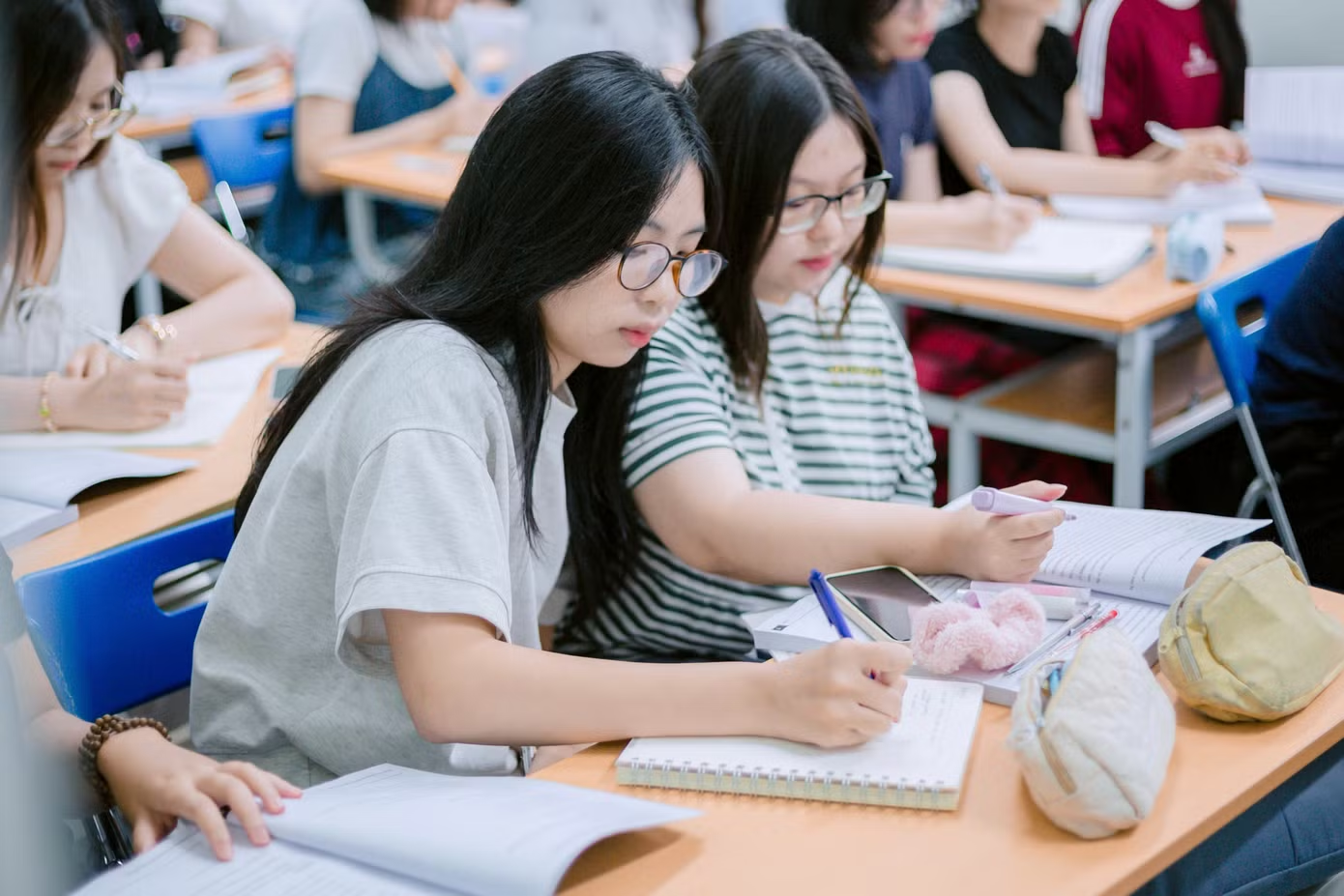
Doctors also clearly distinguish between "eustress" (positive stress, associated with achievable challenges) and "distress" (negative stress, causing overload). With eustress, the task has a certain level of difficulty but is still within the ability to perform. The person doing the work feels they can control the task, are motivated, and have opportunities for growth after completion.
Conversely, distress arises when pressure is excessive, prolonged, or repetitive, while the person feels out of control. This state can lead to fatigue and reduced work performance. Therefore, the goal is not to live completely stress-free, but to learn how to manage it.
How to restore energy
Before attempting to manage stress, each person needs to identify what typically triggers their stress. The triggers vary from person to person: it could be an upcoming exam when studying is still incomplete, a text message from someone they don't want to see, or a very small event that happens while they are hungry and tired.
Next, students need to pay attention to how stress manifests itself: Does the body feel uncomfortable, anxious, does the heart race, or does the hands tremble? Dr. Truc said: "Recognizing both the cause and your own reaction is the first step in choosing how to cope, how to regain energy, instead of just letting the feeling of stress linger."
Everyone recovers differently. Some people find comfort in being with friends, while others need quiet time. Even for the same person, some groups of friends make them happier, while others tire them out. Therefore, students shouldn't rush to categorize themselves into a fixed type, but should observe whether their energy levels increase or decrease after each activity.

Many students, despite being exhausted, still try to stay awake to study, believing it will help them prepare better. However, at this point, their bodies' ability to absorb information is no longer effective. Dr. Truc points out: "Sometimes, we sit in front of books but aren't necessarily studying effectively; we're just doing it to ease our guilt." Instead of letting work pile up until their bodies are exhausted, new students need to proactively plan their studies in advance.
In daily life, maintaining relatively stable sleep and wake times is crucial. Dr. Thien Truc advises: "You can't just look at the total number of hours slept; the feeling upon waking can also vary. Some days you wake up feeling refreshed, while other days you sleep longer but still feel tired. You should maintain relatively stable sleep and wake times, limit the use of screen devices before bed, pay attention to the timing of coffee and tea consumption, exercise, and exposure to sunlight during the day to help you fall asleep more easily."
You shouldn't continue to suffer alone when you're overwhelmed.
Self-observation and self-care are essential, but they shouldn't always be the last resort. When problems become severe or beyond their ability to cope, students should seek professional help. Dr. Tran Thanh Thien Truc emphasized: “When someone mentions thoughts, plans, or behaviors of self-harm, it’s crucial to quickly connect them with emergency assistance from hospitals, organizations, or professionals providing direct support.”
If you notice a friend showing worrying signs, everyone should proactively inquire about their well-being and connect them with family or appropriate support centers. The doctor notes: “The person asking should remain calm, listen attentively, and avoid judgment. Don’t respond with phrases like ‘it’s nothing’ or ‘you’re so weak.’ Outsiders haven’t experienced the situation firsthand, so they can’t hastily assess the extent of the hardship. Pressuring them to recount details or downplaying their feelings won’t help. The first thing you can do is listen.”
Source: https://svvn.tienphong.vn/chuyen-gia-tam-ly-tan-sinh-vien-can-lam-quen-voi-stress-post1882635.tpo