
There is a need for appropriate policies and remuneration schemes, commensurate with responsibilities and workload, so that commune-level officials and civil servants can work with peace of mind, remain committed, and dedicate themselves to their work.
That potential doesn't come naturally; it must be built upon specific, practical conditions, namely appropriate resources, a team of officials assigned to the right jobs, and a reformed approach to task assignment that clearly defines the person, the task, the responsibility, and the deadline. When properly and adequately supported, communes will not only have less burden but also gain the strength to make breakthroughs.
Streamlining to become stronger, not to burden the system further.
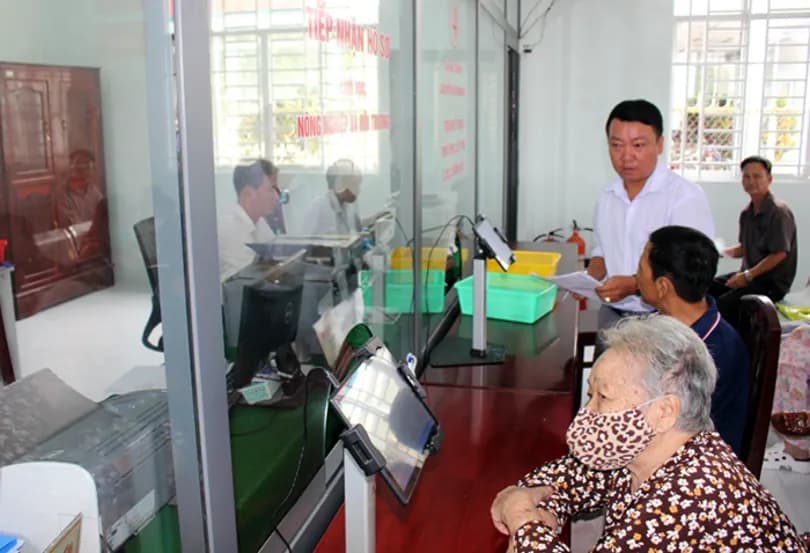
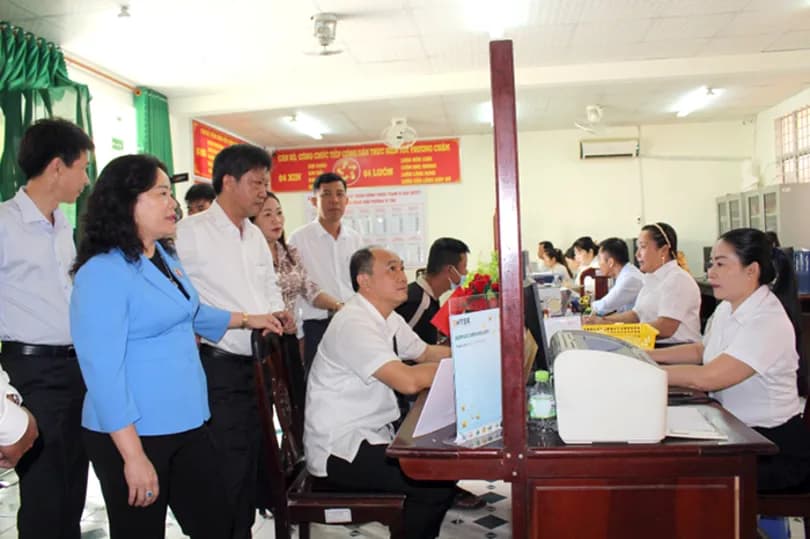
The practical experience at the grassroots level raises an unavoidable question: the organizational structure has been streamlined, but has the workload truly been streamlined? Because "streamlined" in terms of organization doesn't necessarily mean "lighter" in terms of work. Mr. DPT, a specialist at the Party Committee Office of Vi Thuy Commune, Can Tho City, stated that after the merger, the scope of work has broadened, with many areas needing to be monitored simultaneously, while the demands for progress and quality of advice are increasingly high. Some days, the number of documents to be received, studied, and processed reaches dozens; not to mention unexpected tasks and matters requiring coordination with other departments. "What I have to learn after the merger is to know which tasks need prioritizing and which can be handled later; at the same time, I must coordinate with my colleagues so that the work isn't piled on one person. If I only work the old way, it will be very difficult to meet the requirements," Mr. DPT shared.
When the workload increases, the first solution often seen is for officials to work harder, faster, work overtime, or even take work home. The dedication of officials and civil servants is necessary, especially during the period when the new system is stabilizing. However, if the long-term operation of the entire system relies on each individual trying to shoulder an extra burden, then that is not a fundamental solution to the problem of streamlining. A truly streamlined system must help organize work more scientifically , clarify responsibilities, shorten processing times, and ensure resources are used effectively; which tasks can be integrated, simplified, or moved to a digital environment; and which intermediate steps can be eliminated to free up time for specialized work.
From another perspective, after implementing the two-tiered local government model, decentralization and delegation of power have been strengthened, creating conditions for communes to be more proactive in organizing and implementing tasks and resolving issues at the grassroots level. However, in practice, alongside the initial results, there are still issues worth considering.
Recalling the story told by Mr. Dong Van Thanh, Member of the Central Committee of the Communist Party of Vietnam, Standing Deputy Secretary of the City Party Committee, and Chairman of the People's Council of Can Tho City, at the conference summarizing one year of operation of the overall organizational model of the city's political system and the two-tiered local government model, it is clear that there are still shortcomings in decentralization and delegation of power. Mr. Dong Van Thanh stated that recently, a department within a provincial-level agency requested the Party Committee and People's Committee of a commune to directly handle the matter, which is inconsistent with decentralization and delegation of power. Secondly, there are issues with very minor matters that still require summoning for resolution. While the city's area is vast, with some places requiring more than two hours to reach, "a simple phone call would suffice; why summon someone? Funding and transportation are also very limited."
The above situation raises an important issue: it is necessary to distinguish between organizational streamlining and job streamlining. If the number of departments is reduced but the methods of assigning tasks, processing procedures, reporting systems, and overlapping administrative requirements remain the same, the pressure will ultimately still fall on the people directly performing the tasks. In that case, the organization may be smaller on the organizational chart, but it is not necessarily more efficient in actual operation.
Conversely, if a task is assigned to the right person, data is utilized repeatedly, a process is streamlined, and a report is integrated instead of requiring multiple requests, then the same resources can generate greater efficiency. In that case, lean is no longer about "reducing the number of people," but about ensuring each person does the right job, according to their abilities, and has enough time for the most essential tasks.
Boosting with technology
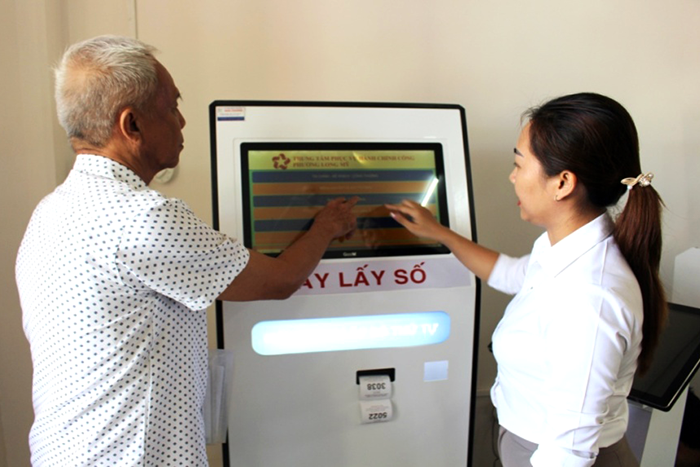
After restructuring, as the scope of work at the commune level broadens, technology needs to be seen as a resource to "empower" grassroots officials. An invested device should reduce manual operations; a deployed software should shorten processing time; and a built data system should minimize data re-entry. This is also a measure of the effectiveness of digital transformation at the grassroots level.
For technology to truly become a "powerful" resource for communes, it cannot rely solely on the efforts of the local authorities. According to Mr. Nguyen Minh Tri, Secretary of the Party Committee and Chairman of the People's Council of Chau Thanh commune, Can Tho city, the central government and the city need to continue improving digital platforms and shared databases, ensuring stable, interconnected, and user-friendly systems; while prioritizing investment in infrastructure, equipment, and internet connections for disadvantaged areas.
More importantly, technology systems need to be designed based on the actual needs of the locality. The commune level should not have to use too many separate software programs, log into multiple systems, or repeatedly enter the same type of data. Data that has been updated at the higher level should be gradually shared and utilized collectively, thereby significantly reducing the time spent on compiling reports and manual processing.
Mr. Nguyen Minh Tri argued that, along with investing in technology, the central government and the city also need to standardize forms and reporting procedures towards sharing data, limiting the requirement for communes to re-provide information that state agencies already have. Because when a system can automatically aggregate data, warn about progress, or provide information to support guidance, it's not just an application of technology, but also a direct way to reduce pressure on local officials.
Don't let policy lag behind responsibility.
Having worked in a government agency for 15 years, NVK, a specialist in the Economic Department of a commune in Can Tho City, remains committed to his job despite frequently considering a different path. Currently, his total monthly salary and allowances are only about 10 million VND. With that income, ensuring a decent life for his family is not easy, especially with the increasing cost of essential expenses. He shared that there have been times when he wanted to "give up" and find a better-paying job to improve his family's life. But after careful consideration, he stayed. "Having worked in a government agency for so long, I'm used to the environment, the work, and my colleagues. Leaving would be a shame, but I really want to improve my income so that my family can have a better life," NVK said.
The story of this professional with 15 years of experience is not about irresponsibility or a lack of commitment to the job. On the contrary, it reflects a very common concern for those working in the public sector: as responsibilities increase and job demands become higher, is the income commensurate with the effort expended?
Resolution No. 27-NQ/TW dated May 21, 2018, of the 12th Central Committee on reforming salary policies for cadres, civil servants, public employees, armed forces personnel, and enterprise workers, set the goal of building a scientific, transparent, and practical salary policy; creating incentives to improve productivity and the quality of human resources, while ensuring the livelihood of salary recipients and their families.
Notably, on August 29, 2026, the Central Steering Committee on Salary, Social Insurance and Benefits for Meritorious Individuals issued a plan to research and develop a reform project on salary and social insurance policies to be submitted to the 5th Plenum of the 14th Central Committee of the Communist Party of Vietnam in March 2027. The research includes a comprehensive assessment of salary policies, salary scales, and allowance schemes.
Information regarding the continued research into the model of 5 salary scales and 9 new allowance schemes is also attracting attention from officials and civil servants. These are contents that were identified during the implementation of Resolution 27-NQ/TW.
For NVK, this information brings much hope. He and his colleagues hope that if the wage policy is reformed, their income will gradually improve, thereby helping them reduce life pressures and feel more secure in their jobs. "We don't expect anything too big, we just hope the new policy will more accurately reflect work and responsibilities, and that salaried workers like us can live on our salaries," NVK expressed.
As responsibilities increase, policies need to keep pace. And when officials and civil servants can be assured that their efforts, responsibilities, and abilities are being recognized appropriately, they will have more motivation to continue to dedicate themselves to their work and to the system they serve.
Text and photos: TRUONG SON
Final article: New system, officials must be "new" in terms of competence.
Source: https://baocantho.com.vn/bai-3-muon-co-so-manh-phai-tiep-suc-cho-co-so-a217285.html