
Defining new collaborative spaces in the digital age.
The year 2026 holds special significance as it is designated the Year of Education, Science, and Technology Exchange between Vietnam and the Russian Federation, building on the success of the 75th anniversary of the establishment of diplomatic relations (1950-2025). Based on the traditional friendship and comprehensive strategic partnership, cooperation in science, technology, and innovation is always considered a crucial pillar.
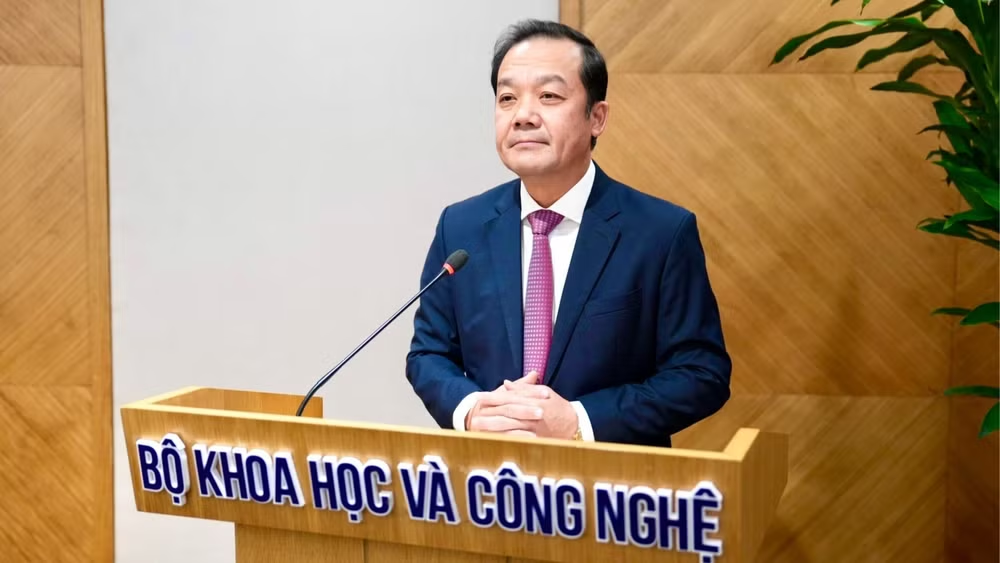
In his welcoming remarks to the Russian delegation, Deputy Minister of Science and Technology Pham Duc Long emphasized that in recent years, the two countries have recorded many significant achievements in extensive cooperation in the fields of research, telecommunications, information security, and human resource training.
However, in the context of globalization and the Fourth Industrial Revolution, there is still enormous room for expanding exchanges, especially in the fields of digital transformation and the development of the digital economy and digital society.
Deputy Minister Pham Duc Long shared with Russian partners Vietnam's strategic direction through the implementation of Resolution No. 57-NQ/TW of the Politburo . In this resolution, science, technology, innovation, and digital transformation are identified as "important breakthroughs".
This process does not occur in isolation but is closely linked to the development of a digital government , the creation of a shared digital platform, and the provision of superior online public services for citizens and businesses.
VNeID and the data challenge: A key point that attracted the attention of the Russian delegation.
During the meeting, one of the topics that the Russian delegation paid particular attention to and discussed enthusiastically was the process of building Vietnam's national population database and the VNeID electronic identification system.
Presenting a detailed overview of this issue, Mr. Hoang Huu Hanh, Deputy Director of the National Digital Transformation Department, provided a comprehensive picture of Vietnam's legal framework, strategy, and information system architecture.
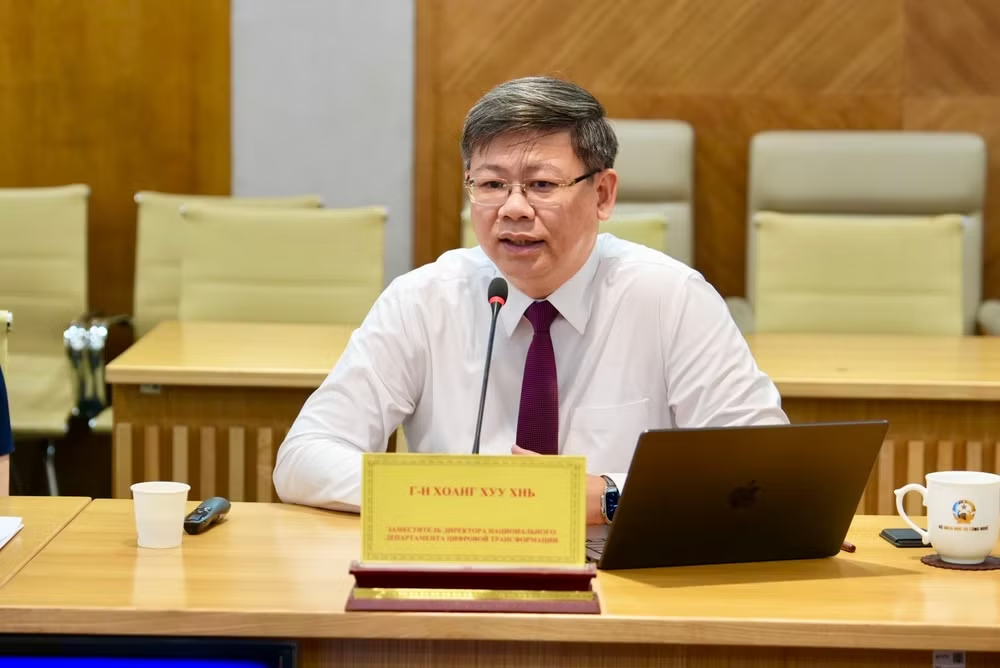
- Photo: Ministry of Science and Technology.
Responding to the Russian side's concerns, Mr. Hanh stated that the construction of Vietnam's population database has always been closely linked to the process of verifying, cleaning, and perfecting citizen information.
The VNeID system is now more than just a paper-based application; it has evolved into a crucial interactive channel between the government and citizens. Traditional administrative procedures and paperwork are gradually being integrated into the digital environment, creating a seamless ecosystem of public services.
However, the biggest lesson that Vietnam has learned and shared is the importance of interoperability. Vietnam is striving to develop shared digital platforms to break down the "data islands" of local, unconnected information systems.
Utilizing existing data and electronic identification helps minimize the need for citizens to repeatedly declare the same information, while optimizing resources and reducing duplicate investments from the state budget.
Smart investment, judged by practical value.
Digital transformation is a resource-intensive undertaking, therefore the methods of investing in and managing technology projects were also a topic of in-depth discussion between the two sides. Representatives from the National Digital Transformation Agency affirmed Vietnam's consistent stance: the effectiveness of digital transformation must be measured by concrete changes that bring real benefits to citizens and businesses, rather than reports that merely list the number of completed software systems or procedures.

To solve this problem, Vietnam is applying a comprehensive project lifecycle management mechanism, from surveying, design, and implementation to monitoring, handover, and operation. In particular, the investment and procurement methods are extremely flexible. Depending on actual needs, the management agency can choose to purchase ready-made products, invest in projects, or lease digital services.
Notably, with new, pioneering, and unprecedented technological solutions on the market, the government is willing to create a "sandbox" mechanism for businesses to test and evaluate their effectiveness before proceeding with further legal procedures. This openness has been highly appreciated by experts in the Russian Federation.
Opening a new chapter in technological cooperation.
The frank and open exchanges at the meeting once again affirmed that digital transformation is not simply about purchasing equipment or installing software. It is a profound reform process encompassing institutional frameworks, operational capabilities, and organizational implementation methods.
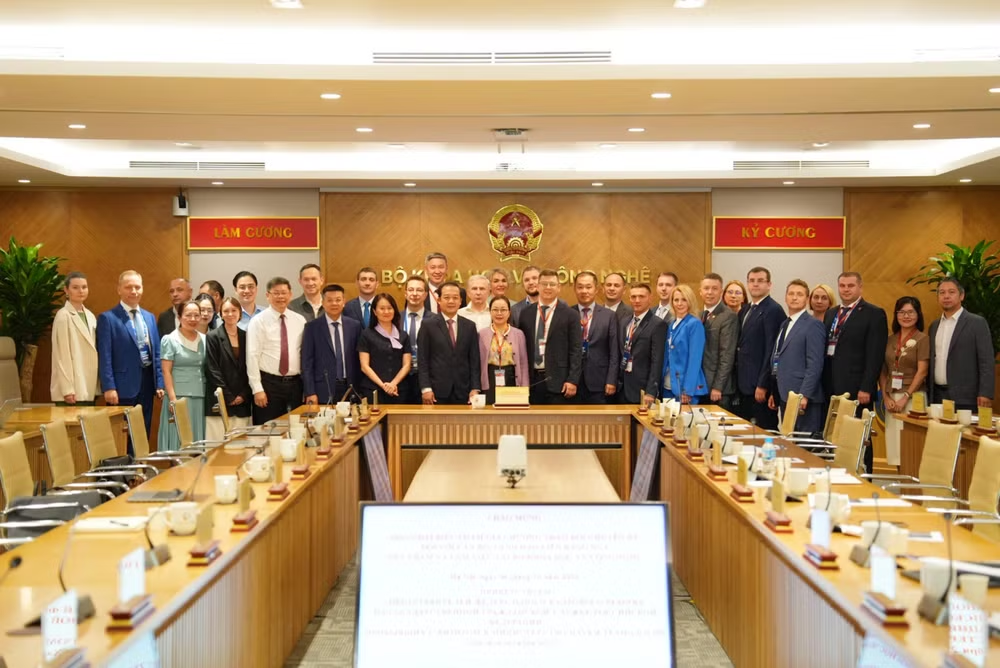
Representatives from both sides acknowledged that Vietnam and the Russian Federation share many common points of intersection and interests in the process of digitizing state administration. The Vietnamese side expressed its willingness to share "practical lessons" on building national databases, electronic identification, and digital platforms; and also wished to learn valuable experiences from the modernization models of the Russian Federation.
This working session was not just an academic exchange, but also an important stepping stone, opening up more concrete and substantive opportunities for cooperation between the two countries in the fields of digital transformation, digital technology, and emerging core technologies of the future.
Source: https://congluan.vn/viet-nam-nga-lay-chuyen-doi-so-lam-chia-khoa-mo-rong-hop-tac-chien-luoc-toan-dien-post363066.html