
From production to value creation in Vietnam
Opening a series of inspiring speeches themed "The World Joins Hands in Action with Vietnam," Mr. Na Ki Hong, General Director of Samsung Vietnam, stated that the role of FDI enterprises should not only be measured by factory size or export turnover, but also by their ability to contribute to the development of domestic technological capabilities.
According to the General Director of Samsung Vietnam, the crucial question is how many Vietnamese engineers are involved in creating the products and how many Vietnamese businesses have the capacity to become suppliers.
One example cited by the General Director of Samsung Vietnam is the team of engineers at the Samsung Vietnam Research and Development Center in Hanoi who participated in developing software for global products. Vietnamese became one of the 13 languages supported when the Galaxy S24 Ultra was launched. Subsequently, the Vietnamese engineering team continued to contribute to subsequent generations of products.
Alongside its research and development activities, Samsung implements numerous programs to train technology personnel and support Vietnamese businesses in improving their production capabilities. In particular, the Smart Factory Development Consulting Program has partnered with 91 businesses and trained 201 Vietnamese experts.
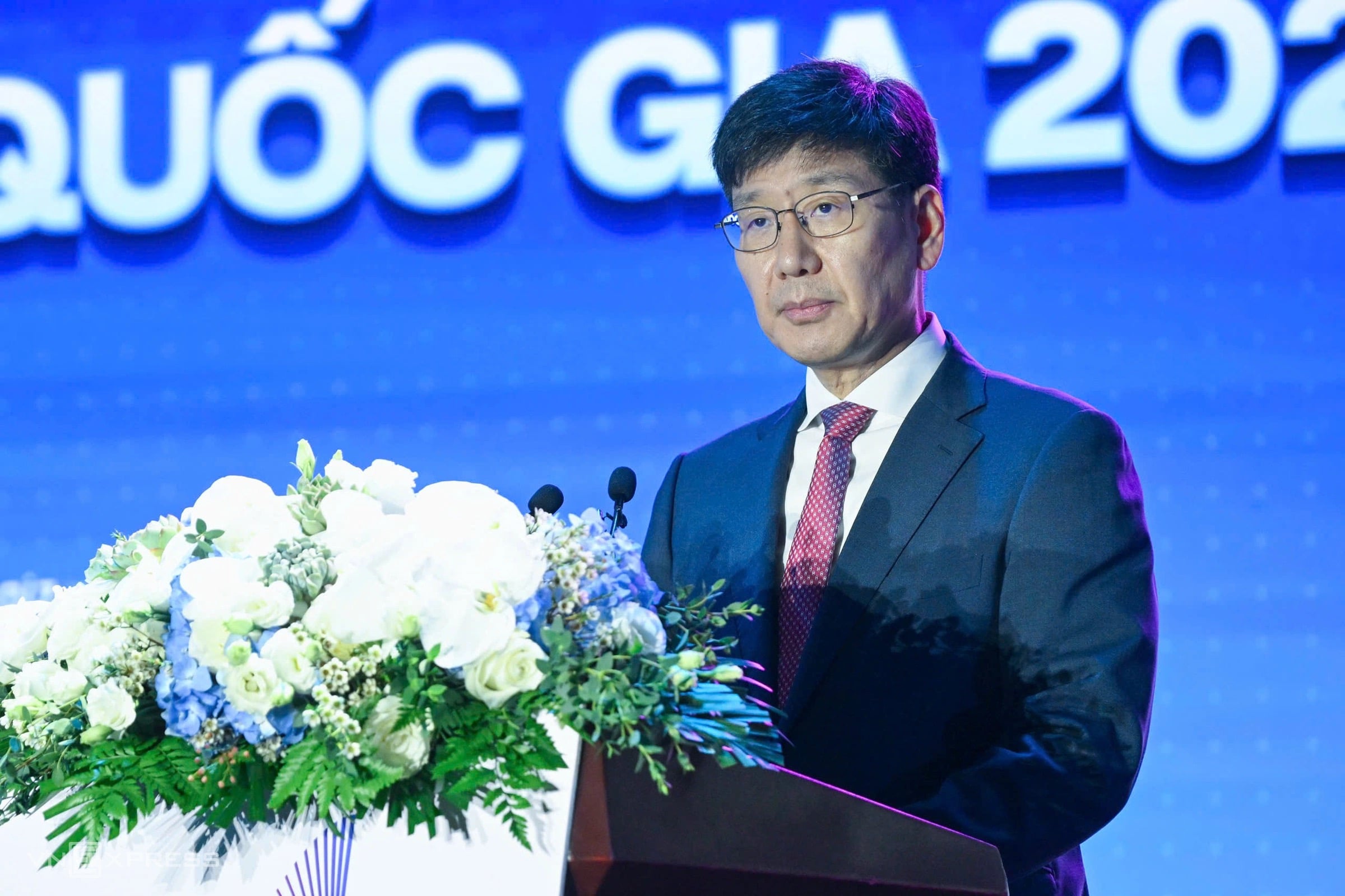
Mr. Na Ki Hong, General Director of Samsung Vietnam, shared at the event.
If products are assembled only in Vietnam, their value primarily lies in the scale of production. It is only when Vietnamese engineers directly solve an R&D problem and the results are used in a global product that true technological capability is formed and retained.
According to the General Director of Samsung Vietnam, the company focuses on two pillars: developing technological talent and enhancing the innovation capacity of domestic businesses.
In 2026, more than 2,900 teams participated in Samsung Solve for Tomorrow. The Samsung Innovation Campus continues to train students in artificial intelligence, the Internet of Things, big data, and semiconductors. From 2012 to the present, Samsung has invested approximately 180 billion VND in university cooperation programs, research, and talent training.
In the business sector, the Smart Factory Development Consulting Program, in coordination with the Ministry of Industry and Trade and local authorities, has supported 91 businesses and trained 201 Vietnamese experts. At a plastics company in Bac Ninh, the application of a data management solution helped increase the plan completion rate from 80% to 92%, while the error rate decreased from 12% to 0.5%.
According to Mr. Na Ki Hong, Vietnam already has a large-scale, high-tech manufacturing base and needs to continue increasing the value created domestically.
"The next chapter needs to be written with more Vietnamese engineers participating in core R&D tasks; more Vietnamese businesses mastering data, processes, and standards; and more technological value being created, disseminated, and retained within the Vietnamese economy ," he said.
Bringing Vietnamese knowledge and culture into the digital world.
Under the theme "Overseas Vietnamese experts and intellectuals promote the flow of knowledge and technology to Vietnam," Christopher Nguyen, founder and CEO of Aitomatic, shared his story about bringing the Vietnamese language and knowledge into the digital environment.
According to Christopher Nguyen, about 34 years ago, the effort to bring the Vietnamese language into the digital world began with a small group of people. Since then, the development of the internet and digital platforms has connected more and more Vietnamese people with the world.
Today, children can use phones, access information, and connect with many places around the world. The development of digital platforms and content creators has contributed to the formation of a vast body of knowledge, providing a foundation for people to plan their future.
This also serves as a source of data for artificial intelligence to learn from. Increasingly, knowledge is being created and stored in the digital environment, becoming a data source for machines to learn from, while also being supplemented by the experience and expertise of engineers.
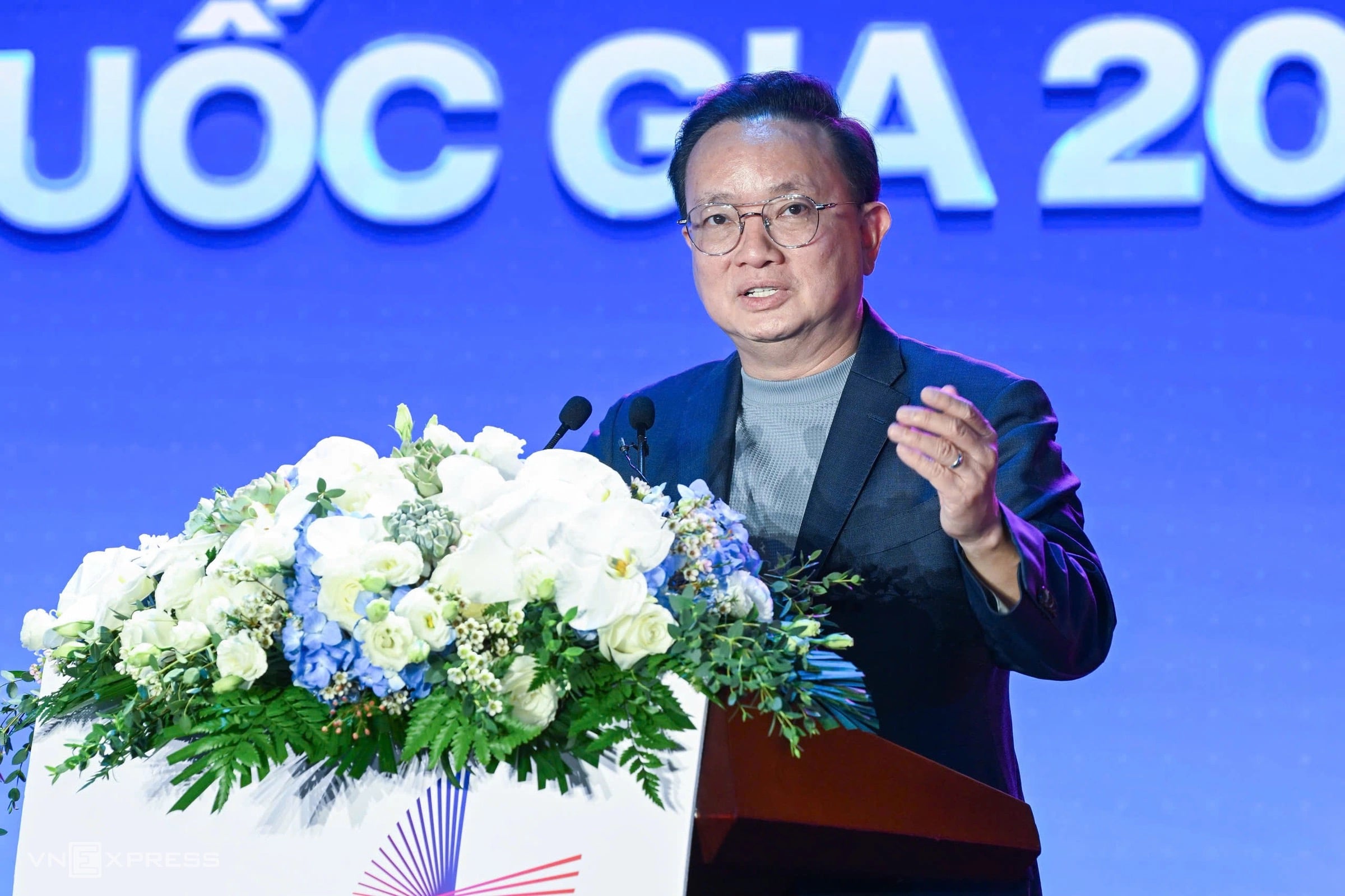
Christopher Nguyen, founder and CEO of Automatic, shared his insights at the event.
The founder and CEO of Aitomatic believes that Vietnam possesses many values that the world needs, from language and culture to knowledge and a worldview.
While the Vietnamese language previously had limited presence in the digital space, the development of AI is opening up opportunities for Vietnamese knowledge to be digitized, disseminated, and contribute to the global knowledge base.
According to him, AI needs not only data from a single language but also knowledge resources specific to each country and community. Many countries are developing AI systems based on their own data, culture, and knowledge. This also presents an opportunity for Vietnam to build AI capabilities based on its unique values.
In this context, the concept of sovereignty no longer means simply separating or protecting individual resources. Digital sovereignty also lies in the ability to collaboratively create, share, and contribute knowledge to bring value to the community.
Based on efforts to introduce the Vietnamese language into the digital world decades ago, Christopher Nguyen believes that today's technological platform has opened up greater possibilities, helping Vietnamese language, knowledge, and culture enter the AI era and build a broader digital future.
Lessons learned from Singapore's experience in building an innovation ecosystem.
Sharing his views on "Policy Mechanisms to Promote Innovation and Suggestions for Vietnam," Edward Lim, Country Director of NUS Enterprise, argued that an innovation ecosystem cannot be formed from a single program but requires the simultaneous development of talent, support mechanisms, and capital, creating a continuous journey from research to market.
According to Edward Lim, since 1991, Singapore has committed over S$125 billion to research and innovation, including S$37 billion for RIE2030 over the next five years. Public investment in this sector is maintained at approximately 1% of GDP.
Funding is used to support the entire technology journey, from its inception to market launch, thereby minimizing risks at each stage. The National Research Foundation (NRF) of Singapore is responsible for coordinating the plan and funding, while universities and businesses are the implementing entities.
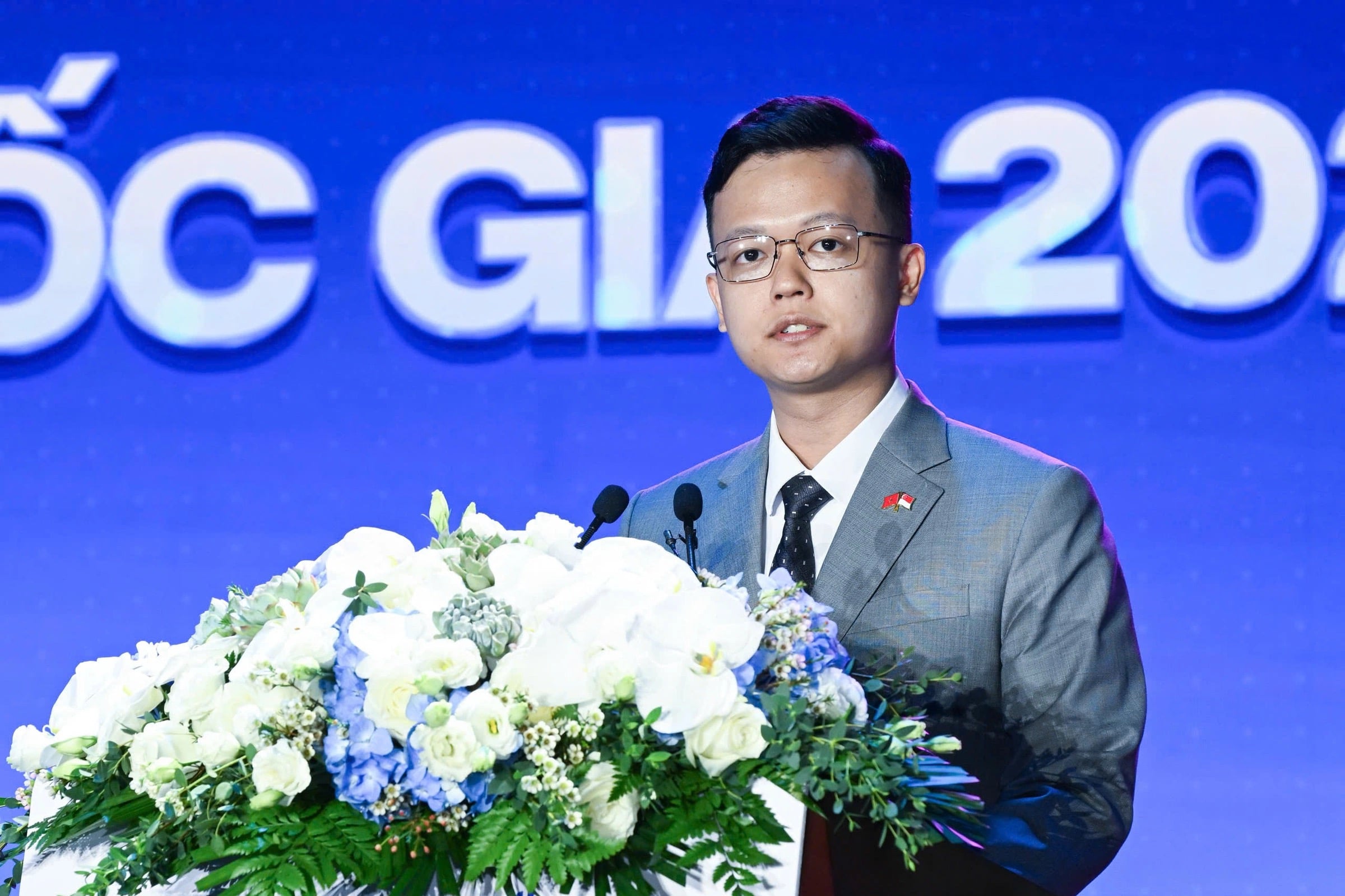
Mr. Edward Lim, Country Director of BLOCK71 Vietnam at NUSX, spoke at the event.
In addition, national programs for developing entrepreneurial capacity within the research community, such as National GRIP, have also been implemented.
Citing the case of the biotechnology startup Forte Biotech, Edward Lim said the company was founded by two former NUS students, one of whom is Vietnamese. Through the GRIP program, the team's research was developed based on licensed patents, received funding from NUS, and brought the solution to Vietnam to provide rapid testing and diagnosis solutions for aquatic diseases, especially shrimp diseases, directly in aquaculture ponds.
Between 2018 and 2023, corporate R&D spending in Singapore increased from S$5.5 billion to S$9 billion. According to Edward Lim, it is crucial to consider how much additional R&D resources and activity from the private sector can be mobilized by the government's investment.
Drawing from Singapore's experience, he offered three suggestions for Vietnam: promoting talent mobility so that international knowledge and experience can be applied domestically; building a seamless support system from idea generation and testing to customers and markets; and using public capital as a catalyst to reduce risks for startups in their early stages.
He cited programs like UniVentures and 84X as examples of how to connect founders and startups with the market and real-world business problems.
"For Vietnam to move further up the global value chain, part of the answer lies in whether 'the next step is prepared before the current step is completed'," Edward Lim emphasized.
Bringing Vietnamese chips from design to market.
Under the theme "Pioneering innovative startups stepping into the global market," Mr. Ta Hong Phuc, Deputy General Director of Hyphen Deux, shared the story of bringing Vietnamese chips from design to market-ready products.
According to him, from a business perspective, the innovation system needs to be viewed from a very specific point: technology must travel all the way to the product and the customer. For the semiconductor industry, this journey is much longer than a single announced technical milestone.
A year ago, at Innovate Vietnam 2025, Hyphen Deux announced that the HDx32U, a microcontroller chip designed by Vietnamese engineers, had completed its tape-out, marking a transition from design to manufacturing.
"However, for us, tape-out is just the beginning," said Mr. Ta Hong Phuc.
Next come the steps of manufacturing, packaging, testing, integration onto the board, real-world operation, and software refinement. More importantly, the product must be used by the customer.
According to him, when choosing new components, businesses need stability, supporting documentation and software, a long-term supply, and the ability to control risks.
Therefore, semiconductor capability should not be measured solely by the number of chips designed or the number of completed tape-out projects, but rather by the number of actual products using Vietnamese chips, the number of engineers mastering the process, and the number of customers who continue to place orders.
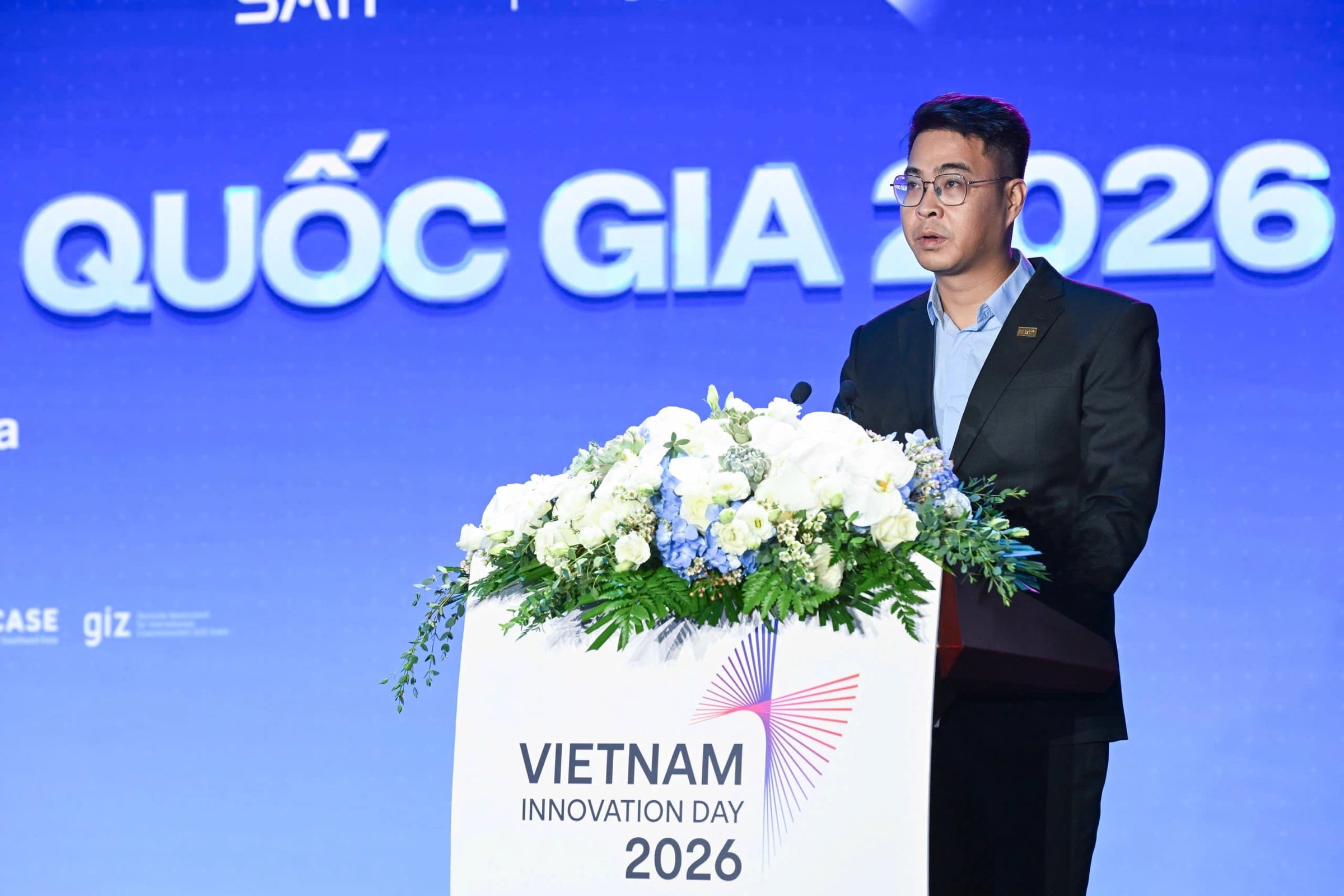
Mr. Ta Hong Phuc, Deputy General Director of Hyphen Deux, gave a speech at the event.
The HDx32U is a versatile, energy-efficient microcontroller chip aimed at IoT, automation, and industrial applications. Hyphen Deux aims to bring the chip to real-world devices, ensuring stable operation and proving its value to customers, rather than limiting itself to just one chip model.
To achieve this goal, businesses need design, manufacturing, packaging, and testing infrastructure; an experienced team; long-term resources; and, most importantly, customer participation in testing.
According to Mr. Ta Hong Phuc, support also needs to cover the entire journey, from infrastructure and expertise to manufacturing, testing, product trials, and market connection.
"If we only provide support up to the tape-out stage, we're only halfway there," he said.
According to him, innovation only truly drives development when technology creates products, productivity, jobs, and revenue. Success is not just about creating a chip, but about the chip being used, creating value, and continuously being improved.
This journey also requires a generation of young engineers who are not only highly skilled but also know how to start from real-world problems, create prototypes, listen to users, and turn technology into products.
Young people need opportunities to experiment and grow.
Concluding the series of inspiring speeches, Tran Van Luc, a former student of Computer Science at Hanoi University of Technology and the founder and director of Awake Drive, shared his journey of innovation in research institutes and universities, from idea to concrete product.
According to Tran Van Luc, Awake Drive was born in 2022 from a question: "How can we detect driver drowsiness early, before it's too late?"
Starting from a small research lab at Hanoi University of Science and Technology, the project chose a challenging path, combining brainwave technology and artificial intelligence to develop a wearable device capable of early detection of drowsiness.
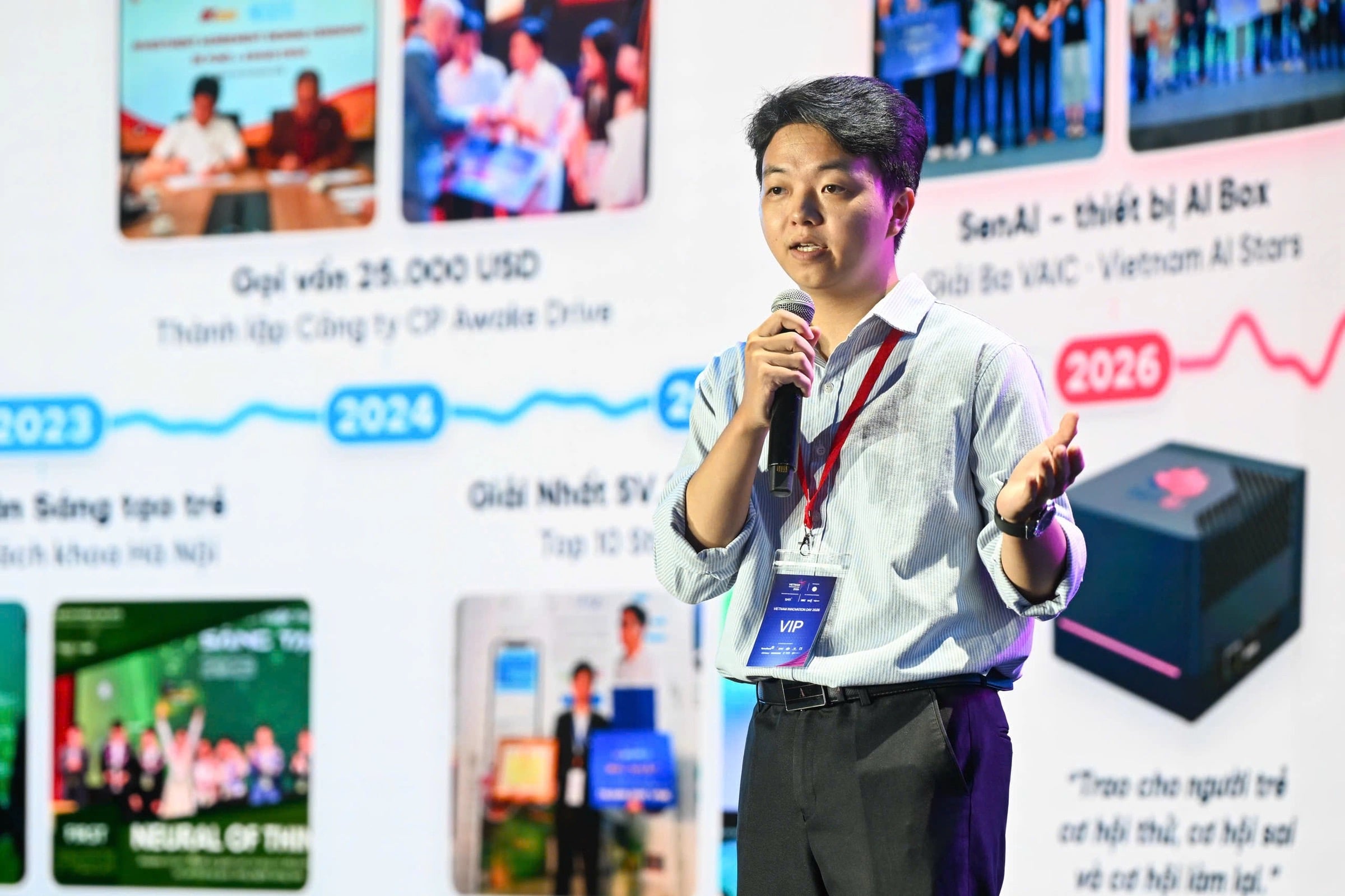
Tran Van Luc, a former student of Computer Science at Hanoi University of Science and Technology, gave a speech at the event.
With the guidance of teachers and the support of Hanoi University of Science and Technology, the project has gradually matured, winning awards in startup competitions, successfully raising capital, and establishing a business, with the hope of bringing technology products developed by young Vietnamese people to the market.
However, the reality of product development reveals many gaps. There are experiments that seem to have reached their goal but have to be started over; data that seems stable can change the results with just a small disturbance.
After numerous trials, the project identified three major gaps. First, the technical gap, as developing AI-powered hardware products is vastly different from simply sketching an idea on paper. Second, the market gap, as businesses require proof, validation, and trust. Third, the operational gap, where a young team must simultaneously conduct research and development, and handle accounting, tax, legal, and contractual issues.
In early 2026, Awake Drive decided to cease operations. According to Tran Van Luc, this decision closed a project but also brought important lessons: innovation requires not only a good idea but also the ability to see it through to the end.
Three lessons learned are: start with the user's real problem; quickly create a first version to learn from real-world experience; and seek partners from the outset instead of waiting for a perfect product.
According to Tran Van Luc, what young entrepreneurs and innovators need is not necessarily large investments or fully equipped labs, but rather opportunities to test their skills against real-world problems, present their solutions, and receive fair evaluation.
Problems from the government, ministries, departments, universities, and businesses need to be expanded to include younger generations. Young people need to be exposed to problems, listen, critique, experiment, and be allowed to make mistakes within reasonable limits.
"Only through trial and error can abilities be developed; only when opportunities arise can useful products be created," said Tran Van Luc.
Based on that reality, the young founder put forward three proposals: expanding access to shared testing spaces and testing infrastructure; creating opportunities for "first customers" from government agencies, universities, and businesses; and simplifying legal, accounting, and tax procedures in the early years so that young teams can have more resources to focus on product development and research.
According to Tran Van Luc, Vietnam does not lack capable young people. What is needed is an ecosystem that is ready to open its doors for them to participate in big projects, support them through difficult times, and create conditions for their growth.
It also forms the foundation for a new generation of entrepreneurs, based on intelligence, belief, and a spirit of innovation.
Source: https://mst.gov.vn/tu-y-tuong-den-san-pham-nhung-cau-chuyen-vuot-song-tai-ngay-hoi-doi-moi-sang-tao-quoc-gia-2026-19726100410561806.htm