
Ensuring closer coordination between lawmaking and law enforcement.
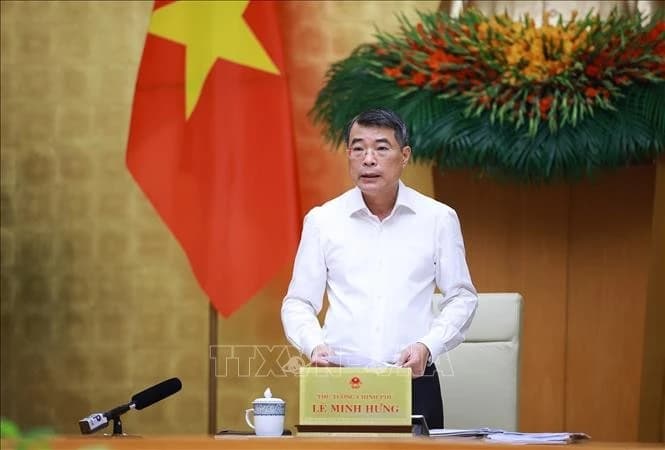
Presenting the draft Law at the session, Minister of Justice Hoang Thanh Tung stated that the draft Law was developed to further institutionalize the Party's guidelines and policies on reforming the work of drafting and implementing laws; to promptly address difficulties and obstacles arising from the practical process of drafting and promulgating legal documents; to enhance the effectiveness of the implementation of legal documents; and to ensure a closer connection between the law-making and law-implementation stages.
The draft Law comprises 10 chapters and 68 articles, regulating the drafting and promulgation of legal documents and the basic contents of their implementation. Specifically, the draft Law implements the principle of streamlining the system of legal documents, stipulating that each entity may only issue one form of legal document; it also identifies five groups of document forms; and the contents within the authority of these entities are implemented using appropriate document forms as stipulated in the draft Law, with transitional provisions to ensure there are no legal gaps.
The draft law also innovates the process of drafting laws and ordinances by further clearly defining the policy-making process and the drafting process, while ensuring continuity and the inheritance of results between stages. The draft does not stipulate a policy review step and replaces it with a mechanism for soliciting opinions and mandatory participation from several ministries and ministerial-level agencies within their respective sectors and fields, similar to the review process.
To simplify and streamline documentation, the draft Law stipulates that policy documents and drafting documents are regulated in a way that allows for the inheritance of materials between stages, focusing on the assessment of policy impacts. Impact assessment reports must be updated when policies change to serve as a basis for drafting, appraisal, verification, and consideration for promulgation.
In addition, the draft Law stipulates the improvement of the process of reviewing, considering, approving, and promulgating laws and ordinances, including provisions for reviewing and approving draft laws at one or more sessions to address important draft laws with broad scope; and improving regulations on how the submitting agency studies and incorporates review opinions and opinions of the Standing Committee of the National Assembly to submit draft laws to the National Assembly in a proactive manner, promoting the responsibility of the submitting agency.
Ensuring that the law both fosters development and effectively manages people's lives.
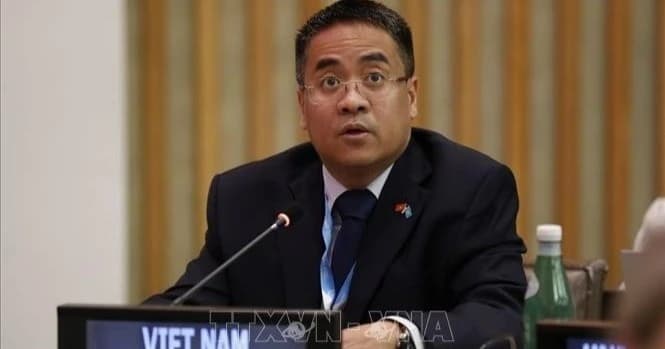
Presenting the preliminary review report, Chairman of the National Assembly's Committee on Law and Justice Phan Chi Hieu stated that the Standing Committee of the Committee on Law and Justice and other National Assembly agencies agreed on the necessity of comprehensively amending the Law. The draft Law's content is fundamentally consistent with the Party's guidelines and policies; ensuring constitutionality, legality, the uniformity of the legal system, and compatibility with relevant international treaties. The majority of opinions within the review body agreed that the draft Law should retain the same scope of application as the current Law and concurred with the name "Law on Legal Normative Documents" to ensure brevity and generality.
During the session, the Standing Committee of the National Assembly highly appreciated the Government and the Ministry of Justice for their prompt, proactive, and diligent research and preparation of the draft Law, ensuring its quality and compliance with regulations. The draft Law is ready to be submitted to the National Assembly for consideration and approval at the next session. The Standing Committee of the National Assembly agreed with the scope and title of the Law as proposed by the Government, and concurred with many basic contents of the draft Law.
To further refine the draft Law to be submitted to the National Assembly, the Standing Committee of the National Assembly requests the Government and the Ministry of Justice to incorporate the opinions of the Standing Committee of the National Assembly and the delegates attending the meeting, ensuring that the law meets the requirements of both fostering development and effectively managing the economic, cultural, and social life of the country. At the same time, emphasis should be placed on digital transformation and building databases in the drafting, promulgation, monitoring, systematization, review of laws, and in the organization of law enforcement.
Regarding specific issues, the Standing Committee of the National Assembly agreed to abolish the forms of legal normative documents such as Resolutions of the National Assembly, Resolutions of the Standing Committee of the National Assembly, Resolutions of the Government, Decisions of the President, and Joint Resolutions in order to institutionalize the requirements of Conclusion No. 09-KL/TW of the Politburo on simplifying the legal system, in the direction that each competent entity only issues one form of legal normative document. However, the Standing Committee of the National Assembly also proposed studying the provision in the Law that the content of these abolished documents would still be legally binding documents and, when necessary, could be used to amend legal normative documents.
Regarding the National Assembly's annual legislative program, the Standing Committee of the National Assembly proposes continuing to study and refine the process of drafting, approving, and adjusting the program in a way that connects with and builds upon the results of the legislative orientation for the term, while retaining the process of policy appraisal and impact assessment for necessary laws.
Source: https://baophapluat.vn/tinh-gon-he-thong-van-ban-gan-xay-dung-voi-to-chuc-thi-hanh-phap-luat.html