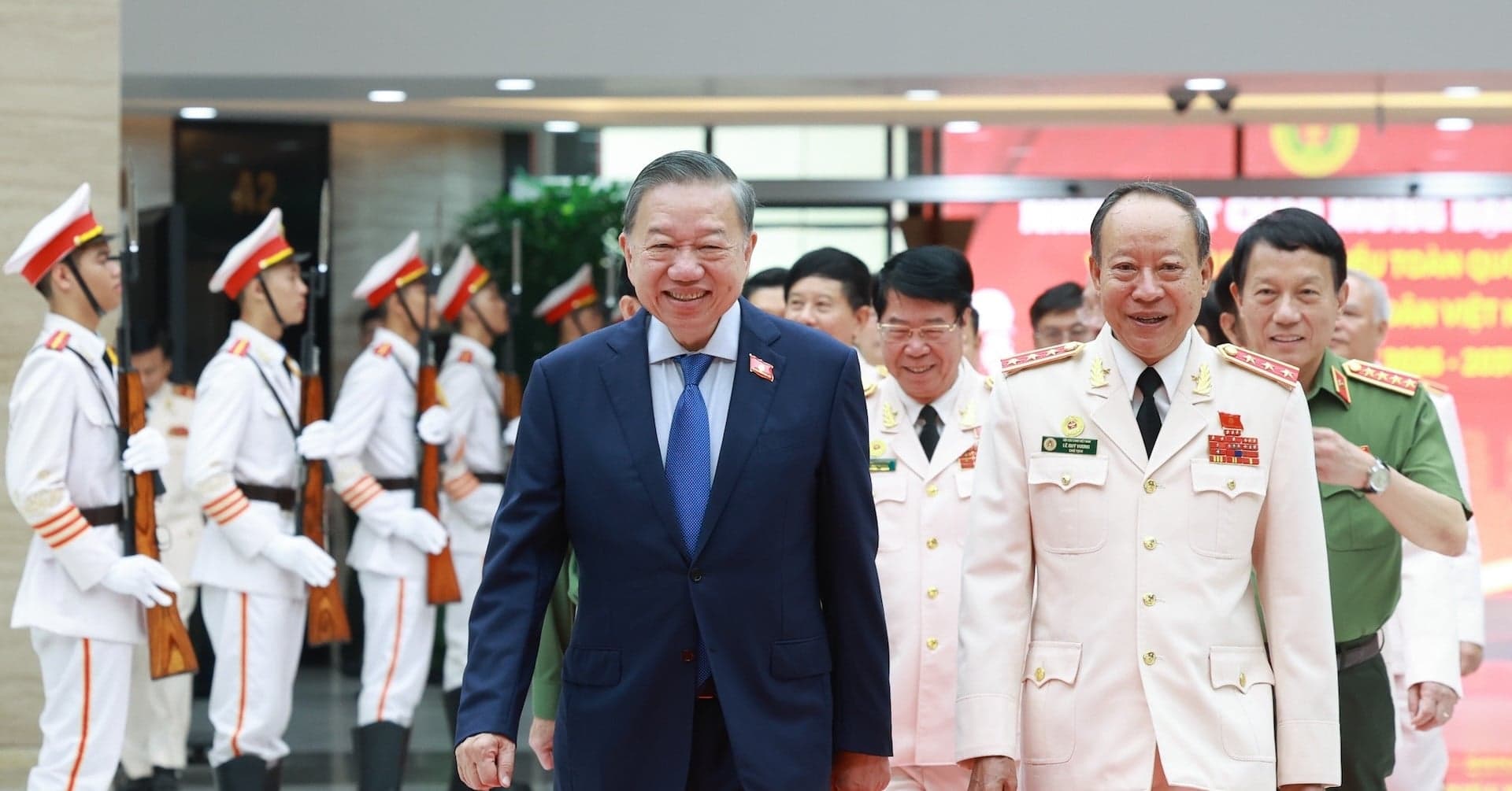


Prime Minister Le Minh Hung presides over the regular Government meeting in September 2026 and the online Government conference with localities. (Photo: Duong Giang/VNA)
On the morning of October 3rd, Prime Minister Le Minh Hung chaired the regular Government meeting for September 2026 and the online Government-locality conference, held in person at the Government headquarters, connecting online with ministries, agencies, and 34 provinces and cities nationwide.
At the meeting, delegates focused on discussing the following topics: the socio-economic situation in September and the third quarter of 2026; the allocation and disbursement of public investment capital; the implementation of national target programs; the direction and management of the Government and the Prime Minister; and key tasks that need to be focused on in the coming period.
The economy achieved many positive results in the first nine months, with GDP in the third quarter increasing by 9.95%.
According to reports and opinions expressed at the meeting, in implementing the policies of the Central Committee, the Politburo , the Secretariat, and the directives of the General Secretary, the President, the Government, and the Prime Minister, all levels, sectors, and localities have been directed to implement synchronously, with a focus on key tasks and solutions in various fields with high determination, great effort, and decisive action, achieving important and fairly comprehensive results, with many outstanding achievements.
GDP growth in the third quarter reached 9.95%, and 9.01% for the first nine months, the highest since 2011. The industrial production index (IIP) for the first nine months increased by 12.1-12.2%, the highest in many years; services showed positive growth; agricultural, forestry, and fisheries production remained basically stable; exports and imports for the first nine months reached US$888 billion, an increase of 30.4%, with a trade surplus of US$1.27 billion in September after several months of deficits; the number of international tourists attracted in the first nine months reached approximately 17.7 million, an increase of 14.5%; registered FDI capital for the first nine months is estimated at nearly US$50.4 billion, an increase of 76.4%, and implemented capital is estimated at over US$21 billion, an increase of 12.1%. The number of businesses entering and re-entering the market in the first nine months reached nearly 224,000, higher than the number of businesses withdrawing from the market (172,000). Public investment disbursement in the first nine months reached nearly 643 trillion VND, equivalent to 63% of the plan, higher than the same period in 2025 by over 202 trillion VND and 12.9%; private investment in the third quarter reached 671 trillion VND, an increase of nearly 15%; total social investment in the third quarter reached 1.3 million trillion VND, an increase of 16.7% compared to the same period.
The macroeconomic fundamentals are stable, inflation is under control, and major balances are ensured; monetary policy, fiscal policy, and other macroeconomic policies are proactively and effectively managed in a coordinated manner; the average consumer price index (CPI) for the first nine months increased by 4.52%, within the target set by the National Assembly . Energy and food security are maintained; the supply of petroleum products is ensured, and prices remain low compared to the region; hydropower exploitation is regulated and increased... to ensure supply and prevent electricity price increases.
State budget revenue for the first nine months reached 2.19 trillion VND, nearly 90% of the projected target, an increase of 12.1% compared to the same period last year, while tax and fee exemptions, reductions, and extensions amounted to approximately 250 trillion VND; the capital market continued to be boosted, and the stock market was upgraded.

Prime Minister Le Minh Hung presides over the regular Government meeting in September 2026 and the online Government conference with localities. (Photo: Duong Giang/VNA)
The government continues to focus on improving institutions and laws, coupled with innovation in thinking and methods of lawmaking and implementation; the focus is on removing bottlenecks, unlocking all resources, and creating a development-oriented institutional framework to create a competitive advantage for double-digit growth; concentrating on investing in the development of a synchronous and modern strategic infrastructure, promoting regional linkages, and exploiting new development spaces…
Science and technology, innovation, and digital transformation have made new strides, linked to the requirements of reforming the development model in the spirit of Resolution 57-NQ/TW; focusing on implementing the "100-day intensive campaign" to address bottlenecks in digital transformation. Project 06 has been implemented vigorously; promoting the development of data infrastructure; the National Digital Architecture Framework has been issued, linked to accelerating the completion of the connection of national and specialized data systems; the National Data Center has been put into operation on the National Single Window Portal... A list of strategic technologies and strategic technology products has been issued and promoted; a special national program on strategic technologies, digital economy development, digital society, and national data has been approved and focused on implementation.
Cultural, social, and social welfare sectors have received attention and achieved many outstanding results, ensuring high economic growth serves the interests of the people, improves their material and spiritual lives, and guarantees social justice; the 500-day campaign to vigorously search for, collect, and identify the remains of martyrs has been launched and implemented; policies for war invalids, martyrs, meritorious individuals, and their families have been effectively implemented; the development of social housing and rental housing has been focused on and achieved positive results; the quality of education and training has been improved; a high-quality human resource training program for priority sectors has been developed and implemented; a unified set of textbooks will be used from the 2026-2027 school year; the construction, completion, and commissioning of 107 multi-level boarding schools in border communes has been vigorously pursued, with the first phase of construction underway; and the policy of tuition fee exemption and reduction continues to be implemented. The work of protecting, caring for, and improving people's health has initially shifted from focusing on medical examination and treatment to proactively preventing disease...
National defense and security have been strengthened, firmly protecting independence, sovereignty, unity, and territorial integrity; high-level diplomacy has been proactively and continuously implemented, contributing to consolidating, expanding, and deepening relations with major countries and important partners in a substantive manner.

The Deputy Prime Minister and members of the Government attended the regular Government meeting in September 2026 and the online Government conference with localities. (Photo: Duong Giang/VNA)
In his concluding remarks, Prime Minister Le Minh Hung emphasized that 2026, the first year of implementing the Resolution of the 14th National Congress of the Party, is of great importance, creating a foundation, momentum, and strength for a new development phase. Despite numerous difficulties and challenges in the world and domestically, with the efforts and determination of the entire political system, we have achieved many very positive and comprehensive results.
Affirming that we have mobilized all resources for growth, the Prime Minister said that the Government and the Prime Minister highly appreciate the efforts of localities, especially those with outstanding growth in the third quarter, contributing to the growth of the first nine months and the overall growth of the country; many localities are expected to achieve higher growth than the set targets; some localities, although not yet achieving the scenario, have made great efforts.
According to the Prime Minister, these results are an important foundation for creating strong transformations, accelerating breakthroughs, achieving rapid and sustainable development, and successfully implementing the tasks, solutions, and goals of the Resolution of the 14th National Congress of the Party.
Besides the fundamental achievements, the Prime Minister pointed out that there are still some difficulties and challenges, including increasing pressure on macroeconomic management; high growth but not yet reaching the set target; and very high inflationary pressure. Some localities and growth poles have not achieved the expected growth, traditional growth drivers have not been strongly promoted; interest rates remain relatively high; businesses, especially small and medium-sized enterprises, still have difficulty accessing capital and credit; some stalled projects have not been resolved; the operation of local government at the two levels is not uniform in some aspects, especially at the grassroots level; science, technology, innovation, digital transformation, especially strategic technologies, have not yet met the requirements…
Resolutely remove bottlenecks and unleash growth drivers.
Directing the main tasks and solutions from now until the end of the year, the Prime Minister stated that the remaining months of 2026 are crucial for achieving the socio-economic development goals for 2026; he requested that Ministers, heads of agencies, Secretaries, Standing Committees, and Chairmen of People's Committees of localities continue to closely monitor and implement action programs and plans more effectively and decisively to complete the 2026 goals, creating momentum for a breakthrough in 2027 with a spirit of acceleration, decisive action, and clear transformation.
The Prime Minister stated that in order to achieve double-digit growth, GDP growth in the fourth quarter must be above 12.5%, and this is a huge pressure and a very heavy task requiring the utmost determination and effort from ministries, sectors, and localities.
Regarding common tasks with ministries, sectors, and localities, the Prime Minister requested continued improvement of institutions and laws, ensuring the highest quality of draft laws submitted to the National Assembly, and the timely and complete issuance of detailed regulations; striving to disburse 100% of the public investment plan, completing key projects according to the 2026 schedule, and resolving long-standing backlogs. Localities should actively participate in providing feedback on the draft Government Decree, proposing groups of tasks and solutions for the development of special economic zones as stipulated in the Law on Urban Development.
The head of government emphasized focusing on strongly developing the domestic market, stimulating demand, effectively exploiting the year-end consumption and tourism season while controlling and stabilizing prices, boosting exports, reducing the trade deficit; promoting new growth drivers; promoting private investment and attracting foreign investment; and requiring corporations and general companies to complete their investment, production, and business plans.

Prime Minister Le Minh Hung presides over the regular Government meeting in September 2026 and the online Government conference with localities. (Photo: Duong Giang/VNA)
The Prime Minister emphasized the need for strict price control and a determination to maintain the inflation target for 2026 approved by the National Assembly. This includes ensuring the supply of essential goods such as gasoline, electricity, food, construction materials, and medicine; strengthening inspections and strictly punishing hoarding, speculation, and smuggling; not increasing electricity prices; and continuing to study appropriate solutions for regulating the prices of state-managed goods such as electricity and gasoline.
On the other hand, according to the Prime Minister, it is necessary to promote the development of science and technology, innovation, digital transformation, and the efficient disbursement of allocated capital; complete the "100-day intensive campaign" to address bottlenecks in digital transformation; implement tasks to develop strategic technology products linked to the strengths of industries and localities; focus on developing culture and society, improving people's lives; develop social housing and rental housing; vigorously implement the 500-day campaign to intensify the search, collection, and identification of the remains of martyrs; implement key tasks in education, health, and social security; strengthen national defense, security, social order and safety, and cybersecurity.
For the People's Committees of provinces and cities, the Prime Minister directed them to closely monitor the situation in their localities; urgently review and update the growth scenario after 9 months, specifically assess each industry, sector, and indicator; clearly identify the shortfall compared to the set scenario; and on that basis, develop appropriate tasks and solutions in the fourth quarter, striving to achieve the highest possible growth target for 2026.
On the other hand, it is necessary to fully review and identify the driving forces and potential areas that can still be exploited, especially in sectors, fields, and projects with the potential to create added value; to review and clearly identify bottlenecks, difficulties, and obstacles hindering growth, especially in investment, land, land clearance, project implementation procedures, etc., focusing on resolving them decisively and promptly reporting issues beyond the authority of the relevant agencies.
Localities that are growth poles with large economic scales, such as Ho Chi Minh City, Hanoi, Hai Phong, Quang Ninh, Dong Nai, Bac Ninh, etc., must strive harder, more vigorously exploit growth potential with immediate solutions, and play a leading and influential role, contributing more to national growth.
For localities where growth is still below the set target, especially those projected to fall below the annual target, it is necessary to carefully assess the growth potential, immediately implement strong, decisive, specific, and effective solutions, and strive to achieve the target at the highest possible level.
Regarding ministries and agencies, the Prime Minister requested the Ministry of Finance to continue closely monitoring domestic and international situations, regularly tracking, analyzing, evaluating, and updating growth scenarios; promptly advising the Government and the Prime Minister on handling difficulties and obstacles, especially those affecting growth; proposing appropriate, effective, and feasible tasks and solutions to promote production and business, and effectively mobilize and utilize resources for development; urgently submitting to the Government for immediate promulgation a Decree reducing income tax by 30% for businesses and business households with revenue not exceeding 10 billion VND/year; and focusing on researching and simplifying tax management processes and procedures related to public investment.
In addition, the committee will preside over a comprehensive assessment of the operations of businesses, promptly address difficulties and obstacles, and strengthen business confidence, paying particular attention to the contents that need to be institutionalized in the Law on Small and Medium-Sized Enterprise Development to be submitted to the National Assembly at the 2nd Session.
Regarding the State Bank of Vietnam, the Prime Minister requested that it focus on managing monetary policy, ensuring liquidity for the economy; implementing solutions to stabilize interest rates and the foreign exchange market; closely monitoring monthly developments in the international balance of payments, proactively forecasting, updating, and developing scenarios for appropriate and timely management; strengthening inspection, supervision, and control of the operations of credit institutions to ensure timely management solutions and prevent violations; and proactively proposing solutions to create credit sources and interest rate mechanisms for social housing, rental housing, large-scale and key projects, and priority sectors…
Meanwhile, the Ministry of Industry and Trade is preparing plans to implement the reciprocal trade agreement as soon as it is signed; focusing on implementing solutions to promote exports, control the trade deficit, and develop balanced and sustainable trade; supporting businesses in responding to international trade fluctuations; leveraging new-generation FTAs; boosting trade promotion, diversifying export markets, and stimulating domestic demand. It is also working with businesses to ensure sufficient supply of petroleum products and electricity; promptly submitting and implementing the revised Power Development Plan VIII; restructuring EVN; urgently finalizing and submitting the Decree on petroleum business; and increasing coal and oil and gas exploitation.
The Ministry of Construction ensures the progress of key transportation projects; coordinates with the Ministry of Industry and Trade to manage the supply of construction materials for important national projects; accelerates the implementation of social housing and rental housing projects; and carefully prepares the draft Law on Real Estate Business, the Law on Housing, and guiding documents for their implementation.
The Ministry of Agriculture and Environment continues to implement solutions to improve the quality of agricultural products, meeting the requirements of plant quarantine, food safety, and traceability of import markets; addressing the need to remove the IUU yellow card; accelerating the issuance of planting area and packaging facility codes, reducing compliance time and costs for people and businesses; and effectively promoting the role of the standing agency of the consolidated national target program…
The Prime Minister instructed the Ministry of Justice to closely coordinate with ministries, government agencies, and National Assembly agencies to finalize draft laws and resolutions to be submitted to the National Assembly. Focus should be placed on appraising implementing guidelines for laws after their adoption, ensuring both timeliness and quality.
The Ministry of Science and Technology is responsible for guiding the implementation of the National Digital Master Architecture Framework and the Digital Architecture Frameworks of agencies and organizations; reviewing and removing bottlenecks in the commercialization of research results; proposing improvements to regulations on science and technology exchange platforms; and coordinating with the Ministry of Finance to remove financial bottlenecks and disburse funds for science and technology, innovation, and digital transformation.
The Ministry of Education and Training will take the lead in finalizing the curriculum and establishing a specific roadmap for completing a new set of textbooks for nationwide use, with free textbooks starting from the 2028-2029 school year; innovating the compilation, publication, distribution, and supply of textbooks; coordinating with ministries, sectors, and localities to complete, ensure the smooth operation, and continue building multi-level boarding schools in disadvantaged communes; coordinating with localities to ensure sufficient teaching staff and reviewing planning, allocating budget and land for the construction of new schools, ensuring enough schools and classrooms; focusing on a comprehensive review of the curriculum, teaching content, and assessment, researching adjustments to reduce learning and examination pressure, and finalizing the enrollment plan.
The Ministry of Health is proactively coordinating with relevant agencies and agencies of the National Assembly to revise and finalize the draft Law amending and supplementing a number of laws in the field of health; continuing to implement the roadmap to strive for the end of 2026, ensuring that all citizens receive free periodic health check-ups or screenings and have electronic health records; coordinating with ministries and agencies to implement the construction of medical centers and combined military-civilian medical stations in land border communes and strengthening the quality of grassroots healthcare.
The Prime Minister requested the Ministry of Culture, Sports and Tourism to focus on developing, reviewing, and finalizing the Vietnam Tourism Development Strategy, and submit it to the Prime Minister; to promote tourism targeting specific markets, effectively exploiting nearby, large-scale markets; and to actively implement measures to stimulate domestic tourism, making practical and effective use of the year-end tourism season and the National Unity Culture Week.
The Ministry of Interior is reviewing and refining regulations on organizational structure at the grassroots level; coordinating with ministries, agencies, and localities to finalize proposals for the staffing of the political system to be submitted to competent authorities, as well as mechanisms for salaries, allowances, decentralization, and delegation of power; finalizing the Decree detailing the Ordinance on Preferential Treatment for People with Meritorious Contributions to the Revolution; proposing solutions for the effective implementation of the National Job Exchange while improving labor databases.
Regarding the Ministry of National Defence, the Ministry of Public Security, and the Ministry of Foreign Affairs, the Prime Minister requested them to continue monitoring and closely following the situation, proactively advising on key tasks; strengthening national defence, ensuring national security, and maintaining social order and safety; promoting the integration of defence and security with economic development; building a self-reliant, independent, dual-use, and modern defence and security industry; and promoting foreign relations and international integration. The Ministry of Public Security is tasked with leading the development and updating of the National Data Architecture Framework and the National Data Governance and Management Framework; effectively leveraging its role as the Standing Agency of the Central Steering Committee to monitor and supervise the implementation of tasks related to the development of science and technology, innovation, and digital transformation.
The Prime Minister emphasized that ministers and heads of agencies need to proactively and thoroughly prepare the content for the 4th Central Committee Meeting and the 2nd Session of the 16th National Assembly; and at the same time, be more proactive and strengthen coordination with media agencies in policy communication./.
Hoai Nam
(VNA/Vietnam+)
Vietnamplus.vn
Source: https://www.vietnamplus.vn/thu-tuong-le-minh-hung-khai-thac-manh-me-hon-cac-du-dia-tang-truong-post1139846.vnp