
 |
Taking place from September 29th to October 1st in Barcelona, the 44th LIBER conference was held against the backdrop of continued growth in the Spanish publishing industry. According to the latest figures from the Federation of Spanish Publishers Associations (FGEE), domestic book market revenue in 2025 reached €3.138 billion, a 3.3% increase compared to the previous year and marking the 12th consecutive year of market growth. In the same year, the publishing industry released 89,107 titles, including 61,831 print titles and 27,276 digital titles.
But what's noteworthy about LIBER 2026 isn't its domestic market size. This book fair is increasingly being organized as an international business infrastructure for the Spanish-language publishing industry.
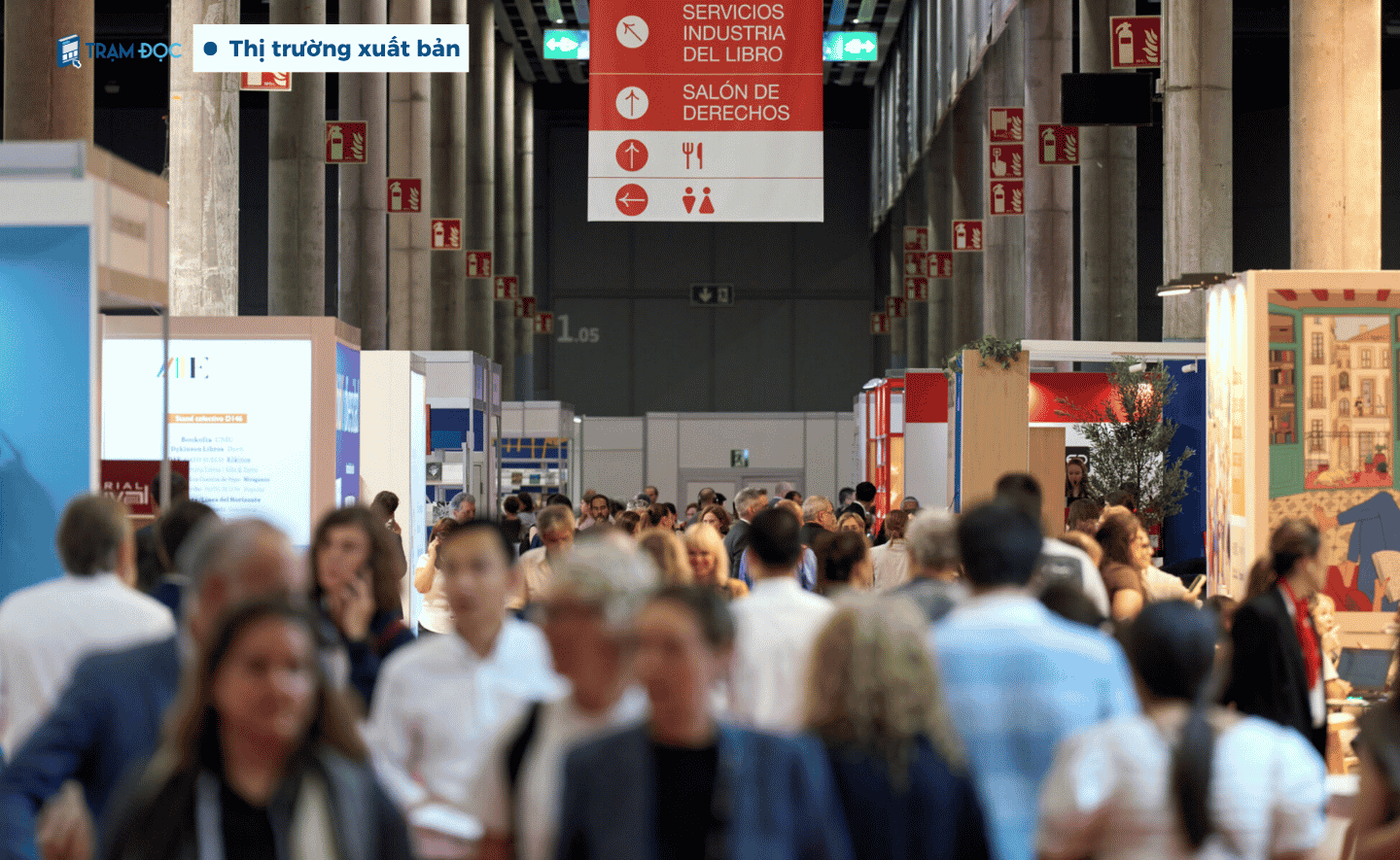
Nearly 250 exhibitors from 19 countries participated in LIBER this year, while 9,100 industry visitors came to Barcelona seeking partners, content, and business opportunities. More notably, the book fair's internationalization programs generated over 5,300 professional meetings, focusing on business networking and licensing deals.
This represents a significant shift in the way book fairs are viewed. An international book fair is no longer just a place where publishers showcase new books. For the Spanish publishing industry, it's also where a book is transformed into an asset that can cross borders: translation rights, publishing rights, audio rights, adaptations, and new distribution agreements.
The biggest advantage of Spanish books
Spain has an advantage that not all European publishing markets possess: Spanish is spoken by approximately 600 million people worldwide . This is a crucial foundation that allows books published in Spain to have a vast language market extending beyond national borders.
But there's a key distinction: having the same language doesn't mean having the same market.
Mexico, Argentina, Colombia, and Chile each have their own publishing systems, reading habits, bookstore networks, and pricing structures. Therefore, the advantage of Spanish only truly becomes a business advantage when publishers have the capacity to bring books to each market.
Spain has established a relatively clear system for this. In 2024, the total export revenue of the book industry reached approximately 381 million euros, an increase of 1.16% compared to the previous year. Exports from the publishing industry alone reached 361.31 million euros. Iberoamerica was the largest region, with 191.43 million euros, followed by the European Union with 130.65 million euros. These two regions accounted for more than 84% of Spain's total book export value.
Mexico is Spain's largest book export market, with €63.60 million in 2024, followed by France with €62.37 million and Argentina with €31.54 million.
These figures show that the internationalization of Spanish publishing is not just a slogan created around LIBER. It has become a real part of the business.
From selling books to selling copyrights.
One of the most notable changes lies in how publishers approach the international market.
Instead of simply exporting books printed in Spain, publishers can sell the publishing rights to a publisher in another country. The local publisher would then be responsible for printing, distributing, and marketing the book to its readers.
This is an important model because it allows a work to generate multiple revenue streams from the same content: an English copyright, a French copyright, a Vietnamese copyright, a screen adaptation copyright… instead of just selling a limited number of physical books from the domestic market.
LIBER is therefore being increasingly designed as a rights marketplace. In 2025, the book fair incorporated the Salón de Derechos - Rights Centre, bringing together over 60 publishers and literary agents from 24 countries. In 2026, the internationalization program continued to expand with hundreds of international buyers, distributors, bookstores, literary agents, and publishers.
Notably, data cited by Publishing Perspectives from FGEE shows that revenue from the sale of publishing rights by Spanish publishers increased from approximately €66 million in 2014 to over €72.5 million in 2024. However, this increase also indicates significant room for growth: at the London Book Fair 2026, FGEE representatives acknowledged that Spanish publishing rights sales remained almost stagnant between 2009 and 2024.
In other words, Spain has a large book market, a linguistic advantage, and an international network, but translating those advantages into royalty revenue remains an ongoing challenge.
Don't rely solely on one book fair.
Another noteworthy point is that LIBER doesn't operate alone. Spanish publishers have a strong presence at other important international book fairs.
At the Bologna Children's Book Fair 2026, nearly 100 Spanish businesses, organizations, and publishing houses participated, with 31 units concentrated at the FGEE booth. Spanish exports of children's and young adult books alone reached €24.56 million in 2024, a 2.21% increase compared to the previous year.
At the Feria Internacional del Libro de Buenos Aires, nearly 60 Spanish publishers and publishing brands participated in 2026. Meanwhile, at Guadalajara, one of the most important book fairs in Latin America, 227 Spanish publishing brands have participated with the goal of expanding the presence of Spanish books in the Americas.
From a market perspective, this is a noteworthy strategy: instead of waiting for international readers to find them, publishers, authors, and book catalogs proactively bring their publications to places where publishing rights are bought and sold.
An ecosystem, not just a single publishing industry.
What makes the Spanish story all the more noteworthy is that its publication is being placed within a broader cultural ecosystem.
Barcelona is not just the location of LIBER. The city also boasts networks of independent publishers, book fairs, literary agencies, and international translation services. For example, LiteralPRO in Barcelona has built a model connecting Spanish and international independent publishers through B2B meetings, with support from the Spanish Ministry of Culture, the city of Barcelona, and the Catalan government.
At the corporate level, Spanish publishers are also looking to expand by building multiple publishing brands, acquiring smaller publishers, and expanding their book portfolios to more markets. Grupo Editorial Sargantana, for example, currently has nine publishing brands, around 800 active titles, sells Spanish-language books in 32 countries, and has sold rights to 15 countries.
This shows that internationalization isn't just a story for big corporations. It can start with a small publisher, an agency, a specialized book catalog, or an author with the ability to transcend language barriers.
The bigger lesson from the Spanish market
Looking solely at LIBER 2026, we might simply see it as an international book fair with 9,100 attendees. But when we compare it to figures on revenue, exports, copyrights, and the presence of Spanish publishers in Bologna, Buenos Aires, or Guadalajara, a different picture emerges.
Spain is trying to turn its cultural advantages into international business capabilities.
Books here are not just considered products sold to domestic readers. A book can be exported in printed form; its rights sold to another publisher; translated into a new language; brought to the Latin American market; or become the raw material for another cultural product.
However, the figures also show that this is not yet a complete success story. Book exports have reached hundreds of millions of euros, but growth remains modest; royalty revenue has increased for a decade but has remained almost stagnant in some periods. Spain's next challenge, therefore, is not simply "how to sell more books," but rather "how to get the stories, authors, and ideas originating from the Spanish market to reach further?"
That's also why LIBER is increasingly resembling a publishing rights market rather than a book fair in the traditional sense. And if this trend continues, the strength of a publishing industry in the future will likely be measured not only by the number of books sold domestically, but also by how many works can reach the world and how much value can be created from them after crossing borders.
Source: https://znews.vn/tay-ban-nha-dang-bien-sach-thanh-mot-nganh-xuat-khau-nhu-the-nao-post1687502.html