
People are carrying grass home after a lawn mowing trip.
The market only sells one type of product.
O Lam is an area with a large Khmer population, many families maintaining the profession of raising buffalo and cattle. As the area of natural grasslands shrinks and the demand for livestock feed increases, some people have started using boats to go to neighboring areas to cut grass to bring back and sell.
From that need, grass trading points along the Ninh Phuoc canal gradually formed and have been maintained for many decades.
Every day, the market is usually bustling between 10 and 11 a.m. and from 3 p.m. On the canal, boats and canoes loaded with grass dock one after another. On the shore, buyers transport the grass home using motorbikes, tricycles, ox carts, or horse-drawn carts.
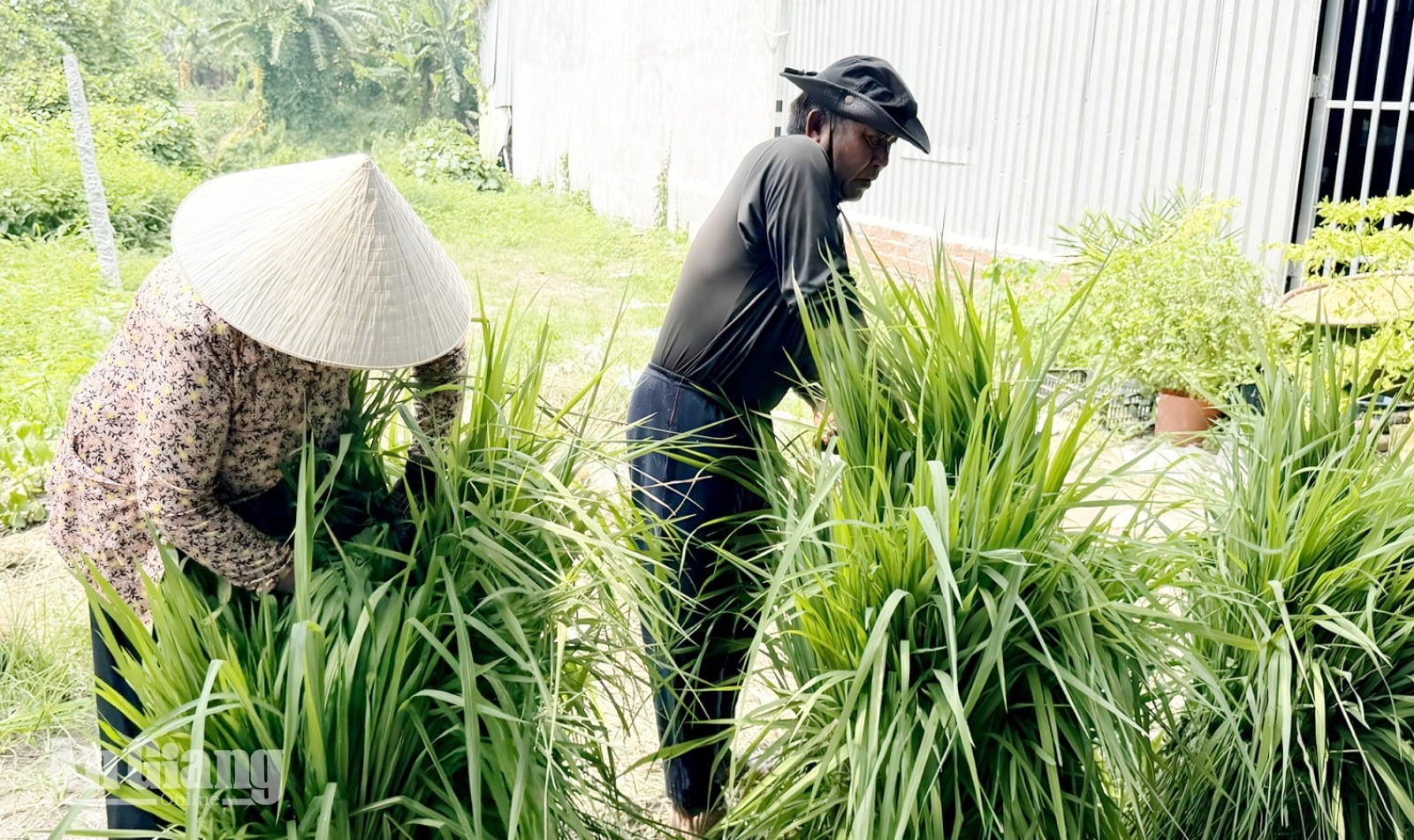
Without fixed stalls, bundles of fresh grass are stacked right on the canal bank. The price ranges from 3,000 to 5,000 VND per bundle, depending on the type and size. The transaction is quick and easy, with little bargaining. Sellers bring the grass ashore, cattle farmers select the quantity they need, and then transport it home. Conversations in Khmer create a unique atmosphere at this market in the Khmer community.
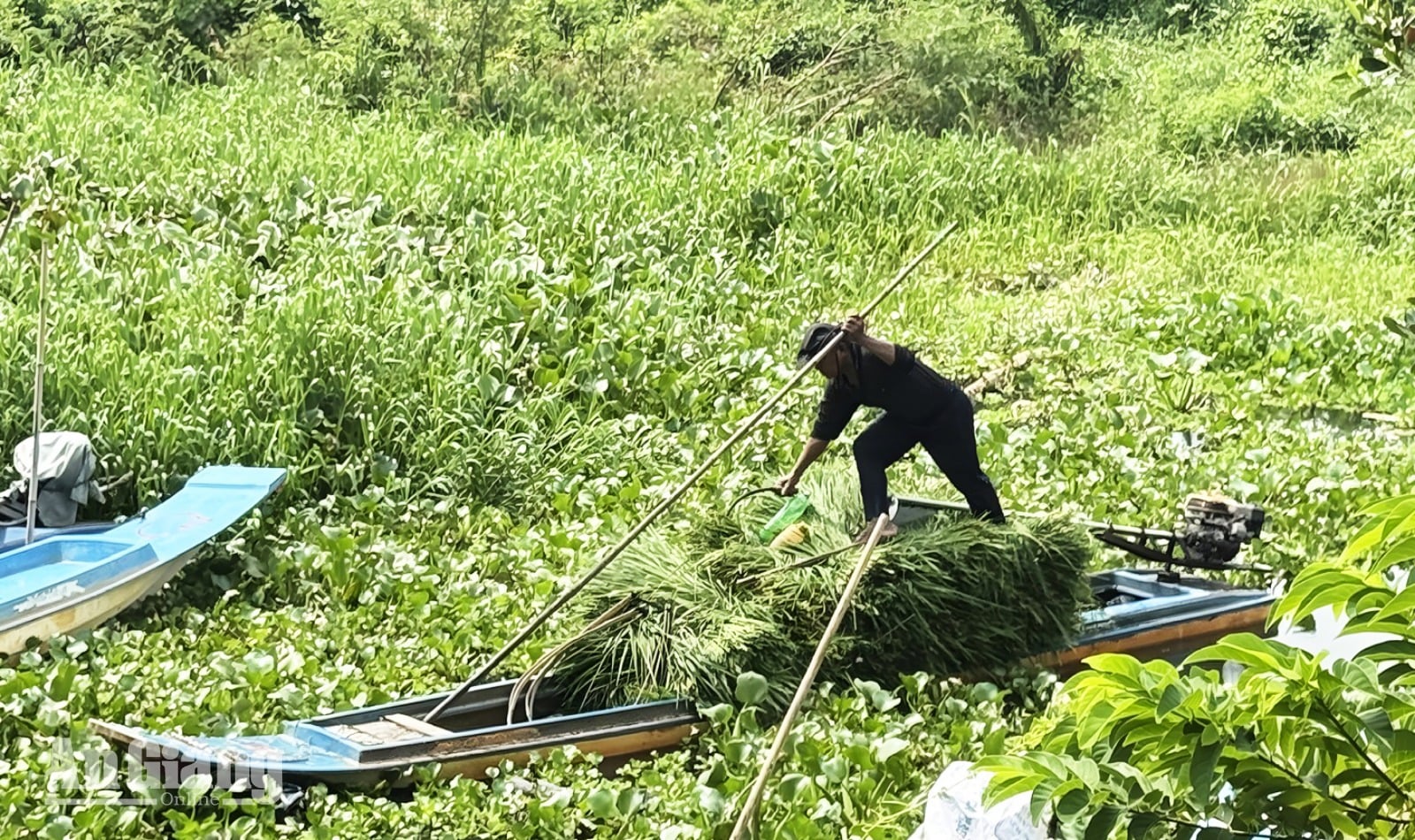
To get fresh bundles of grass to the market, many people have to start work before dawn. Around 4 a.m., they prepare their packed lunches, knives, and sickles, then paddle their boats or motorboats to distant fields to find grass. Some trips require traveling dozens of kilometers to gather enough grass to sell.
To obtain fresh grass, people usually leave home early in the morning.
Mr. Chau Rem has been working as a grass cutter for over 24 years. Each day, he cuts about 60-70 bundles of grass, earning approximately 300,000 VND.
“Every day I cut about 60-70 bundles of grass. The money I earn is enough to cover my living expenses. Thanks to this job, I was able to raise my two children and send them to school,” Mr. Chau Rem shared.
The work is highly dependent on the seasons and weather. During the dry season, grass is scarcer, and grass cutters have to travel further, sometimes carrying the grass under the sun. During the flood season, boats can get closer to the fields, but the workers have to immerse themselves in the water for hours to cut and gather the grass.
After being cut, the grass is bundled together right in the field and then transferred to boats and canoes. Upon returning to the market, each bundle is brought ashore to await buyers. This process repeats from early morning until midday, and then continues into the afternoon.
Livelihoods along the canal
The O Lam grass market is not large in scale, nor is it organized like a typical market. But over the years, it has become a familiar meeting point between grass cutters and cattle breeders in the area.
For livestock farmers, the market helps them secure a reliable food source when they don't have the means to travel far to cut grass. For those working in the fields, the bundles of grass they collect become a source of daily income.
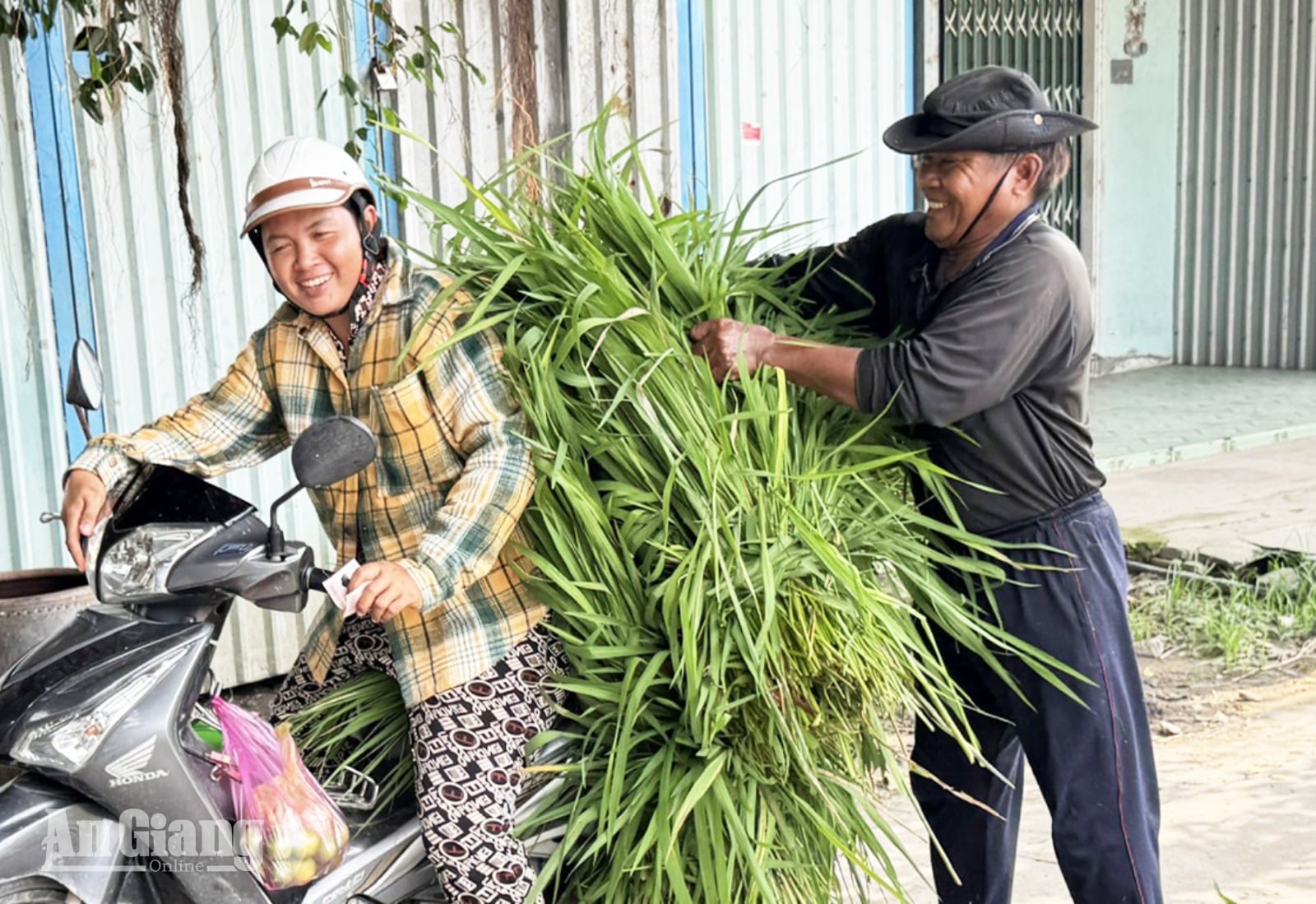
The grass is sold to local cattle farmers.
The market reflects a way of life closely linked to the production conditions of the Khmer people in O Lam. From the needs of livestock farming, the profession of hiring people to cut and sell grass was formed; and from that profession, a trading point has existed for many decades.
In the heart of the Seven Mountains region, boats carrying grass still regularly arrive ashore every day. Without signs or calls to action, the small market along the Ninh Phuoc canal continues to thrive on the very real needs of the people: grass cutters earn extra income, and cattle farmers have a source of feed for their herds.
DUC TOAN
Source: https://baoangiang.com.vn/phien-cho-co-o-vung-bay-nui-a498931.html