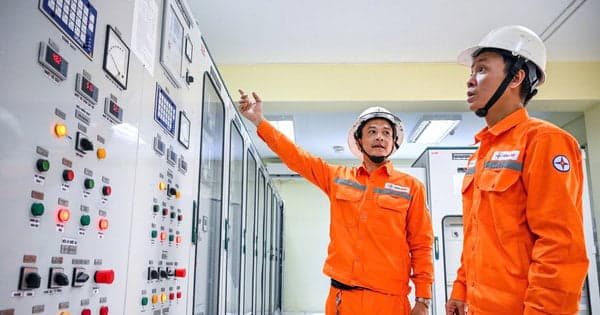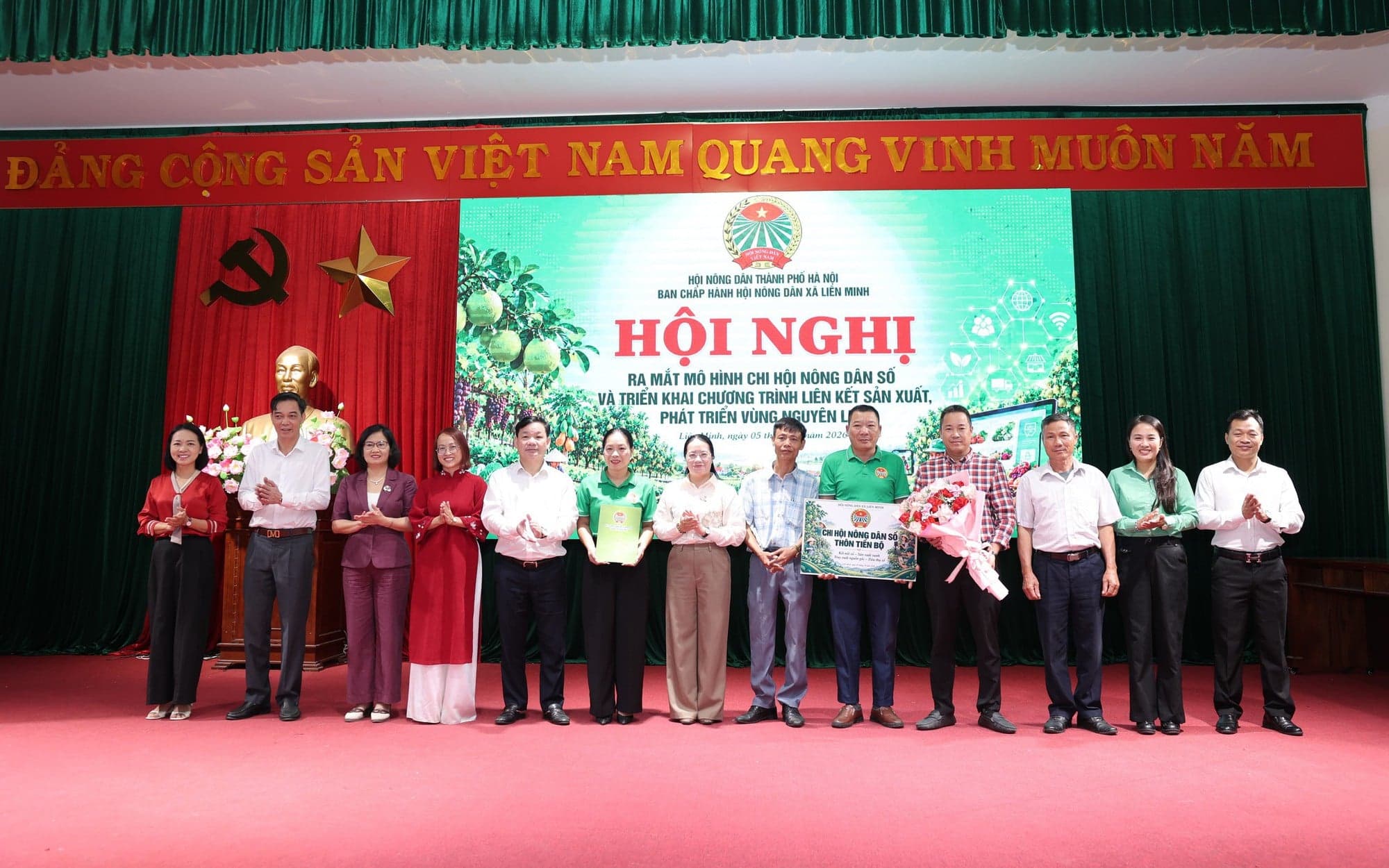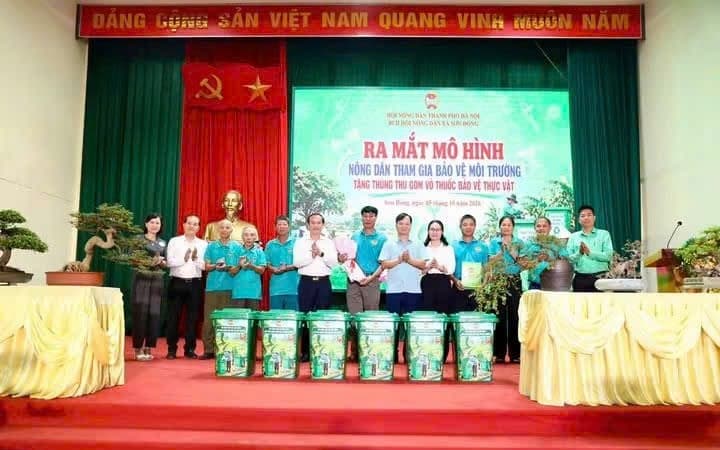

The exhibition, themed "Two-Tier Local Government: Streamlined, Efficient, and Close to the People," captures the vibrant developments in the capital city over the past year of operating the two-tier local government system.
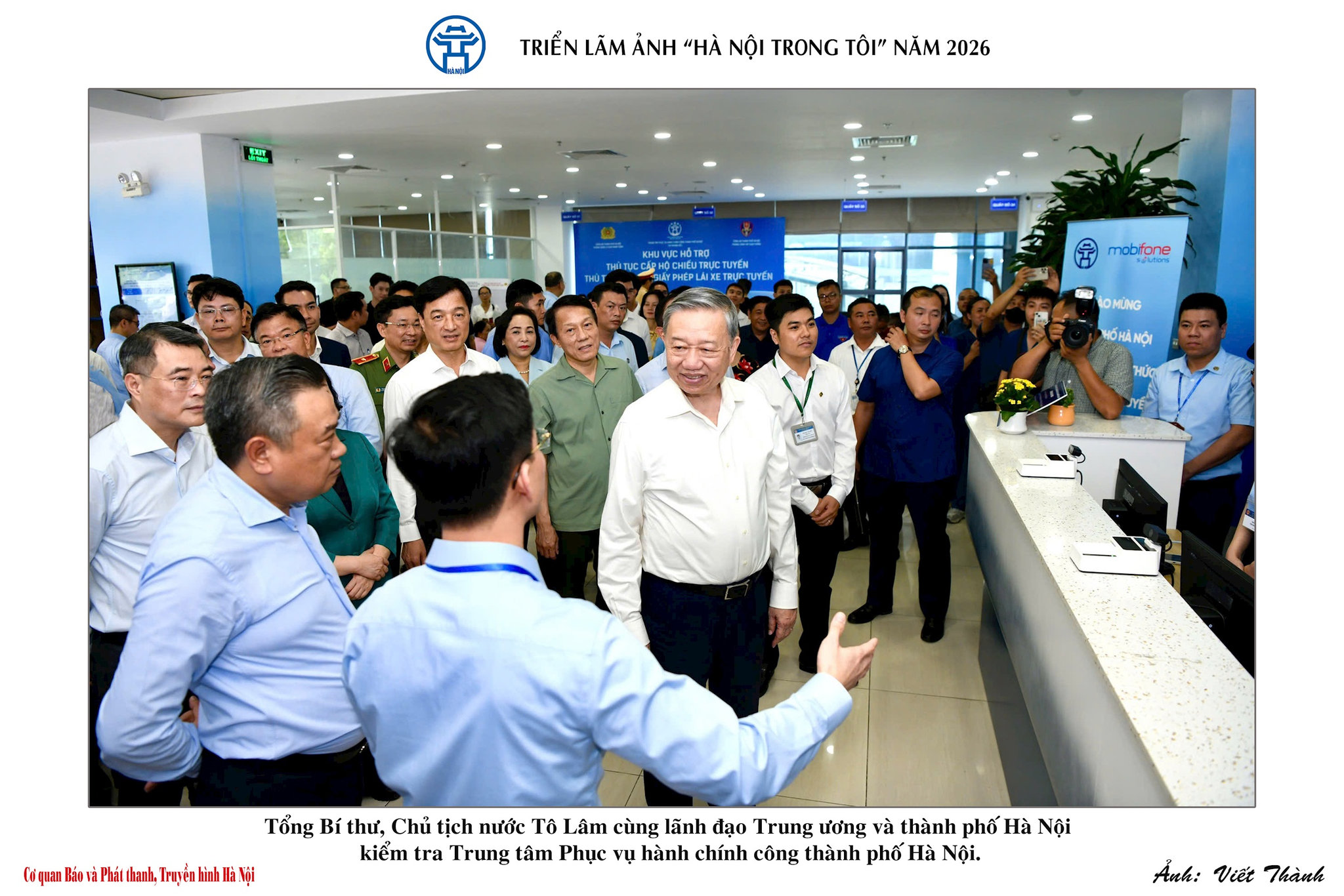
Images depicting a government close to its people.
Nearly 80 photographs on display at the exhibition offer vibrant, fresh, and colorful perspectives on Hanoi during more than a year of implementing the two-tiered local government model. Through each image, the public can sense the movement of the capital city from the city center to each locality, while also clearly seeing the spirit of innovation in the government's operations, aiming to better serve the people and businesses.
According to Nguyen Thanh Loi, Deputy Director of the Hanoi Press and Broadcasting Agency and Head of the Exhibition Organizing Committee, 2026 holds special significance as it marks the first year of implementing the Resolution of the 14th National Congress of the Communist Party of Vietnam and the Resolutions of the Party Congresses at all levels for the 2025-2030 term. It is also an opportunity to look back on the glorious history of the Capital City, and to mark more than a year since Hanoi began operating a two-tiered local government model, ending the operation of 30 districts and towns, and reorganizing from 526 communes, wards, and townships down to 126.
Therefore, this year's "Hanoi in My Heart" exhibition focuses on the theme of implementing a two-tiered government system, changes in the operation of local governments, transportation infrastructure, urban landscape, and the modern pace of life in Hanoi.
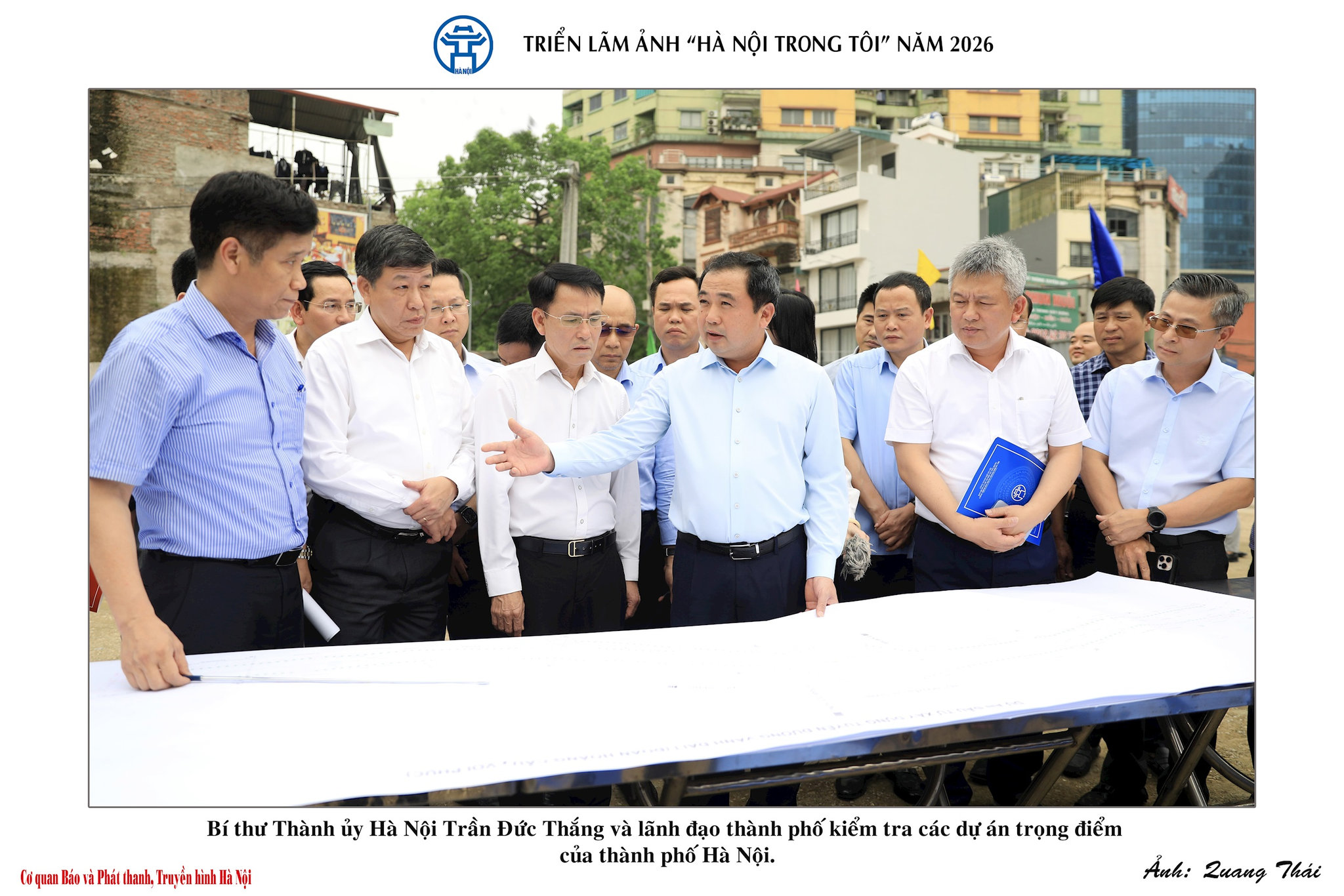
The exhibition is divided into three sections, each a snapshot contributing to a comprehensive picture of a rapidly transforming Hanoi. In the section "Building a People-Centered Government," images highlighting the close engagement of central and city leaders with the grassroots are particularly striking. These include: General Secretary and President To Lam, along with central and Hanoi city leaders, inspecting the Hanoi City Public Administrative Service Center on July 1, 2025 (by author Viet Thanh); Hanoi Party Secretary Tran Duc Thang and city leaders inspecting key Hanoi projects (by author Quang Thai); and Hanoi People's Committee Chairman Vu Dai Thang visiting a model of the Hanoi Capital City Master Plan with a 100-year vision at the Hanoi Museum (by author Viet Thanh).
Digital transformation is also captured by photographers through moments at the Public Administrative Service Centers, where officials, union members, and women's association members participate in guiding citizens through procedures. These simple images reflect the shift from a "management" mindset to a "governance" mindset, creating and serving.
While the first section showcased innovation in government operations, "Movement from the Grassroots" brought viewers closer to concrete stories from everyday life. These included images by Nguyen Bich Huong guiding elderly people in using online public services; Duy Khanh and youth union members practicing artificial intelligence (AI) applications with grassroots officials; and Van Tuyen showing students in Hoai Duc commune undergoing health checkups before the start of the 2026-2027 school year. These moments, though not elaborate, demonstrate the increasingly prominent presence of the government in people's lives, serving the people.
In the section "Hanoi Reaching New Heights in the Modern Era," major projects that are transforming the capital's appearance are captured from various perspectives. These include the Ring Road 1 section from Hoang Cau to Voi Phuc, the Ring Road 2.5 section from Cau Giay to Duong Dinh Nghe, Thuy Phuong 2 regulating lake, Phu Do regulating lake, etc. These transportation and infrastructure projects are depicted not only as milestones in urban development but also as symbols of a Hanoi expanding its development space.
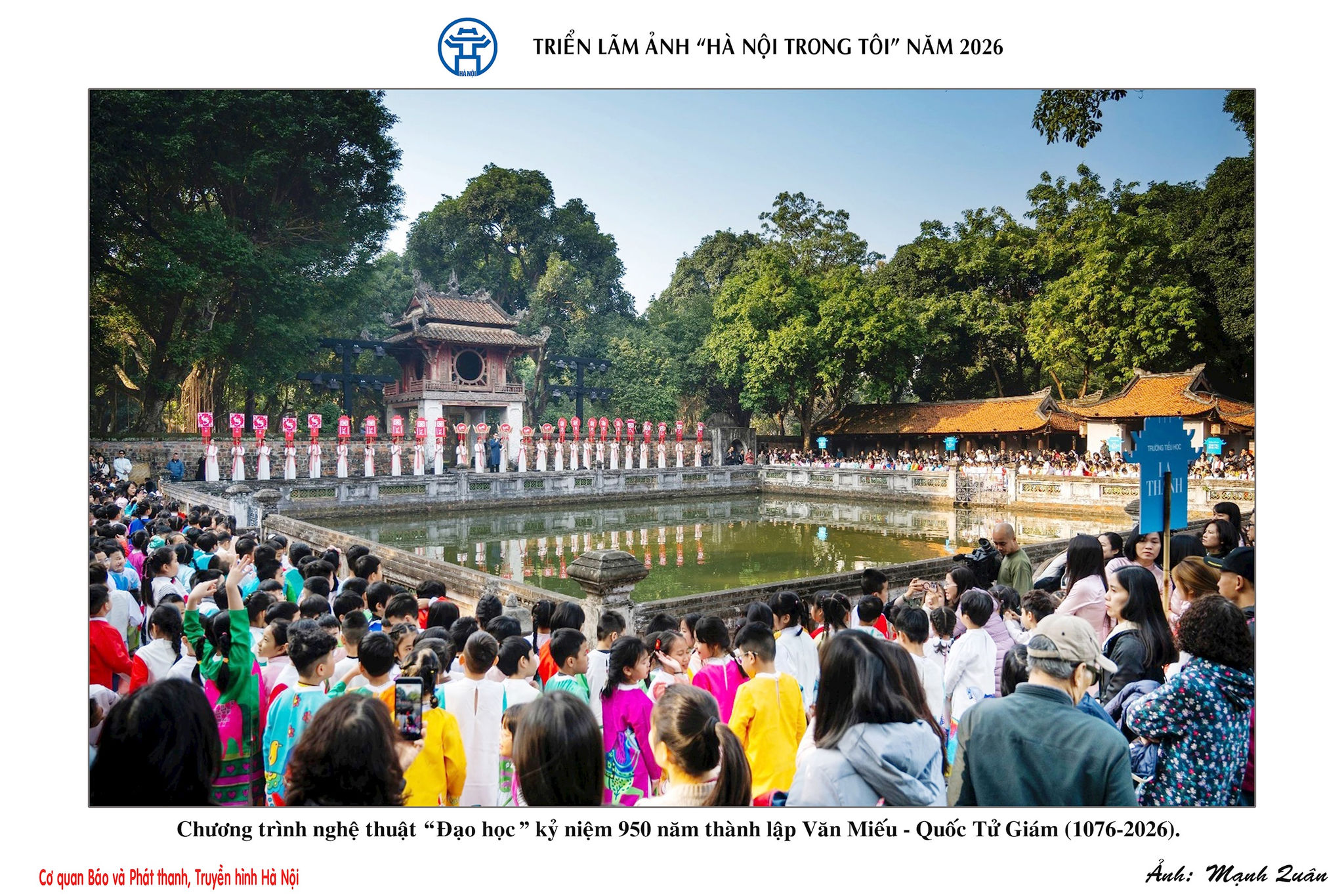
Besides showcasing the modern urban landscape, the artworks also capture the vibrant and creative moments of Hanoi after each major national event. Through the lenses of the artists, the thousand-year-old capital appears both familiar and intimate, yet dynamic, modern, and full of life.
Cultivating love for Hanoi
The "Hanoi in My Heart" exhibition is held annually in October, commemorating the Liberation Day of the Capital. Since its first event in 2000 at the City Exhibition Center (45 Trang Tien Street, Hanoi), the exhibition has gradually been elevated to a city-level cultural event. Each year, the exhibition chooses a different theme, closely following the development direction and major events of the Capital, from "Colors of Capital Culture" in 2022, "Hanoi - 15 Years of Expanding Administrative Boundaries" in 2023, "Hanoi's Breakthrough" in 2024 to "Hanoi in the Era of Advancement" in 2025.
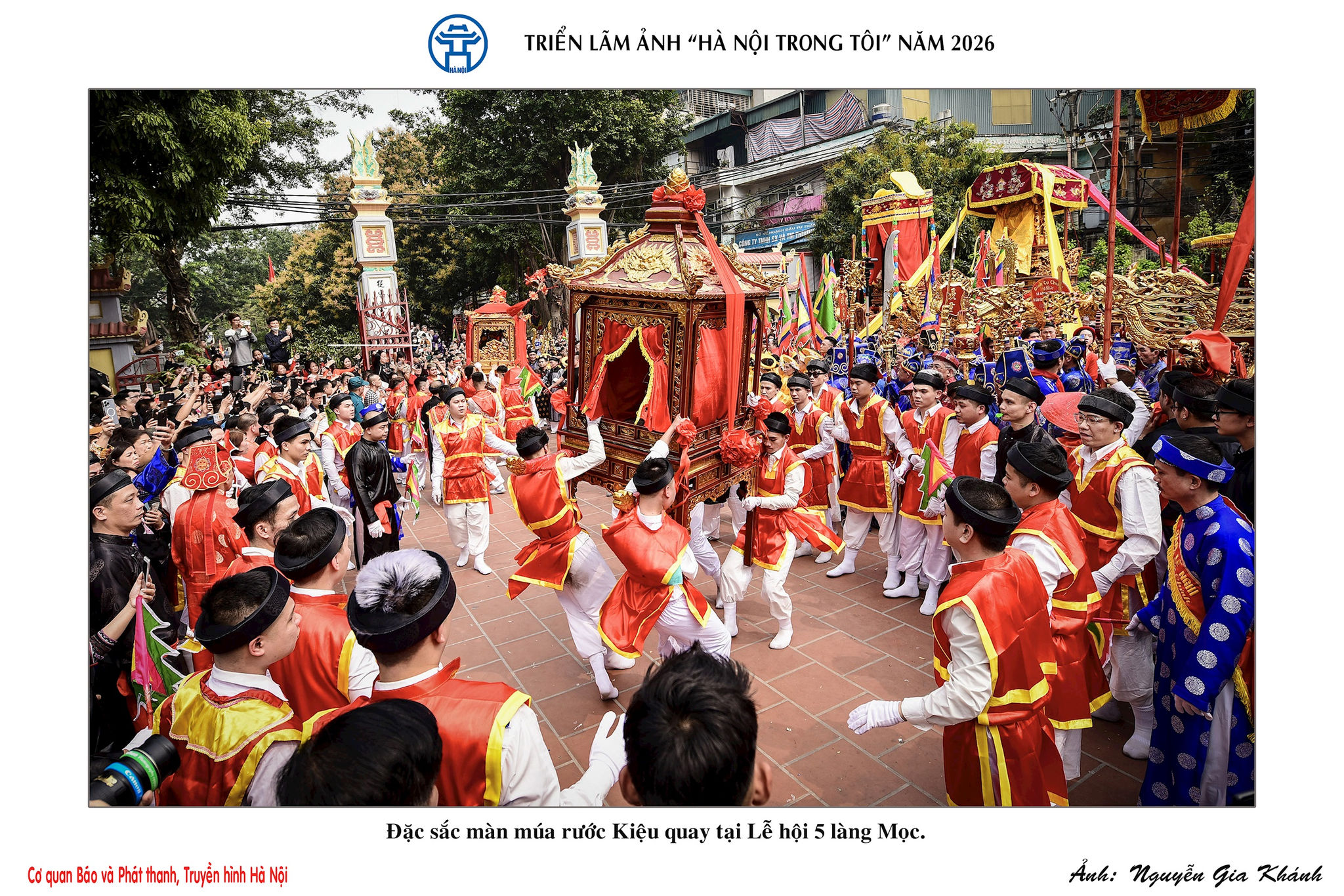
Nguyen Gia Khanh, Deputy Chairman of the Hanoi Senior Citizens Photography Club, who has been involved with the exhibition for many years, said that the club currently has 40 artists, mostly aged 70-80, with the oldest being 89 years old. Despite their advanced age, the artists still maintain their passion for photography and actively create and record moments of life in the capital city.
According to Mr. Nguyen Gia Khanh, through their works, the photographers expressed their desire to capture a capital city undergoing many changes and striving for strong growth. Alongside achievements in the economy and society, and changes in social governance and public administration services, the capital city continues to uphold its national cultural identity.
“21 years is a persistent journey of nurturing love for Hanoi through photographs. Each time we press the shutter, the artists capture the rhythm of life, the appearance, and the changes of the city. This year, the photos submitted by the Club's members to the competition show the cultural values and landscapes of Hanoi under the new government model that need to be preserved, promoted, and honored,” expressed photographer Nguyen Gia Khanh.
Meanwhile, young photographer Vu Duy Khanh, who has participated in the exhibition since 2019, said that the exhibition is an opportunity for young people to clearly feel the movement of the capital city through each image. “This year’s exhibition theme gives me a new perspective. I hope the photos presented at the exhibition will contribute to recording a memorable milestone in the process of building a two-tiered local government, while also spreading the image of a streamlined, efficient, friendly Hanoi that is increasingly closer to the people,” Vu Duy Khanh expressed.
For photographer Nguyen Viet Thanh, the exhibition is an opportunity for photographers to look back at Hanoi from a different perspective, not only through its buildings, landscapes, and festivals, but also through its rhythm of life, its people, and the changes happening every day. "Through my works, I hope viewers can feel a Hanoi that is renewing itself, dynamic, yet still preserving the cultural, historical values and unique identity of the capital," said photographer Nguyen Viet Thanh.
For over two decades, the "Hanoi in My Eyes" photo exhibition has diligently captured moments of the capital city, becoming an indispensable cultural event every October. Through each exhibition season, Hanoi is presented with fresh, multifaceted perspectives through the lenses of photographers and journalists.
The exhibition's appeal continues to grow as more and more photography enthusiasts and the public flock to it, not only to admire the beautiful works but also to rediscover a familiar Hanoi in its most ordinary moments. Through this, the "Hanoi in My Heart" exhibition has become a unique event in the cultural life of the capital city.
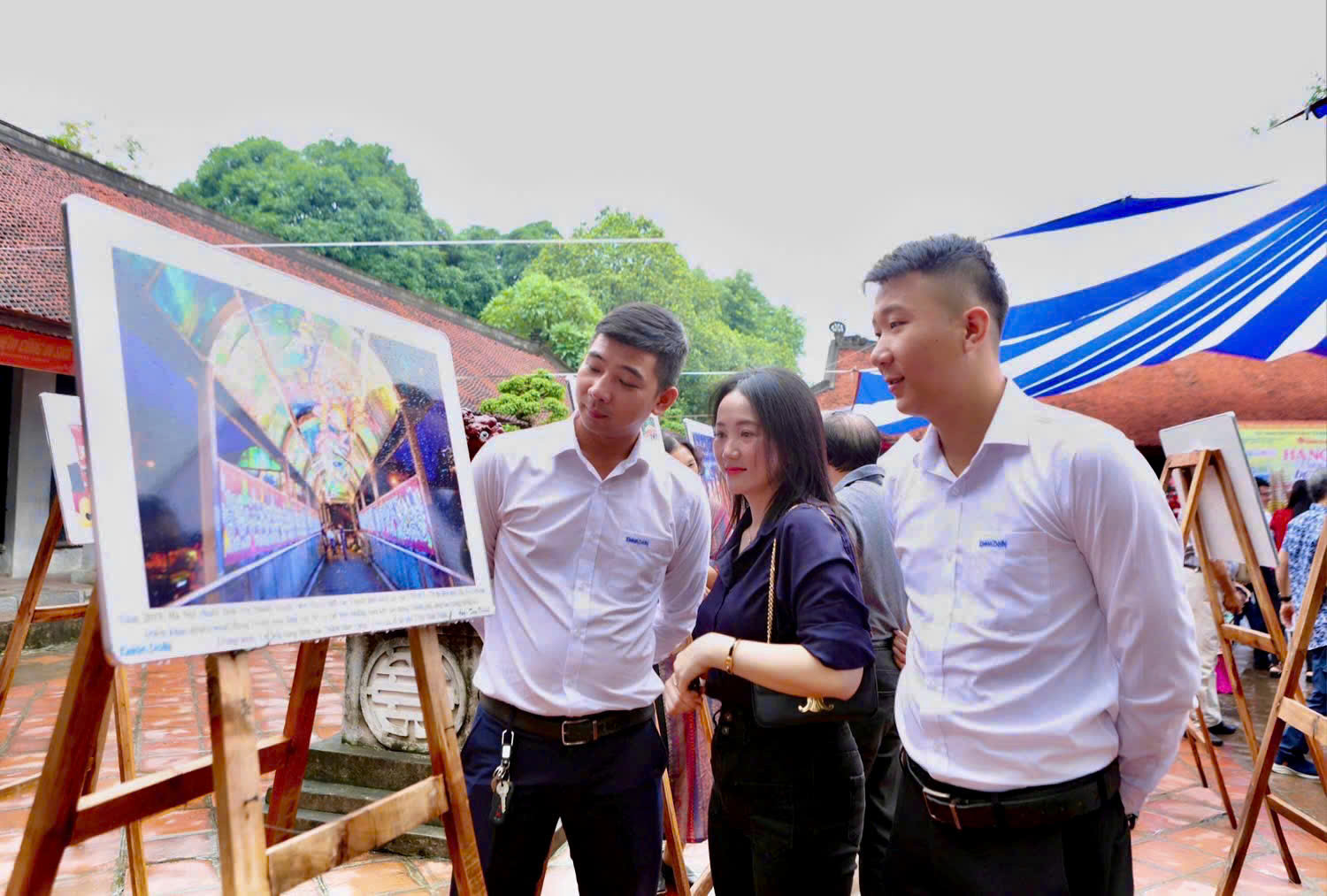
The 21st "Hanoi in My Heart" exhibition will run until October 12, 2026 at the Van Mieu - Quoc Tu Giam National Special Monument Area and from October 12 to 21, 2026 at the Hanoi Museum.
Source: https://hanoimoi.vn/nhung-chuyen-dong-moi-cua-thu-do-qua-trien-lam-anh-ha-noi-trong-toi-nam-2026-1759720.html