
 |
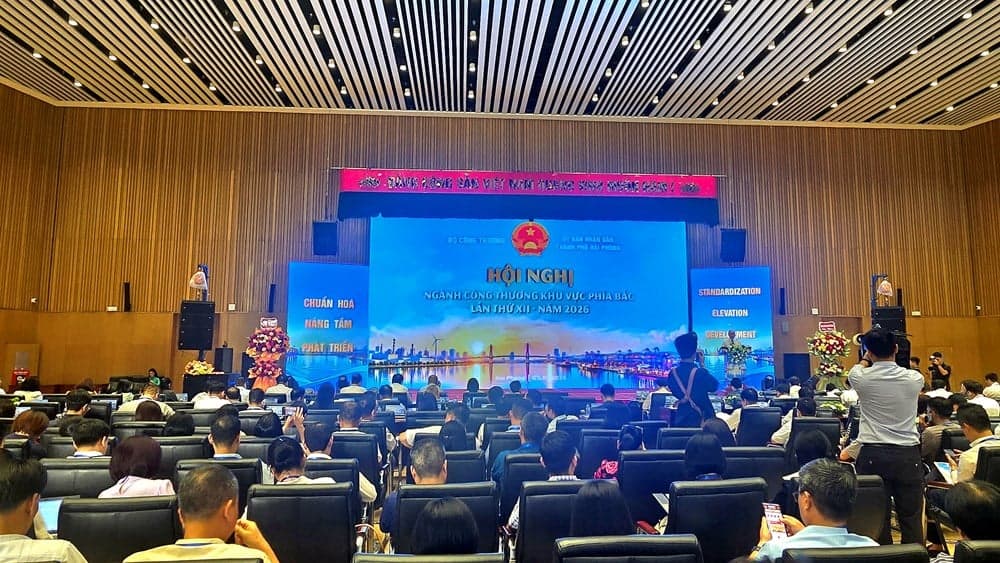
| Overview of the press conference announcing socio -economic statistics for the third quarter and the first nine months of 2026. (Photo: Mai Lien) |
Speaking at the press conference, Ms. Nguyen Thi Huong, Director of the General Statistics Office, stated that in the first nine months of 2026, the global economy will continue to face many uncertainties stemming from prolonged conflicts, strategic competition, protectionist trends, and policy adjustments by major economies.
GDP increased by 9.95%.
In this context, the Director General of the General Statistics Office stated that the Gross Domestic Product (GDP) in the third quarter of 2026 is estimated to have increased by 9.95% compared to the same period last year, higher than the 8.15% increase in the first quarter and the 8.81% increase in the second quarter. Specifically, the agriculture, forestry, and fisheries sector increased by 4.21%, contributing 5.14% to the overall increase in added value of the entire economy; the industry and construction sector increased by 12.50%, contributing 51.57%; and the service sector increased by 9.54%, contributing 43.29%.
 |
| GDP for the first nine months of 2026 is estimated to increase by 9.01% compared to the same period last year. (Source: VGP) |
Regarding GDP utilization in Q3 2026, final consumption increased by 8.96% year-on-year; asset accumulation increased by 21.39%; exports of goods and services increased by 23.27%; and imports of goods and services increased by 28.75%.
GDP in the first nine months of 2026 is estimated to increase by 9.01% compared to the same period last year. Of this, the agriculture, forestry, and fisheries sector increased by 4.02%, contributing 5.35% to the total value-added growth of the entire economy; the industry and construction sector increased by 11.21%, contributing 49.62%; and the service sector increased by 8.69%, contributing 45.03%.
In the agriculture, forestry, and fisheries sector, the added value of agriculture increased by 3.72%, forestry by 3.99%, and fisheries by 4.99%. Industry and construction continued to be the driving force of growth, with the industrial sector increasing by 11.02%, including manufacturing by 11.36%; and the construction sector by 12.22%.
The service sector maintained positive growth momentum. Several sectors recorded notable increases, including transportation and warehousing (11.03%); wholesale and retail trade (9.85%); finance, banking and insurance (9.45%); and accommodation and food services (8.83%).
Regarding the economic structure in the first nine months, the service sector accounted for 42.97%; industry and construction accounted for 38.35%; agriculture, forestry and fisheries accounted for 10.65%; and product taxes less product subsidies accounted for 8.03%.
In terms of GDP utilization, final consumption in the first nine months increased by 8.51%; asset accumulation increased by 17.88%; exports of goods and services increased by 21.29%; and imports increased by 27.19% compared to the same period last year.
Regarding business and investment activities, in the first nine months of 2026, the whole country saw over 223,900 newly registered and reactivated businesses, a decrease of 3.2% compared to the same period in 2025. On average, about 24,900 businesses entered the market each month. Meanwhile, the number of businesses withdrawing from the market reached 172,000, a decrease of 1.7% compared to the same period.
Total social investment implemented in the first nine months is estimated at VND 3,109.6 trillion, an increase of 15.1% compared to the same period last year. Total registered foreign investment in Vietnam as of September 30th reached US$50.36 billion, an increase of 76.4%. Foreign direct investment (FDI) implemented is estimated at US$21.07 billion, an increase of 12.1% and the highest level for the first nine months in the past five years.
Conversely, Vietnam's overseas investment continued to expand. In the first nine months, 121 new investment projects were granted certificates with a total Vietnamese capital of US$1.28 billion, an increase of 80.9% compared to the same period last year. In addition, 32 projects adjusted their capital, with an additional US$1.49 billion, 10.8 times higher than the same period.
Regarding trade and import-export activities, the total value of goods exports and imports in the first nine months of 2026 reached US$888.02 billion, an increase of 30.4% compared to the same period last year. Of this, exports reached US$434.30 billion, an increase of 24.5%; and imports reached US$453.72 billion, an increase of 36.7%.
In terms of export structure, processed industrial goods reached US$392.79 billion, accounting for 90.4% of total export value. Agricultural and forestry products reached US$30 billion, accounting for 6.9%; and seafood reached US$9.1 billion, accounting for 2.1%.
The United States continues to be Vietnam's largest export market, with a turnover of $140 billion; China is the largest import market, reaching $187.34 billion. The trade balance for goods in the first nine months showed a deficit of $19.42 billion, in contrast to a surplus of $16.87 billion in the same period last year. In September alone, Vietnam recorded a trade surplus of $1.27 billion, after nine consecutive months of deficits.
Regarding trade in services, service exports in the first nine months are estimated at $26.1 billion, an increase of 18.5% compared to the same period last year. Of this, tourism services reached $13.06 billion, accounting for half of the total service export value; transportation services reached $7.81 billion, an increase of 29.5%.
Regarding tourism, services, and transportation, in the first nine months of 2026, Vietnam welcomed 17.7 million international visitors, an increase of 14.5% compared to the same period last year. In September alone, the number of international visitors reached approximately 1.77 million, an increase of 16.1% compared to the same period in 2025, although it decreased by 11.3% compared to the previous month.
The Vietnamese stock market has officially been upgraded to a secondary emerging market by FTSE Russell. Total capital raised on the stock market in the first nine months reached VND 731.6 trillion, an increase of 85.6% compared to the same period in 2025. The number of investor accounts as of the end of August reached nearly 13.89 million, an increase of 16.98% compared to the end of 2025.
On average, in the first nine months of 2026, the consumer price index (CPI) increased by 4.52% compared to the same period of the previous year, while core inflation increased by 4.26%. The average gold price index increased by 42.67%, and the average US dollar price index increased by 1.01%.
8 main solutions
According to the Head of the General Statistics Office, achieving double-digit growth poses a major challenge, requiring the concerted efforts and decisive involvement of the entire political system, the Government, the business community, and the people, along with the support and assistance of international partners.
All sectors, levels, and localities need to proactively update and forecast the situation, manage flexibly and appropriately to the new context, and promptly respond to emerging issues. At the same time, they must steadfastly pursue the goal of promoting growth while maintaining macroeconomic stability, controlling inflation, ensuring social security, and improving people's living standards.
Accordingly, the General Statistics Office proposes that attention should be paid to the following key tasks:
Firstly, we must steadfastly prioritize promoting growth while maintaining macroeconomic stability, ensuring major balances, controlling inflation and prices, and stabilizing the market; coordinating closely, synchronously, and effectively fiscal, monetary, and other macroeconomic policies. We must closely monitor global economic and political developments, fluctuations in oil prices, transportation costs, exchange rates, etc.
Secondly, continue restructuring the agricultural sector towards improving quality and adaptability to climate change; promote linkages in agricultural production, processing, and consumption. Strengthen disease control, develop biosecure, large-scale, concentrated livestock farming and value chains linked to the application of high technology and digital transformation.
Thirdly, promote industrial production towards enhancing competitiveness; proactively manage supply chain risks, diversify supply sources and control logistics costs; promptly resolve difficulties and obstacles related to procedures, land, and production and business conditions; and accelerate the development of strategic technology products.
Fourth, accelerate the disbursement of public investment capital in conjunction with socio-economic accounting. Expedite the implementation and ensure the quality of nationally important projects and works. Selectively attract investment projects; and at the same time, improve the effectiveness of linkages between the foreign investment sector and domestic enterprises.
Fifth, support and enhance the export capacity of the domestic economic sector, promote sustainable exports, increase added value, and diversify markets, products, and supply chains. Effectively utilize FTAs to expand export markets; improve the capacity to meet international standards. Develop logistics services.
Sixth, continue to effectively implement consumer stimulus programs, promotions, and supply-demand linkages. Promote the development of e-commerce, expand modern distribution systems, and ensure the supply of essential goods.
Seventh, continue to promote the development of tourism and service industries. Strengthen promotion and marketing, diversify and innovate tourism products, expand the international tourist market; improve service quality, enhance transportation and air connectivity, and create favorable conditions for tourists.
Eighth, strengthen disease prevention and control, proactively respond to natural disasters; ensure agricultural production, prevent forest fires, and minimize damage caused by natural disasters. Effectively implement social security policies, ensuring stability and improving the people's living standards.
Source: https://baoquocte.vn/kinh-te-viet-nam-tang-truong-9-01-trong-9-thang-nam-2026-451377.html