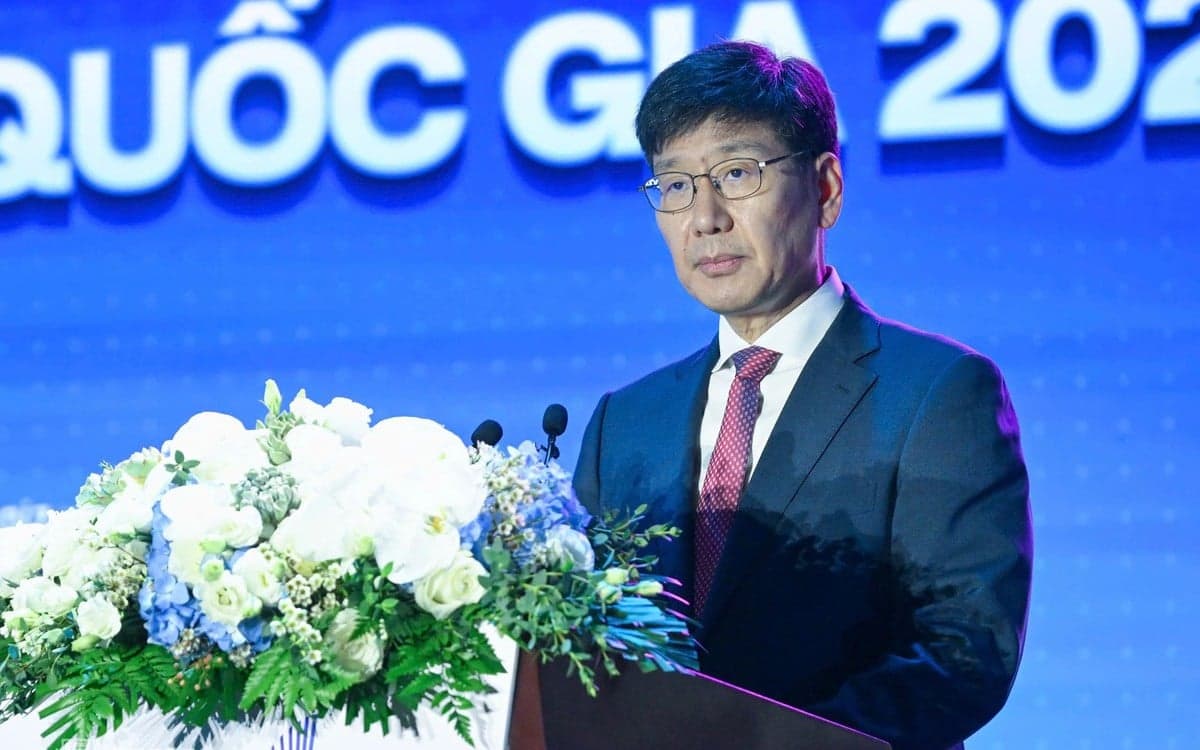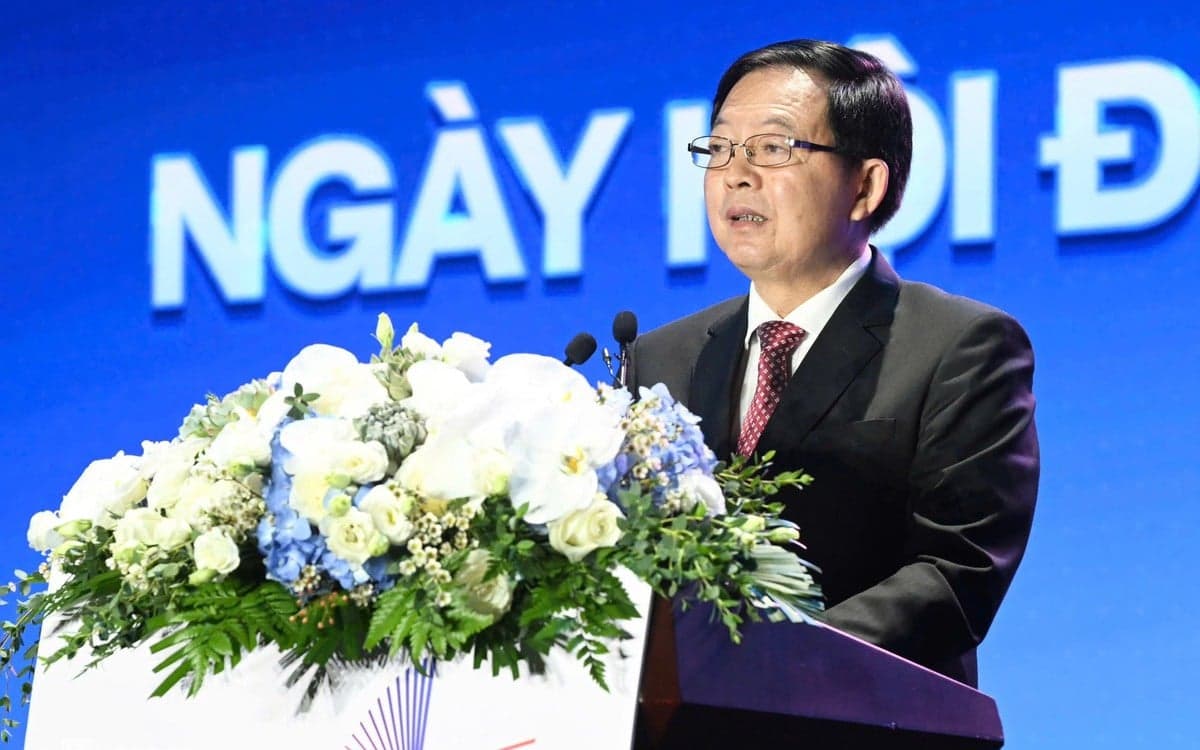

On October 4, 2026, at the National Convention Center, the 2026 Innovation Forum in the Finance and Banking Sector, themed “Unlocking Resources for Innovation,” was held as part of the 2026 National Innovation Day. This was a specialized forum for the finance and banking sector, bringing together regulatory agencies, training institutions, technology companies, credit organizations, experts, and scientists to discuss the necessary resources to promote science, technology, innovation, and digital transformation .
In his opening remarks and orientation for the Forum, Deputy Governor of the State Bank of Vietnam Pham Tien Dung emphasized that Resolution No. 57-NQ/TW of the Politburo and the Law on Science, Technology and Innovation 2025 have provided important orientations and legal basis for mobilizing resources for innovation, requiring a shift in management thinking, acceptance of risks and delays in research, a business-centric approach, and the promotion of research and technology results into application and commercialization.
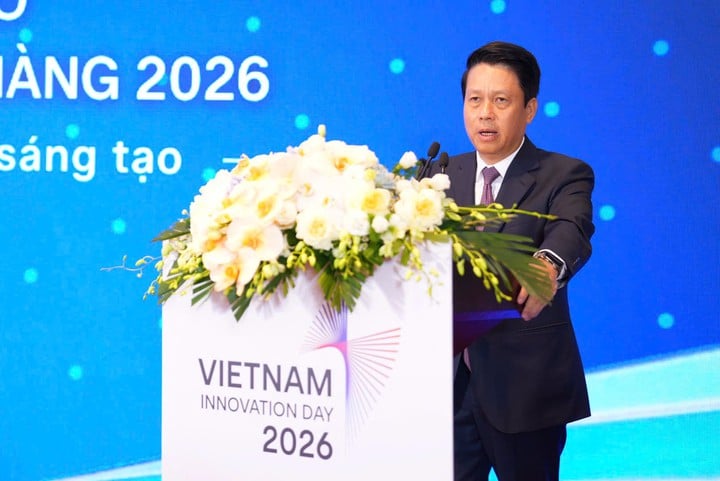
Deputy Governor of the State Bank of Vietnam Pham Tien Dung delivered the opening remarks and outlined the direction of the Forum.
According to the Deputy Governor, unlocking resources must first and foremost be linked to clearly identifying what problems innovation aims to solve, what products it aims to create, and what value it will bring to socio -economic development. Research and technology results need to be applied and commercialized, contributing to increased labor productivity, cost and time savings, and the creation of new products and services to serve the people and businesses.
Based on practical implementation, the Deputy Governor stated that AI, big data, automation, and digital platforms are creating significant changes in governance, operations, and service delivery methods. Technology also opens up possibilities for solving many complex problems such as fraud detection, money tracing, risk warning, and user protection.
However, the rapid pace of technological development, especially AI, also necessitates a risk-averse approach to innovation. A newly invested technology or system can quickly be replaced by a new generation. Therefore, the Deputy Governor noted the need to create space for experimentation, accept unsuccessful cases, and consider sharing experiences as part of the process of accumulating innovative capacity.
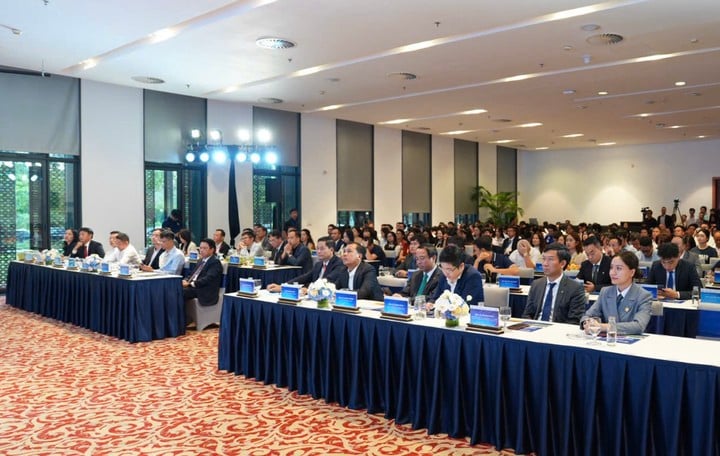
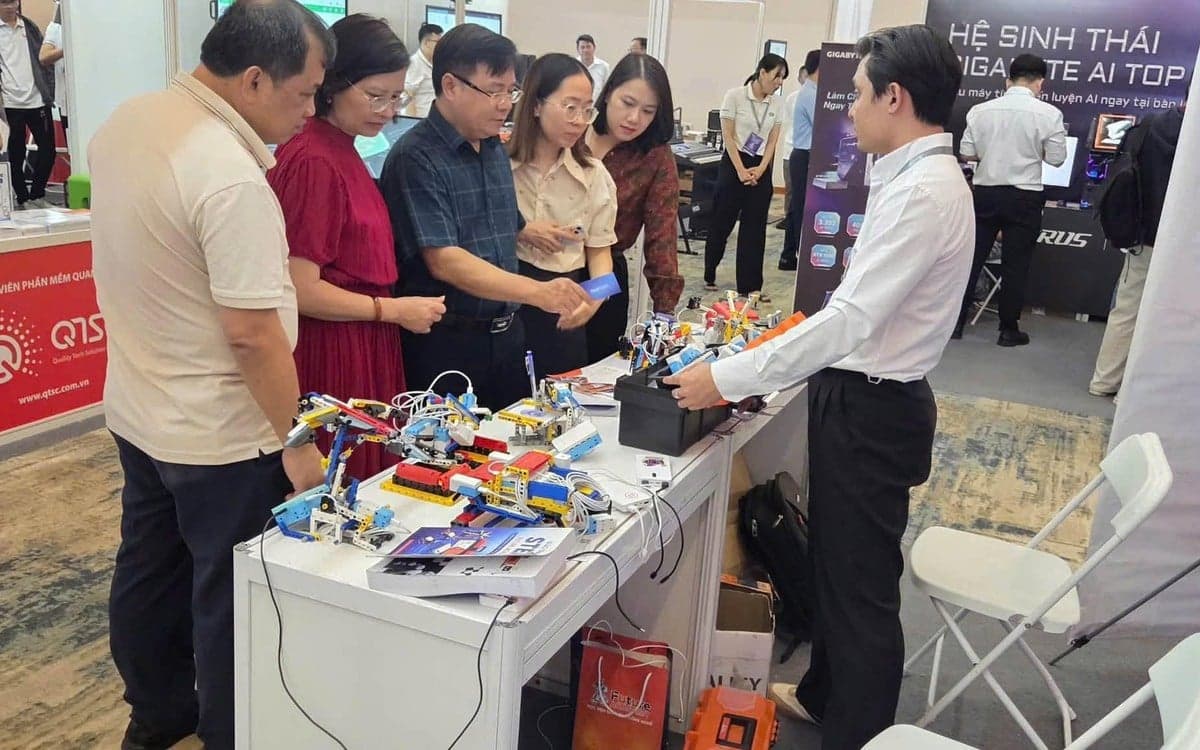
Delegates attending the Forum
Another issue raised by Deputy Governor of the State Bank of Vietnam, Pham Tien Dung, is the exploitation of intellectual property as a resource for development. In the context of increasingly short technology lifecycles, the valuation of inventions, data, research results, and intangible assets needs to be further studied and improved to facilitate access to appropriate resources for technology companies and innovation projects.
The Deputy Governor requested that agencies, experts, and businesses submit specific, feasible recommendations, clearly identifying areas that can be implemented immediately, areas requiring inter-sectoral coordination, and issues that need further policy refinement. The policy-making process must stem from practical realities, accurately identify bottlenecks, and create space for the development of new models.
At the Forum, delegates presented numerous papers, focusing on analyzing the key conditions for bringing innovation from idea to application and market. The discussions revealed that, in addition to capital, this process also requires technology, data, human resources, a testing environment, and the ability to connect within the ecosystem.
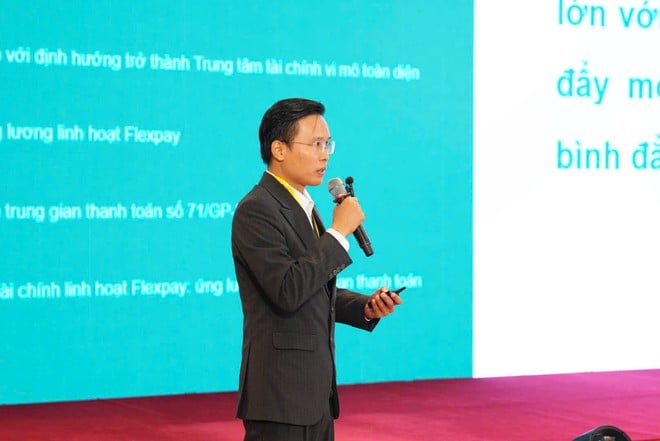
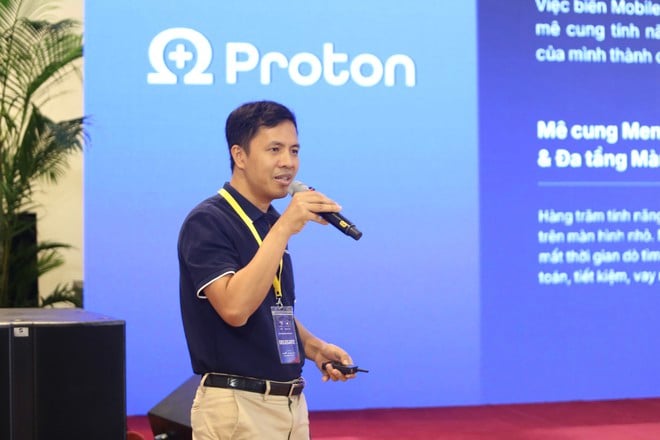
Delegates presented papers and shared various solutions to promote innovation at the Forum.
Many issues were raised, such as mechanisms for businesses whose primary assets are data and intellectual property; the application of AI and digital assistants; the development of Open APIs, data platforms, automation, and open innovation models. Opinions also emphasized the need to strengthen linkages between regulatory agencies, research institutes, universities, and businesses so that technology products can be tested, verified, refined, and put into practice.
During the high-level policy dialogue session "From Idea to Implementation - What Mechanisms Ensure Financial Resources Flow into Innovation," delegates identified bottlenecks in the valuation of intangible assets, a lack of data for evaluating technology companies, fragmented data, and inconsistent mechanisms for connecting and sharing information.
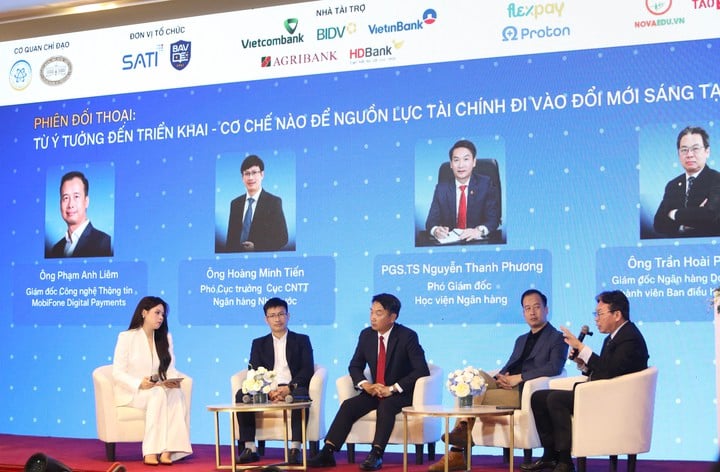
High-level policy dialogue session "From Idea to Implementation - What Mechanisms Ensure Financial Resources Flow into Innovation"
Proposed solutions include further improving the legal framework, enhancing the capacity for valuing intangible assets, building a shared database, standardizing Open APIs and connectivity standards, strengthening controlled data sharing, ensuring information security, and developing human resources to meet the requirements of applying technology, data, and AI.
Source: https://mst.gov.vn/khoi-thong-nguon-luc-de-cong-nghe-va-doi-moi-sang-tao-dong-gop-cho-nen-kinh-te-19726100415583578.htm