

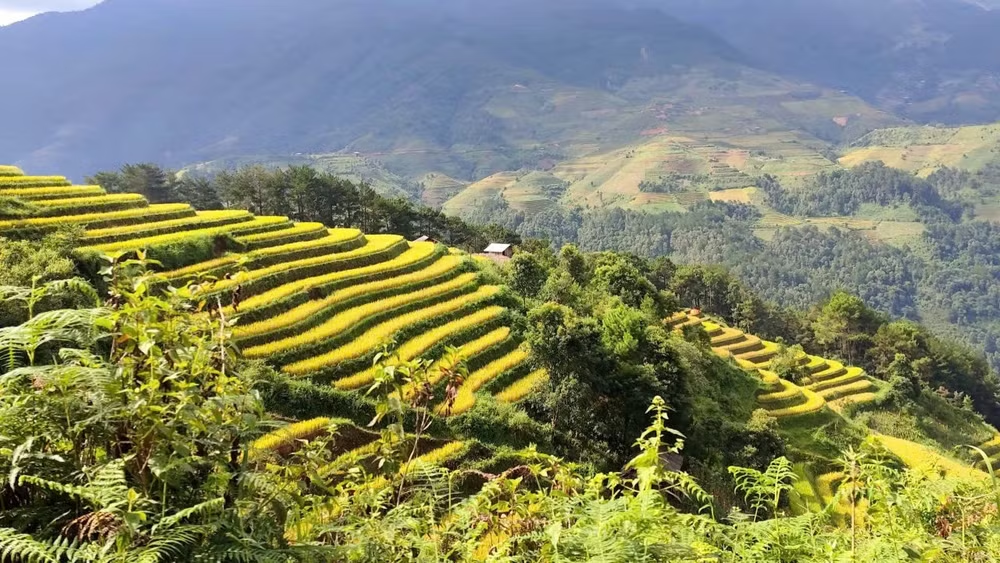
Lao Cai province is actively connecting its famous terraced rice fields into a single tourist route. (Photo: Duy Doanh)
A huge but dispersed advantage.
On October 6th, a conference to assess the feasibility and development of the tourism product " Exploring the route connecting cultural heritage of terraced rice fields" was held in Ban Lien commune (Lao Cai). Prior to this, from October 3rd to 6th, more than 50 delegates, including tourism officials, travel businesses, and journalists, traveled the entire route to evaluate roads, accommodation, and rest stops.
According to the Provincial Department of Culture, Sports and Tourism, in the first nine months of 2026, the province is expected to welcome over 9.8 million visitors, including approximately 1.36 million international tourists; total revenue is projected at 40,880 billion VND, equivalent to about 80% of the annual plan. The province has three terraced rice field systems that have been classified by the State, with the Mu Cang Chai terraced rice fields being a Special National Monument covering 852.9 hectares under protection.
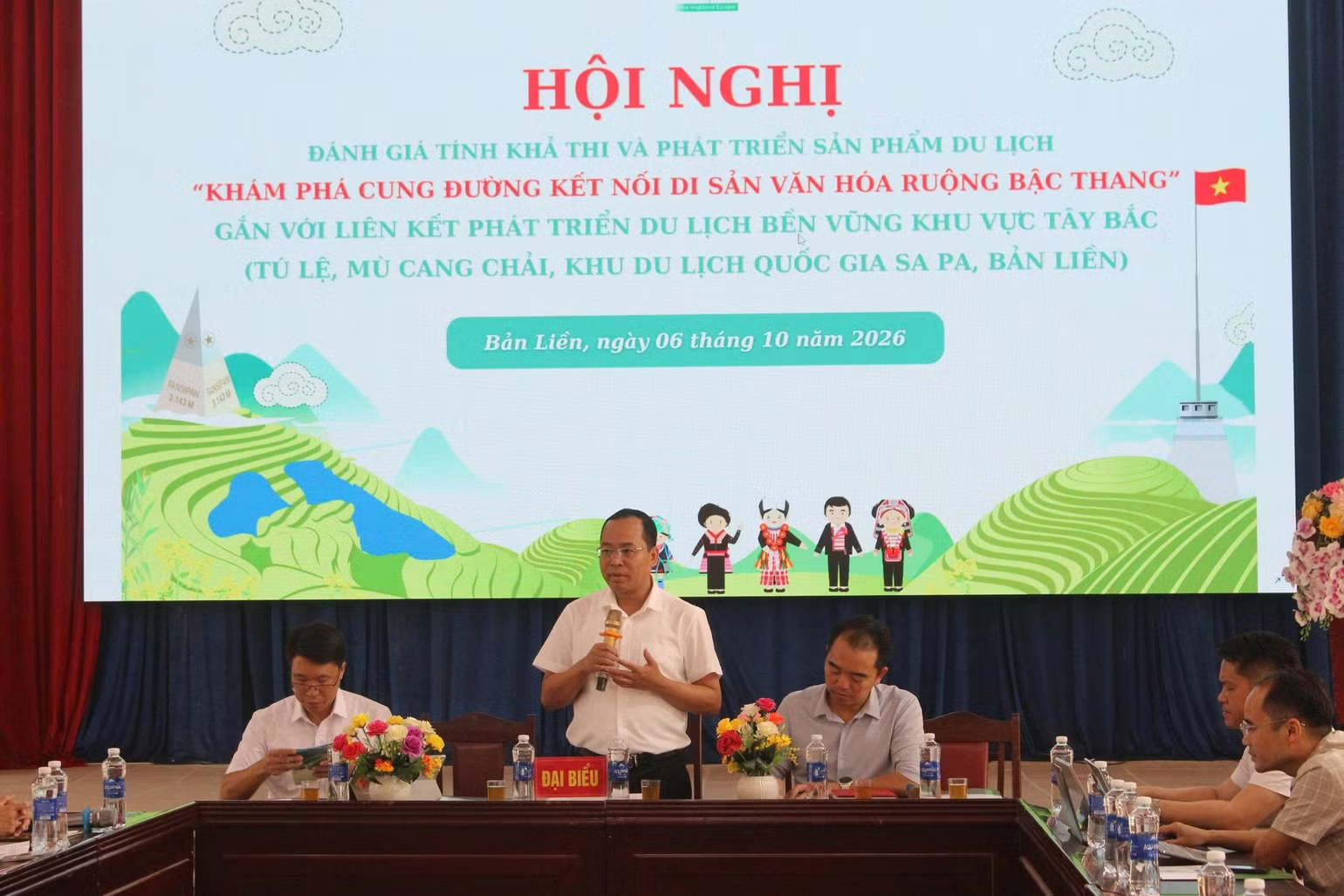
Conference to assess the feasibility and development of the tourism product "Exploring the route connecting cultural heritage of terraced rice fields". (Photo: Duy Doanh)
However, this advantage has only been exploited seasonally. From the beginning of the year to October 4th, Mu Cang Chai commune welcomed 197,570 visitors, exceeding the annual plan by 16.2%; of which 119,700 visitors came during the five weeks of the Golden Harvest Festival (from August 31st to October 4th). Thus, about 60% of the visitors for more than nine months were concentrated in just over one month. The commune's tourism revenue reached 423.2 billion VND, meaning each visitor spent more than 2.1 million VND, only about half the provincial average (approximately 4.1 million VND).
During peak weeks, traffic, accommodation, and the environment are all under pressure, while many service establishments experience a lack of customers for the rest of the year. Mr. Giang A Tang, Vice Chairman of the People's Committee of Mu Cang Chai commune, said that the locality is developing specific products for each season and increasing links with travel businesses to extend the length of stay and increase tourist spending.
In Bản Liền, according to the Chairman of the People's Committee of Lương Mạnh Hà commune, in the first six months of 2026, the commune welcomed approximately 6,800 visitors, more than the whole year of 2025 (about 4,500 visitors), but still very modest compared to the established tourist destinations of the province.
This disparity is also a microcosm of tourism in Lao Cai. At a tourism business meeting held in Sa Pa on July 8, 2026, many opinions suggested that Lao Cai's product structure still heavily depends on Sa Pa and its scenic attractions, making it vulnerable to changes in weather or market conditions. As a result, some areas are overcrowded seasonally, others have few visitors, and some bear the majority of the province's tourist flow. Individual destinations will find it difficult to address these shortcomings on their own.
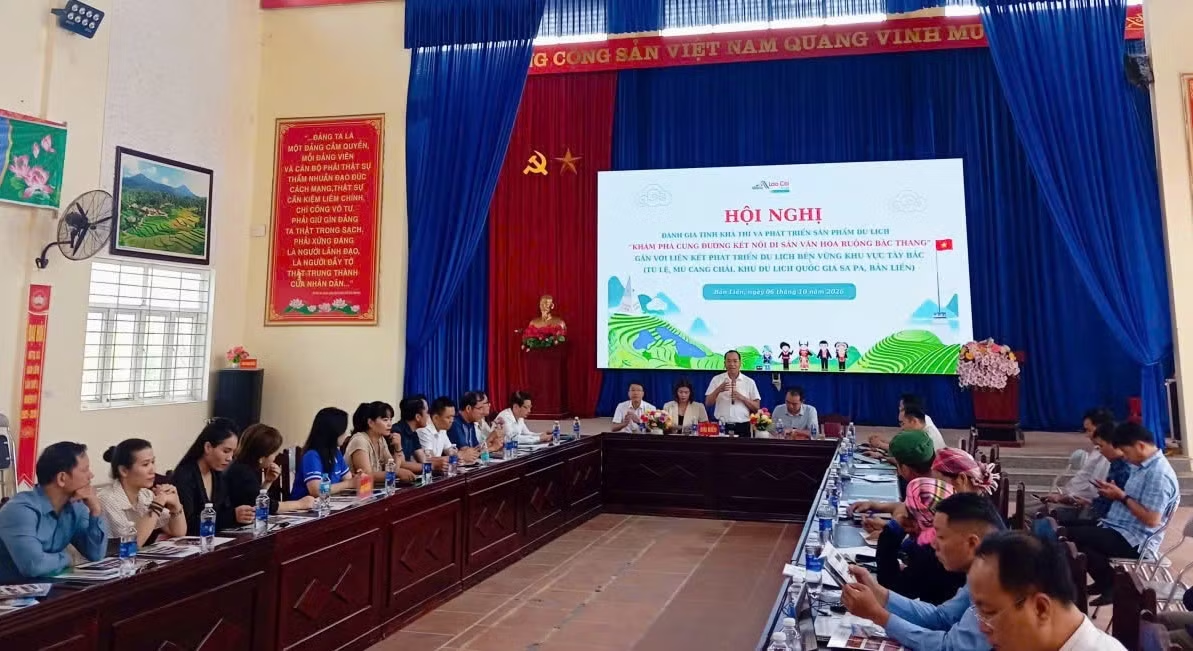
Conference to assess the feasibility and development of the tourism product "Exploring the route connecting cultural heritage of terraced rice fields". (Photo: Duy Doanh)
This weakness is not new. In 2023, when discussing terraced rice field tourism in Northwest Vietnam, Associate Professor Dr. Duong Van Sau ( Hanoi University of Culture) commented that the products were still poor, fragmented, and lacked interconnected development. At that time, Mu Cang Chai and Sa Pa belonged to two different provinces. From July 1, 2025, Yen Bai and Lao Cai will merge, with the entire route located within one province, under a single tourism management authority. The geographical boundary is no longer a barrier; therefore, the remaining issue is how to organize it.
In recent times, Lao Cai has been strengthening cooperation agreements. The province is a member of the tourism cooperation program between eight provinces in the expanded Northwest region and Ho Chi Minh City for the period 2026-2030; on October 1st, it continued to sign a cooperation program with Tuyen Quang province, which is expected to form five inter-provincial routes.
Deputy Director of the Vietnam National Tourism Administration, Ha Van Sieu, shared: localities need to place linkages in a new mindset, forming a common tourism development space with common products, common brands, common markets, common data, and common coordination mechanisms. Lao Cai has terraced rice fields as an advantage to implement tourism connectivity within the province, before expanding to inter-provincial routes.
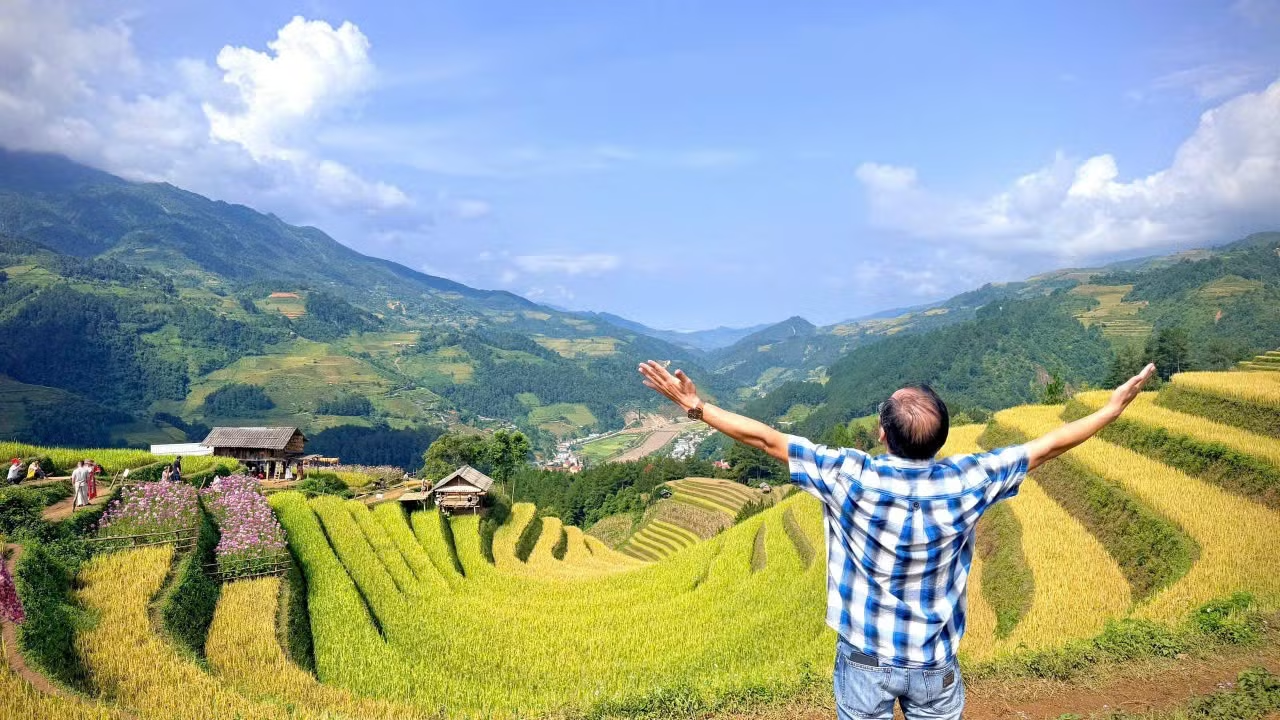
The winding terraced rice fields are a major tourist attraction in Lao Cai. (Photo: Duy Doanh)
Strengthening value chain linkages
In his opening remarks at the feasibility study conference on the tourism product "Exploring the connecting route of terraced rice fields cultural heritage," Mr. Pham Tat Thanh, Deputy Director of the Investment, Trade and Tourism Promotion Center of Lao Cai province, analyzed: "If we only take tourists to a spot to admire the terraced rice fields, take photos, and then leave, we are only exploiting a very small part of the value of this resource." According to him, the terraced rice fields are the thread running throughout the journey, but what truly matters is the local meal, the homestay overnight stay, the opportunity to learn about traditional crafts, and the encounter with the community.
The recent local survey trip was designed with that in mind. In Suoi Giang, the group visited the ancestral tea tree and watched artisans prepare Shan Tuyet tea; in Ban Com (Tu Le commune), they learned how to make sticky rice flakes; they crossed the Khau Pha pass to Mu Cang Chai, then traveled along the Muong Hoa valley of Sa Pa, following provincial road 152 to Ban Lien to join the Tay people in picking tea and harvesting rice. Based on the fieldwork, two model programs were developed for testing: "Journey to the Golden Season of Northwest Vietnam," a three-day, two-night program for domestic tourists, and "Living with Heritage - Experiencing Local Culture," a four-day, three-night program for tourists who want to stay longer with the community. Each group consisted of 10 to 20 people during the pilot phase.
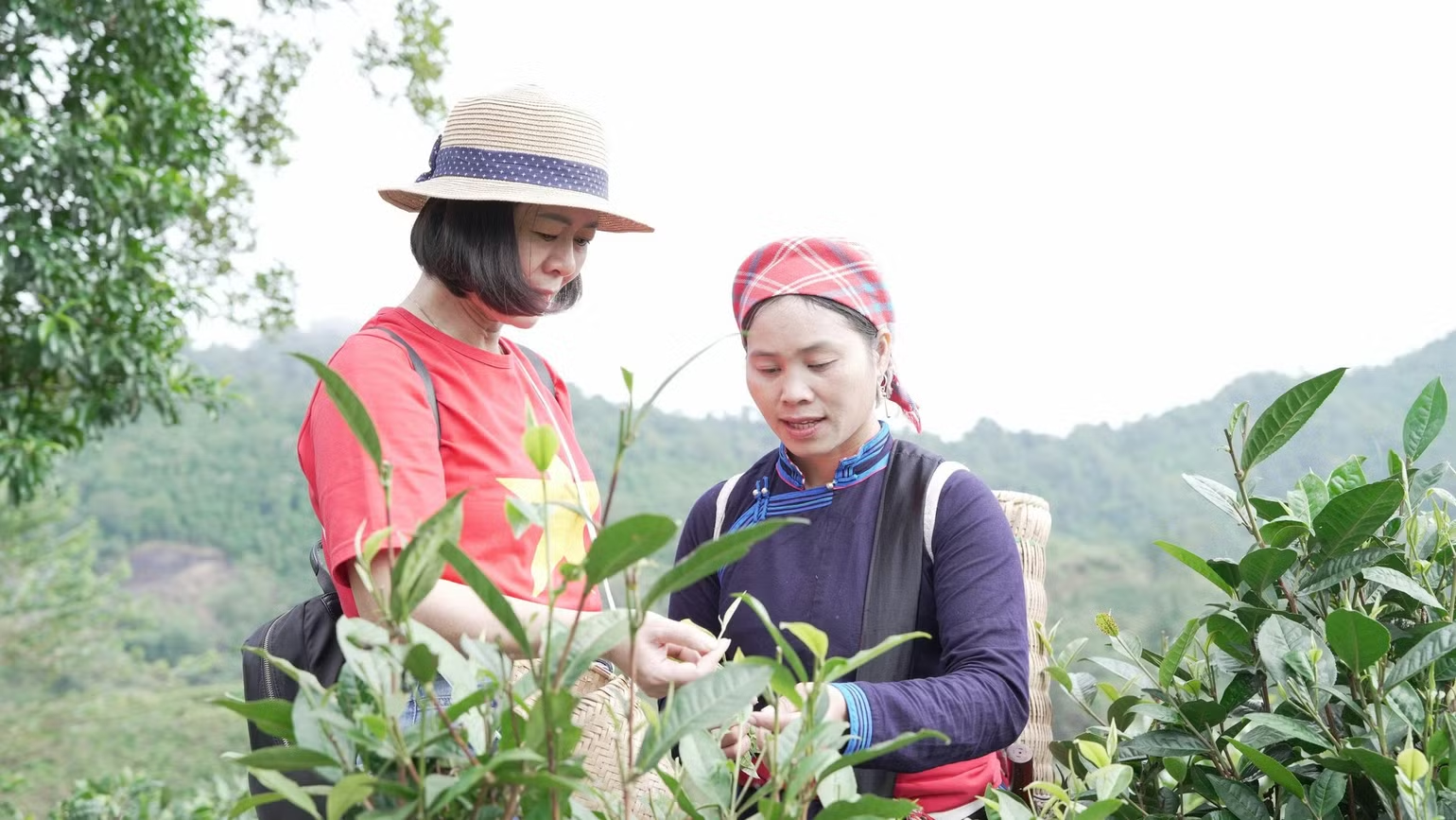
Tourists experience tea picking with the Tay people in Lien village. (Photo: Duy Doanh)
However, Mr. Pham Tat Thanh himself noted: "Having resources does not mean you have a product. Having a product does not mean the market will buy it. And having customers does not mean the product is sustainable." Therefore, he requested clarification: is the route actually operational? Who are the customers? Which businesses are selling? Who provides the service? What are the selling price and operating costs? He also emphasized that the linkage must shift from "joint participation" to "joint responsibility for product quality."
Based on the current situation along the route, three things need to be implemented. First, narrowing the service gap is crucial: during the recent National Day holiday, three-star and higher-rated accommodations in Sa Pa reached approximately 95% occupancy, while in Ban Lien, only 12 households will be involved in community tourism by 2024, so maintaining small group sizes in these villages is necessary. Next, minimum conditions along the route such as restrooms, garbage collection, signposts, price lists, and contingency plans for floods are essential. Finally, mechanisms to ensure the interests of local people are protected. Mu Cang Chai currently retains all revenue from terraced rice field entrance fees to manage, preserve, and directly support households involved in tourism. This approach should be considered for the entire route, because if people abandon their fields, the landscape will be lost.
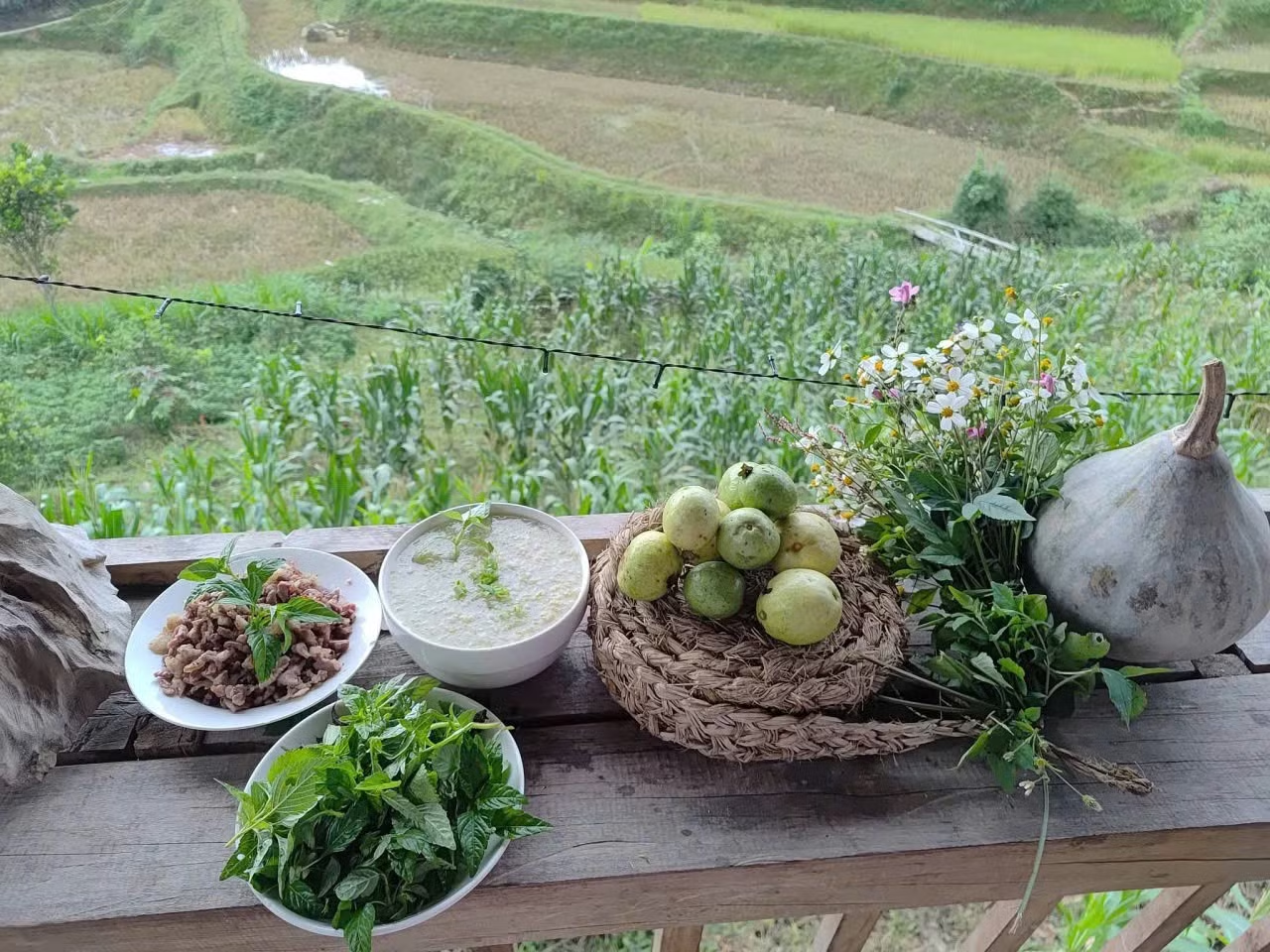
Experiencing the local way of life is a major draw for tourists seeking longer stays. (Photo: Duy Doanh)
Resolution No. 26-NQ/TW dated August 22, 2026, of the Politburo on tourism development requires strengthening the value chain linkages between travel agencies, transportation, accommodation, services, and local products, focusing on attracting high-spending tourists who stay for longer periods. For Lao Cai, the goal by 2030 is to welcome 15 million tourists, generating total revenue of approximately 70,000 billion VND. This means the average revenue per tourist must increase from the current approximately 4.1 million VND to nearly 4.7 million VND. This increase is unlikely to come from day trips; therefore, connecting heritage destinations is expected to open up new opportunities for breakthrough tourism development in the locality.
THI PHONG
Nhandan.vn
Source: https://nhandan.vn/ket-noi-di-san-van-hoa-ruong-bac-thang-post993292.html