
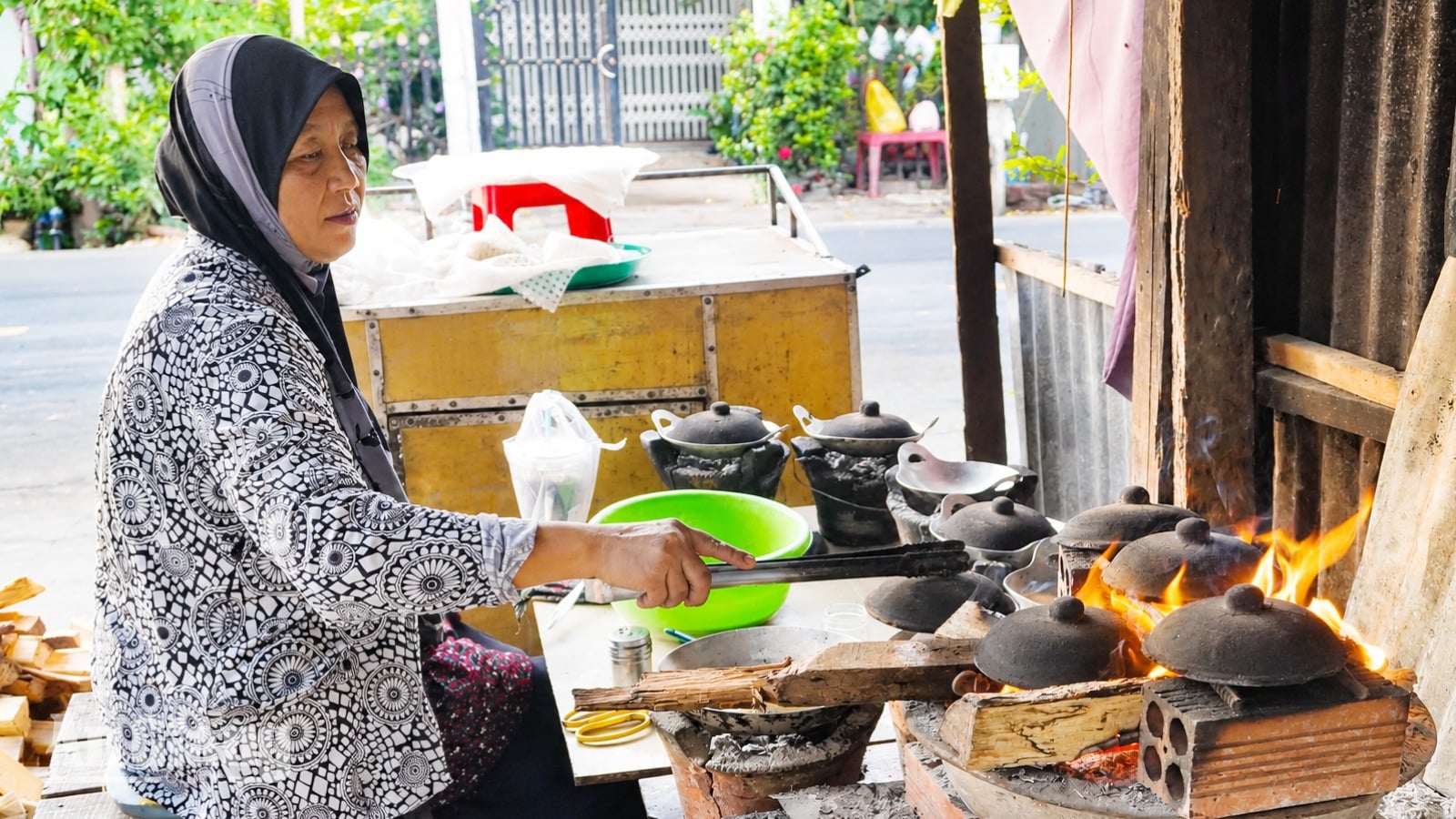
Ms. Phao Sy Dah skillfully makes Namparang cakes on a traditional stove.
Keeping the flame alive for traditional Vietnamese cakes.
In Ha Bao 2, as the charcoal stove begins to glow red in the morning, Mrs. Phao Sy Dah's kitchen becomes bustling. A small pan sits on the stove, next to it are heated earthenware lids. Each time a lid is opened, the aroma of the cakes wafts out, a blend of the sweetness of palm sugar and the nutty fragrance of roasted sesame seeds.
Namparang cakes may look simple, but making them perfectly cooked, crispy on the outside and soft and fluffy on the inside, requires experience. The batter is poured into a pan in the right amount, then covered with a heated earthenware lid. The heat from the charcoal stove below and the lid above helps the cake cook evenly.
Just a few minutes later, when the lid is opened, the surface of the cake turns a light golden color, with roasted sesame seeds floating on the surface. The baker doesn't have a thermometer; they rely mainly on experience: the charcoal must be hot enough, the clay lid must be at the right temperature, the amount of batter must be just right, and the timing of opening the lid must be precise.
Ms. Phao Sy Dah has been making Namparang for over 18 years. Just by looking at the color of the cake, feeling the heat from the stove, or smelling the aroma, she can tell if the cake is ready.
On a typical day, she makes about 80 cakes, selling them for around 6,000 VND each. Some people buy them to eat while they're still hot, while others buy them to take home as gifts.
“My mother used to make them and taught me how. I gradually got used to it, and eventually it became a skill. As long as I can still make them, I'll continue doing so so that my children and grandchildren will know about this traditional Cham cake. Every day, I light the fire, make the cakes, and seeing customers buy them and take them home makes me happy,” shared Mrs. Phao Sy Dah.
Passing down skills through family kitchens.
Namparang is not just an everyday dish. In the lives of the Cham people, many types of traditional cakes also appear during festivals, holidays, parties, or family gatherings. A plate of hot cakes placed in the middle of the house when guests arrive is also a way for the people to introduce the flavors of their homeland.
To ensure that this pastry is not just a memory, the art of baking is passed down from generation to generation right in family kitchens.
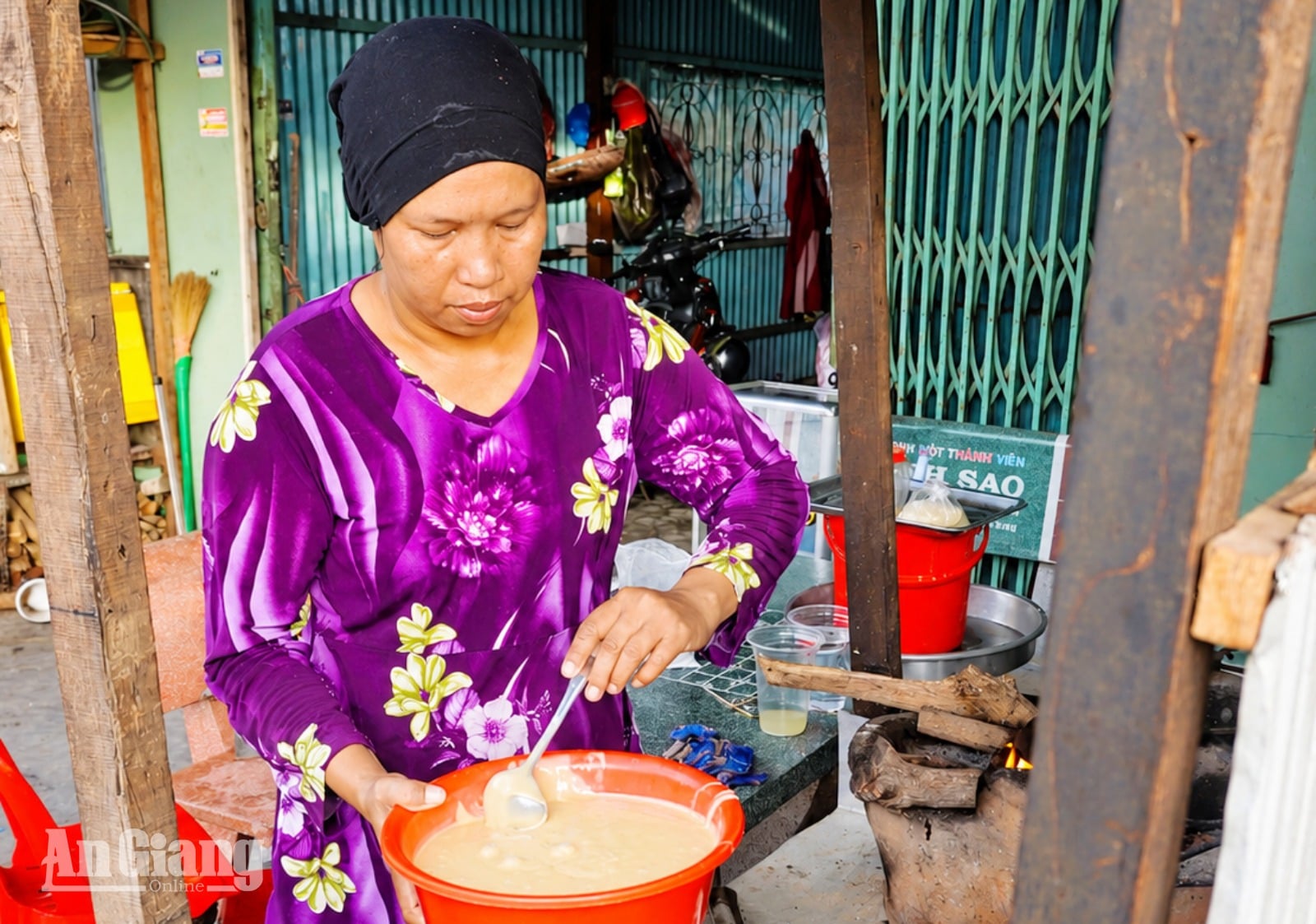
Ali Ha prepares the batter for making Namparang cakes, continuing her family's traditional craft.
Ali Ha learned to make Namparang from her mother. Without formal training, her first lessons began by observing each step of the process while standing by the stove. From preparing the batter and controlling the heat to knowing when the pancakes were cooked, everything was learned through hands-on practice.
"My mother has been making cakes for a long time, so I've gotten used to it. When I was little, I used to stand next to her and watch her make them, then help a little, and try making them myself. Later, when I got the hang of it, I started making them myself. As long as there are people buying them and enjoying them, I'll keep making them; it would be a waste to throw them away," said Ali Ha.
It is this simple method of passing on the craft that helps preserve seemingly small details, such as the temperature of the charcoal, the heat of the clay lid, or the right time to open the cake.
The aroma of the pastries captivates tourists.
Not only familiar to locals, Namparang cakes also delight many tourists visiting Vinh Hau. The unusual name and the way the cakes are baked using a charcoal stove and a clay lid make many people want to stop and watch and enjoy them as soon as they come out of the oven.
Mr. Huynh Nguyen Minh Phong, a tourist from Ho Chi Minh City, said that he was initially curious about the name Namparang cake. Upon tasting it, he was impressed by the moderate sweetness, the aroma of palm sugar and roasted sesame seeds, and the traditional method of making the cake using a clay lid.
For Ms. Dang Kim Xuyen, also from Ho Chi Minh City, Namparang is a flavor that has become familiar after many times of enjoying it.
"I've been eating these cakes since around 2020. They're fragrant, just the right amount of sweetness, and taste great when eaten hot. Every time I come down here, I buy a few to take home for my family," Ms. Xuyen shared.
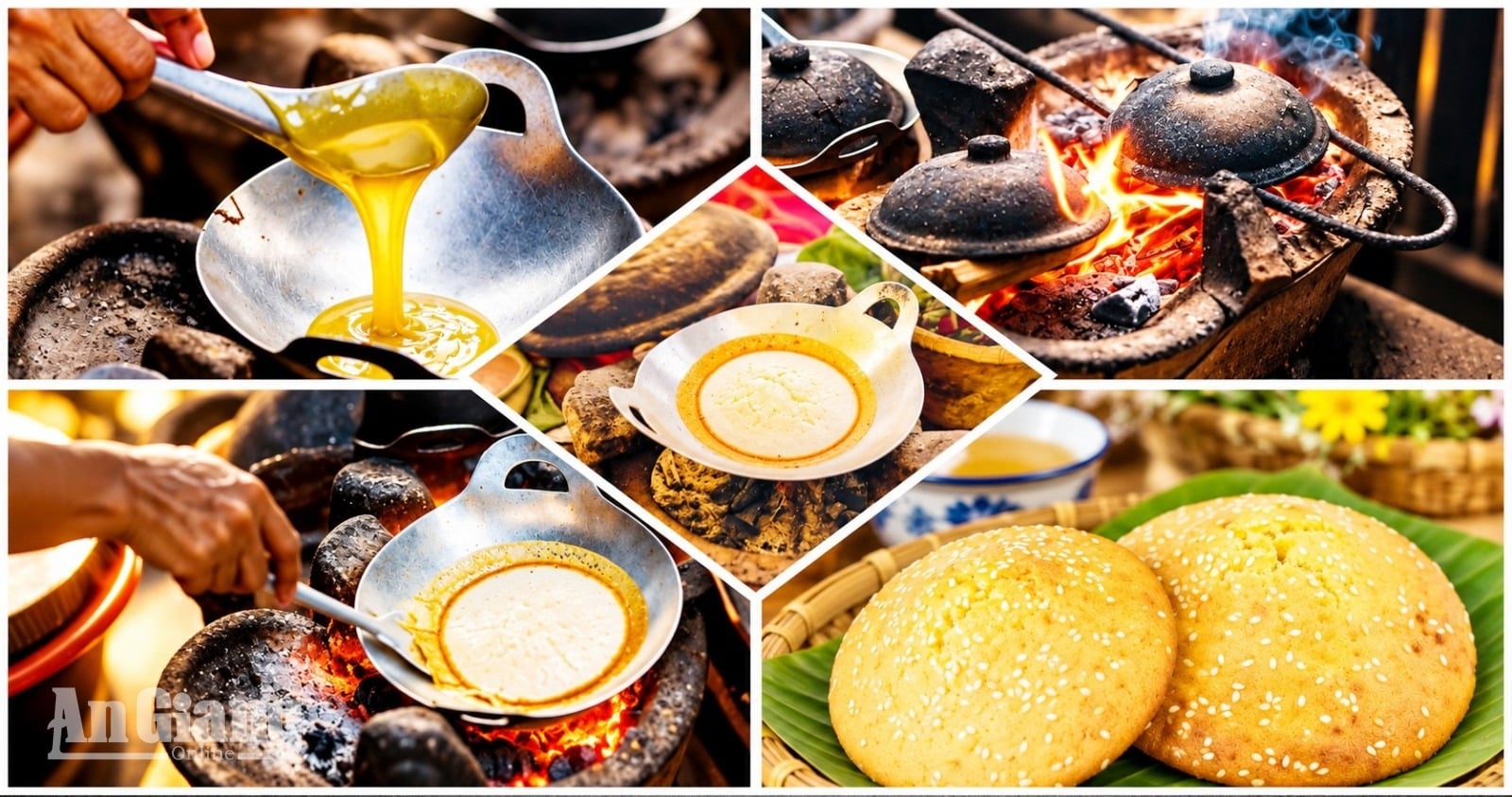
From dough to finished product, Namparang is handcrafted over a charcoal stove, with a terracotta lid that gives it the distinctive flavor of the Cham people.
According to Du So, Secretary of the Party Branch of Ha Bao 2 hamlet, the hamlet currently has 1,551 households, of which 488 are Cham ethnic minority households. In recent years, in addition to developing their family economy , some households have maintained traditional crafts, including making Namparang cakes.
According to Mr. Du So, some people make cakes to sell, while others only make them during holidays and Tet (Lunar New Year). Maintaining the craft helps the younger generation learn how to make the cakes their grandparents used to make, and also creates an additional source of income for the family.
A Namparang might only take a few minutes to cook on the stove, but preserving its flavor through generations is a long story of those who still light the fire every day. In the warmth of the Cham kitchen in Ha Bao 2, this traditional cake continues to be made, passed down, and become an integral part of the community's cultural life.
Text and photos: DANH THÀNH - DIỆP ANH
Source: https://baoangiang.com.vn/hap-dan-huong-vi-banh-namparang-cua-dong-bao-cham-vinh-hau-a498739.html