

According to Goldman Sachs, the diesel market could continue to face pressure until 2027 because the global refining system is not yet able to meet the projected strong recovery in demand.
"We need to keep oil prices high enough to limit supply-demand imbalances next year," Nikhil Bhandari, head of natural resources research for Asia-Pacific at Goldman Sachs, told CNBC on October 5.
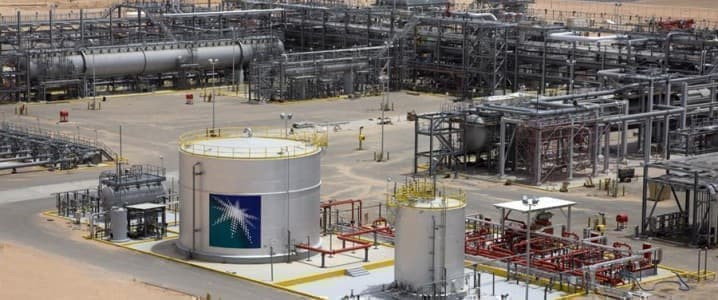
Goldman Sachs forecasts that the price difference between diesel, jet fuel, and crude oil will reach over $40 per barrel in 2027, double the current level.
Goldman Sachs issued this warning despite the bank's expectation that Brent crude oil prices will remain stable around $80 per barrel next year as crude oil flows through the Strait of Hormuz gradually return to normal.
"If demand continues its strong recovery in 2027, we believe the global refining system will have to reach its highest operating rate in two decades," expert Bhandari stated.
Meanwhile, energy expert Baden Moore at financial firm CLSA believes that the recent drop in oil demand will not last. According to him, basic demand for petroleum products remains strong, while key market factors remain stable thanks to effective inventory management, consumption cuts, and optimized refining operations.
According to Baden Moore, replenishing global oil inventories while still meeting demand could take up to two years.
Goldman Sachs said that the recovery in demand for refined oil products may face headwinds as global refining networks are under pressure.
Goldman Sachs forecasts that 2026 will continue to be a year of negative global refining capacity growth, with capacity outside of China decreasing by approximately 300,000 barrels per day. According to Goldman Sachs' "Global Refining Supercycle" report, published on September 21st, inventories of petroleum products could end 2026 at levels lower than the lowest number of supply days recorded since 2015.
Currently, the average refining capacity of 2 million barrels per day in the Middle East has not been restored, while damaged refineries in Russia continue to restrict diesel supplies. In addition, US refineries will also have to carry out delayed maintenance after a period of high capacity operation, thus temporarily reducing output.
Experts believe that even if crude oil exports from the Gulf region recover, it is not expected to significantly improve the supply of refined oil products, as the transportation of diesel, gasoline, and jet fuel remains restricted.
Earlier, on October 2nd, the Group of Seven (G7) industrialized nations agreed to release 100 million barrels of crude oil and refined petroleum products over four months, with a large quantity of diesel fuel prioritized for release to the market by G7 members and partners within the first 20 days. This move caused diesel futures prices in the European market to fall by 5.75%.
However, energy experts assess that the G7's release of oil reserves is unlikely to have a lasting impact. Saudi Aramco CEO Amin Nasser stated that the G7's emergency reserves could help the global oil market overcome challenges this winter, but cannot solve the long-term supply shortage.
Moore argued that continuing to release existing inventories is essentially only a temporary measure given that global diesel supply remains lower than demand and inventories continue to decline.
Sharing the same view, Bernard Aw, chief economist for the Asia-Pacific region at Coface, a leading global commercial credit risk management firm, also assessed that the impact of this measure is only temporary and does not address the structural problem.
Source: https://hanoimoi.vn/goldman-sachs-gia-dau-diesel-co-the-neo-cao-den-nam-2027-1759817.html