
Prime Minister Le Minh Hung 's official visit to Cambodia is expected to create a turning point in Cambodia-Vietnam relations, shifting from a foundation of "political trust" to a "driving force for development," from "historical closeness" to "strategic closeness," with a focus on concretizing high-level consensuses into projects connecting the economy, infrastructure, and cooperation that bring practical benefits to people and businesses, thereby making Cambodia-Vietnam relations increasingly deeper, more substantive, and sustainable.
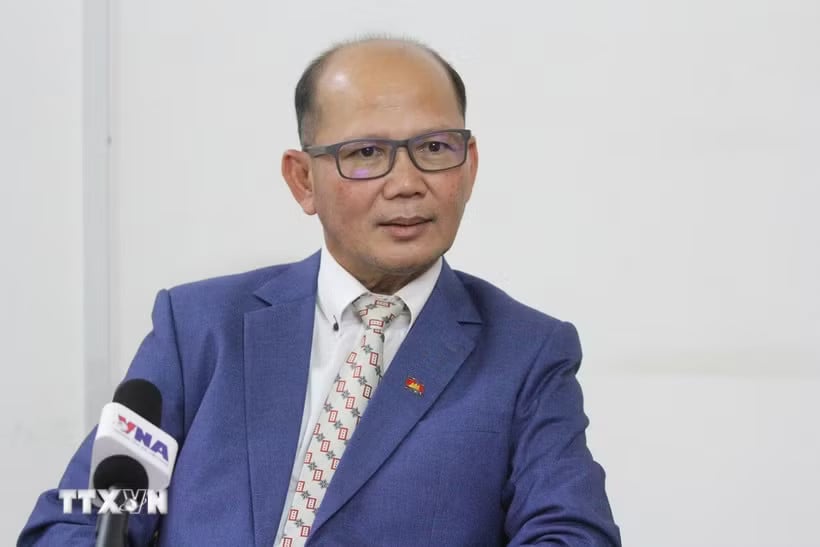
This was the assessment of Mr. Uch Leang, Acting Director of the Department of Asian, African and Middle Eastern Studies, Institute of International Relations under the Royal Academy of Cambodia, and also President of the Association of Cambodian Alumni who studied in Vietnam, in an exchange before the visit.
Connecting the two economies and enhancing the quality of cooperation.
According to Mr. Uch Leang, this official visit should be viewed in a long-term perspective and at the regional level, because the Cambodia-Vietnam relationship is not only significant for the two countries but is also linked to peace, stability, connectivity, and cooperation within the Association of Southeast Asian Nations (ASEAN).
High-level contacts in 2026 show that the two sides have a fairly solid foundation of political trust, while cooperation in economics, defense and security, border issues, and people-to-people exchanges continues to expand.
He noted that the most important breakthrough in the coming period is the shift from expanding cooperation to improving the quality and substance of cooperation.
First and foremost, both sides need to prioritize connecting the two economies, especially in terms of transportation infrastructure, border crossings, logistics, trade and investment, and economic zones, thereby creating conditions for closer linkages between goods, businesses, and production chains of the two countries.
Connectivity projects such as the Ho Chi Minh City-Moc Bai-Bavet-Phnom Penh expressway could become important drivers of development if implemented effectively.
Besides economic connectivity, cooperation in defense and security and border management also needs to be deepened, especially in combating cross-border crime, addressing non-traditional security challenges, and building a peaceful, stable, cooperative, and developing border.
This is not only a security issue for each country but also directly contributes to the stable environment of the Mekong sub-region and ASEAN.
Another driving force that Mr. Uch Leang emphasized was people-to-people exchange, education , culture, and the younger generation.
According to him, this is a social foundation that helps strengthen long-term understanding and trust between the two nations, especially as the two countries are looking forward to celebrating the 60th anniversary of the establishment of diplomatic relations in 2027.
He argued that the most important measure of a visit lies not only in new statements or agreements, but in the ability to concretize high-level consensuses into programs and projects with clear roadmaps that bring practical benefits to the people and businesses.
Interacting with young people, fostering connections for the future.
Further analyzing the field of people-to-people exchanges, Cambodian scholars argue that people-to-people exchanges, especially exchanges between younger generations, are not only a complementary area to Cambodia-Vietnam relations, but also one of the most important social foundations determining the long-term vitality of bilateral relations.
He explained that while state-level relations establish the political and strategic framework, people-to-people exchanges contribute to building understanding, empathy, and trust at the societal level. When this foundation is strong enough, bilateral relations will be better able to adapt to changes in the regional and international environment.
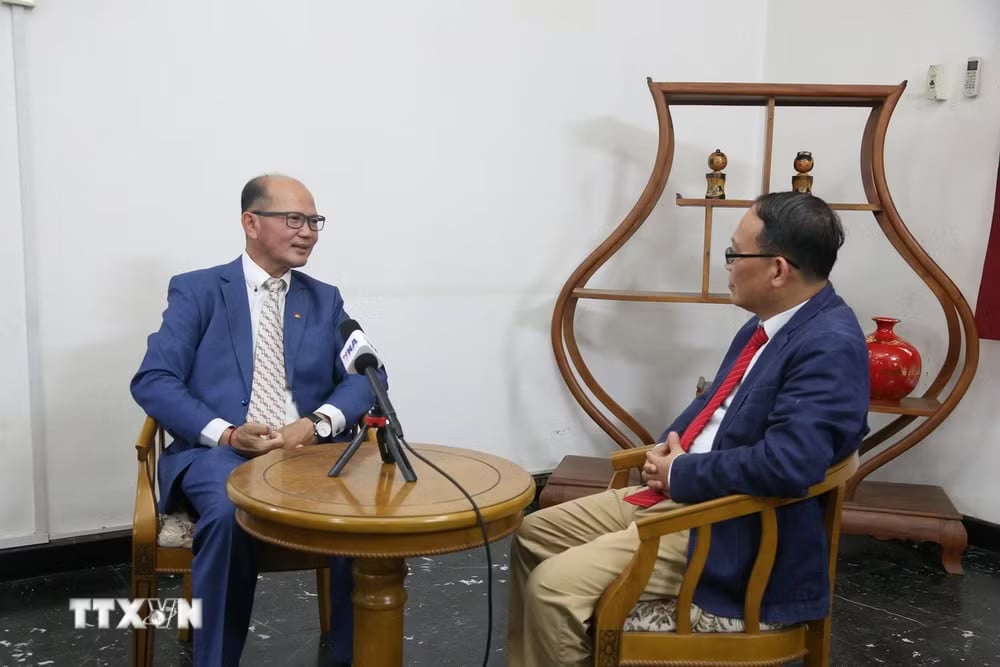
Mr. Uch Leang added that the relationship between the two countries has a special historical depth, but history also demands the continuous strengthening of mutual understanding between generations.
Through education, culture, academia, sports, tourism, and community activities, people from both countries have the opportunity to interact directly, gain a better understanding of each other's countries, people, cultures, and shared interests.
This is a practical way to build a foundation of relationships that is not only based on agreements between government agencies, but also nurtured within the community itself.
For the younger generation, he considers this area to be even more important, because today's youth will be the leaders, diplomats, entrepreneurs, scholars, and those who will directly shape Cambodia-Vietnam relations for decades to come.
Therefore, investing in youth exchange is essentially investing in the future of bilateral relations. I believe we need to expand student exchange programs, scholarships, joint research, youth forums, entrepreneurship, volunteer activities, and alumni networking.
More importantly, it is necessary to create conditions for young people from both countries to not only meet at official events, but also to study together, conduct research together, work together, and solve community problems together.
Mr. Uch Leang particularly emphasized the role of the Cambodian alumni community who studied in Vietnam. According to him, this is a special resource.
With their firsthand experience in Vietnam and their involvement in various aspects of Cambodian life, this network can become a "bridge of knowledge and society," contributing to the promotion of cooperation in education, research, economics, culture, and people-to-people exchanges between the two countries.
However, people-to-people exchanges in the new era also need innovation in content and methods. They should not be limited to ceremonial activities or traditional exchanges, but should aim for programs that are in-depth, interactive, and produce long-lasting results. In particular, digital platforms and social media should be utilized so that young people from both countries can regularly exchange and share knowledge and understanding of each other.
According to him, the sustainability of Cambodia-Vietnam relations in the future will not only be measured by the number of high-level visits or signed agreements, but also by the level of understanding, trust, and goodwill between the people of the two countries.
Therefore, if state diplomacy is the political foundation of bilateral relations, then people-to-people exchanges, especially among the younger generation, are the social foundation and long-term resource that ensures the continuation of Cambodia-Vietnam relations from one generation to the next.
On the occasion of the two countries looking forward to the 60th anniversary of the establishment of diplomatic relations in 2027, he suggested that this is the appropriate time to build a long-term people-to-people exchange program in which young people, students, scholars, and alumni networks become active participants, thereby taking the relationship between the two countries from "historically close" to "connected in the future".
Turning high-level consensus into tangible results.
Regarding Prime Minister Le Minh Hung's visit to Cambodia, he stated that this official visit not only helps to consolidate and deepen the foundation of political trust between the two countries, but also creates momentum to translate high-level consensus into concrete cooperation results.
In the context of a rapidly changing and intertwined regional landscape, maintaining regular, frank, and constructive high-level dialogue is of particular importance to Cambodia and Vietnam. Cambodian scholars expect the visit to generate momentum in three main areas.
First, strengthen the mechanisms for dialogue and strategic coordination. Both sides need to continue maintaining regular exchanges between high-level leaders and relevant agencies, not only on bilateral relations but also on regional and international issues of mutual concern. This will help the two countries enhance their understanding of each other's priorities, proactively address differences, and maintain an environment of trust and stability.
Secondly, political relations should be integrated into more substantive cooperation programs. According to him, political trust is only truly sustainable when it is demonstrated through concrete benefits.
Therefore, the visit should create further impetus for economic cooperation, trade and investment, infrastructure connectivity, border region development, defense and security, and people-to-people exchanges. In particular, attention should be paid to projects that can connect the two economies, facilitate businesses, boost trade, and bring tangible benefits to the people.
Third, create a suitable framework for addressing issues that still require coordination. For issues related to borders, security, transnational crime, water resource management, or non-traditional challenges, it is crucial to maintain mechanisms for professional exchange and dialogue at all levels.
Mr. Uch Leang stated that the principles of mutual respect, equality, mutual benefit, and resolving issues through dialogue should continue to be promoted. Complex issues should be addressed step by step, in a constructive spirit and in accordance with the legitimate interests of both sides.
Mr. Uch Leang particularly hopes that the visit will contribute to improving the implementation of the agreements and directions that have been reached.
According to him, a high-level visit can create important political direction, but its long-term value depends on how those directions are concretized into programs and projects. Therefore, in addition to joint statements, both sides need to clearly identify priority areas, key projects, implementation roadmaps, as well as mechanisms for monitoring and evaluating results.
Looking at the broader picture, Mr. Uch Leang believes this is the right time for Cambodia and Vietnam to define a cooperation program for a new phase, in which political relations continue to be the foundation, economic cooperation is the driving force, defense and security is an important area, and people-to-people exchanges are the long-term social foundation.
According to this scholar, if the above guidelines are effectively implemented, Cambodia-Vietnam relations will not only continue to be strengthened in terms of "political trust" but can also transform this foundation into "coordination capacity" and "development impetus," thereby making Cambodia-Vietnam relations increasingly deeper, more substantive, effective, and sustainable.
Source: https://daibieunhandan.vn/hoc-gia-campuchia-dua-dong-thuan-cap-cao-thanh-ket-thuc-cho-quan-he-viet-nam-campuchia-10432935.html