
Artificial intelligence has stepped onto the stage in an almost direct sense. It can generate dialogue, react to actors, and participate in improvisations that have long been considered the exclusive domain of humans. But the more AI accomplishes, the more difficult the question becomes: is creativity simply the ability to produce something new?
For Piotr Mirowski, a Polish computer scientist and actor, the answer isn't simple. He spent years incorporating language modeling into Improbotics, a project that combines real actors with AI. His work, "Improbotics Presents: Artificial Reality," even involves replacing performers with AI versions of themselves.
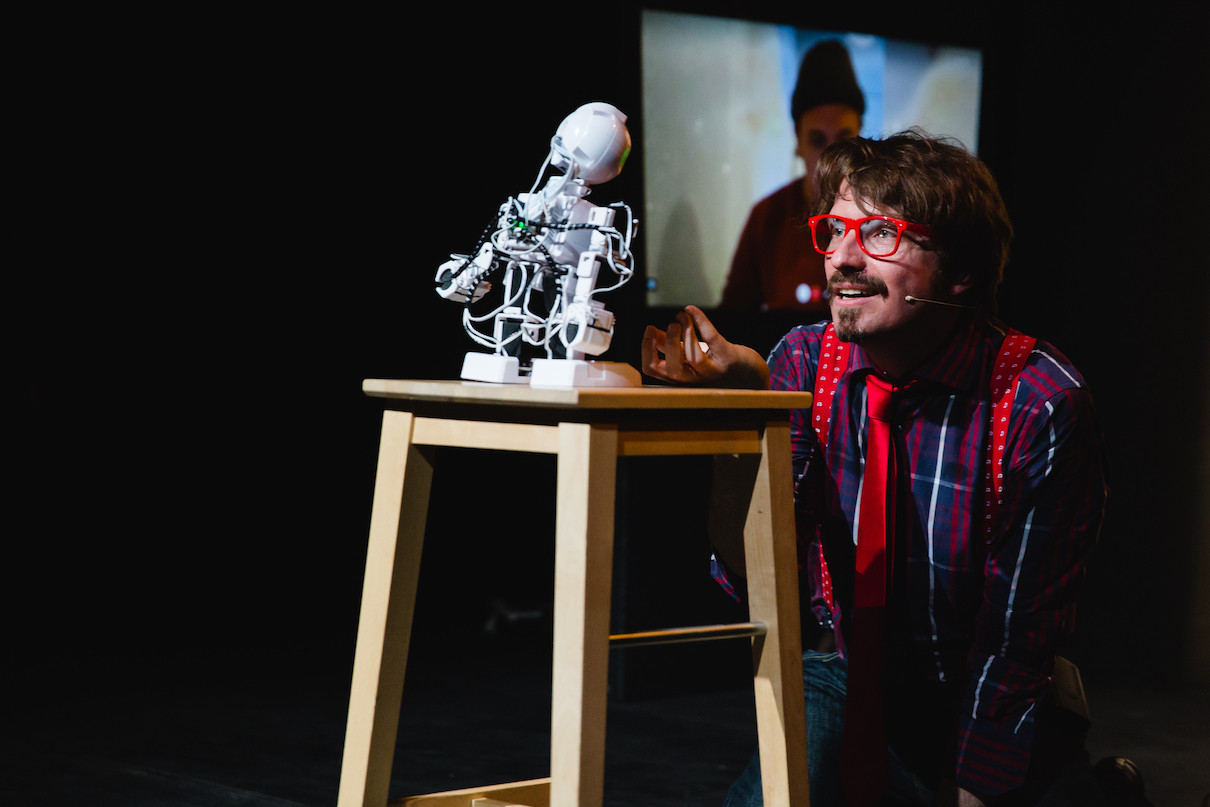
Mirowski began experimenting after noticing that models predicting the next word could produce dialogue quite smoothly, while real people were sometimes hampered by self-censorship when improvising. He built a model himself, trained it with subtitles and movie dialogue, and then performed it on a small stage in London.
AI has an advantage in improvisation due to its rapid response, less susceptibility to the fear of making mistakes, and ability to generate multiple solutions simultaneously. However, according to Piotr Mirowski, the ability to create content quickly does not equate to meaningful creativity.
A line of dialogue on stage depends on the writer's intention, the actor's experience, and the audience's reaction. These are factors that machines can only simulate.
Improbotics therefore does not hand over the entire creative process to AI. The team currently has 11 members and still needs more personnel to operate the technology.
This shows that bringing AI onto the stage does not mean diminishing the role of humans. On the contrary, the technology creates new jobs in design, control, and coordination during performances.
A study published in 2025 in the journal "Sustainable Future," based on 24 interviews with theater professionals who are using or exploring AI, also showed that the technology has been tested in many creative and operational aspects. However, professionals in the field still emphasize the need for human involvement in the creative process, while also demanding transparency and oversight when incorporating AI into the arts.
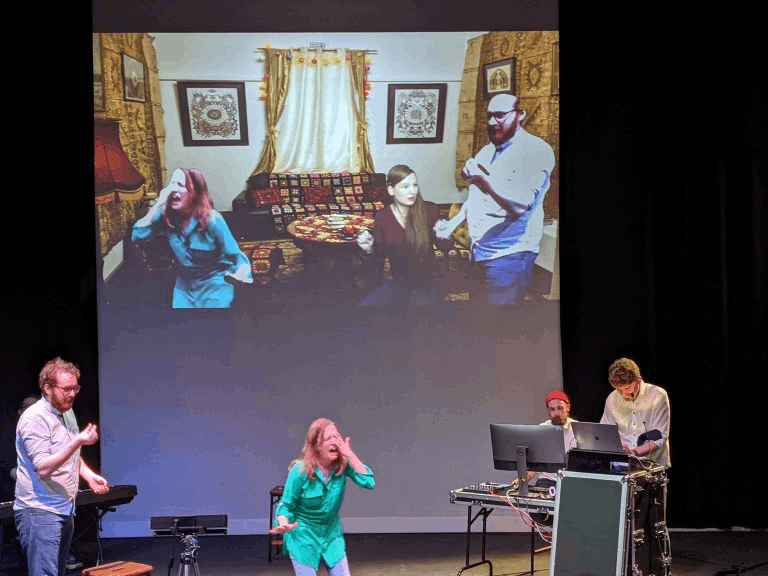
The appeal of theater lies not only in the dialogue or the story. Audiences also come to witness a real person standing before them, who may succeed, fail, forget lines, or react in ways that cannot be perfectly replicated.
Mirowski argues that viewers still "crave authentic, deeply human experiences." With "Artificial Reality," the structure of the work is still built by a team of actors, comedians, and professional designers, rather than being handed over to AI.
A 2023 survey by Improbotics at Edinburgh Fringe revealed that audiences are more open to AI assisting human creativity, but less enthusiastic if the technology becomes the storyteller itself. Viewers may accept AI as a tool, but remain interested in who is actually behind the work. As machine-generated products increasingly resemble human creations, the creator's imprint and responsibility become even more important.
In its report on AI and culture published at MONDIACULT 2025, UNESCO also emphasized that the application of AI must go hand in hand with protecting the rights of creators, cultural diversity, and the role of humans in the arts.
Technology can still help reduce costs, support production, and open up new forms of performance. Mirowski also warns about the impact of AI on creative work, society, and the environment. On stage, AI can write faster, generate more options, and even perform alongside humans, but the value of the performance still depends on the people making artistic choices, responding to the audience, and transforming dialogue into a truly relatable experience for viewers.
Source: https://hanoimoi.vn/gioi-han-cua-ai-บน-san-khau-1759807.html