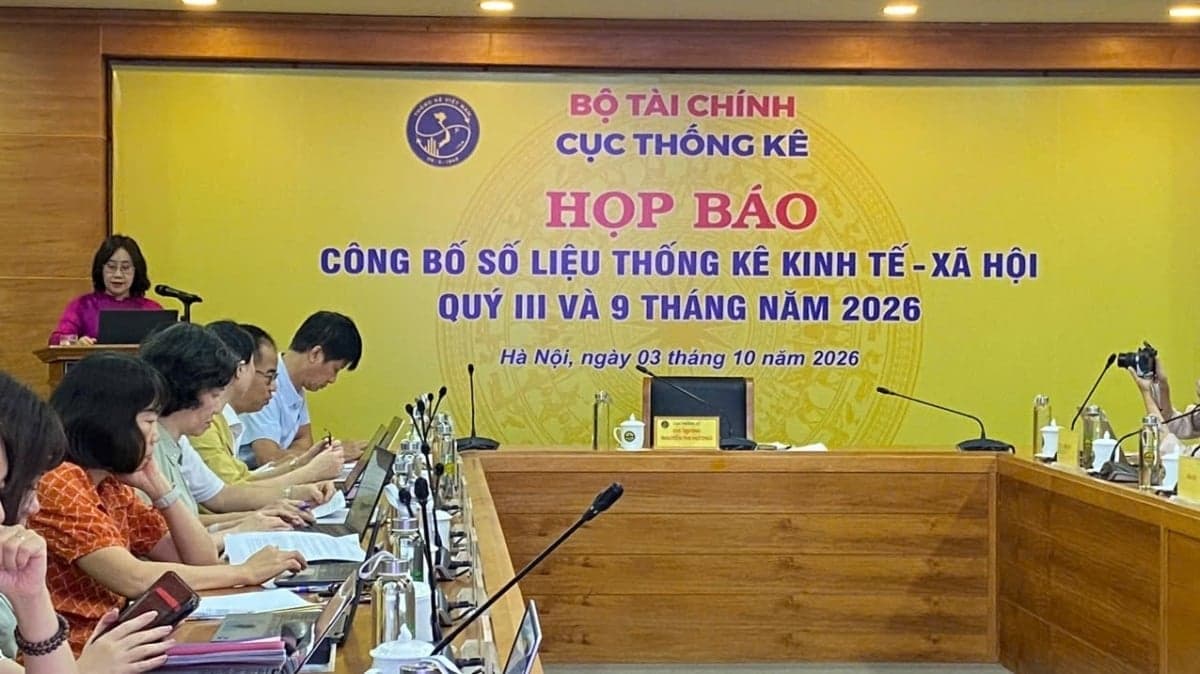

According to the socio -economic report for the third quarter and the first nine months of 2026 by Ho Chi Minh City Statistics, the real estate market continues to face risks that need to be closely monitored, but the flow of money into this channel has not actually decreased.
Accordingly, in the first nine months of the year, the real estate business segment maintained revenue growth of 8.4% compared to the same period last year. In the structure of other service revenue, estimated at VND 576,125 billion, real estate business accounted for as much as 56%.
Construction activity in the area increased by 10.45%. However, to maintain the recovery momentum, it is necessary to expedite the removal of obstacles related to land, planning, compensation procedures, land clearance, and to promote the development of social housing.
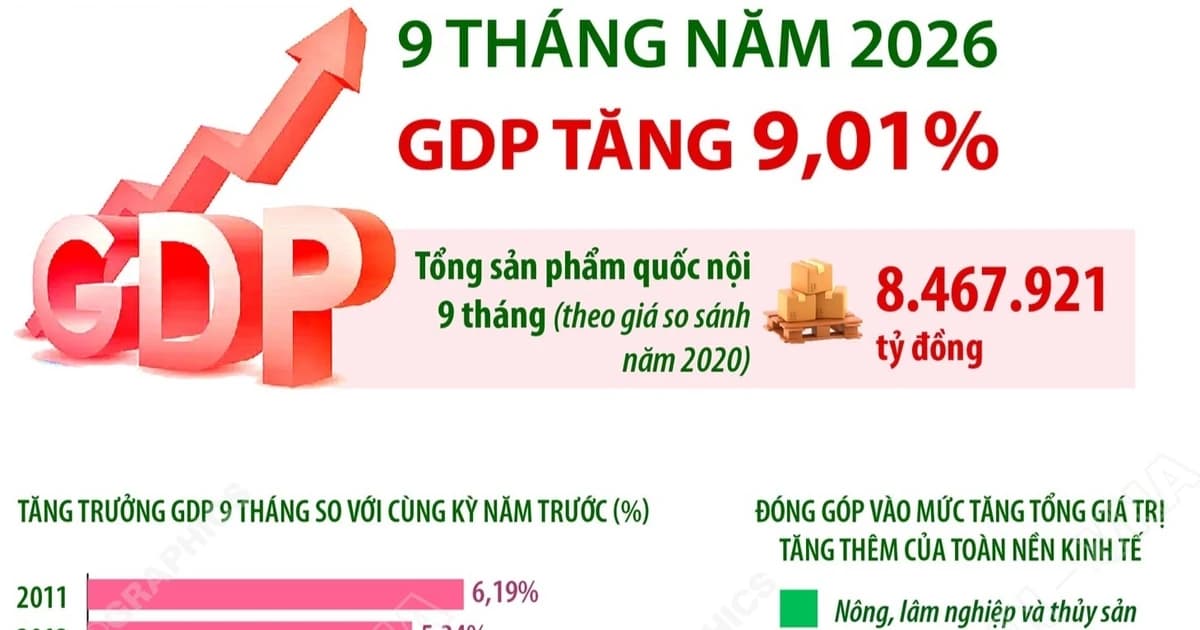
In the third quarter of this year, Ho Chi Minh City's economy grew by 9.86% compared to the same period last year. Of this, the agriculture, forestry, and fisheries sector increased by 3.4%, contributing 0.7% to the GRDP growth. The industrial and construction sector increased by 10.17%, contributing 37.5%.

As of September 28th, Ho Chi Minh City had disbursed 108,749 billion VND, completing nearly 74% of the allocated capital plan. Budgetary funds are flowing strongly into major core infrastructure projects such as the Ho Chi Minh City - Moc Bai expressway, metro line 2, the Xuyen Tam canal renovation project, and the Tham Luong - Ben Cat canal infrastructure.
According to a scenario developed by the Ho Chi Minh City Institute for Development Research and the Ho Chi Minh City Department of Finance, in order for the annual GRDP to grow by 10.2%, Ho Chi Minh City must achieve a growth rate of over 13.5% in the fourth quarter of 2026.
Therefore, Ho Chi Minh City must put into practical operation three main sources of capital: public investment, private investment, and FDI. Ho Chi Minh City will tighten discipline, link the responsibility of the head of each agency to the progress of disbursement and land clearance, handle outstanding projects, and effectively exploit revenue sources, especially revenue from land.
Ho Chi Minh City is also focusing on finalizing the master plan to submit to competent authorities, developing underground spaces, urban areas based on the TOD (Transit-Oriented Development) model for public transportation, implementing social housing projects, and renovating housing along rivers and canals.
Regarding budget revenue, Ho Chi Minh City focuses on exploiting five groups of revenue sources: revenue from land and land auctions, tax debt recovery, import and export revenue, revenue from the production and business activities of enterprises, and other legitimate revenue sources.
Specifically, Ho Chi Minh City will finalize the documentation to put the land plots up for auction as planned, issue specific land price decisions for the projects that have been surveyed, handle tax debts, and promptly record revenue in the budget as prescribed.
Source: https://tienphong.vn/dong-tien-do-vao-bat-dong-san-khong-giam-post1881672.tpo