


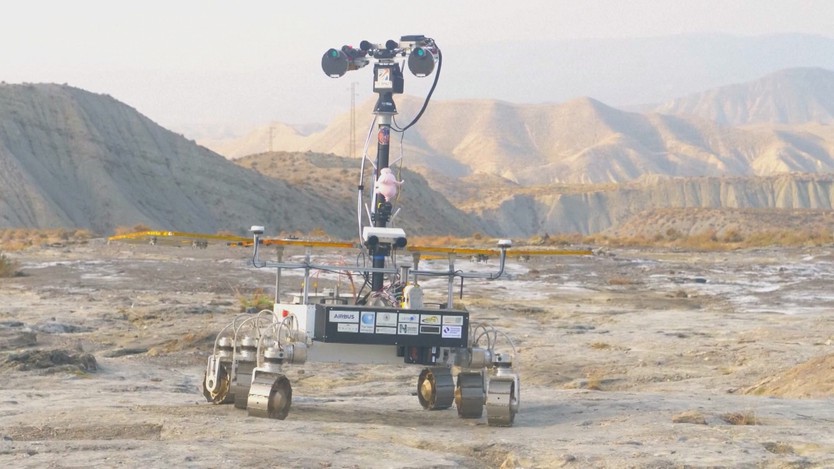
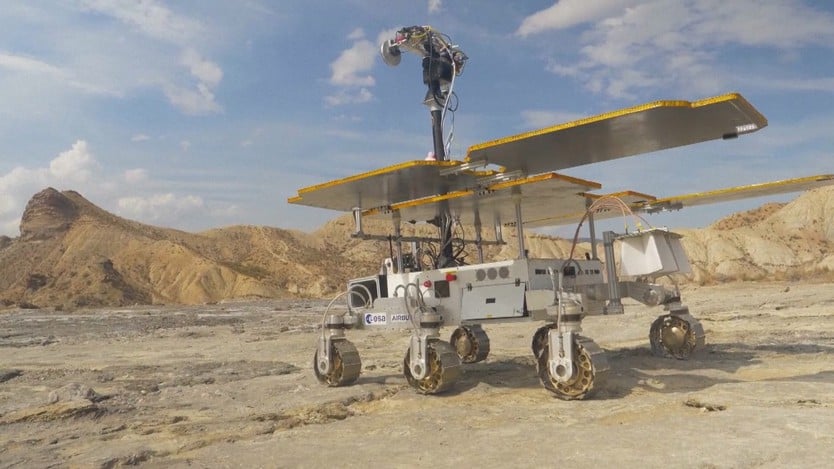
This vehicle is expected to be sent to Mars to search for evidence of life on the Red Planet by 2030.
The testing process included simulating the activities that the actual rover would perform after landing on Mars in 2030. The rover is expected to use a two-meter-deep drill to avoid harsh radiation and search for intact organic molecules.
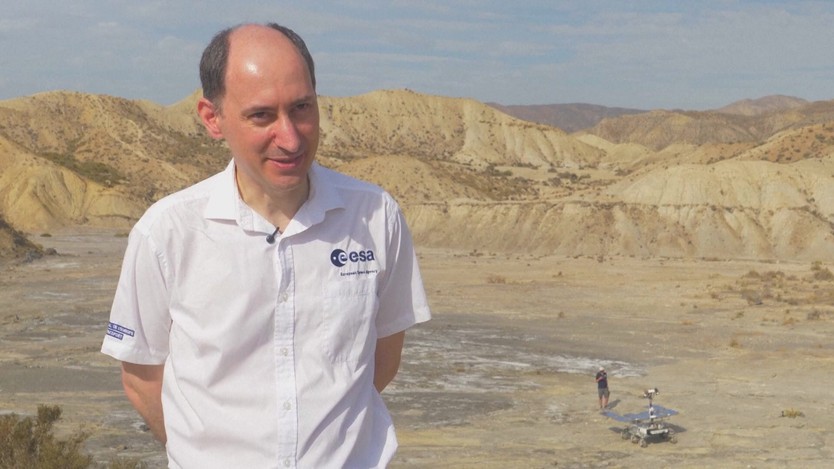
Benoit Pouffary, Chief Engineer, Exploration Division, European Space Agency (ESA), shared information about testing a prototype rover for Mars exploration.
Benoit Pouffary, Chief Engineer of the European Space Agency's (ESA) Exploration Division, shared: "The process is that the rover receives an operational plan from the control center in Turin, and then executes it automatically. What we need to verify is whether the rover can approach its target effectively, avoid obstacles, and find its way without hindrance."
The research team concluded that Spain 's Tabernas Desert was the perfect location for the experiment. It contains clay minerals, carbonate minerals, and traces of water-rock interactions similar to those found on the Red Planet.
Source: https://htv.vn/chau-au-thu-nghiem-mau-xe-tu-hanh-phuc-vu-viec-tham-hiem-sao-hoa-222261004192208496.htm