

One afternoon by Huu Tiep Lake (Ba Dinh Ward, Hanoi ), the water's surface was calm, reflecting the rows of trees. At the water's edge, the wreckage of a B-52 still lay there, a testament to the years Hanoi lived amidst air raid sirens, the roar of aircraft, and bombing raids.
More than half a century has passed. Those who directly experienced the war are now elderly, while the generation born in peacetime only knows about B-52s through history books, artifacts, and places associated with war memories.
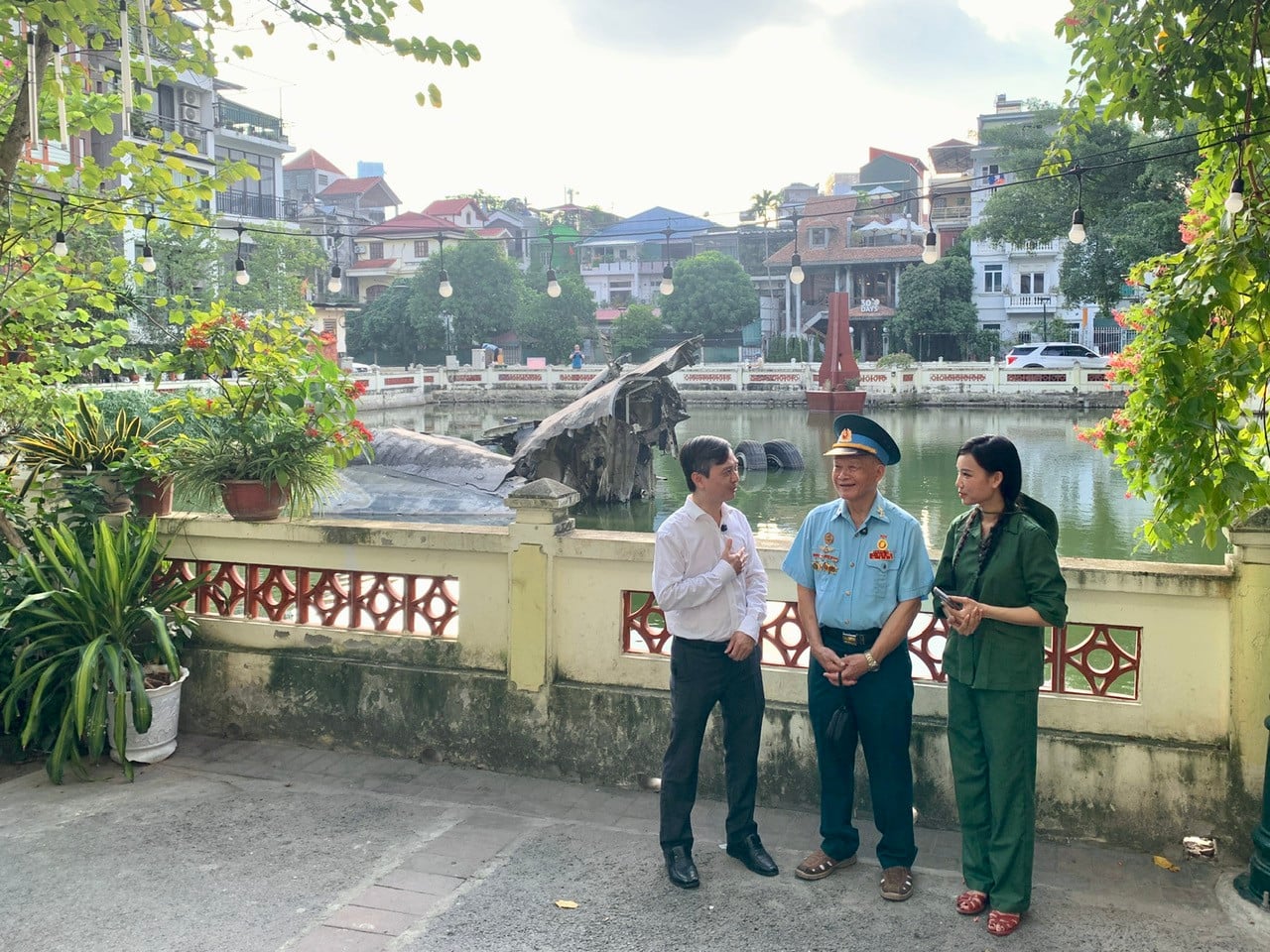
For Colonel Vu Dinh Rang, it was a part of his own memory, awakened when he returned to Huu Tiep Lake during the livestream cultural and historical experience program "One Lake, One Historical Story from Those Involved," organized by the Ba Dinh Ward People's Committee.
Colonel Vu Dinh Rang was a MiG-21 pilot and a former officer of the 921st Regiment, 371st Division, Air Defense - Air Force Command. He enlisted in 1963 and was sent for pilot training in 1965. Afterward, he was assigned to the 921st Regiment and trained in night combat, primarily tasked with intercepting B-52 bombers.
However, "hunting B-52s" was no easy task. Mr. Rang recounted that an American pilot at the time might have over 1,000 flight hours, while he only had about 200. The disparity in personnel, equipment, and experience made each flight a grueling challenge.
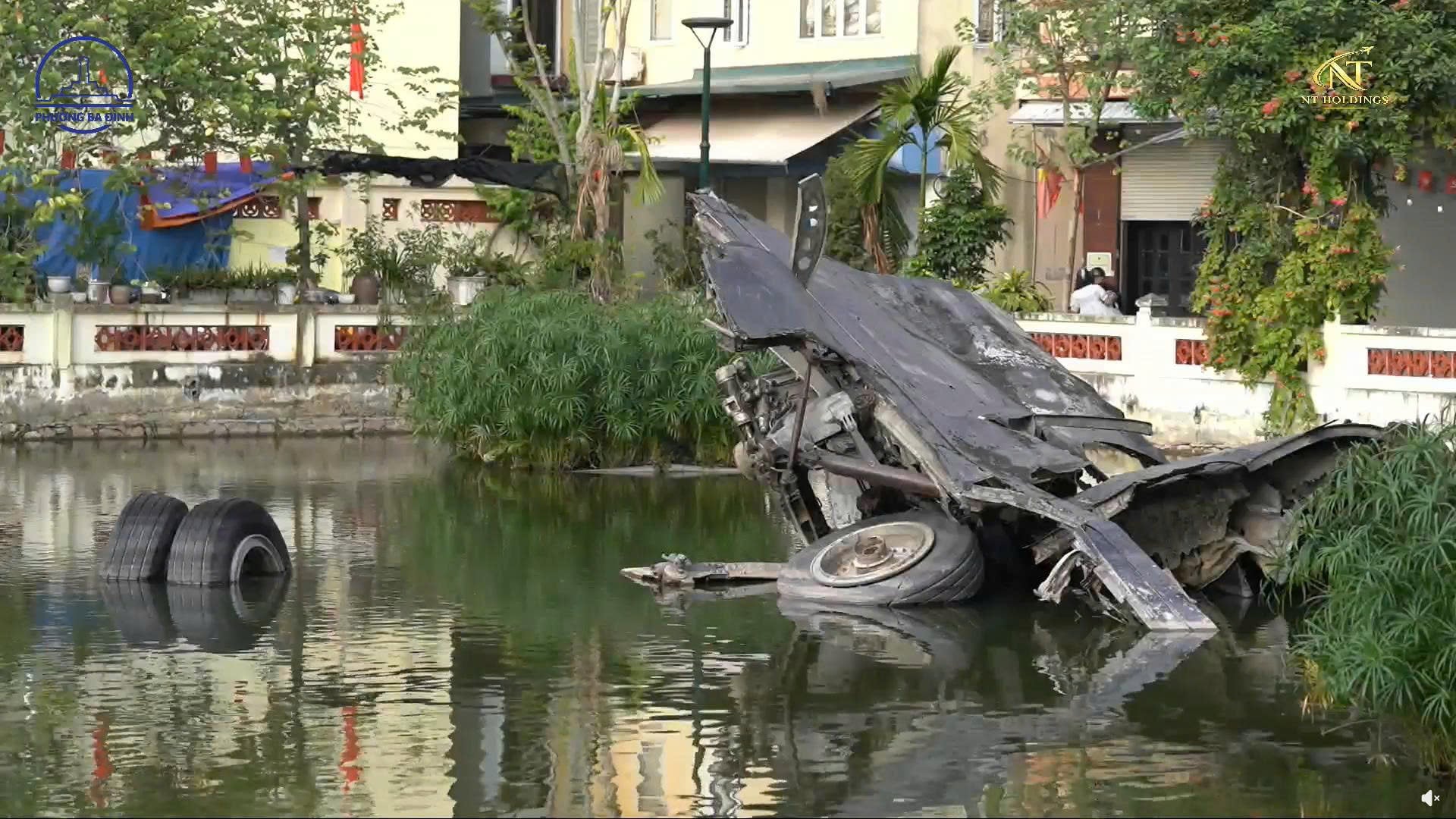
Meanwhile, the B-52, then nicknamed the "flying fortress," had a wingspan of approximately 56 meters, a fuselage length of about 50 meters, and could carry around 30 tons of bombs. "Hunting B-52s" was particularly difficult at night, when runways might have been damaged, and pilots had to take off in low-light conditions and approach their targets amidst treacherous airspace.
With initiative and creativity, the armed forces, with the Air Defense-Air Force as the core, the people of North Vietnam, and the military and people of Hanoi, have leveraged the combined strength of the people's air defense posture and achieved victory.
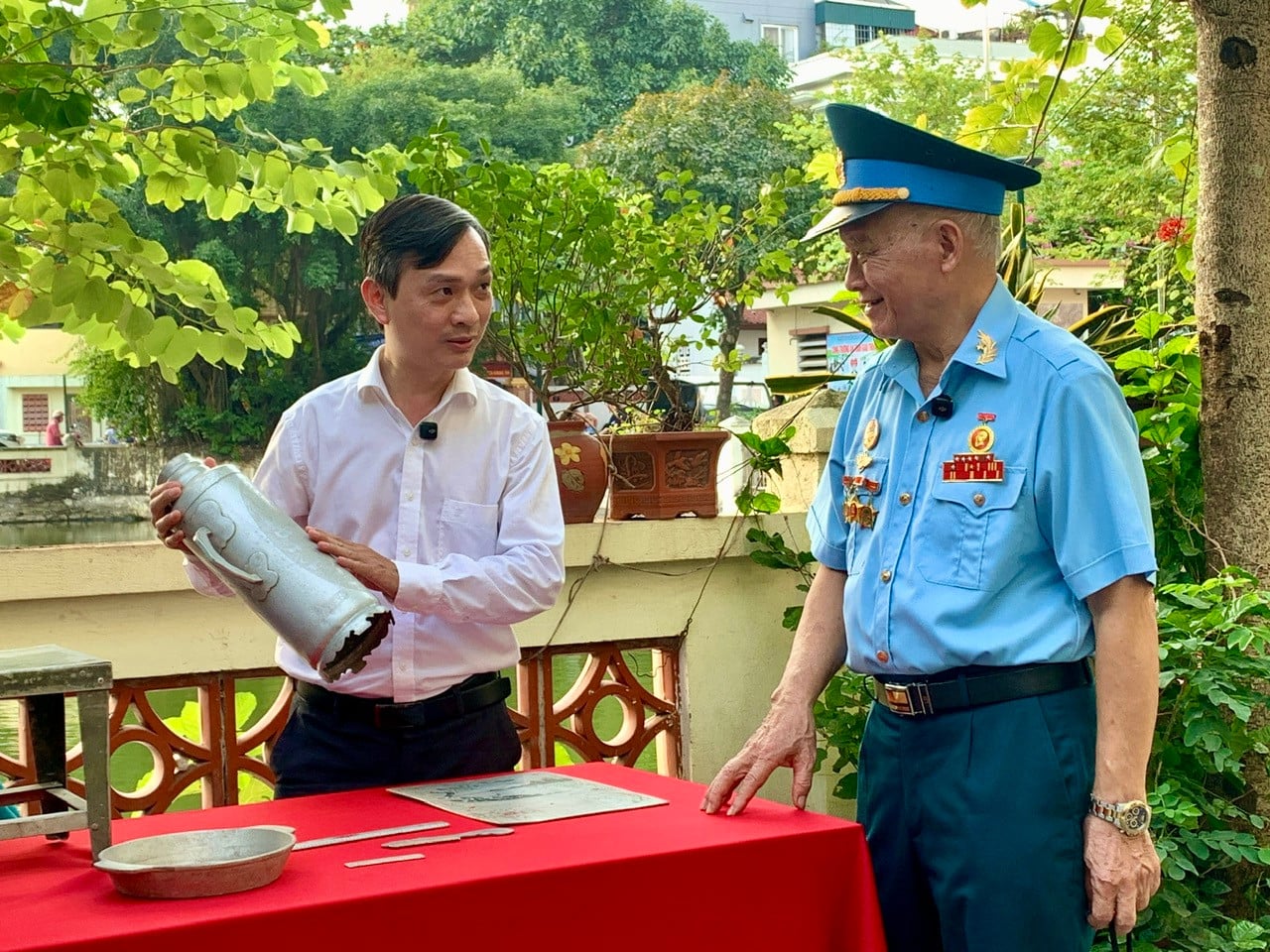
Standing by Huu Tiep Lake, Mr. Rang pointed to the remaining wreckage of the airplane and recounted a relic that many generations of Hanoians could see with their own eyes. The pieces of metal that once belonged to that war machine were later repurposed as household items during the subsidy period.
During the conversation, the Vice Chairman of the Ba Dinh Ward People's Committee, Nguyen Dan Huy, brought some items made from pieces of wrecked aircraft. These artifacts immediately evoked many memories for Mr. Rang, from the battlefields of the past to the lives of the people after the war.
“A lake, a historical story from the insiders” is part of a series of programs implemented by the Ba Dinh Ward People's Committee to bring local historical and cultural values closer to the public in the digital environment.
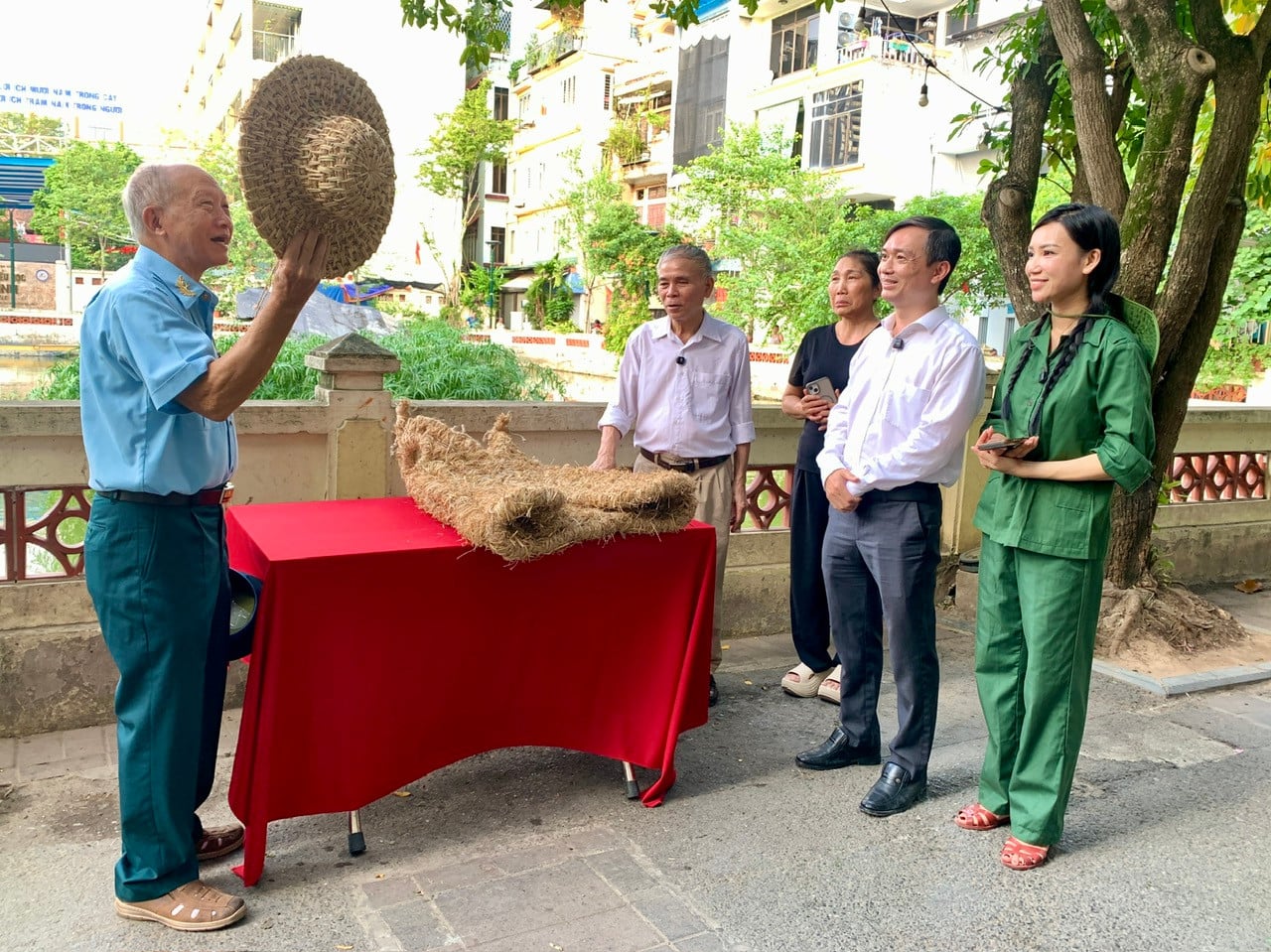
From Huu Tiep Lake, the program not only introduces a war relic but also allows viewers to meet a witness who directly participated in the confrontation with enemy B-52 aircraft in the skies over Hanoi. The stories and artifacts thus become a bridge between the past and the present.
From the very beginning of the program, viewers were invited to answer questions about the remains of the B-52 at the bottom of the lake. At one point, the livestream attracted over 5,000 live viewers, along with many questions sent to Colonel Vu Dinh Rang about the aircraft, landmarks around the lake, and war memories.
Colonel Vu Dinh Rang believes this approach helps bring history closer to the younger generation. According to him, recounting the heroic deeds of Hanoi's people and army in an accessible way will help young people better understand what previous generations experienced.
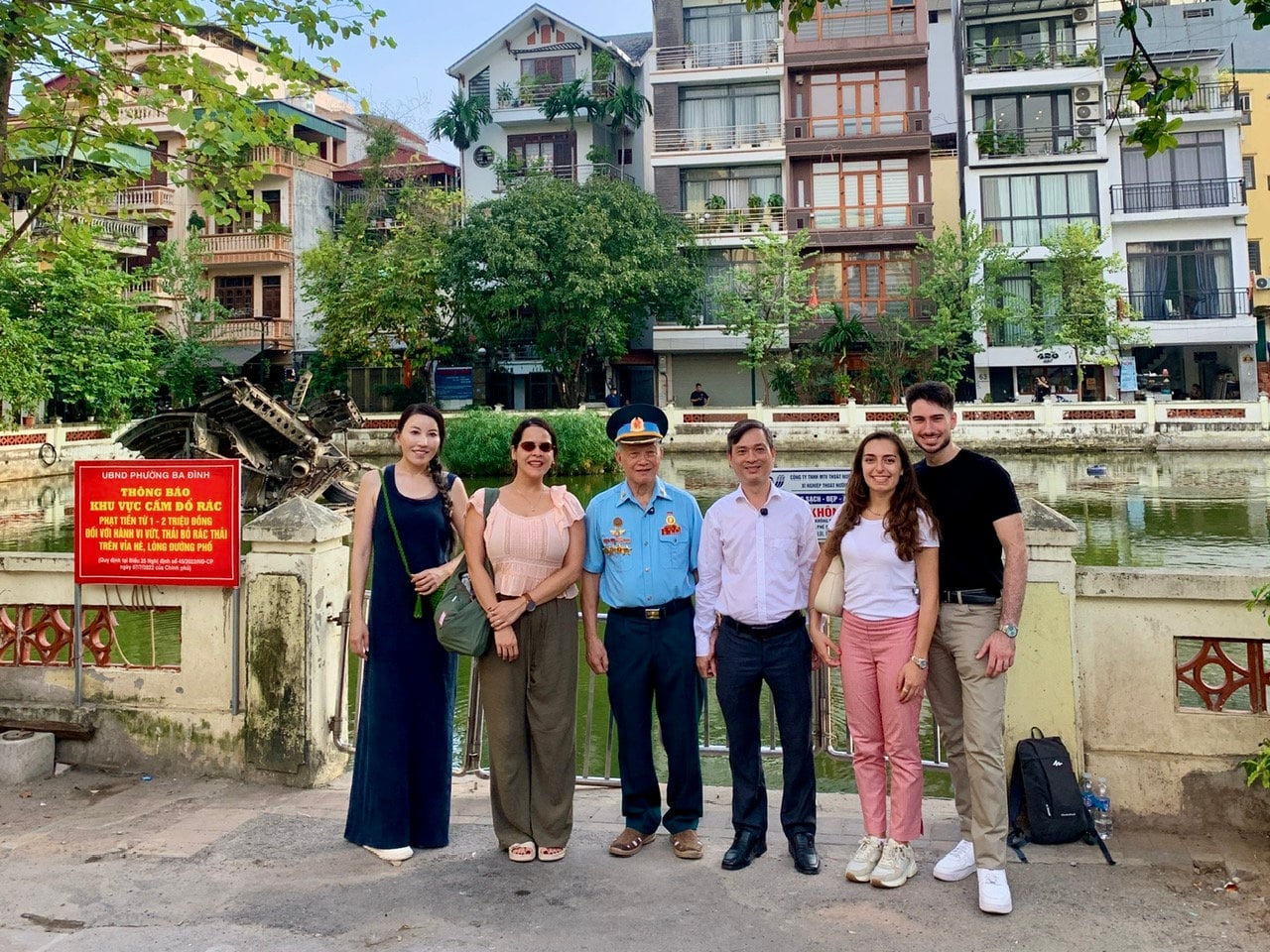
According to Nguyen Dan Huy, Vice Chairman of the People's Committee of Ba Dinh Ward, historical stories told by specific individuals easily create a sense of closeness and emotion. Prior to the program at Huu Tiep Lake, the ward organized livestream sessions introducing OCOP products and the "Subsidized Era" space in the "Patriotic Tour" program, attracting the attention of a large audience, especially young people.
From artifacts from a difficult era to stories of those who directly experienced the war, these programs are opening up new ways for the public to look back at a bygone Hanoi. Ba Dinh Ward plans to continue organizing livestream programs related to landmarks, relics, and typical cultural and historical values in the area.
More than half a century has passed since Hanoi was engulfed in bombing, yet the wreckage of a B-52 by Huu Tiep Lake still lies there. But amidst a city undergoing daily transformation, this relic not only reminds us of the war but also serves as a place where memories are retold, generations meet, and the value of peace is more deeply felt.
Source: https://hanoimoi.vn/ben-ho-huu-tiep-nghe-nguoi-phi-cong-ke-chuyen-tren-bau-troi-nam-xua-1759521.html