

The adult literacy campaign reached every household in Tah B village.
The digital literacy campaign in Tah B village didn't begin with formal classes or lengthy textbooks, but with very familiar operations on people's smartphones.


From familiar smartphones, the people of Tah B village are gradually accessing digital utilities that serve their lives, administrative procedures, and information connectivity.
The village of Tah B in Cuôr Đăng commune currently has 343 households with nearly 1,700 inhabitants, mostly from the Ê Đê ethnic group. According to local information, 310 out of 343 households are from the Ê Đê ethnic group. The barriers to accessing technology lie not only in the equipment itself, but also in language, psychological apprehension, and the ingrained habits of older generations when using technology.
Ms. H Bé Êban, a resident of Tah B village, said that previously, phones were mainly used for making and receiving calls. Processing paperwork also required traveling long distances. After receiving guidance, she learned how to look up health insurance information and access some procedures more conveniently right on her phone.
This change shows that the primary value of digital transformation in remote areas and ethnic minority regions lies not in grand concepts, but in how technology actually helps people solve very specific needs in their lives.
The popular education program is being "democratized" using accessible language.
Digital literacy programs are only truly effective when people understand and can implement them. In Tah B village, Ms. H Kơm Niê, the village head and also the head of the community digital technology team, along with other team members, directly visited each household to provide guidance.


Instead of providing theoretical guidance, members of the Community Digital Technology Team go directly to people's homes, demonstrating and explaining each step so that people can easily understand and follow along.
Ms. H Kơm Niê chose a bilingual Ede-Kinh teaching approach, explaining technological concepts in familiar languages and demonstrating directly on the phone. Content such as installing VNeID, scanning QR codes, making electronic payments, or looking up administrative procedures was broken down into smaller steps to make it easier for people to understand.
Besides providing direct instruction, she also recorded each step on the screen, added explanations in the Ede language, and shared them through the village's Zalo group and social media. This method allows those unfamiliar with technology to review the instructions multiple times, instead of having to memorize everything in a single training session.
It is this persistence and flexibility that is gradually narrowing the digital divide between population groups, especially the elderly and those with limited access to technology.
From VNeID to online public services
Community digital technology teams in Cuôr Đăng are currently focusing on guiding people to use practical utilities such as VNeID, the Dak Lak Digital application, VssID, online public services, cashless payments, and digital information channels of the local government.


Community-based digital technology teams are becoming a direct force in bringing digital skills to individual households, especially the elderly and those who still face difficulties in accessing technology.
This approach demonstrates that digital transformation at the grassroots level is not just about bringing an application to people, but also about creating usage habits and helping people gain enough confidence to perform operations independently after receiving guidance.
The network of community-based digital technology groups is expanding throughout the province.
Starting from a specific village, this model is being expanded throughout Dak Lak province. According to the Ministry of Science and Technology's information portal, 100% of villages, hamlets, and residential areas in the province have established community digital technology teams, with a total of over 18,000 members. These teams are considered "digital bridges," directly guiding people in using technology according to the motto "going door to door."


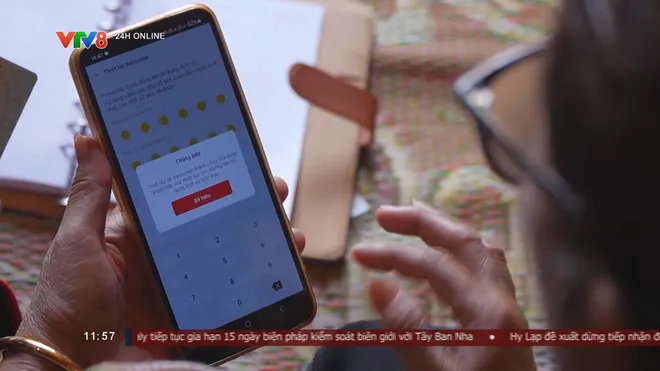
From being hesitant about smartphones, many people have started to operate them themselves, search for information, and use digital utilities in their daily lives.
From hands accustomed to working in the fields to hands-on interactions with mobile phone screens, the transformation in Tah B village demonstrates that digital transformation is only truly meaningful when technology is brought to the right place, to the right people, and in a way that the community can embrace. Therefore, the "light of the digital world" lies not in modern devices, but in each villager's increased access to information, services, and opportunities in their daily lives.
We invite viewers to watch other exciting programs on VTV8 channel at: https://vtvgo.vn/video/catalog/list/ffc98a39-06ff-424b-a85f-388837a68f87/chuyen-trang-van-hoa--du-lich--lich-su--di-san-19,ffc98a39-06ff-424b-a85f-388837a68f87.html
Source: https://vtv8.vtv.vn/anh-sang-so-trong-buon-lang-dak-lak-binh-dan-hoc-vu-so-dua-cong-nghe-den-tung-nep-nha-107261002113321721.htm