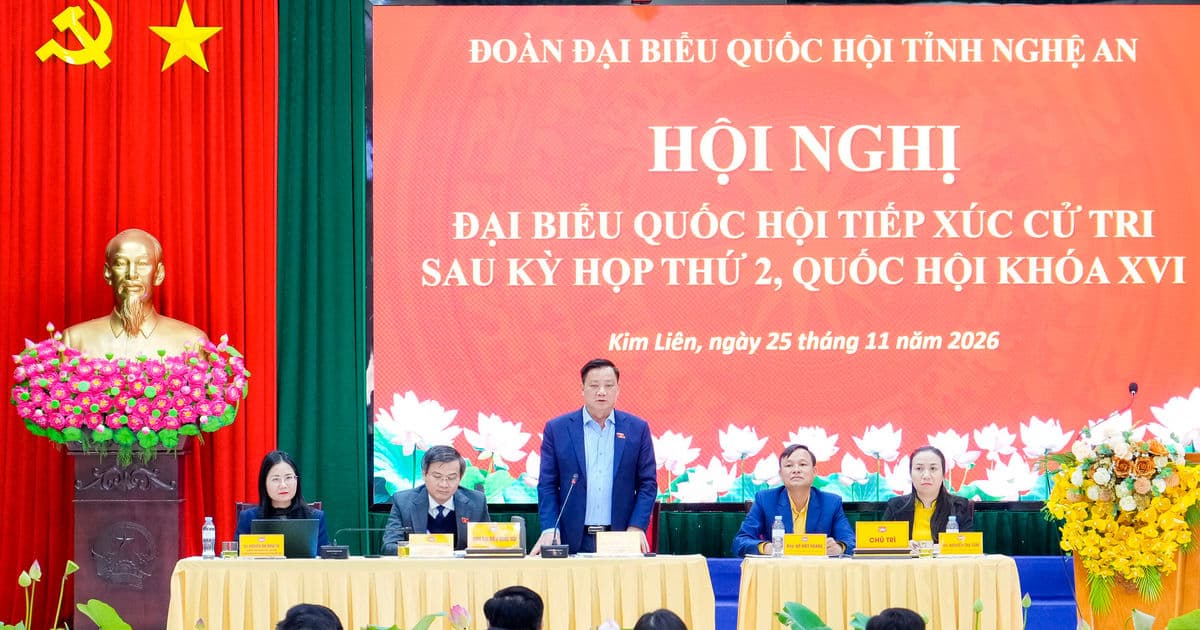
Attending the working session were representatives from the Economic and Budget Committee of the Provincial People's Council; the Departments of Industry and Trade, and Construction, along with representatives from other relevant departments and agencies.

During the meeting, members focused on discussing and providing feedback on the draft Resolution of the Provincial People's Council stipulating a number of policies to support investment and development of industrial clusters, intended to replace Resolution No. 22 of 2021.

According to the report, the province has established 31 industrial clusters with an occupancy rate of 75%, providing employment for over 25,600 workers. However, many state-managed industrial clusters are lacking investment capital for environmental protection infrastructure.


Accordingly, the new draft proposes that the provincial budget allocate a maximum of 20 billion VND per year for support. This includes 100% funding for investment in connecting transportation infrastructure with a maximum length of 2 km for industrial clusters in disadvantaged areas or encouraged industries; and 100% funding for the construction or upgrading of centralized wastewater treatment systems, with a maximum of 15 billion VND for new construction projects and 5 billion VND for renovation projects.

Regarding this draft, Vice Chairman of the Provincial People's Committee Phung Thanh Vinh requested the lead agency, the Department of Industry and Trade, to review it based on the Resolution, ensuring compliance with central government policies while adapting it to the province's specific characteristics. He also requested coordination with the Department of Finance and the Department of Justice to specifically identify the support sources and methods, review the wording to ensure accuracy, and promptly finalize the procedures for approval at the year-end Provincial People's Council meeting.

Next, the members discussed two draft Decisions of the Provincial People's Committee aimed at tightening the management of the construction materials market. One draft stipulated economic and technical characteristics for price declaration applicable to eight key material groups (such as soil, sand, stone, bricks, concrete, etc.), excluding cement and steel, which are already managed by the Ministries.

At the same time, the draft regulations on coordinating the survey and publication of construction material prices will clearly define the responsibilities of the Department of Construction, the Department of Finance, the Tax authorities, and the People's Committees of communes and wards in collecting data, verifying invoices, and handling unusual price fluctuations. According to the regulations, construction material prices will be published periodically, quarterly or monthly if the market experiences significant fluctuations.

Regarding these two drafts, Vice Chairman of the Provincial People's Committee Phung Thanh Vinh basically agreed. He requested the lead agency, the Department of Construction, to revise some wording and structure to ensure clarity before submitting them for approval.
The completion of these mechanisms and policies is expected to create momentum to attract investment into industrial clusters, while ensuring transparency and market-based management of construction investment costs in Nghe An province in the coming time.