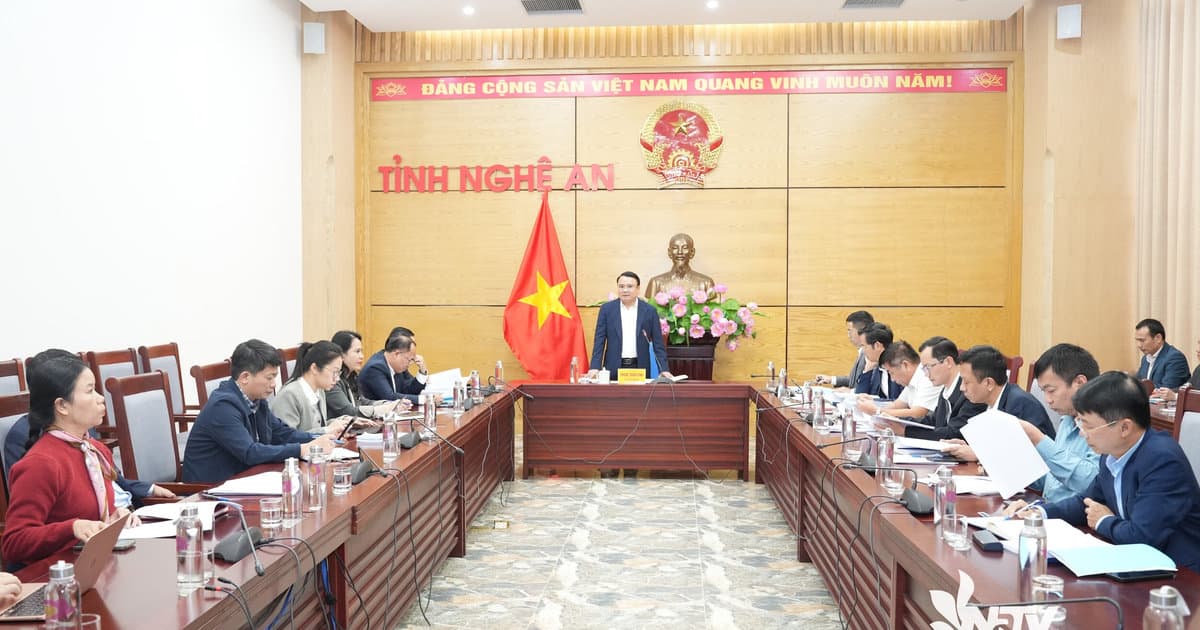
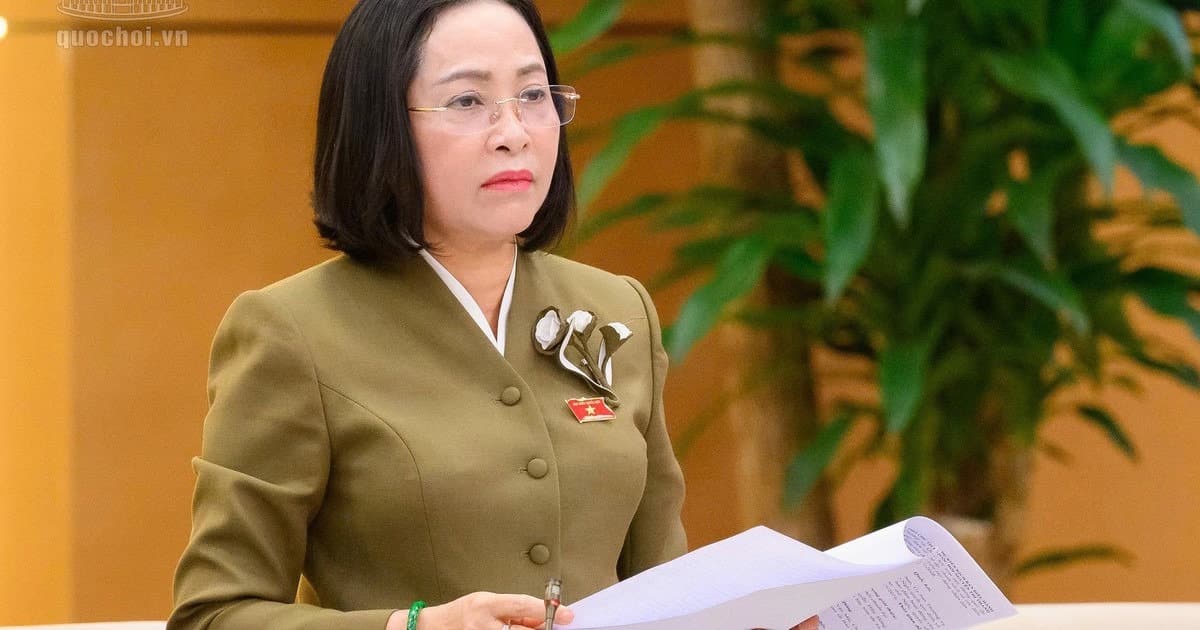
On the afternoon of November 25th, National Assembly deputies: Doan Minh Huan - Member of the Politburo, Director of the Ho Chi Minh National Academy of Politics; Nguyen Khac Than - Member of the Central Committee of the Party, Secretary of the Provincial Party Committee, Head of the Provincial National Assembly Delegation; and Nguyen Thi Minh Tu - Director of the Center for Science, Technology and Digital Transformation , Department of Science and Technology, met with voters in Kim Lien commune following the 2nd Session of the 16th National Assembly.
Also attending were comrades: Vo Trong Hai - Deputy Secretary of the Provincial Party Committee, Chairman of the Provincial People's Committee; Nguyen Nhu Khoi - Member of the Provincial Party Committee, Vice Chairman of the Provincial People's Council; and leaders of various departments and agencies.

At the conference, voters in Kim Lien commune expressed their agreement with the policies of the Party and the State; at the same time, they made many suggestions on issues directly related to people's lives, economic development, and local construction.
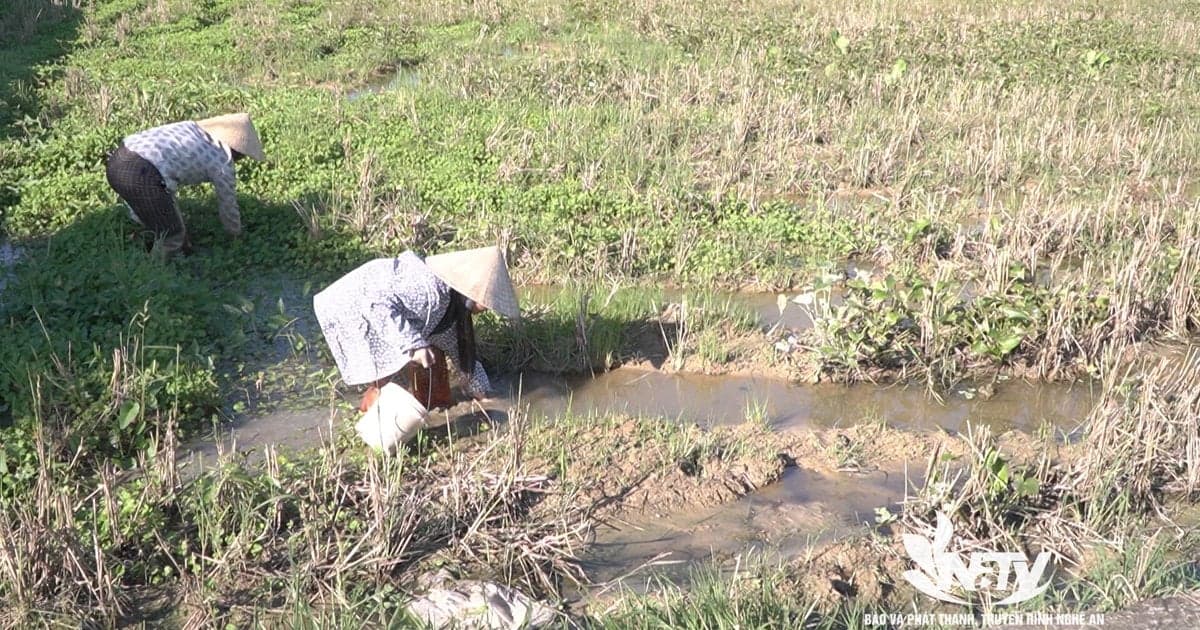
In the agricultural sector, voters reflected on the rising prices of supplies, fertilizers, seeds, and animal feed, while product output remained unstable, affecting people's income and investment in production.

Voters requested that the State implement more supportive policies, facilitate access to preferential capital, and encourage the transformation of crop and livestock structures to suit local conditions; at the same time, there should be mechanisms to support people in developing lotus-growing areas in conjunction with creating landscapes for tourism in the locality.
In particular, voters in Kim Lien commune requested that the Central and Provincial governments pay attention to investing in the comprehensive development of infrastructure, landscape, and connecting routes at the Kim Lien historical site; promptly repair and upgrade the severely dilapidated Nhan Thap Temple; and establish a mechanism to support the training and nurturing of key members of the Nghe Tinh folk song club to promote the value of cultural heritage.

Assessing the exploitation and promotion of the value of the Kim Kien historical site as inadequate, voters proposed the establishment of a special mechanism to support Kim Lien commune in implementing a pilot model of applying science and technology, innovation, and digital transformation in the preservation and promotion of cultural heritage associated with tourism development, in accordance with the spirit of Resolution 57.
This includes prioritizing the digitalization of heritage sites, applying new technologies, developing lotus products, attracting investment in high-quality tourism services, creating livelihoods and increasing income for local people, contributing to making Kim Lien a unique cultural and tourist destination.

Speaking and exchanging views with voters, Director of the Ho Chi Minh National Political Academy, Doan Minh Huan, emphasized the need to place Kim Lien within the overall development strategy of Nghe An province and the country; to leverage the advantages of being the birthplace of President Ho Chi Minh, and to be a pioneer in economic development while preserving and promoting cultural and historical values.
Comrade Doan Minh Huan stated that 2026 is the first year of implementing the 5-year socio-economic development plan 2026-2030, therefore the requirement is not only to achieve growth but also to ensure sustainable and inclusive development, improve the quality of employment, income, and public services.

For Nghe An province, it is necessary to transform its potential, advantages, major infrastructure projects, and cultural values into tangible development capabilities. Kim Lien, in particular, with its status as the birthplace of President Ho Chi Minh, a cultural and historical space of the entire country, and a national tourist area, needs to be a role model and pioneer in many fields.
Regarding economic development, the Director of the Ho Chi Minh National Political Academy emphasized the need for a strong shift from an agricultural production mindset to an agricultural economic mindset, building a multi-value agricultural sector.
This requires organizing agricultural products, OCOP products, and related services such as food, accommodation, and cultural experiences into a standardized value chain with brands, linking cooperatives, businesses, processing, and tourism.

Referring to the difficulties faced by farmers due to fluctuating prices of supplies and raw materials, and the situation of being subjected to price manipulation, Comrade Doan Minh Huan suggested that the fundamental solution is to strengthen cooperation and linkages.
"Farmers need to participate in new-style cooperative models with strong governance capabilities, legal status, and negotiating power within the value chain. The government plays a supporting role in infrastructure, irrigation, trade promotion, market access, brand building, and the development of OCOP products," emphasized Comrade Doan Minh Huan.
In particular, Comrade Doan Minh Huan suggested developing lotus into a key agricultural product of Kim Lien, forming a diverse product ecosystem ranging from food, pharmaceuticals, and healthcare products to tourism and local cultural values. This not only enhances production value but also contributes to promoting the image and identity of the locality.
For tourism, it is necessary to link the exploitation of heritage resources with the preservation of the original form, ensuring the authenticity and integrity of the heritage; shifting from traditional tourism to creative tourism. Kim Lien should be developed into a space for traditional education, a practical training ground, a place for technology application and connection with other heritage sites in the region, befitting its status as a significant historical site with nationwide influence.

In addition, Director of the Ho Chi Minh National Political Academy, Doan Minh Huan, requested that the legitimate rights and interests of the people be ensured during the implementation of infrastructure projects; that the governance capacity of local authorities be improved, and that voter petitions be addressed in a clear manner, with clear responsibilities and clear timelines.
In particular, it is necessary to proactively prepare for the milestone year of 2030, leading up to the 140th anniversary of President Ho Chi Minh's birth, with practical projects and models that contribute to preserving heritage, improving people's lives, and building President Ho Chi Minh's homeland into an increasingly prosperous, beautiful, and civilized place.