From aspiring entrepreneur to successful farmer
In Lo O hamlet, Nghia Thanh commune, Ho Chi Minh City, Mr. Dao Van Duong (born in 1962, of the Cho Ro ethnic group) still diligently cares for his pomelo orchard and herd of cattle, and participates in local community activities. More than three decades ago, when he arrived in this area to start his life, he began almost from scratch, hoping to find a place with favorable conditions for production development and a stable life for his family.
According to Mr. Duong, around 1995, Nghia Thanh commune was sparsely populated, lacked infrastructure, and its roads were mostly unpaved dirt paths. His family bought land and began cultivating nearly 2 hectares, mainly growing crops. Life was initially difficult, but with the belief that escaping poverty required hard work and knowledge, he persevered in researching and learning production techniques.

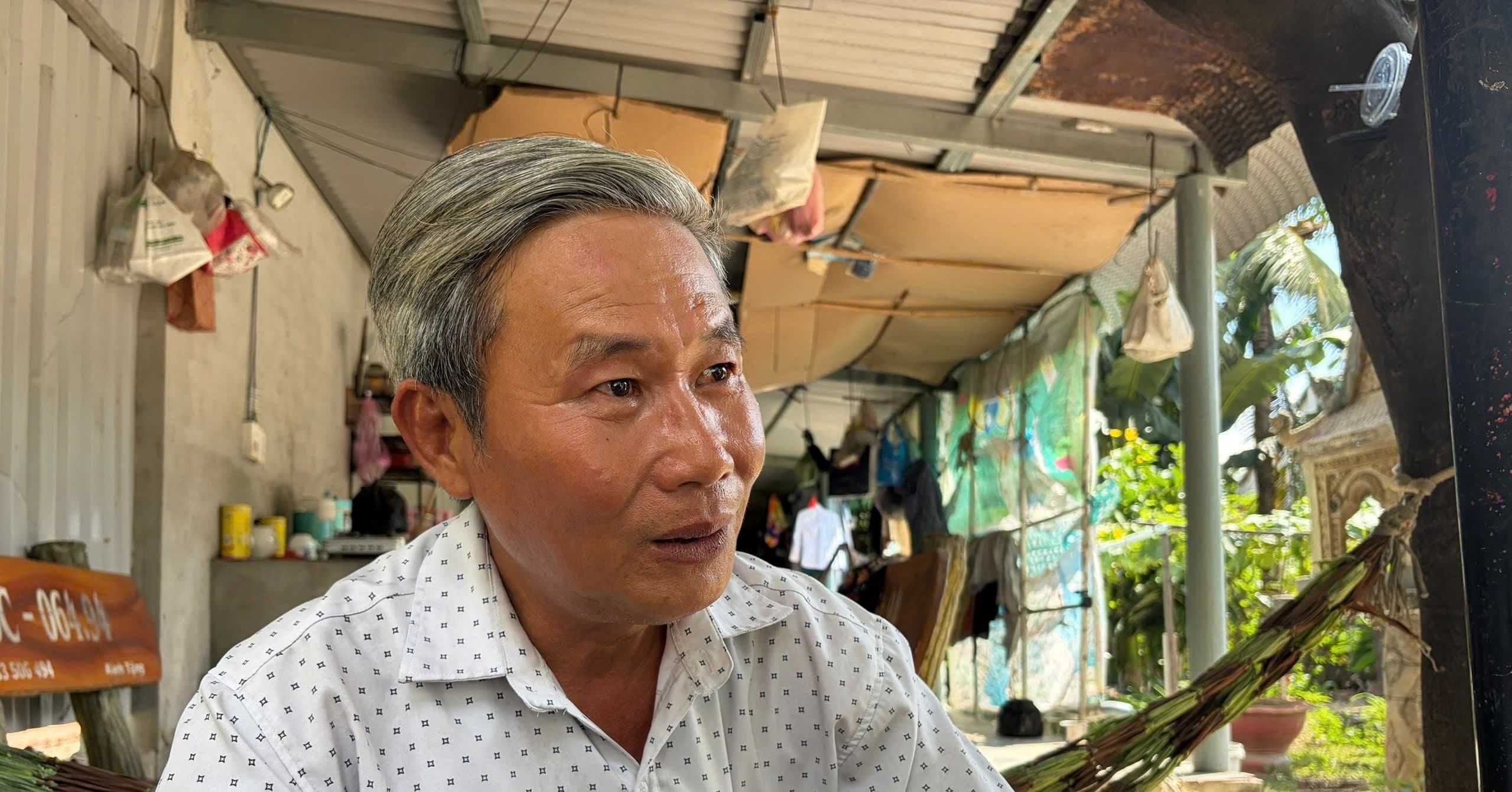
Mr. Dao Van Duong, a member of the Cho Ro ethnic group in Lo O hamlet, Nghia Thanh commune, Ho Chi Minh City, is a prime example of economic development and active contribution to building new rural areas in his locality. Photo: Dinh Tuyen
He actively participated in training courses and vocational training programs on pepper cultivation, fruit tree farming, and livestock breeding to improve his farming techniques, organized by the local authorities. Using the knowledge he accumulated, he gradually transformed his production structure, combining crop cultivation with livestock breeding, proactively adapting to changes in the market and farming conditions.
When pepper cultivation was highly profitable, he invested in about 1.5 hectares, yielding approximately 5 tons per year and generating an income of around 550 million VND after deducting expenses. However, as the pepper plants gradually deteriorated and diseases increased, he decided not to continue with the old model but boldly switched to other crops and livestock.
"I used to grow a lot of pepper, but the plants gradually died, so now I've switched to growing pomelos, cashews, and raising breeding cows," Mr. Duong shared.
Currently, his family owns about 0.5 hectares of pomelo trees and a herd of 25 breeding cows and 15 beef cattle, generating hundreds of millions of dong in income each year.

By proactively learning, applying new techniques, and flexibly adapting production methods, Mr. Dao Van Duong's family has gradually achieved economic stability. (Photo: Dinh Tuyen)
Besides focusing on developing his family's economy, Mr. Duong also shares his experience and supports local people in the production process. Over the years, he has directly guided 15 laborers in farming and livestock techniques; creating stable jobs for 10 laborers with an average income of about 5 million VND/person/month.
Ms. Nguyen Thi Tuyet Nga, Vice Chairwoman of the Vietnam Fatherland Front Committee of Nghia Thanh commune and Chairwoman of the Nghia Thanh Commune Farmers' Association, praised Mr. Duong as an exemplary farmer in Lo O hamlet. He is always eager to learn, boldly applies science and technology to production, and lives harmoniously, unitedly, caring for and sharing with his fellow villagers, especially those ethnic minority households facing difficulties.
Donating nearly 2,000 square meters of land to pave the way for development in his hometown.
While economic development has provided Mr. Duong's family with a stable life, his contributions to the community further demonstrate the farmer's responsibility to the place he has lived in for many years.
In the early days of settling in Lo O hamlet, Mr. Duong witnessed many difficulties in the lives of the people. There was no electricity grid, so people had to dig wells for water, and the roads were mostly dirt paths. Travel and transportation of agricultural products were very difficult, especially during the rainy season.
In 2000, he was elected by the people as the Head of Lo O Hamlet and held this position until 2017. During his time in office, he was always concerned about improving transportation infrastructure, because convenient roads not only help people travel easily but also open up opportunities for production development, trade, and access to essential services.
With that in mind, he proactively took the lead in donating land and directly encouraged households to support the policy of expanding rural roads.
"This is my land, and I accept having it cut across to make way for the road. This is a remote area; without a road, the people here won't be able to travel or develop," Mr. Duong shared.
With the belief that the common good of the community is also the long-term benefit of each family, he and his relatives voluntarily donated nearly 2,000 square meters of land to facilitate road construction.
For a rural area like Lo O hamlet, which still faces many difficulties, every meter of road added not only shortens travel distances but also helps connect people with opportunities for socio-economic development.
Not content with simply donating land, during his time as village head and even after leaving that position, Mr. Duong actively encouraged people to comply with the Party's guidelines and policies, and the laws of the State; participated in emulation movements and community activities; and contributed to various funds initiated by the locality. His family has consistently received the title of "Culturally Exemplary Family" for many years. He himself is a prime example of studying and following the ideology, ethics, and style of Ho Chi Minh.
According to Ms. Nguyen Thi Tuyet Nga, Mr. Duong has always been exemplary and a leader in local movements; actively guiding production techniques, supporting livestock, and encouraging members in difficult circumstances to strive for a better life. Among the ethnic minority people in the hamlet, he is a respected figure, always willing to share and provide support when needed.
Working together to develop areas inhabited by ethnic minorities.
According to a report by the People's Committee of Nghia Thanh commune as of November 2026, the locality currently has 7 ethnic minority groups including Cho Ro, Hoa, Tay, Khmer, Ede, Dao, and Nung, with a total of 357 households and 1,630 people. Of these, the Cho Ro people have 214 households with 976 people, making them the largest ethnic minority community in the locality.

Mr. Dao Van Duong's family currently raises 40 cows, generating hundreds of millions of dong in income each year. Photo: Dinh Tuyen
Over the years, thanks to the State's investment and the people's efforts, the material and spiritual lives of the ethnic minority communities have gradually improved. Essential infrastructure, especially transportation, schools, health stations, electricity, and clean water, continues to receive investment. Policies supporting economic development, education , health, and social welfare have been implemented, contributing to the stability of people's lives. Notably, Nghia Thanh commune now has no poor households belonging to ethnic minorities.
Along with government policies, the active participation of the people is crucial in the process of local development. Pioneering individuals like Mr. Duong not only strive for success in labor and production but also contribute to fostering a spirit of solidarity, responsibility, and a collective awareness of building their homeland within the community.