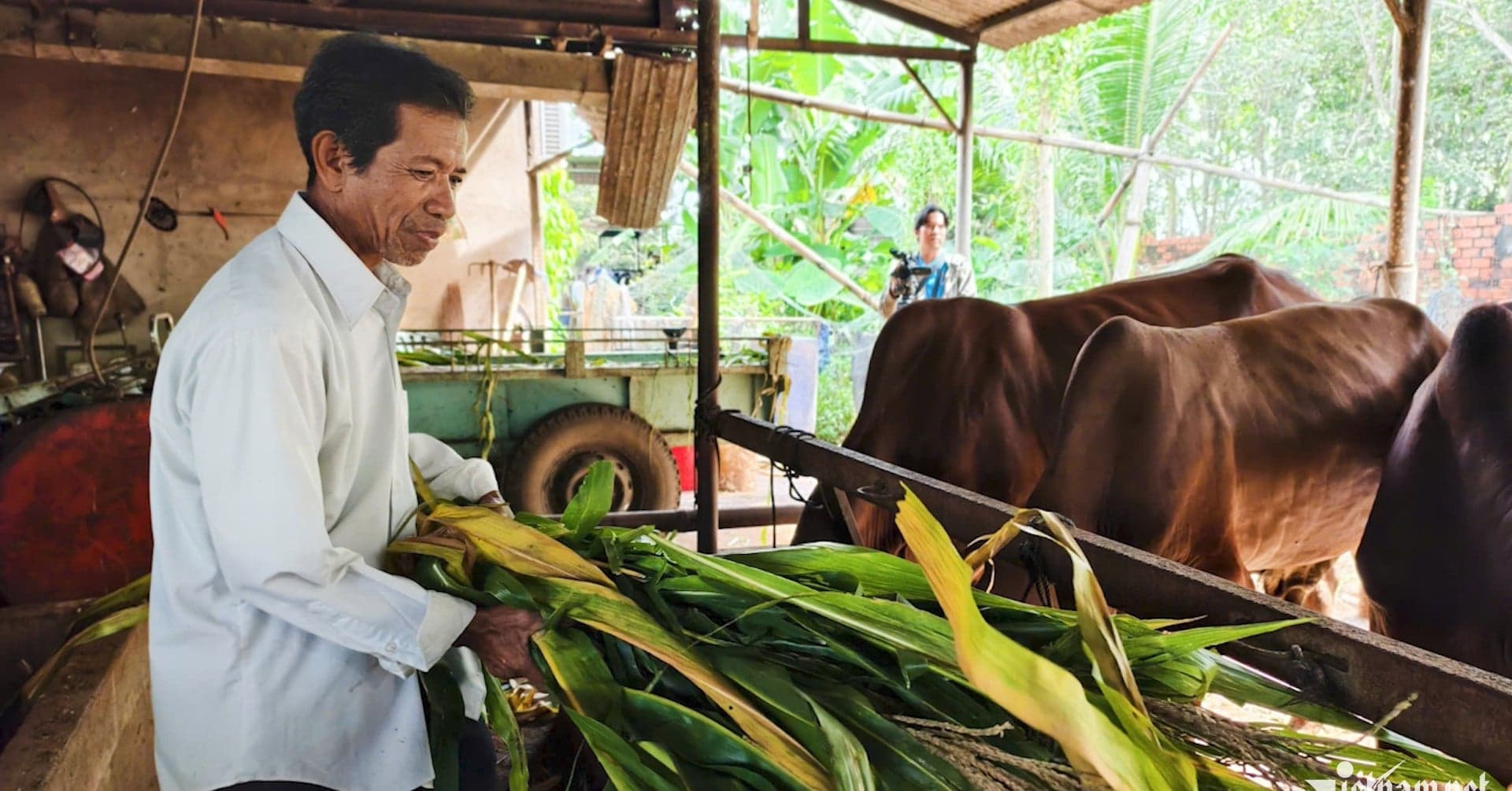
If you visited Thanh Dong neighborhood, Binh Minh ward, Tay Ninh province a few years ago, you would be surprised by the changes upon your return. Concrete roads now stretch throughout the alleys, lined with spacious, clean houses, giving the neighborhood a new look.
Few people know that behind this transformation in the neighborhood with a large Khmer population lies the persistent contribution of Mr. Pham Hoang Thanh Nam, the head of Thanh Dong neighborhood.
Thanh Dong neighborhood is a unique area within Binh Minh ward, home to a concentrated community of Khmer ethnic minorities comprising 229 households and 971 residents. For generations, the lives of the majority of the people here have been closely tied to farming and livestock raising. Because of this long-standing tradition, many old habits persist, becoming obstacles to the overall development of the locality.

Previously, when people mentioned Thanh Dong, they remembered narrow, dusty dirt roads that became muddy and slippery in the rain, posing countless obstacles to travel for the local people. More importantly, the practice of raising cattle right in the residential areas of many Khmer ethnic families severely impacted the living environment. Wastewater and livestock waste emitted strong odors, attracting flies and mosquitoes, not only detracting from the aesthetics but also posing a potential risk of disease for the residents.
When the State decided to invest in expanding and upgrading rural roads and beautifying residential areas, Thanh Dong was one of the areas that benefited from this preferential treatment. However, this sound policy, when implemented, faced considerable hesitation and even opposition from the Khmer ethnic community.
For these people, every inch of land is connected to the sweat and toil of generations. Donating land for roads means shrinking the area of their gardens and yards. Changing their livestock farming habits is even more difficult. Many people shake their heads and refuse, saying, "Our ancestors have always lived this way without any problems."
A heartfelt appeal for change in every street and alley.
Faced with the lack of consensus among the local people, Mr. Pham Hoang Thanh Nam, the neighborhood leader, chose to begin with patience. He understood that community outreach work in ethnic minority areas could not be rushed, nor could it rely solely on dry administrative orders. To get the people to listen, they must first be helped to understand; to get them to follow, those involved in community outreach must be genuinely close to the people, sincere, and respectful of their customs and traditions.
With that in mind, Mr. Nam persistently went from house to house, spreading awareness and explaining the State's policies and guidelines to the people so they would understand and correctly implement them. He encouraged people to move their livestock pens away from their homes, maintain environmental hygiene, ensure a clean living space, and contribute to protecting their own health and that of their families.
Initially, whenever he appeared, the villagers would try to avoid him. Understanding this, during their meetings, he didn't rush to spread propaganda or campaign, but instead inquired about their businesses and their children's education. Through his sincerity and approachability, he gradually bridged the gap, making the villagers more open and happy to welcome him whenever he visited their homes.
Once the villagers became more open, Mr. Nam skillfully analyzed the benefits and drawbacks of locating livestock pens near their homes. He explained that if they continued raising buffalo and cattle right next to their houses, the first to be affected would be the health of their family members. Conversely, moving the pens away from the living area not only helps ensure environmental hygiene but also keeps the house clean, the living space healthier, and contributes to long-term health protection.
Regarding road construction, he patiently explained: wide roads make travel easier for the people, and provide convenient and quick access to medical care in case of illness or emergency.
That campaign wasn't measured in days or weeks, but lasted for over three years. There were households Mr. Nam had to visit dozens of times before he finally gained their consent. He faced strong resistance many times, and at times felt like he was at a dead end, but he never once considered giving up.
He persistently encouraged households with Party and Youth Union members to set an example. When some pioneering households dismantled their livestock pens, voluntarily moved back their fences, and donated land to beautify their yards, the appearance of their houses became cleaner, more beautiful, and more spacious. From these visible changes, the surrounding households gradually changed their thinking and followed suit.
"Slow and steady wins the race," Mr. Nam's persistence finally bore fruit. Gradually, each household in Thanh Dong nodded in agreement. The residents voluntarily relocated their livestock pens to residential areas, happily handing over the land for road expansion and paving.
On the day the new roads were completed, joy was evident on the faces of the Khmer people here. No more muddy roads every rainy season, no more pungent odors in front of their houses; Thanh Dong today has truly undergone a transformation.
In addition, Mr. Nam actively disseminated the policies, laws , guidelines, and directions of the Party and the State to ethnic minority communities.
Through community meetings, traditional Khmer festivals such as Chol Chnam Thmay and Sene Don Ta, or even within their own families, he skillfully integrated legal regulations on security and order, traffic safety, national unity policies, and socio- economic development support programs.
Through his dedication, approachability, and personal integrity, Nam has helped local people raise awareness and strictly abide by the law.
Sharing his experience in disseminating legal information among ethnic minority communities, Mr. Nam said that the process of mobilizing people faced many difficulties due to the unique characteristics of the area, which includes both Hoa and Khmer ethnic groups. Each ethnic group has different cultural characteristics, customs, traditions, and levels of awareness, requiring appropriate methods of communication so that people can easily understand and remember the information.
"There are some points we have to explain multiple times, and we also cleverly integrate them into community activities so that people can easily understand them. The most encouraging thing is that, to date, the awareness of the law among ethnic minorities in the area has significantly improved," Mr. Nam shared.
Commenting on Mr. Nam's contributions, Mr. Nguyen Quoc Ngan, Deputy Head of the Culture and Social Affairs Department of Binh Minh Ward, said that Mr. Nam is a long-serving and reputable neighborhood leader who is trusted and respected by many people in the Khmer community.
“Mr. Nam plays a crucial role in bridging the gap, bringing the Party's guidelines and policies, and the State's laws closer to the people. With his energetic and dedicated work ethic and outstanding achievements, even though he is over the age limit, during the past term, he was still encouraged by the government to continue in his position,” Mr. Ngan said.