
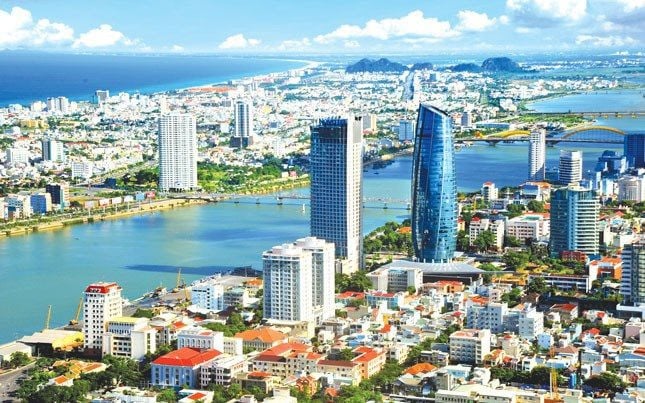
On the morning of October 3rd, the Standing Vice Chairman of the Da Nang City People's Committee, Ho Ky Minh, worked with the Central inter-agency survey team led by Deputy Minister of Home Affairs Truong Hai Long on the project to establish 10 new wards to meet the city's rapid urbanization rate.
The plan to establish wards was developed with the aim of upgrading 10 commune-level administrative units, including Hoa Vang, Hoa Tien, Ba Na, Dien Ban Tay, Nui Thanh, Tam Anh, Dai Loc, Nam Phuoc, Chien Dan, and Thang Binh.
This policy received strong public support through direct consultations at each household. Preliminary assessments from the submitted documents indicate that all 10 localities basically meet the standards regarding their economic and social development structure and level.
In terms of urban population size, Hoa Tien and Nui Thanh both reached 100%, followed by Hoa Vang at nearly 78%, Ba Na at over 72%, and Chien Dan at over 69%. The remaining areas such as Thang Binh, Dien Ban Tay, Dai Loc, and Nam Phuoc all exceeded 50%, with Tam Anh area alone reaching over 31,000 urban residents.
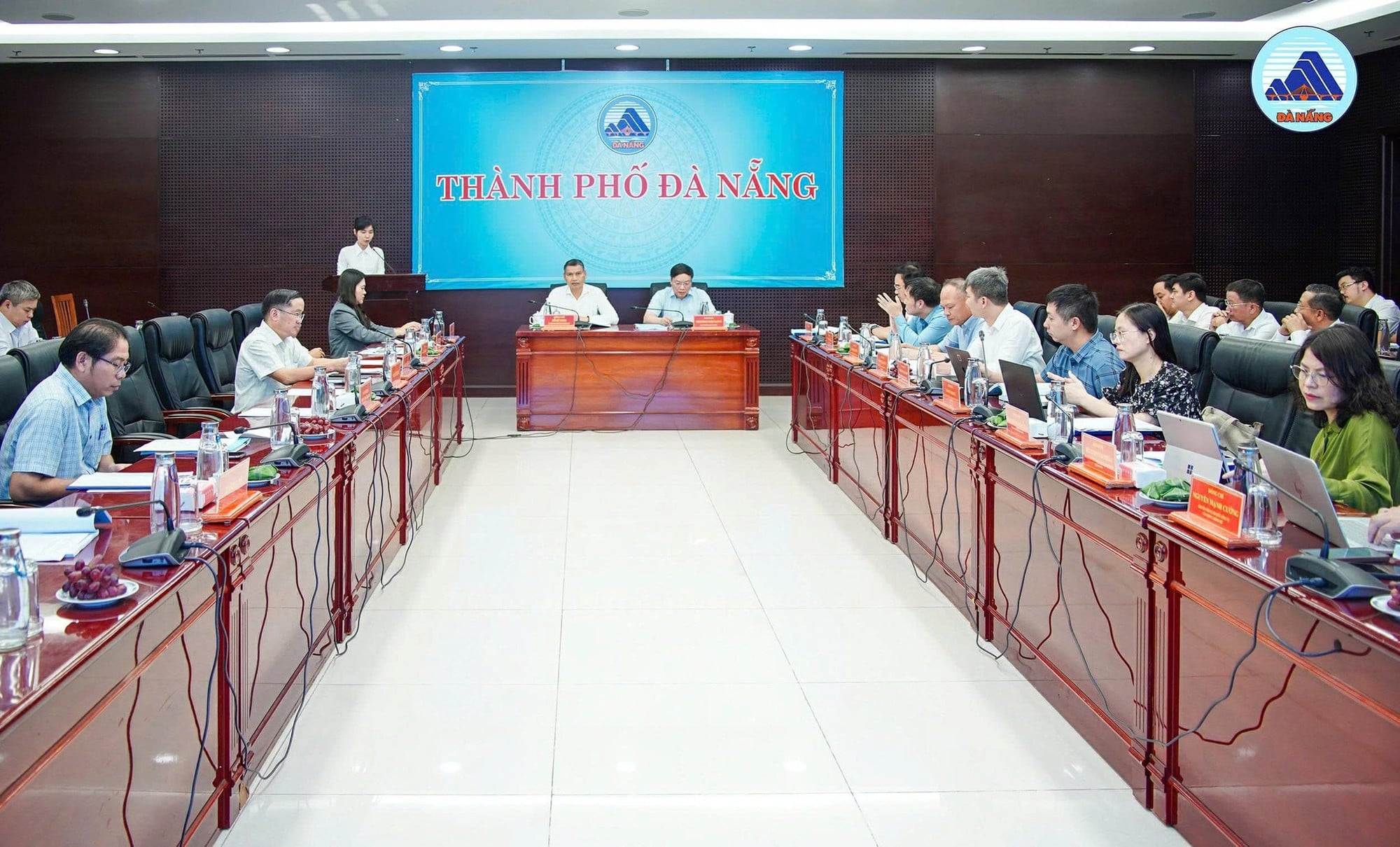
Scene from the working session (Photo: Da Nang City People's Committee)
Deputy Minister of Home Affairs Truong Hai Long emphasized that the development of the plan should leverage areas that have already developed into urban areas, while adhering to the principle of local decision-making, local implementation, and local accountability.
The Deputy Minister noted that the city needs to carefully review the basis for determining urban population, especially in areas where projects are underway; the calculations must be based on urban planning approved by competent authorities, ensuring accurate data.
For socio-economic development indicators where interpretations are still unclear, localities need to coordinate with relevant agencies to standardize calculation methods in order to accurately reflect the actual level of development.
Along with finalizing the criteria, the Deputy Minister of the Ministry of Interior suggested that the city supplement the plan and roadmap for the development of administrative units after they are converted into wards, linking it with the organizational structure and human resource allocation plan to meet urban management requirements.
Ho Ky Minh, Standing Vice Chairman of the Da Nang City People's Committee, directed relevant departments to urgently coordinate with local authorities to review the entire system of data on land, budget, and urban infrastructure in order to complete the dossier for submission to competent authorities.
The leaders of the Da Nang City People's Committee emphasized that the project is not simply a change in administrative name, but must be closely linked to the overall planning and spatial development orientation of a "new Da Nang".
The dossier needs to clarify the regional linkage structure between the northern development pole, the central city of Da Nang, and the southern pole, comprising the city of Tam Ky and the Chu Lai Open Economic Zone, identifying the important transitional connecting role of cities located in the middle area such as Thang Binh and Nam Phuoc.
Besides integrating dynamic functional zones such as Free Trade Zones and High-Tech Zones, the city will also fully update its external transportation network, including the North-South Expressway, National Highway 1A, existing railway lines, and planned high-speed railways, to create a seamlessly connected, modern, and sustainable urban space.
Currently, Vietnam has 9 centrally-governed cities, including Ho Chi Minh City, Dong Nai, Can Tho, Da Nang, Hue, Hanoi , Quang Ninh, Hai Phong, and Bac Ninh.
Of these, Dong Nai is the largest city in terms of area, covering over 12,737 km2, while Da Nang is the second largest with an area of approximately 11,860 km2.
Source: https://giadinh.suckhoedoisong.vn/thanh-pho-truc-thuoc-trung-uong-rong-thu-2-viet-nam-du-kien-thanh-lap-them-10-phuong-moi-172261004180902838.htm