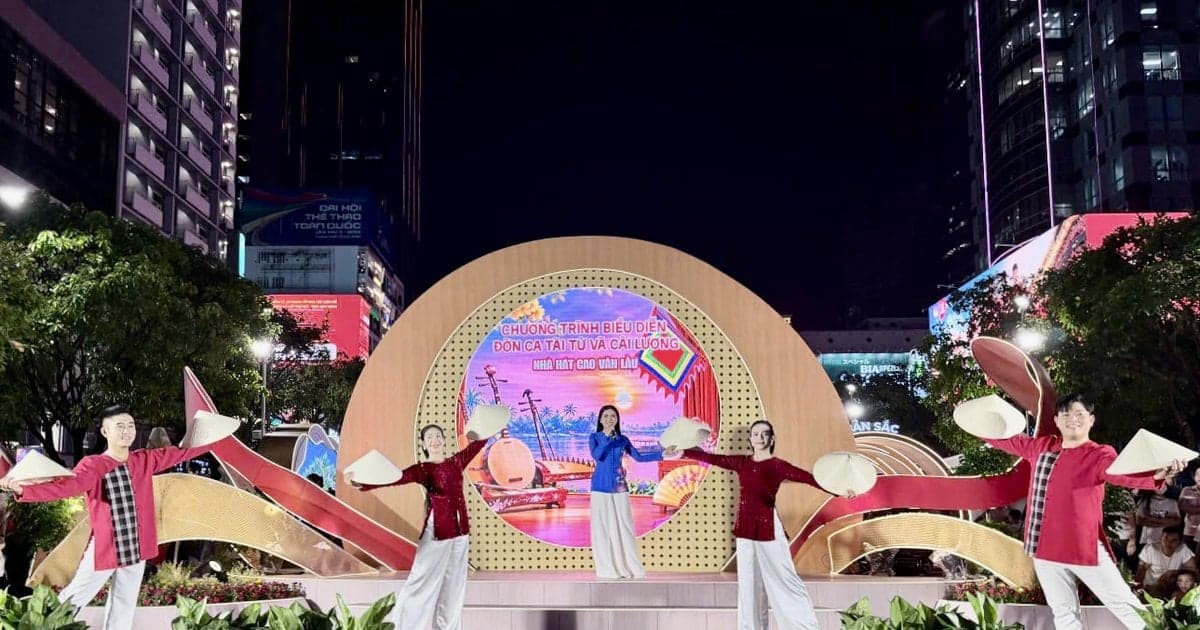
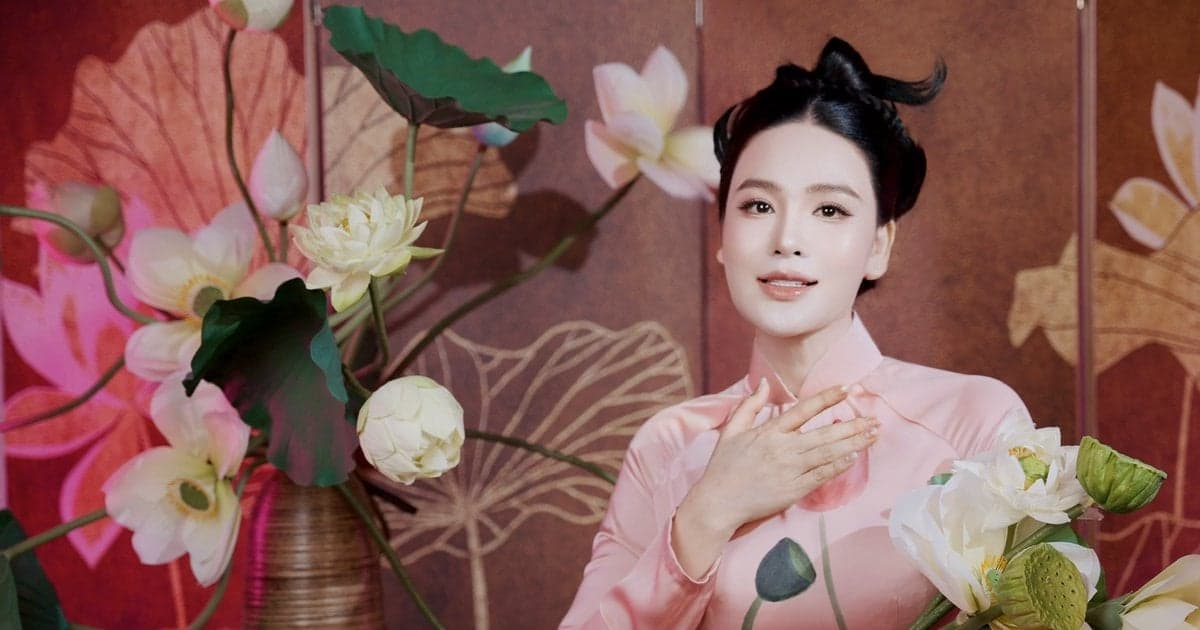
From artists to young people, each person has their own story.
The program's appeal was built right from the launch press conference on October 12, 2026, when many artists and content creators such as musician Nguyen Van Chung, rapper Ha Le, Double2T, Duc Phuc, and Tuan Cry participated in sharing and spreading the competition's message. Instead of just calling for participation, these artists brought very unique perspectives on sound in life.

Accompanying the program, singer Duc Phuc conveyed a message about love for his homeland and country through familiar melodies. According to the singer, music sometimes doesn't need anything grand; just a familiar melody is enough to evoke feelings for one's homeland and country, and the simple things that each person always carries in their heart.
Inspired by this, the singer invites everyone to raise their own voice to tell the story of their birthplace, the things they love, and their pride in Vietnam, because each person's melody will together create the common sound of the nation.

For rapper Ha Le, the sound that lingers in his memory the most is the sound of a baby crying. This everyday anecdote shows that the sounds that touch the deepest emotions are sometimes not found on stage, but are present in the rhythm of daily life.

From the artists' perspective, the program's cultural approach becomes more accessible to the public. Participants don't need to be artists or music connoisseurs; a lullaby, a traditional musical instrument, the sounds of a marketplace, or a song associated with local customs can all become the material for a unique story.
Continuing that momentum, the nationwide launch ceremony held on October 30, 2026, at the Vietnam National Academy of Music expanded its reach to a large number of students through live and online connections between 27 universities and academies.

In the classrooms, students are encouraged to independently research, document, and tell cultural stories from their own perspectives. A trip to a region rich in cultural identity, a conversation with a local artisan, or rediscovering a familiar folk melody can all serve as a starting point for a competition entry.
Instead of simply accepting pre-presented cultural values, young people directly participate in the process of discovery and creation through familiar forms such as short videos , sound mixes, or stories that preserve sounds that are gradually becoming less common in modern life.

When every citizen can become a storyteller of culture
Building on the clear positive response from the youth community, the program also aims for a broader goal: to make culture a shared story for all citizens.
At the nationwide online conference to implement the program on the afternoon of November 13, 2026, Alternate Member of the Central Committee of the Communist Party of Vietnam, Deputy Minister of Culture, Sports and Tourism Nguyen Huy Dung emphasized the significance and expectations for "The Sound of Vietnam. The Melody of Life".
According to the Deputy Minister, this is not simply a musical playground, but also a vivid demonstration of putting the policy into practice in daily life. The special thing is that every citizen can become an author, regardless of age or region, contributing their songs, lullabies, and the simple sounds of their homeland.
Culture is not only present in officially recognized heritage sites, works of art, or major festivals, but also in the language, customs, daily life, and familiar sounds of each region. When people are directly able to record and tell these stories, preserving culture begins with what each person is living, hearing, and cherishing.
The attention and guidance from the Ministry's leadership are the driving force for the Organizing Committee to continue bringing the program closer to the public, expanding opportunities for everyone to contribute their own unique voice to the common cultural landscape.
The numbers show the level of community response.
The reach of "Vietnamese Sounds: Melodies of Life" is not only demonstrated through its launch activities or the participation of artists. According to statistics up to November 13, 2026, the program system has recorded over 1.3 million responses to the quiz questions, nearly 4,000 video testimonials, and almost 3,000 creative works submitted from across the country.
These three figures reflect the different ways the public participated: some started by learning about culture through questions, some shared their feelings through videos, and others dedicated time to creating their own works.
Notably, nearly 3,000 entries from various localities demonstrate the program's potential to spark widespread interest. Each entry presents a different style, but all stem from a common thread: the creator finds a sound meaningful to them and wants to share it with the community.

Technology brings old sounds closer to new audiences.
Throughout this journey, technology and digital platforms play a crucial role as a bridge. A folk melody, the sound of an artist's instrument, or the sounds of a traditional festival can be recorded with a phone, compiled into a short video, and shared with a wide audience.
This approach was also emphasized by the Organizing Committee during the implementation process. With VTC Corporation playing a key role, technology and digital media were leveraged to bring cultural values closer to the public, especially the younger generation.
During the program's activities, Mr. Chu Tien Dat, Chairman of the Board of Members of VTC Corporation and Deputy Head of the Organizing Committee, shared his views on the role of technology and digital media in spreading cultural values.

The involvement of platforms and content creators opens up more opportunities for cultural stories to reach viewers more naturally. However, technology is only a tool; what determines the value of a product is still the story told, the understanding and feelings of the creator towards the cultural values they want to preserve.
When a traditional sound is explored, recorded, and shared by young people in a format that suits current reception habits, it has a greater chance of breaking out of its familiar space and reaching new audiences.
So that the sounds of Vietnam may continue to be heard.
The program "Vietnamese Sounds: Melodies of Life" is accepting entries from October 12th to November 30th, 2026, at thanham.vn. This is an opportunity for everyone to share a sound connected to their memories, homeland, people, and cherished cultural values.
Professional filming equipment and elaborate presentation are unnecessary; true value can begin with a genuine story, like a mother's call for dinner, the sound of a flute in a village, singing at a festival, or the sounds of a traditional craft preserved through generations. With the participation of artists, the enthusiastic response of students and the general public, and the expectations of cultural leaders, "Vietnamese Sounds: Melodies of Life" is demonstrating a new approach: preserving culture not only through archiving but also through community participation and creativity. A culture truly comes alive only when its values continue to be present in life, embraced and retold by generations in their own way.