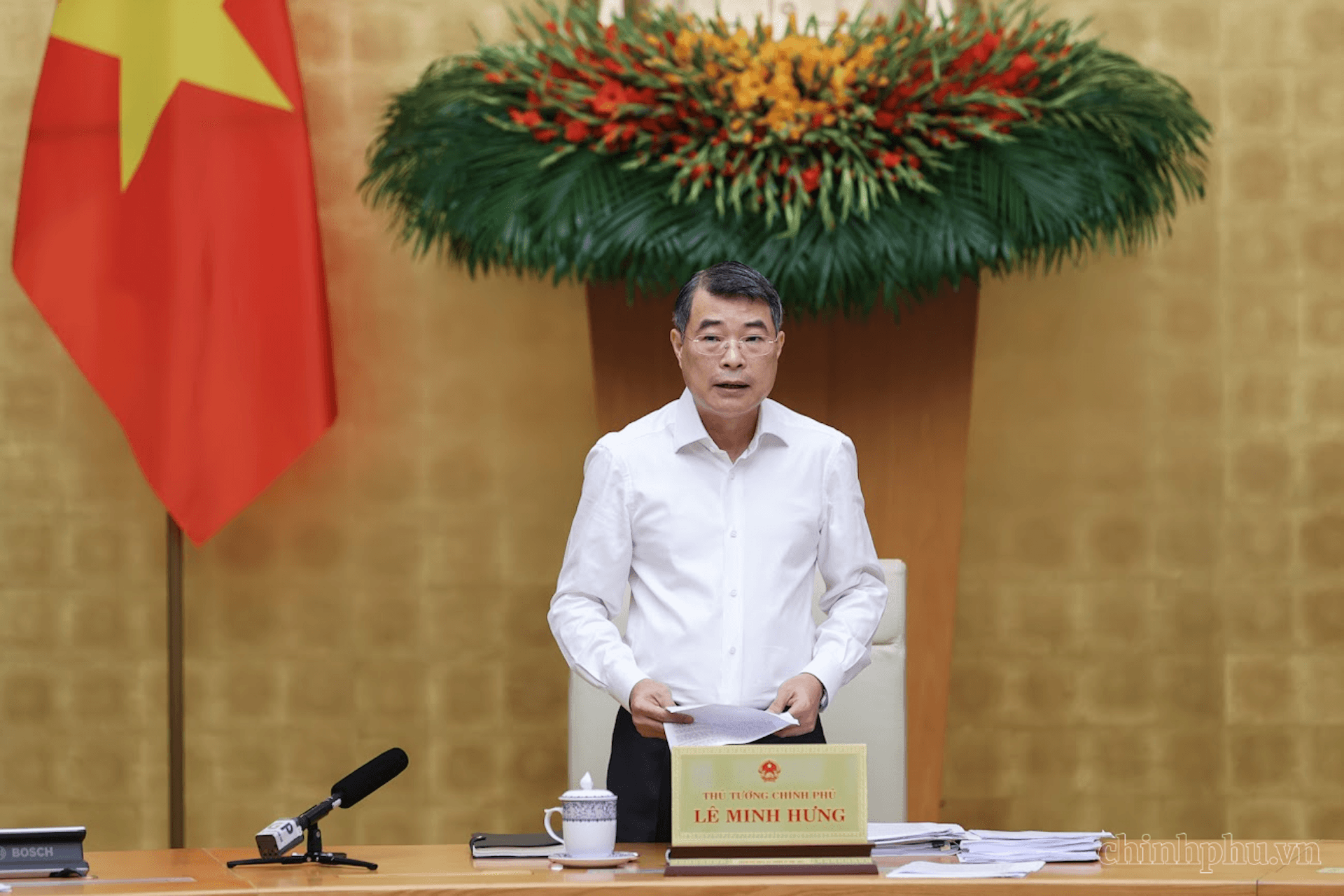


12 out of 34 localities achieved double-digit growth in the first nine months.
According to the Ministry of Finance's report, the global situation is volatile and unpredictable, especially with conflicts in the Middle East. World oil prices in September increased by 11.3-20.7% compared to August. Domestically, under the leadership of the Party, directly led by General Secretary and President To Lam, and with the support and supervision of the National Assembly, the Government has focused on leading and directing ministries and localities to decisively and effectively implement assigned tasks. As a result, the socio-economic situation in the first nine months has achieved many positive results, with the highest growth in many years, and macroeconomic stability has been maintained.
Specifically, GDP growth in the third quarter is estimated at 9.95%, and for the first nine months, GDP growth was 9.01%. Of this: Agriculture, forestry, and fisheries increased by 4.02%, closely following the full-year target; industry and construction increased by 11.21%, the highest since 2015. Services increased by 8.69%, only slightly lower than the same period in 2022 (11.37%).
In the first nine months, consumption increased by 13.4%, reaching the lower end of the annual target (13-15%); international visitors reached 17.7 million, an increase of 14.5%, the highest ever. Total social investment reached VND 3.11 trillion, an increase of 15.1%, with Hanoi and Ho Chi Minh City increasing by 19% and 17.3% respectively. Registered FDI reached USD 50.36 billion, an increase of 76.4%, while implemented FDI reached USD 21.07 billion, an increase of 12.1%.
Total exports and imports reached US$888 billion, a 30.4% increase compared to the same period last year. Exports reached US$434.3 billion, a 24.5% increase, exceeding the annual target, while imports reached US$453.7 billion, a 36.7% increase. The trade balance in September reversed to a surplus of US$1.27 billion.
Across the country, 12 out of 34 localities achieved double-digit growth in the first nine months, including 7 out of 10 key localities such as Quang Ninh, Hai Phong, Bac Ninh, etc. Ho Chi Minh City and Hanoi grew by 9.06% and 8.85% respectively, about 0.7% higher than the growth rate in the first six months.
State budget revenue is estimated at 2.19 million billion VND, reaching 86.5% of the projected target and increasing by 12.1%. Approximately 185.6 trillion VND has been exempted or reduced, and about 60 trillion VND of taxes and fees have been extended. Public investment disbursement reached 643 trillion VND, equivalent to 62.9% of the plan, 202.6 trillion VND higher than the same period last year, or 12.9%.
In the first nine months, 223,900 businesses entered or re-entered the market, exceeding the number of businesses that withdrew from the market (172,000 businesses).
Official scoring of public investment disbursement starts from the October period.
Despite the achievements, Minister Ngo Van Tuan acknowledged that achieving double-digit growth remains a major challenge, with growth in the first nine months still 1% below the annual target. A 12.5% increase is needed in the fourth quarter, and currently 24 out of 34 localities are experiencing growth below their annual targets, creating significant pressure on the final quarter of the year.
Regarding future directions and tasks, the Ministry of Finance proposed several key priorities. Concerning fiscal policy, the Ministry of Finance submitted to the Government a Decree to reduce the tax payable by 30% for businesses and household businesses with annual revenue not exceeding 10 billion VND; ministries, agencies, and localities are to strive to disburse 100% of public investment plans; and there is a firm commitment to reallocating capital from slow-disbursing projects to projects with greater needs…
The Ministry of Finance also proposed officially scoring the disbursement of public investment capital starting from the October period, as a basis for reallocating capital and allocating capital plans for 2027.
In addition, the State Bank of Vietnam proactively and flexibly manages monetary policy, coordinating closely with fiscal policy, balancing inflation control and growth support; managing credit growth at around 15%, focusing on production and business, priority sectors, and growth drivers; increasing access to capital for small and medium-sized enterprises; and strictly controlling credit to sectors with potential risks…
The Ministry of Industry and Trade, in coordination with the Ministry of Finance, will develop appropriate methods for utilizing the Fuel Price Stabilization Fund; ensure sufficient electricity and fuel supply; and thoroughly conserve electricity and energy. Ministries and localities will carefully assess price adjustments for goods under state management; ensure a balance between supply and demand during the year-end period; and strictly handle acts of speculation, hoarding, and unreasonable price increases.
Regarding investment and construction promotion, the Ministry of Construction and localities will focus on completing land clearance for key expressways by October 2026; concentrate on construction of existing projects/component projects with low disbursement rates; prioritize the coordination of sand and stone supply for key projects, expedite the licensing and exploitation of new material mines; effectively manage the supply and prices of raw materials; and strive to complete approximately 97,300 social housing and rental housing units in 2026.
To continue focusing on improving institutions and the business environment, the Ministry of Finance proposes that the Ministry of Justice and other ministries finalize draft laws and resolutions to be submitted to the 2nd Session; issue detailed regulations on time; strictly control the issuance of new administrative procedures and business conditions; and continue to reduce compliance costs and logistics costs.
The Ministry of Interior, other ministries, and local authorities should resolve obstacles in the operation of the two-tiered local government system and improve the implementation capacity at the grassroots level; the heads of departments should directly supervise the complete handling of surplus offices, houses, and land after restructuring, preventing damage and waste.
Simultaneously, efforts will continue to improve the development of culture, society, health, education, and the environment. The Ministry of Education and Training is finalizing plans for reforming examinations and admissions. The Ministry of Health is effectively implementing regular health check-ups and free screenings, doing a good job in disease prevention and control, and ensuring food safety.
The Ministry of Interior and local authorities have effectively implemented social security policies; created jobs for young people; and vigorously carried out the 500-day campaign to search for, collect, and identify the remains of fallen soldiers.
The Ministry of Agriculture and Environment, the Ministry of National Defence, the Ministry of Public Security, and local authorities should strengthen disaster forecasting, prepare forces, equipment, and response plans, and ensure the highest level of safety for people's lives and property.
Source: https://daidoanket.vn/tang-truong-cao-nhat-trong-nhieu-nam-gdp-quy-iii-uoc-dat-9-95.html