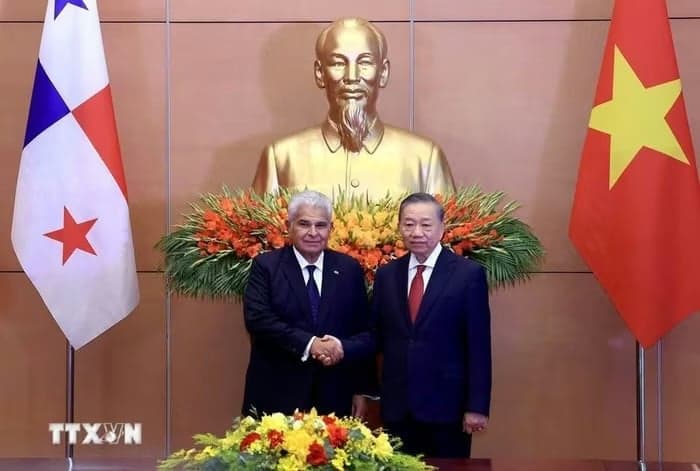

The event took place within the framework of the official visit of Panamanian President José Raúl Mulino and his wife to Vietnam from October 5-8.
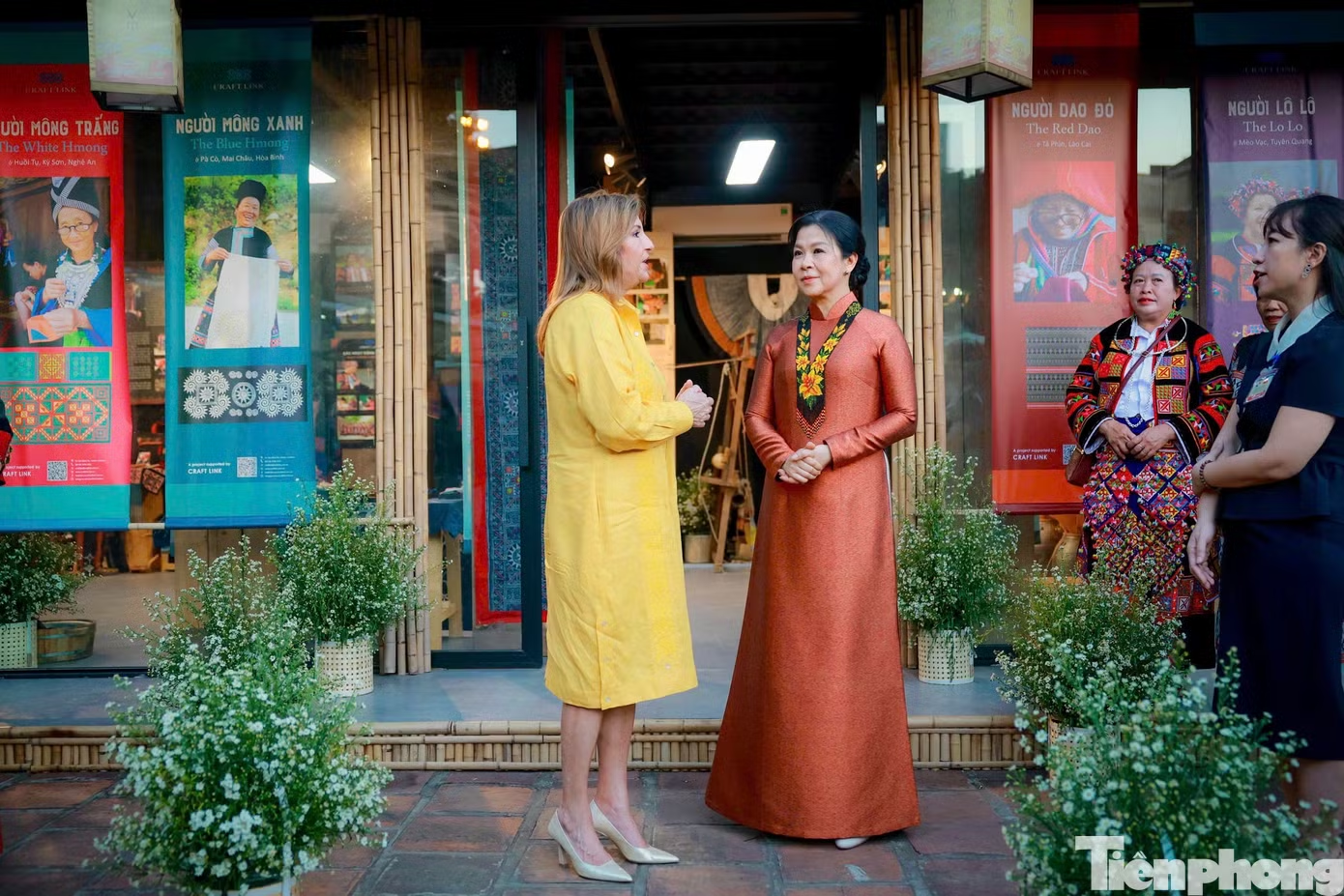
The two ladies listened to presentations about the cultural diversity of Vietnam's ethnic groups, spending time learning about traditional costumes and the weaving, embroidery, and pattern-making techniques that have been preserved and passed down through generations. These costumes, with their distinctive materials, colors, and patterns, not only reflect aesthetic concepts but also preserve stories about the history, customs, traditions, and unique identity of each community.
In a friendly atmosphere, the two Ladies met with artisans and learned about some of the processes involved in creating traditional handicrafts of the Ta Oi, Red Dao, and Green Hmong ethnic groups. They also observed how indigo dyes were used to create fabrics, how patterns were painted with beeswax, and the meanings behind these designs.
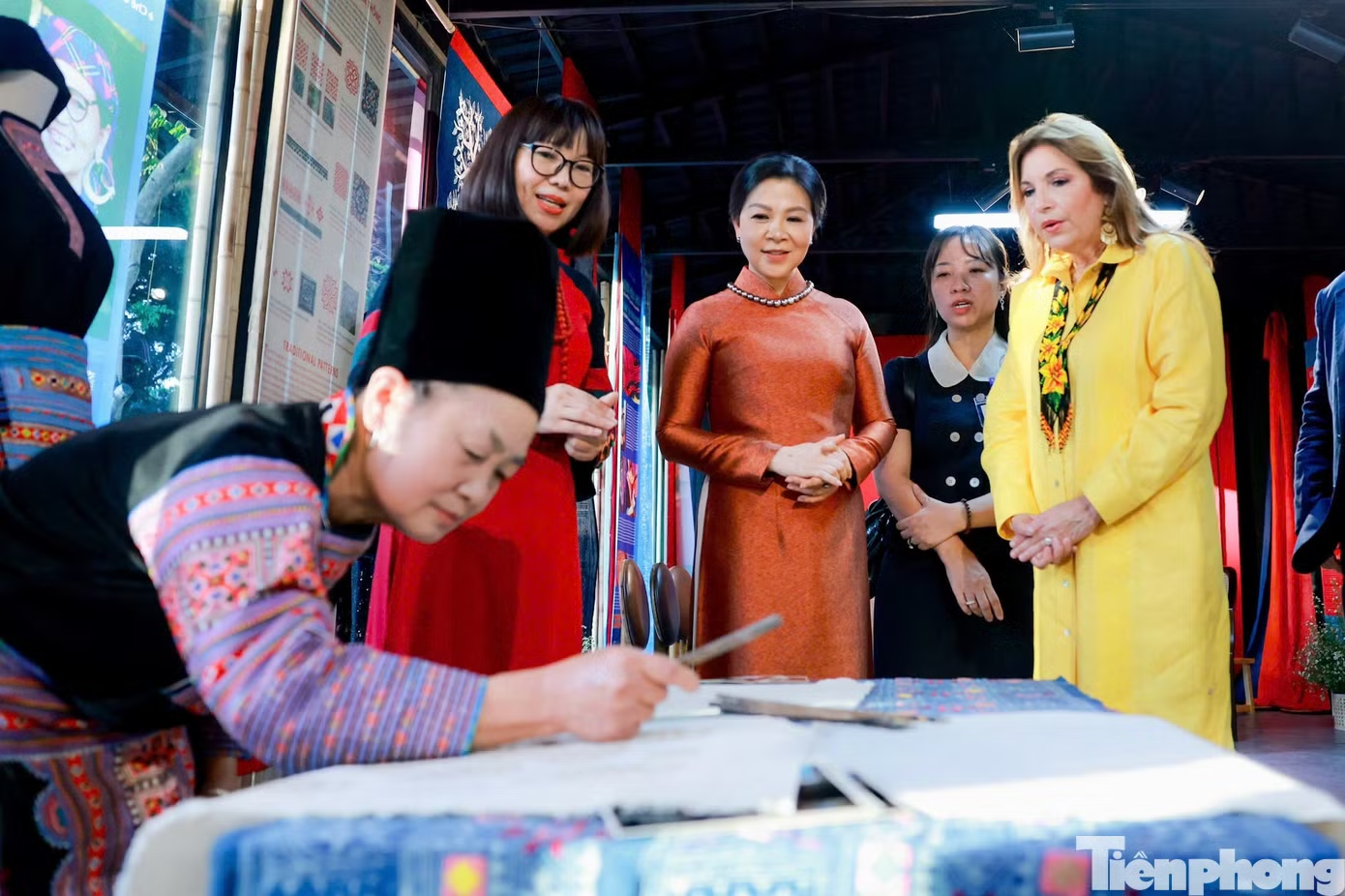
Photo: Minh Chau
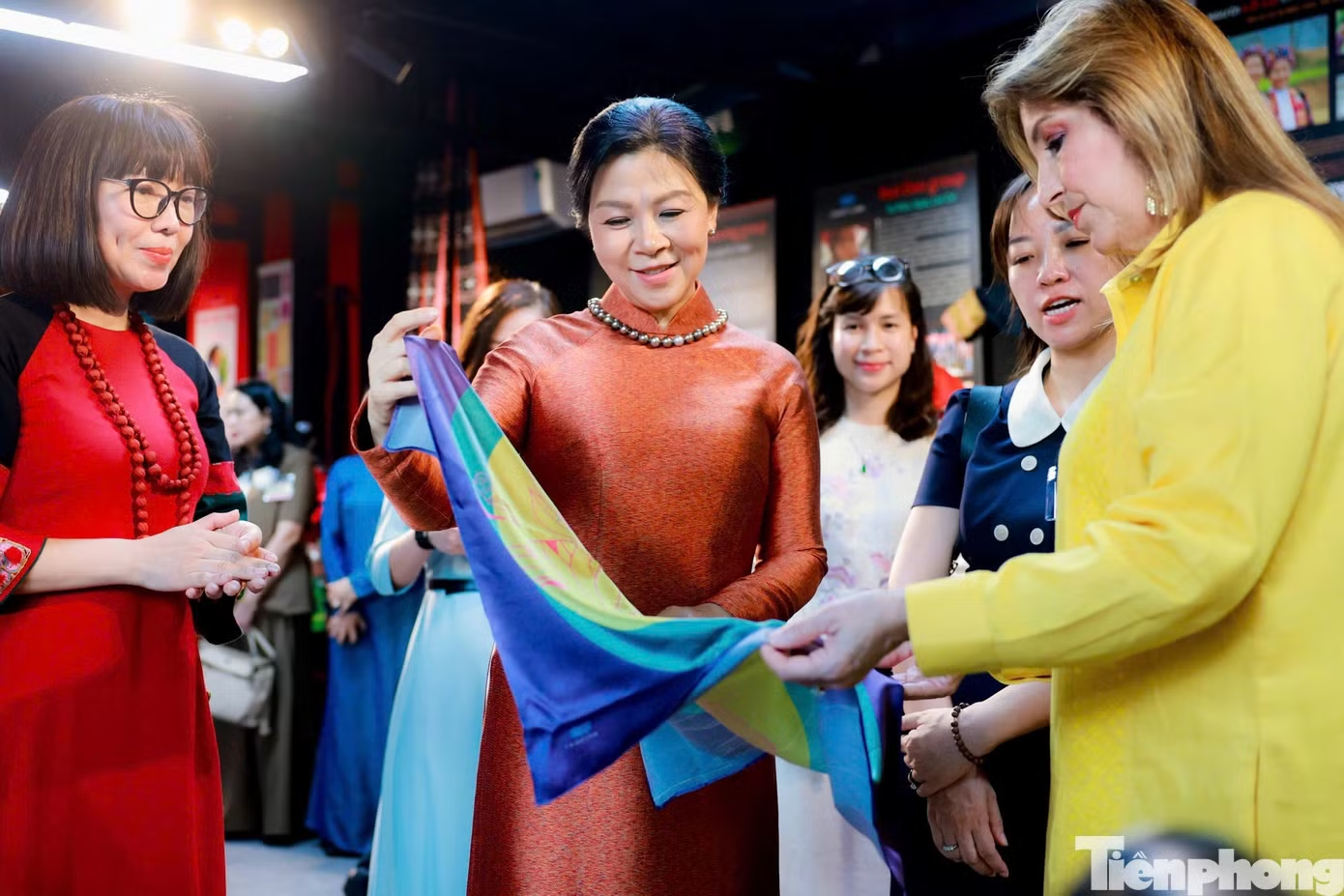
Mrs. Ngo Phuong Ly shared her pride in introducing Mrs. Maricel Cohen de Mulino to the patterns, fabrics, and dyes made entirely from natural materials used by the local people.
In today's modern life, the biggest challenge for traditional culture is not just preservation, but how to make heritage live on in daily life, providing sustainable livelihoods for people, especially women and vulnerable groups in society.
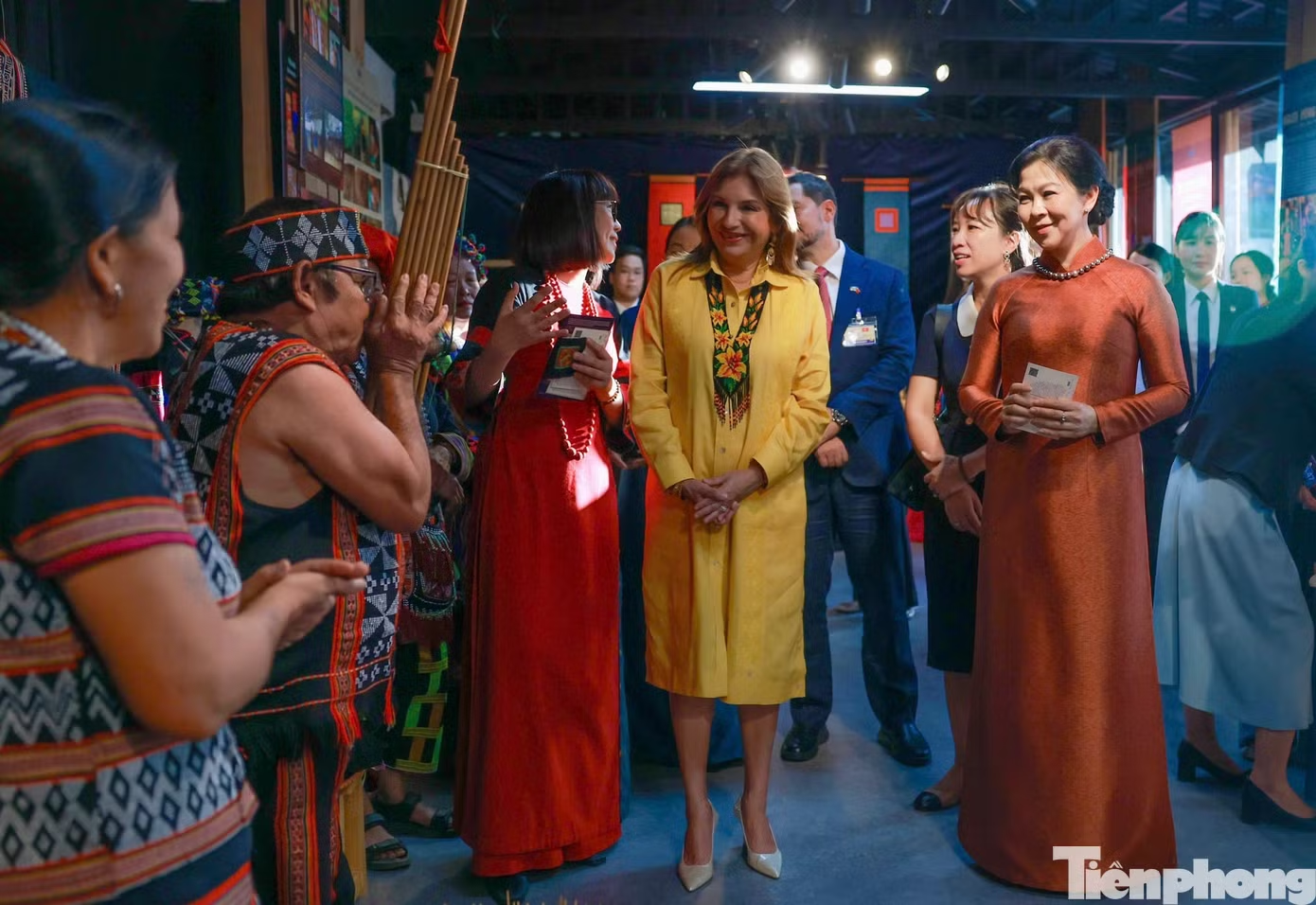
From that perspective, the wife of the General Secretary and President believes that preserving heritage is not just about safeguarding artifacts or techniques from the past, but more importantly, about creating conditions for those values to continue to be practiced, innovated, and adapted to contemporary life.
Providing support to traditional handicraft production groups, especially ethnic minority women, the poor, and people with disabilities in remote areas, not only contributes to job creation and income improvement for the people, but also helps to restore and preserve endangered handicrafts such as brocade weaving, pottery making, basket weaving, and wood carving.
In addition, support them in designing products suitable for the modern market, training management skills, and connecting their products to the world ; creating motivation for the younger generation to continue learning, staying committed to, and developing traditional crafts.
Drawing from stories about the traditional costumes of Vietnamese ethnic groups, Mrs. Maricel Cohen de Mulino shared her joy and special impression of seeing familiar patterns on Panamanian clothing in Vietnam.
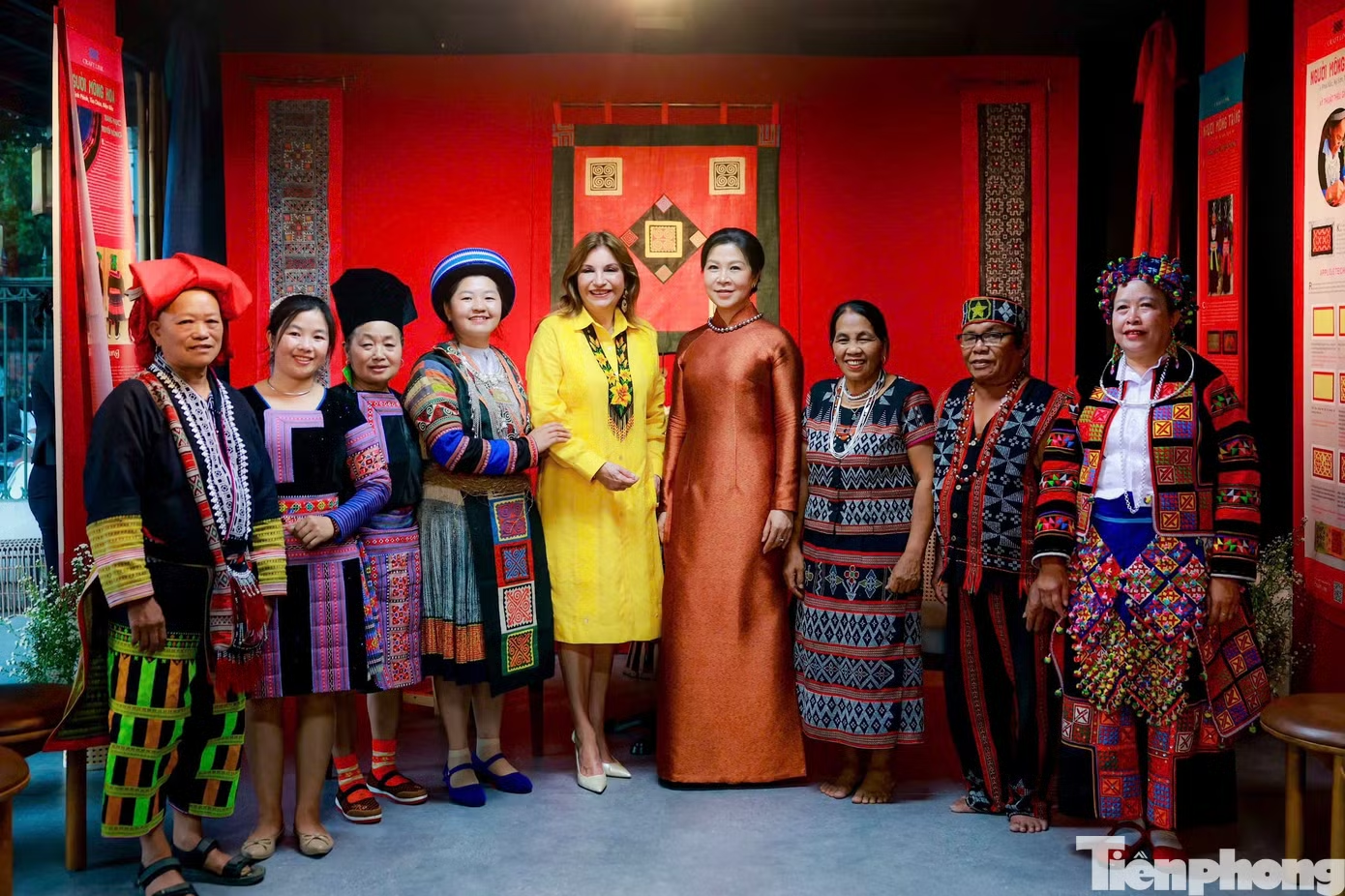
Despite being located on two different continents, separated by tens of thousands of kilometers, the First Lady of Panama shares the culture of the indigenous communities in Panama, including the Mola art of the Guna people, which has similarities in the use of colors, patterns, and techniques in depicting motifs on the traditional costumes of the Hmong, Dao, and Thai people in Vietnam.
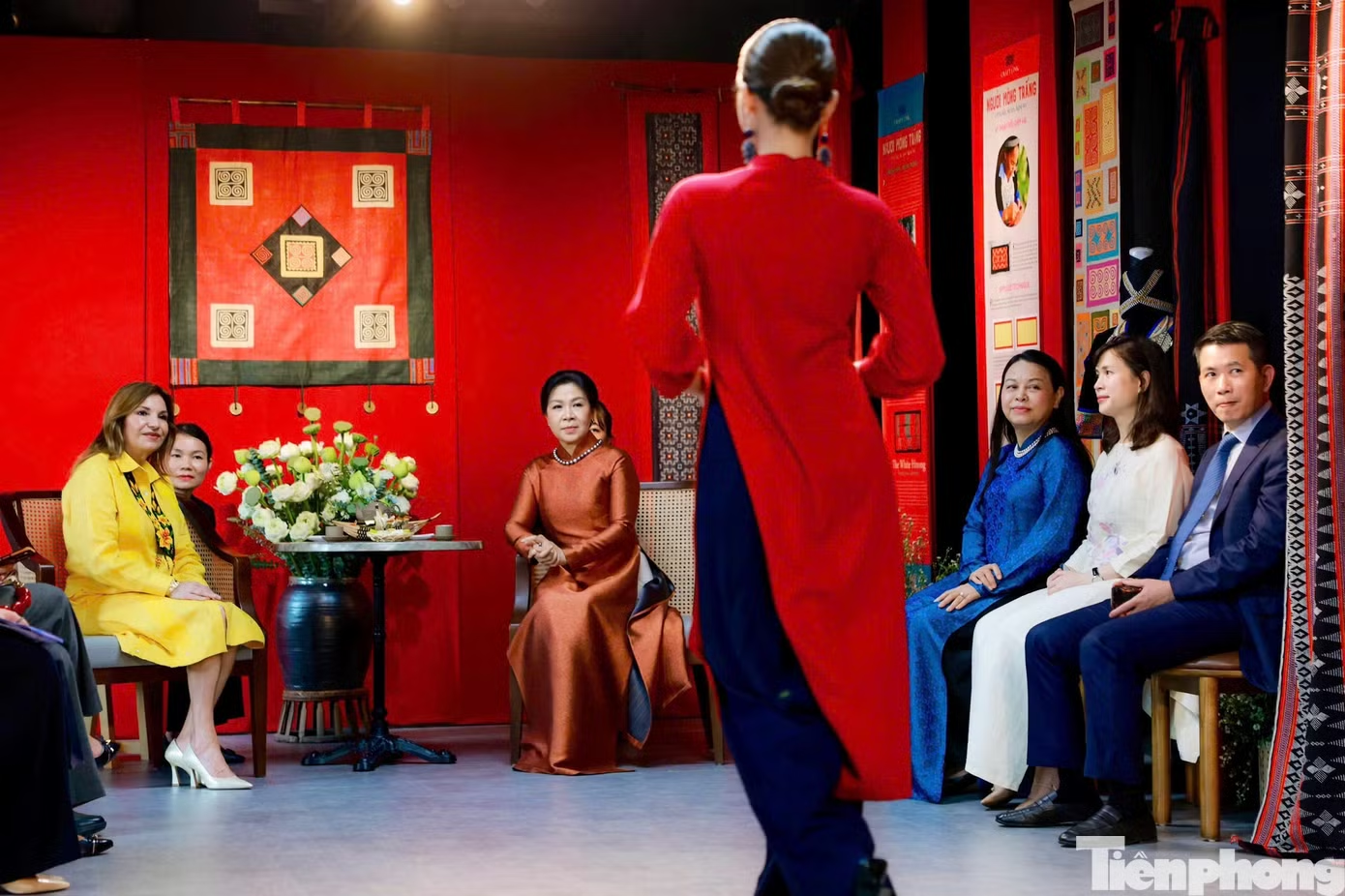
In a relaxed and friendly atmosphere, the two ladies enjoyed tea, watched a fashion show featuring traditional Vietnamese ao dai dresses, and exchanged views on the role of women in modern life, as well as the significance of culture in fostering community cohesion and enhancing understanding among different ethnic groups.
Source: https://tienphong.vn/phu-nhan-tong-bi-thu-chu-tich-nuoc-to-lam-va-phu-nhan-tong-thong-panama-tim-hieu-trang-phuc-dan-toc-thieu-so-post1882826.tpo