
Step into the "one-person studio"
A traditional film typically begins with a script, actors, a set, and cameras. But with AI films, the starting point is just a command.

Seeking out director Pham Vinh Khuong, one of the pioneers in applying AI to filmmaking in Vietnam, we learned about the process of transforming descriptive lines into a complete work of art.
Reviewing the footage from "Journey to the Sacred Land ," Khương excitedly revisited the initial command to sketch the female protagonist: "Create a female character using high-quality resin, with smooth lines in a chibi style, a blend of hip-hop and jazz, with a large head, small body, emerald green eyes, and wavy white hair..."
To ensure the character appears consistent from one scene to the next, filmmakers must meticulously detail every accessory and costume, making continuous adjustments until the AI produces a satisfactory appearance.
He outlines the process of producing an AI film into five basic steps: storyboard writing (ChatGPT/Claude), creating fixed character concepts (Midjourney/Flux/Gemini), rendering video animation (Seedance/Kling/Veo), creating dialogue and music (ElevenLabs/Suno), and post-production, lip-syncing, and color grading (Premiere/CapCut).
At just over 4 minutes long, the animated film "Journey to the Sacred Land" was completed by him and his collaborators in less than 2 days. If done using traditional animation methods, a professional team could take more than half a year. This model opens up the concept of a "one-person studio," where one individual can handle many stages that previously required an entire film crew.
However, writer and screenwriter Pham Ha Thu shared her experience of trying her hand at making an AI film: "Many young people are very talented now, but a big mistake many make is thinking that a fast-paced, dramatic plot will make a better film. Cutting out dialogue and omitting the cause-and-effect relationships results in a film that is all about the outcome, losing emotion and detail."
Characters are not created by major events, but by small details and moments of silence. No matter how brilliant the AI is, it can only perform statistical analysis; it cannot comprehend the character's deepest pain to touch the audience's hearts.”
The explosion of AI video creation tools has lowered technical barriers, but it has also opened up other implications regarding identity. Because much of the training data, script templates, and character models of current AI platforms originate from and are heavily influenced by the Chinese market, many young Vietnamese aspiring AI filmmakers have fallen into the trap of "copying the original."
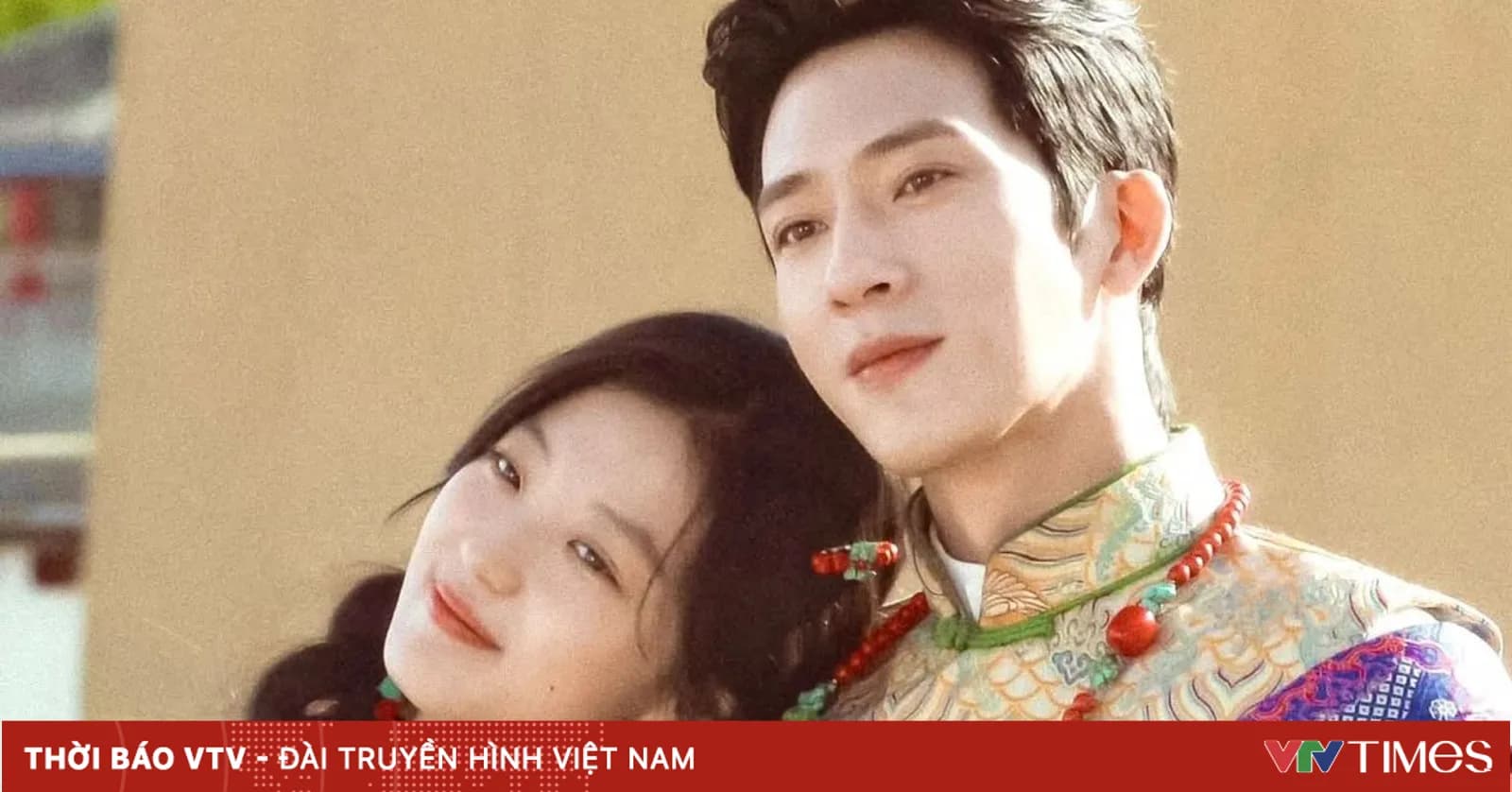
From the pale-skinned character designs, hairstyles, and costumes to the fast-paced, sensational dialogue, the ambiguity regarding copyright and identity is evident as many Facebook and TikTok accounts brazenly create sensational short episodes, even "borrowing" the brand of popular VTV television shows like "Living with Mother-in-Law" to attract views.
In reality, behind those sensational headlines lie two trends: firstly, short films produced by Chinese studios with AI translation and robotic voiceovers; secondly, products created by young Vietnamese filmmakers that completely copy scripts, dialogue, and family conflict motifs from foreign countries.
Although some TikTok channels like Thao's Story or Ms. Sau's Boarding House have made efforts to incorporate local elements (boarding houses, traditional clothing, local markets) into their AI-powered videos, the majority on the internet still feature pale-skinned characters with lifeless expressions, constantly escalating conflicts with slapping scenes and relentless accusations to "trap" users into paying to watch more.
A young AI filmmaker revealed that the process of creating a film is condensed into a few lines of prompts, from script and character design to setting the scene and creating emotional background music; the script can be "borrowed" for free from the vast online library of stories. But is that enough to create a compelling Vietnamese film story?
Automated processes and emotional boundaries
From scattered experiments, the concept of a "film production machine" began to take shape. While making a single film is a meticulous, handcrafted process, producing hundreds of short episodes operates like an industrial assembly line.
Filmmakers simply use tools to freeze the characters' faces and then let AI automatically run the process to produce dozens of episodes every day. This speed optimizes costs, but drags the artistic quality down to a "fast food" level.
Furthermore, AI provides data on viewer behavior, such as when viewers fast-forward or swipe away, allowing producers to strategically place plot twists to keep viewers engaged. However, the line between technology and genuine art remains clear. Technically, AI often suffers from errors such as distorted hands, blank expressions, incorrect shadow placement, and misaligned costumes between camera angles.
Director Dung Nghe commented that AI can create a person crying/laughing, but creating an expression that truly moves the audience is another matter entirely.
“AI is just a way for us to make a film, not the reason why audiences will love it,” director Dung Nghe emphasized. Meritorious Artist Trinh Quang Tung, Deputy General Director in charge of the Central Documentary and Scientific Film Studio, noted: “If it is clearly defined from the beginning that AI is a means of illustration and recreation, then it can be acceptable. But if AI images are introduced and presented as real events or characters, the boundary between illustration and truth will be blurred, distorting the essence of documentary films.”
Ultimately, as technology becomes more accessible, what helps filmmakers thrive is their aesthetic sense, philosophical perspective, and unique identity. AI can help create films faster and cheaper, but whether the story resonates with viewers emotionally remains the responsibility of humans.
The cross-border market landscape
The emergence of AI did not create the microdrama market (a very short film designed for mobile phones); rather, the market had already formed, and AI is accelerating its scale many times over.
Vietnam has also begun to organize several short film competitions about AI, such as Vietnam AI Film 2026 with the theme "Vietnamese Legends Through the Lens of AI." Most recently, in late September, TFS Film Studio of Ho Chi Minh City Radio and Television announced the AI film project " Hunting Ground," adapted from the novel of the same name by writer Nguyen Dinh Tu.
In China, the "capital" of short films, the regulatory body officially recognized microdramas in 2020. In just the first eight months of 2026, the country released 430,000 short film episodes (13 times the total for all of 2025), with over 90% featuring AI.
Thanks to AI, the production time for a 3-5 minute episode has been reduced from 3 months (with 5 people) to 1-2 days (with just 1 person), and costs have dropped by 90%. The Chinese market has now exceeded 100 billion yuan (approximately $14.8 billion) with over 800 million viewers. This craze is rapidly spreading globally.
In India , studios are using AI for production, multilingual voiceovers, and reducing costs by 80%. In the West, giants like Disney, Fox, Peacock, and TikTok have all entered the market, investing in and experimenting with paid short film platforms such as DramaBox, My Drama, ReelShort, and LimeShorts...
In Vietnam, the 2026 Mobile App Trends Report noted a 271% year-on-year increase in downloads of short film streaming apps in Q4 2025. This group of apps climbed to fifth place in terms of in-app purchase (IAP) revenue, reaching $11.5 million, dominated by foreign apps such as DramaWave, ShortMax, NetShort, StardustTV, etc.
All of this shows that microdrama has become a lucrative cross-border market. But when content "factories" can churn out hundreds of thousands of episodes every day, behind every screen swipe lies a massive flow of money crossing borders.
The story now goes beyond innovation or technology, into a more complex realm: payment mechanisms, platform accountability, and legal loopholes that need to be addressed.
Forecast of the global microdrama market size
According to Media Partners Asia, microdrama revenue outside of China is projected to reach $3.6 billion this year and surpass $9.5 billion by 2031. The market is currently dominated by five major platforms: ReelShort (29%), DramaBox (21%), DramaWave (13%), NetShort (10%), and GoodShort (6%).
In Q1 2026, in-app purchase (IAP) revenue reached $750 million, with Southeast Asia currently leading the world in downloads (accounting for 32% of the global market share).
(Source: ScreenDaily, Sensor Tower)
Source: https://www.sggp.org.vn/phim-ngan-ai-va-hang-loat-he-luy-bai-3-nhung-cau-lenh-trieu-do-post874686.html