On November 24, 1946, the First National Cultural Conference was held at the Hanoi Grand Theatre. This historic event raised fundamental issues regarding the role of culture in the building and development of the nation.
Throughout history, culture has not only been a repository of traditional values but also a persistent stream that nurtures the soul, forges character, and creates the spiritual strength of the Vietnamese people.
From customs, traditions, language, folk songs to historical values, patriotic traditions, and the spirit of solidarity, culture has crystallized into a unique identity, becoming a bond that connects communities and transmits positive values through many generations.
Leading up to Vietnam Culture Day on November 24th, a deeper understanding of the value of culture, the stimulation of creativity, and the promotion of national identity are all the more practically significant in the context of Vietnam entering a new stage of development.
In the context of international integration, where knowledge, science and technology, and innovation are increasingly becoming important drivers of growth, the role of culture is being recognized more profoundly.
Culture is not only a heritage that needs to be preserved, but also an endogenous resource that contributes to the formation of national soft power, the development of Vietnamese people, and the creation of a spiritual foundation for sustainable development.
Preserving cultural identity, therefore, does not mean confining oneself to traditional values, but rather should be placed within a process of selective inheritance and creative development so that culture continues to be present, dynamic, and spread in contemporary life.
Given this need, promoting the role of arts training institutions, connecting creative resources, and expanding performance spaces are practically significant in bringing cultural values closer to the public.
In that direction, the Ho Chi Minh City Conservatory of Music is gradually asserting its role not only as a professional music training and research institution but also as an active participant in the performing arts scene.
The proactive organization of large-scale programs with a focus on content and artistic quality demonstrates the school's efforts to more effectively utilize its existing potential.
This is also one of the directions that the Board of Directors, along with the entire staff, lecturers, and employees of the Conservatory, are committed to promoting.
Sharing his thoughts on this direction, People's Artist Do Quoc Hung said: "When I took on the role at the Ho Chi Minh City Conservatory of Music, I realized that the school possesses a very rich artistic resource that has not been exploited and developed to its full potential."

That resource is primarily a team of highly qualified and talented artists and instructors in various fields, from vocal music and Western instruments to traditional Vietnamese instruments.
In addition, the Conservatory has a strong force of students receiving professional training, along with a large network of artists who have graduated from the school and are now actively involved in the music scene.
According to People's Artist Do Quoc Hung, these are important resources that need to be connected and facilitated, not only to improve the quality of training but also to contribute more to performing arts activities, meeting the increasingly diverse tastes of the public.
Commenting on this development, music researcher and critic Nguyen Quang Long believes that the resurgence in performance activities at the Ho Chi Minh City Conservatory of Music has a positive impact on the musical landscape of the South in particular and the musical life of the whole country in general.
According to music researcher Nguyen Quang Long, the public in the South will have more options to enjoy art from an organization with a professional training foundation, possessing strengths in mainstream music, classical music, and political art programs.
These are all fields that require professional expertise, a team of skilled artists, and serious investment in content and performance quality.
Music researcher Nguyen Quang Long also emphasized that, if maintained regularly and with long-term direction, performance activities will help the Conservatory of Music better utilize its existing resources, while contributing to enriching artistic life and creating more space for the public to access and enjoy profound musical values.
With its professional training foundation, experienced artists, and a well-trained pool of successors, the Ho Chi Minh City Conservatory of Music has many advantages to develop performance activities as one of its strengths, alongside its training function.
One of the activities demonstrating that orientation is the "The Nation Rises Up " art program organized by the Ho Chi Minh City Conservatory of Music, aimed at celebrating Vietnam Culture Day on November 24th.
The program will take place at 8:10 PM on November 23, 2026, at the Southern Military Theater in Ho Chi Minh City and will be broadcast live on VTV9.
Staged in the form of artistic commentary, "The Nation Rises Up " is not simply a musical performance but is constructed as a continuous artistic narrative, connecting the past, present, and future through the language of music.
The program consists of three chapters, forming an emotional journey from identifying our origins and affirming our vitality to striving towards the nation's aspirations for development.
Chapter 1: Origins – The Soul of Vietnam opens up a cultural space rich in identity, recreating traditional values through the melodies of folk songs from the three regions of Vietnam, songs about homeland and country, and traditional musical instruments.
Chapter 2, "Continuity – The Vitality of Vietnam," continues , taking viewers to glorious pages of history where patriotic traditions, solidarity, independence, and aspirations for peace have been forged through generations.
Chapter 3: Aspiration – The Nation Rises, opening up a picture of Vietnam in its new development journey, with a spirit of self-reliance, aspiration for innovation, creativity, and integration.
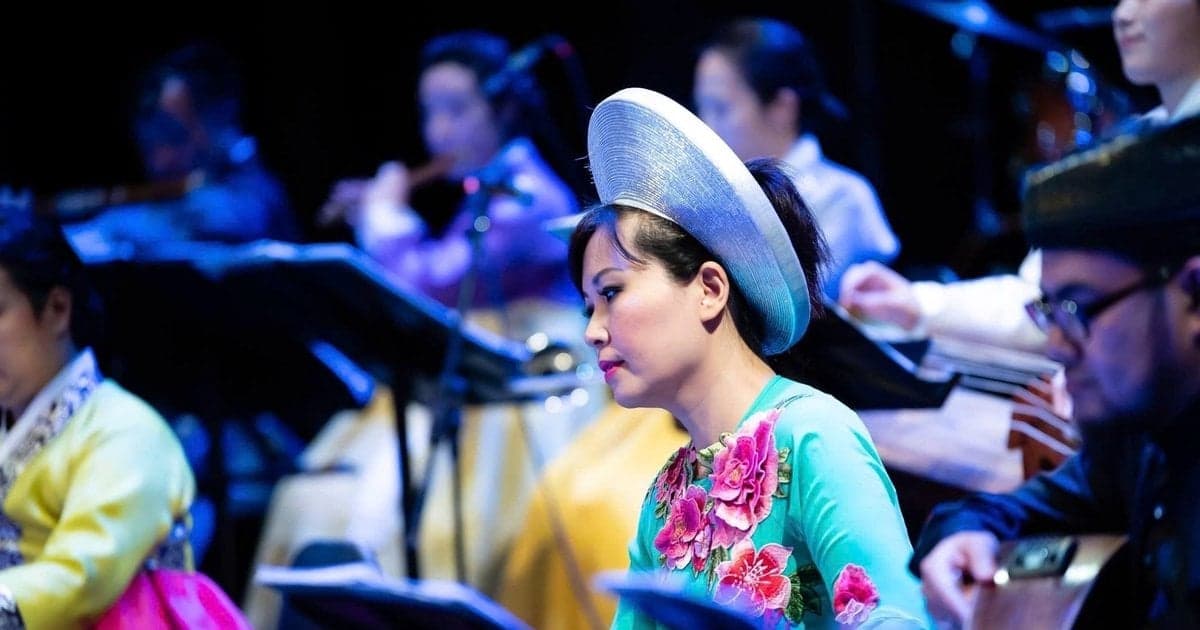
The highlight of the program is the combination of traditional music, revolutionary songs, contemporary compositions, and mixed performing arts.
Many familiar works such as "Floating Water Hyacinths and Drifting Clouds," "Ly Muoi Thuong," "Ly Qua Keu," "Ly Ngua O," "The Country," "The Road We Take," "The Song of Unification," "The Night Stars," "The Country Full of Joy," "The Aspiration of Youth - The Youth of the Ho Chi Minh Generation," "Oh Land, Blooming Flowers," "The Country Rises Up," etc., are selected and arranged according to the content, contributing to guiding emotions and conveying messages about culture, history, and national aspirations.
The program brings together many renowned artists such as People's Artist Quoc Hung, People's Artist Ta Minh Tam, Meritorious Artist Pham The Vi, Meritorious Artist Khanh Ngoc, Vo Ha Tram, Pham Trang, Thu Hang, Bich Hong, Le Thi My Hao, along with the Ho Chi Minh City Conservatory of Music Choir and Mai Trang Dance Troupe.
The combination of vocalists, traditional instrumental ensembles, choir, and dance is expected to create an artistic space rich in identity, both solemn and profound, yet youthful and modern.


Leading up to Vietnam Culture Day on November 24th, "The Nation Rises Up" not only contributes another meaningful artistic activity but also demonstrates the efforts of the Ho Chi Minh City Conservatory of Music in developing its potential, expanding performance activities, and making a positive contribution to professional music life.
Through the language of art, the program simultaneously spreads national pride, love for the homeland, and a sense of responsibility in preserving and promoting the beautiful values of Vietnamese culture.