

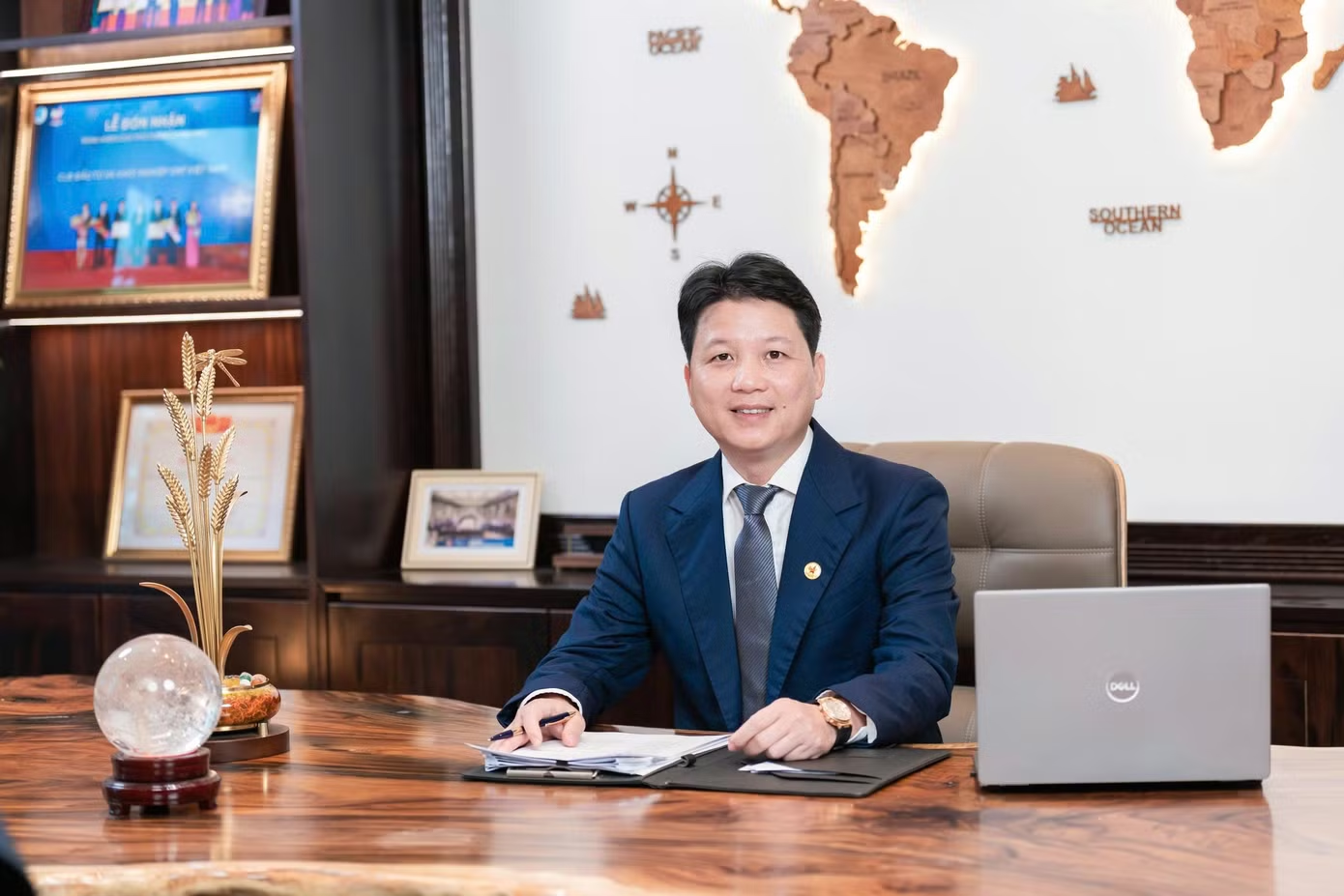
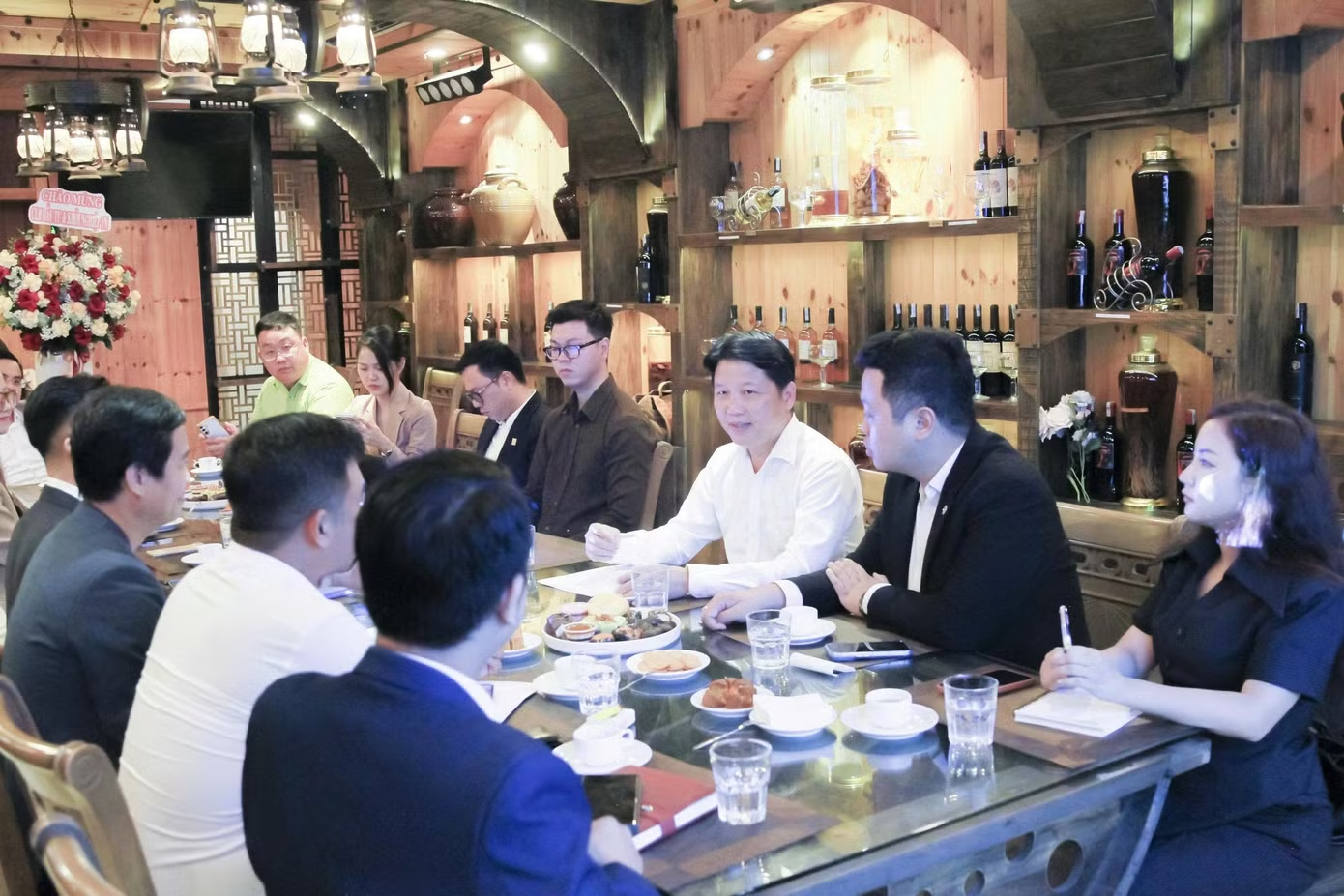
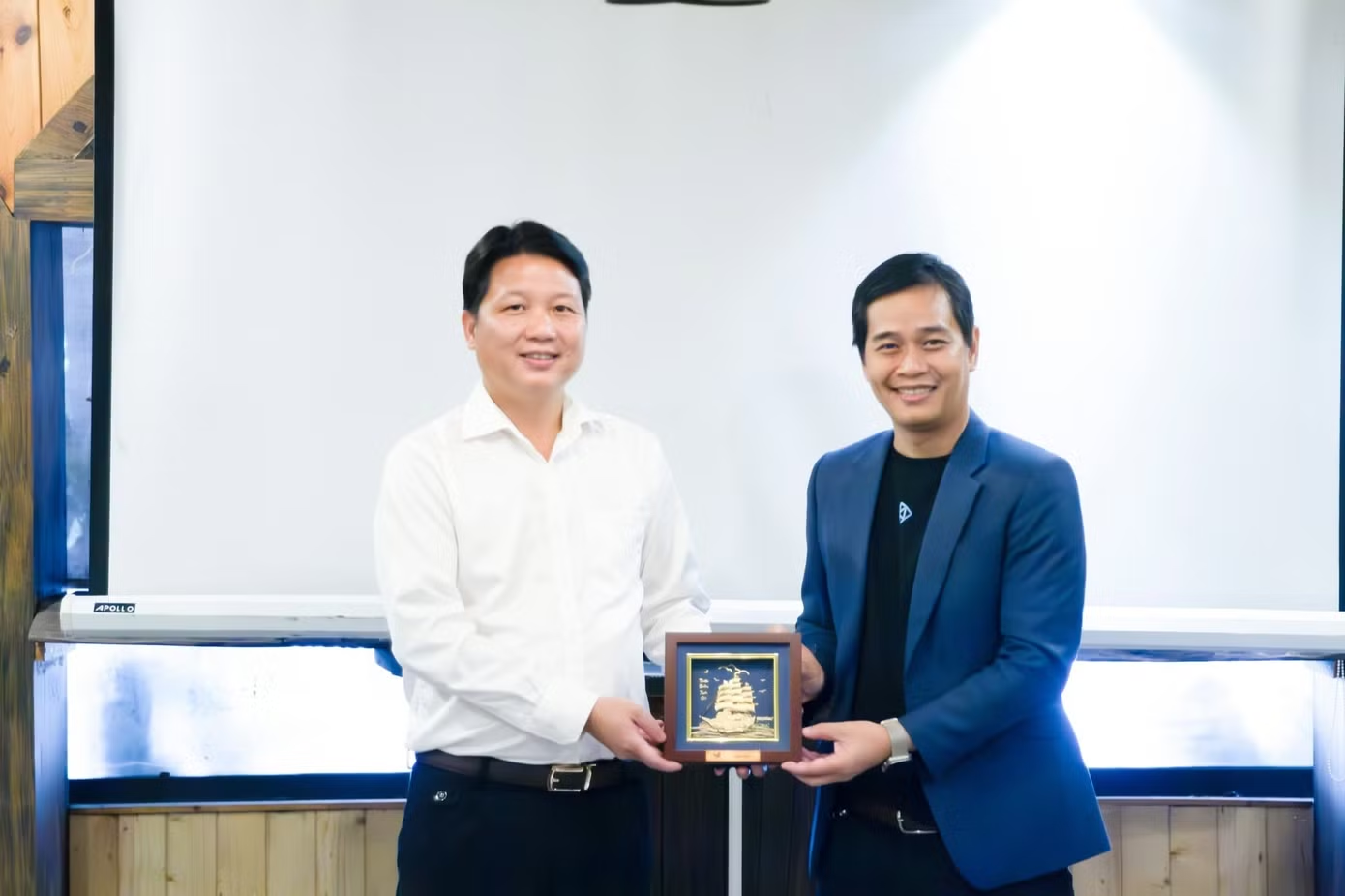
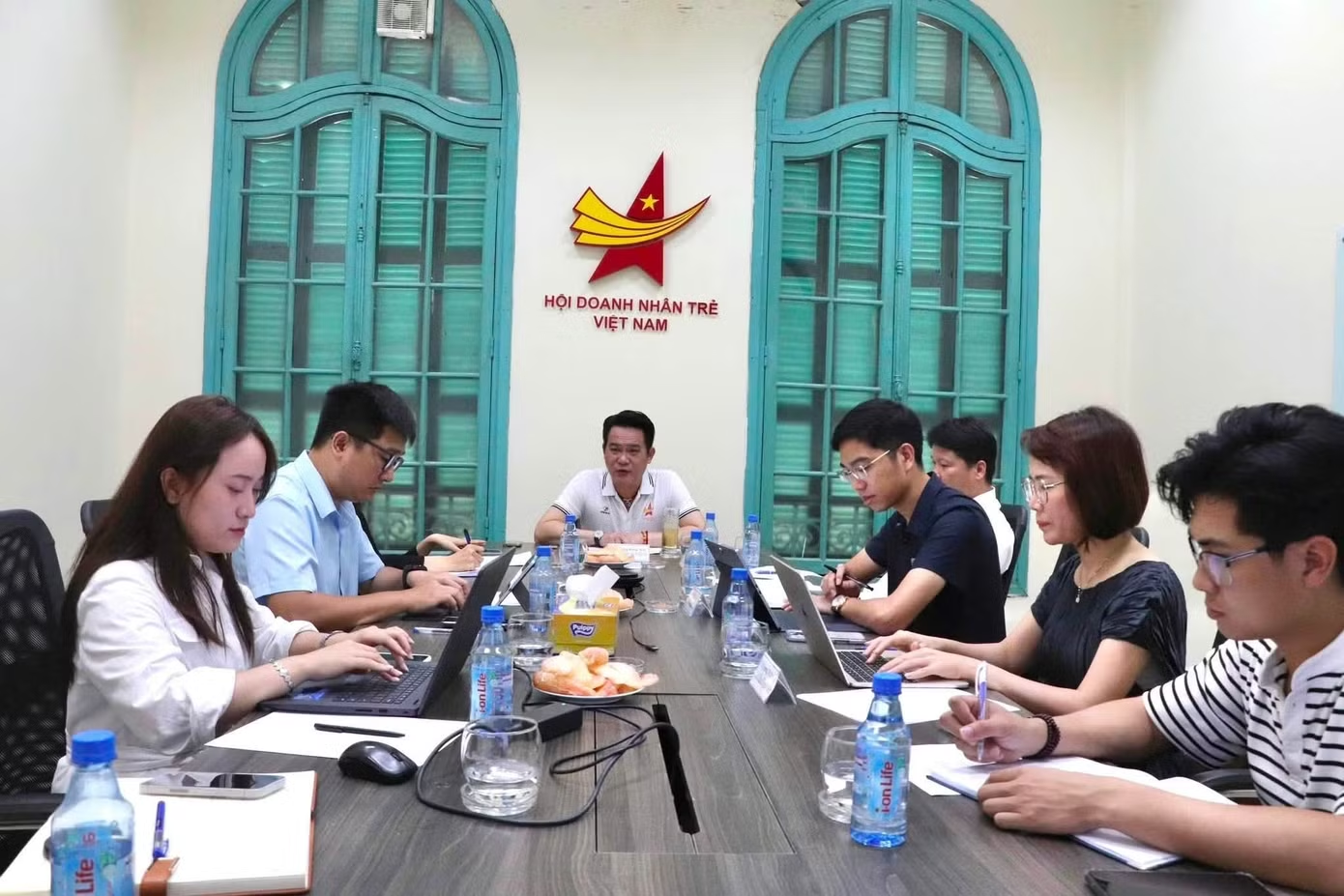
This was shared by Mr. Le Manh Cuong, Chairman of the Vietnam Young Entrepreneurs Investment and Startup Club, with a reporter from Tien Phong newspaper , when talking about the entrepreneurial spirit of the new generation of entrepreneurs.
When a business registration certificate is no longer a measure of entrepreneurial spirit.
Sir, looking back on your entrepreneurial journey, how does starting a business today differ from about 10 years ago ?
Mr. Le Manh Cuong: I think the biggest difference lies in the understanding of entrepreneurship. Previously, the path was quite linear: have an idea, start a company, raise capital, create a product, and then find customers. That path still exists and is always very valuable, but the reality of business today is much more diverse.
A young person can start from scratch, but they can also take over a large family business that has been operating for 20-30 years, changing the management model, digitizing the entire operational chain, and developing a business sector that the previous generation never ventured into.
Alternatively, someone might not start a new business but instead acquire an existing one with a market, then restructure the product, capital, and human resources to create a new growth cycle. Others might enter a very traditional industry like agriculture , construction, logistics, or retail, but use AI, data, e-commerce, or green technology to do things in a completely different way...
It can be said that nowadays, a business registration certificate is no longer the only measure of success; the core is identifying opportunities, accepting risks, and creating new value.
As evidence, the Outstanding Young Entrepreneur 2026 selection program organized by the Vietnam Young Entrepreneurs Association has removed the limit on businesses operating for no more than 10 years, opening the door to succession, mergers and acquisitions (M&A), restructuring, etc., as long as they demonstrate a significant development impact.
Some argue that inheriting a family business has a significant advantage over a self-made founder starting from scratch, so is calling it "entrepreneurship" too broad a term?
Mr. Le Manh Cuong: Here, we need to distinguish between "inheriting a business" and "creating a new phase of development for the business." A young person who is handed over a business with revenue, a factory, customers, and personnel cannot say that they started like a founder with only a few hundred million dong.
However, successors face a unique kind of pressure. They inherit assets but not automatically inherit leadership skills; they inherit the brand but not automatically gain recognition from employees, partners, or the market.

In particular, many Vietnamese family businesses are facing the challenge of transitioning generations at a time when technology, consumer behavior, supply chains, and management methods are changing very rapidly.
If the F2 generation simply takes over the title, that's not yet entrepreneurship. However, if they professionalize management, create new products, open new markets, undergo digital transformation , and move the business into a higher value chain, then the mark of an entrepreneur is very clear.
Starting a business doesn't necessarily mean having "nothing in hand." More fundamentally, entrepreneurship is the ability to create something new in uncertain circumstances.
In the age of AI, how can young people start their own businesses?
AI, data, and e-commerce are drastically reducing barriers to market entry. Is this a better time to start a business?
Mr. Le Manh Cuong: It's easier to start, but not necessarily easier to succeed. Nowadays, just two or three AI users can research customers, build prototypes, run ads, and sell products at much lower costs.
However, if we're fast, our competitors are too. When ideas are easily copied, the advantage is no longer about "thinking it up first," but rather about execution speed, data, customer experience, operating systems, and the ability to innovate continuously.
AI can create beautiful demos, but it doesn't prove customers will pay. So when a young person brings a project to me, I don't ask if the idea is unique, but rather: Who will pay? Why will they pay? If they don't have your product, how are they solving that problem? Then there are the numbers about the cost of acquiring a customer, the return rate, the profit margin, and if revenue drops by 30%, how long will the cash flow sustain the business...
Many people enthusiastically talk about the multi-billion dollar market, but haven't answered the question of whether a single sale results in profit or loss. Starting a business requires ambition, but ambition must be based on sound calculations. I often tell the members of the club that you shouldn't confuse creating a product with building a business, and you should learn four things early on: managing cash flow, people, legal matters, and data," said Le Manh Cuong.
Sir, M&A is a new avenue for entrepreneurship. Perhaps instead of spending years building a company from scratch, young entrepreneurs could buy existing businesses to "get ahead"?
Mr. Le Manh Cuong: Moving faster might be possible, but making it easier isn't guaranteed. M&A allows an entrepreneur to "buy back time," acquiring existing customers, brands, licenses, personnel, or production capacity.

However, along with the assets, you might also be buying unseen problems such as debts, taxes, shareholder disputes, employment contracts, intellectual property, or an overly dependent customer base.
Therefore, M&A is not simply about "buying a company," but about valuing, assessing, and restructuring a business system. Vietnam has many small and medium-sized enterprises that already have a foundation, customers, and assets, but are facing challenges related to succession, technology, capital, or management.
Young people capable of taking over and reviving these businesses means preserving resources for society, instead of letting them close down and others having to start from scratch.
Forming an ecosystem that supports and promotes business development.
In the context of today's startup environment, how should the Club and the Outstanding Young Entrepreneur program change to promote Vietnam's startup ecosystem, sir?
Mr. Le Manh Cuong: Nowadays, it's increasingly easy for young people to start businesses, but staying afloat and growing them is the real challenge.
Nevertheless, Resolution 68 identifies the private sector as the most important driving force of the economy, setting a target of approximately 2 million operating businesses by 2030; Resolution 57 places science , technology, innovation, and digital transformation in a breakthrough position. This presents a great opportunity for young entrepreneurs, but policy opportunities only become business opportunities when businesses have the capacity to absorb them.
Regarding entrepreneurship, the question now is no longer about organizing many competitions or events, but rather what young entrepreneurs gain after the event to help their businesses grow. Inspiration is necessary, but if young people are not helped to understand the market, capital, taxes, laws , and management, it is easy to create a generation that "likes to start businesses" but lacks the necessary skills to run a business.
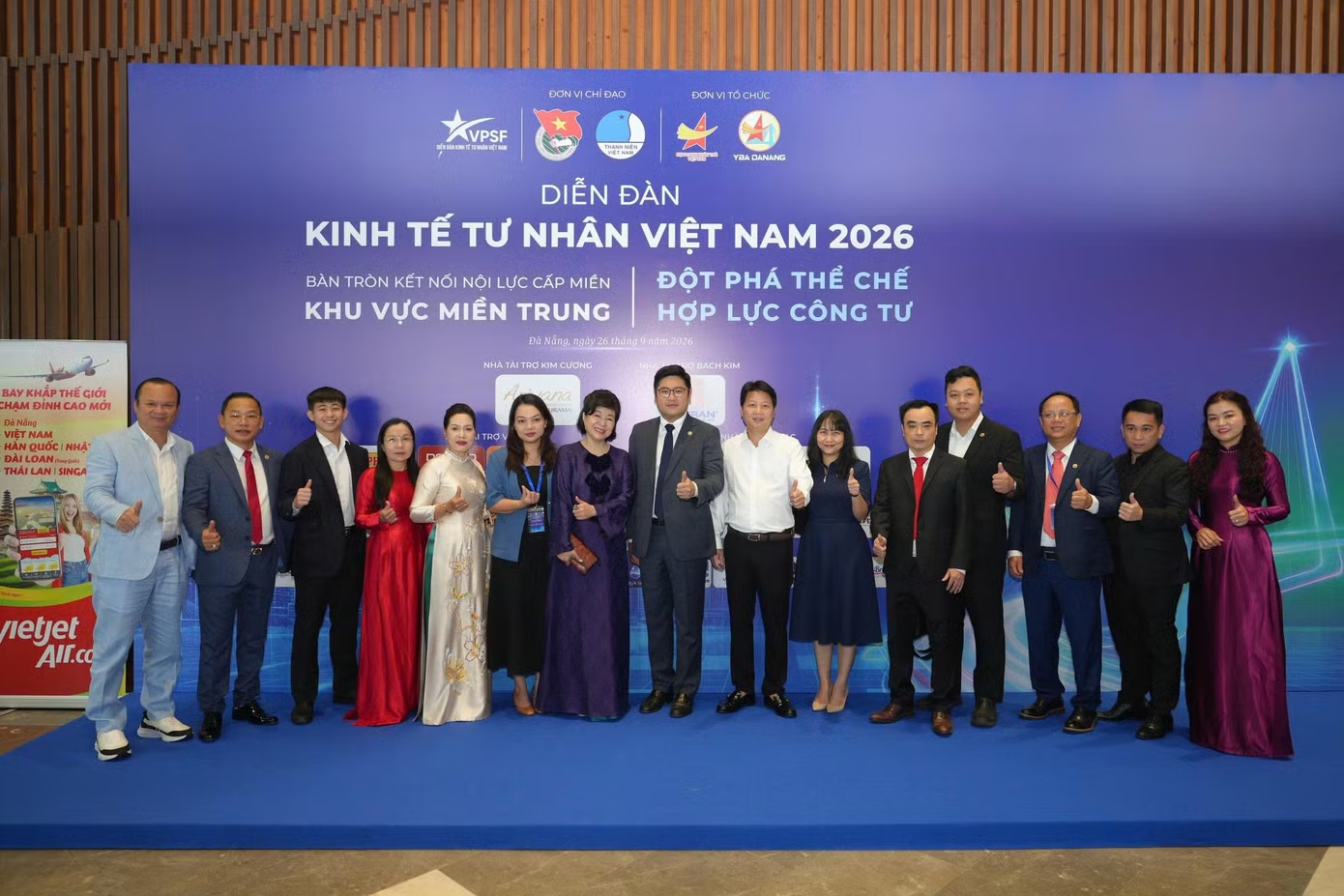
After 10 years, the club has a network in 22 provinces and cities with thousands of members, and its greatest value lies in that network itself. There, startups find their first customers, and founders find experienced people to ask for advice on finance, legal matters, and management. We want to shift from "connecting to get to know each other" to "connecting to create transactions, investments, and new capabilities."
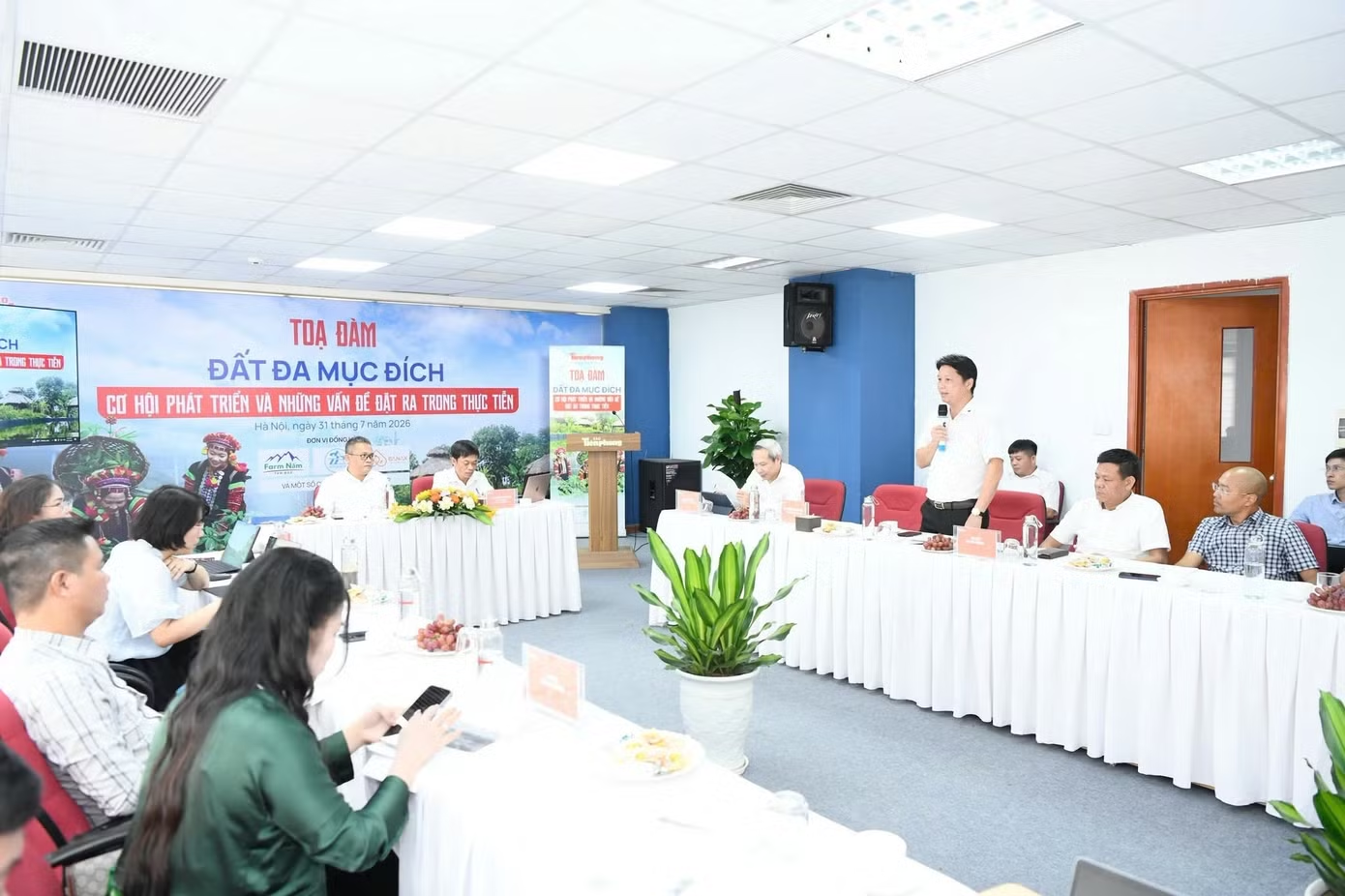
The Outstanding Young Entrepreneur Award program also follows this approach. The title is not the destination but the starting point: after the honor, there must be connections with capital, markets, technology, and partners, so that in a few years, those honored today will return to guide the younger generation.
"For me, starting a business isn't about creating another legal entity, but about opening up a new path to growth. That's the biggest difference between today's generation of young entrepreneurs," said Le Manh Cuong.
If you were to give one piece of advice to young people who want to start a business today, what would you say?
Mr. Le Manh Cuong: Don't start a business just because others are. Begin with a problem you truly understand, such as: meeting with customers before seeking funding, selling products before thinking about pricing, and understanding financial reports before building a large organization.
Prepare for tough years, because a good business is one that stands strong when the market changes, and don't assume everyone has to start from scratch.
For me, starting a business isn't about creating another legal entity, but about opening up a new path to growth. That's the biggest difference between today's generation of young entrepreneurs and the current one.
Thank you!
Source: https://tienphong.vn/nguoi-tre-lam-gi-de-vuot-tuong-lua-khoi-nghiep-the-he-moi-post1882145.tpo