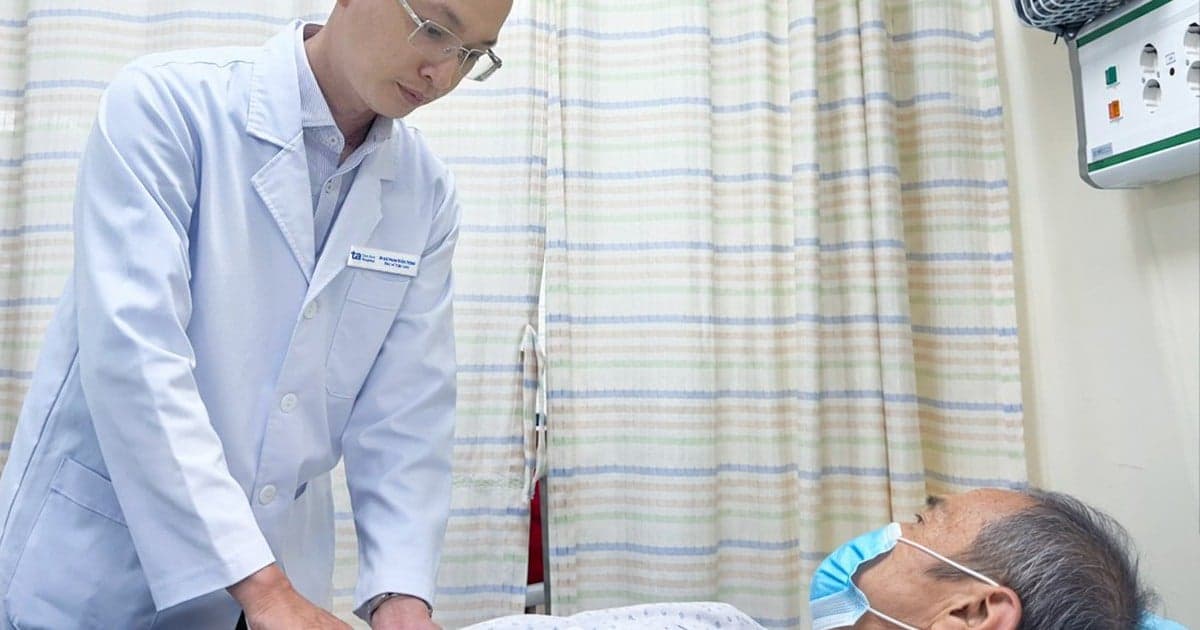

Mr. NAT (50 years old, residing in Ho Chi Minh City) felt unwell for about 3 days before the party, occasionally experiencing sharp pains in his left chest, but did not seek medical attention. At the party, after drinking some wine, he suddenly vomited and collapsed.
Seeing that Mr. T. was still conscious, his relatives took him home. However, en route, he experienced difficulty breathing, decreased consciousness, muscle spasms in his limbs, and his eyes rolled back, so he was rushed to a hospital in Tan Son Hoa ward (Ho Chi Minh City) for emergency treatment. There, the patient suffered cardiac arrest, respiratory arrest, and fell into a coma.
Doctors immediately performed cardiopulmonary resuscitation (CPR). After about 30 minutes, his heart started beating again, but the man remained in a coma, requiring mechanical ventilation and medication to support circulation. During treatment, the patient experienced spasms in his limbs.
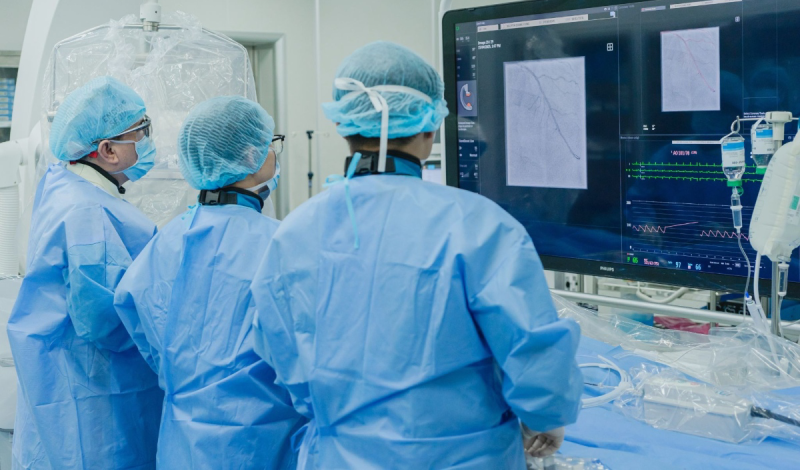
According to Dr. Pham Thi Ngoc Bich, a specialist in Interventional Cardiology in Ho Chi Minh City, the examination results showed that the patient had an acute myocardial infarction, with cardiac function reduced to 37%. Coronary angiography revealed a 70% stenosis of the anterior interventricular artery, accompanied by a thrombus within the vessel. The doctor determined this to be the cause of the myocardial infarction and proceeded with coronary revascularization.
Following the intervention, respiratory and circulatory conditions gradually improved. One day later, Mr. T. was conscious, breathing on his own, and able to eat and drink. His cardiac function improved to 54% after treatment. After 6 days, the patient was stable and discharged from the hospital.
According to Dr. Bich, myocardial infarction (heart attack) doesn't always manifest as severe chest pain. Patients may only experience tightness or discomfort in the chest, shortness of breath, sweating, nausea, dizziness, unusual fatigue, or fainting. These symptoms are easily overlooked or mistaken for other illnesses.
Individuals with hypertension, diabetes, dyslipidemia, or a history of cardiovascular disease should pay particular attention to any unusual symptoms that may appear.
When a person suddenly loses consciousness and is not breathing normally, call emergency services immediately and perform cardiopulmonary resuscitation (CPR). Place the patient on a hard surface and perform chest compressions at the center of the chest at a rate of 100-120 times per minute, with a depth of about 5-6 cm, allowing the chest to return to its normal position after each compression. If an automated external defibrillator (AED) is available, turn it on and follow the device's instructions, continuing chest compressions until medical personnel arrive.
Source: https://vietnamnet.vn/nguoi-dan-ong-guc-tren-ban-nhau-roi-ngung-tim-2561388.html