
On the evening of October 4th, the second World Culture Festival in Hanoi - 2026 concluded at the Thang Long Imperial Citadel historical site, after four days of events themed "Gathering Heritage - Shaping the Future".
Speaking at the closing ceremony, Minister of Culture, Sports and Tourism Lam Thi Phuong Thanh said that the Ministry will continue to coordinate with the Ministry of Foreign Affairs , Hanoi city, UNESCO, diplomatic missions and international partners to gradually build the World Cultural Festival in Hanoi into a prestigious international cultural exchange and cooperation platform, held annually, with its own unique identity and concrete cooperation results each year.
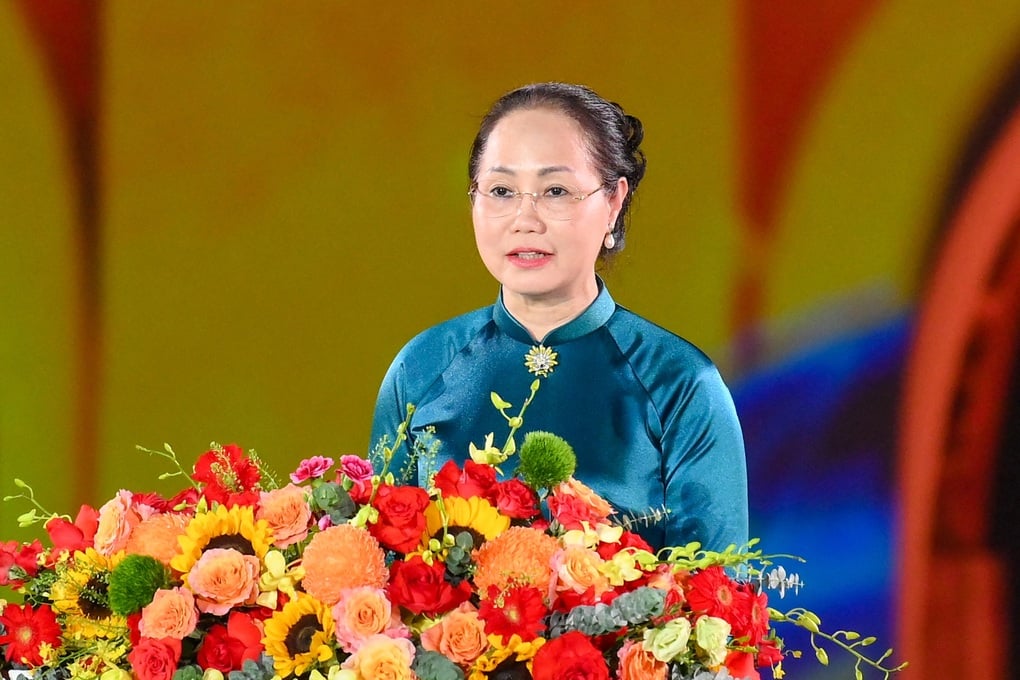
Minister of Culture, Sports and Tourism Lam Thi Phuong Thanh speaks at the closing ceremony of the second World Culture Festival in Hanoi (Photo: The Dai).
"We hope that Hanoi will not only be a venue for festivals, but will increasingly become a regular meeting point for cultures; a place where initiatives on heritage, creativity, cultural industries and sustainable development are connected," the Minister said.
This year's festival brought together 50 countries, with 45 cultural spaces, 19 international art troupes, 35 food stalls, and a program showcasing films from nearly 20 film industries. Over four days, Thang Long Imperial Citadel became a place where heritage, performing arts, cinema, fashion , cuisine, tourism, and creative forms all converged, interacted, and connected.
According to Minister Lam Thi Phuong Thanh, the presence of 50 countries and international organizations, hundreds of artists and artisans, and a large audience in Hanoi created a broad, diverse, and vibrant space for cultural exchange. New connections were formed, demonstrating that culture can bring people, nations, and peoples closer together.
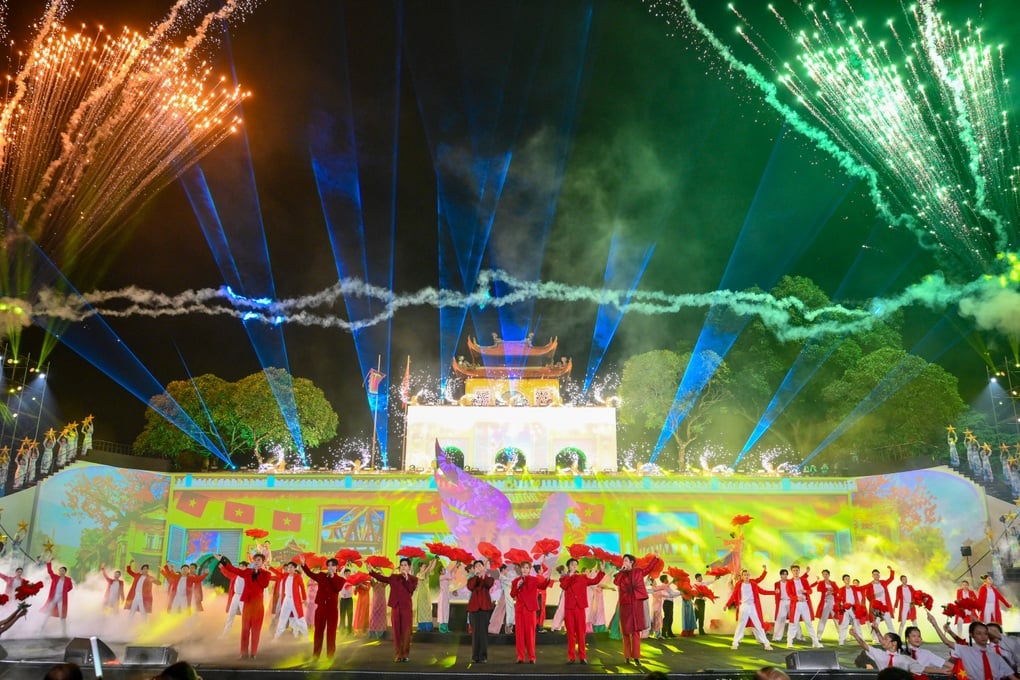
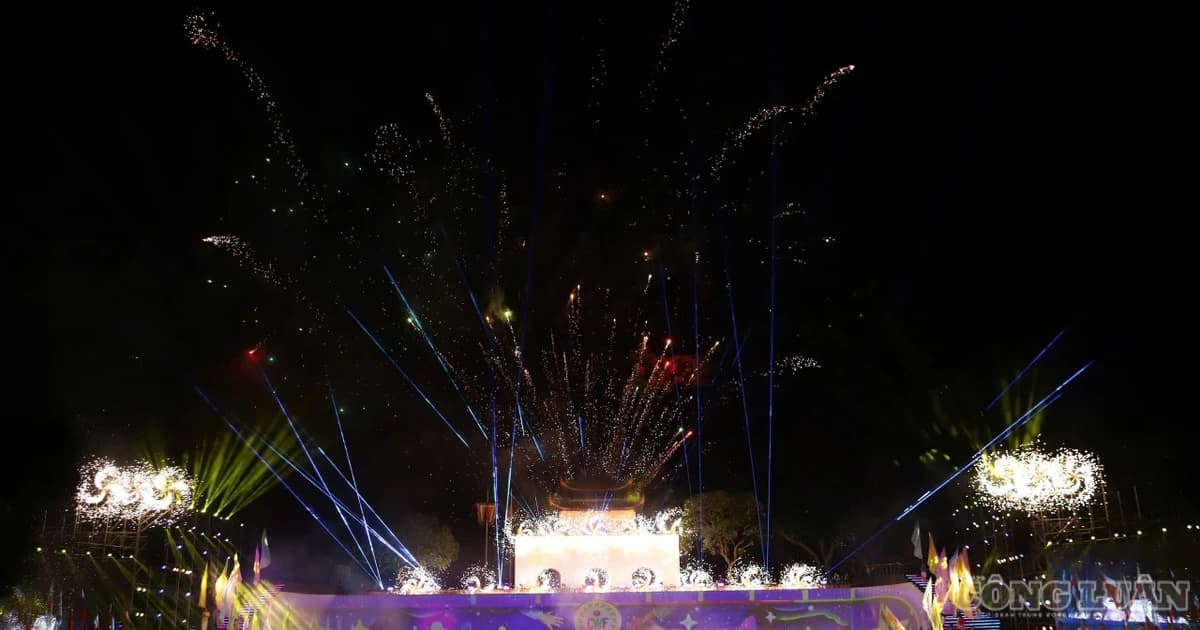
The vibrant colors of world cultures converge on a grand stage erected right in Thang Long Imperial Citadel, Hanoi (Photo: The Dai).
The festival also coincided with Vietnam's 50th anniversary of joining UNESCO. According to Minister Lam Thi Phuong Thanh, this marks a milestone in Vietnam's half-century journey from a country emerging from war to an active, responsible member, increasingly proactively contributing initiatives to common issues of UNESCO and the international community.
According to the Minister, culture is both the spiritual foundation of society and a goal, driving force, and resource for national development. Preserving heritage is not just about safeguarding what belongs to the past, but about ensuring that heritage continues to live in contemporary life, continues to be created, generates new values, and is passed on to future generations.
From that perspective, the Minister assessed that the coexistence of heritage, performing arts, cinema, fashion, cuisine, tourism, and new creative forms in one space has contributed to the formation of new products and values, and created appeal for the public.
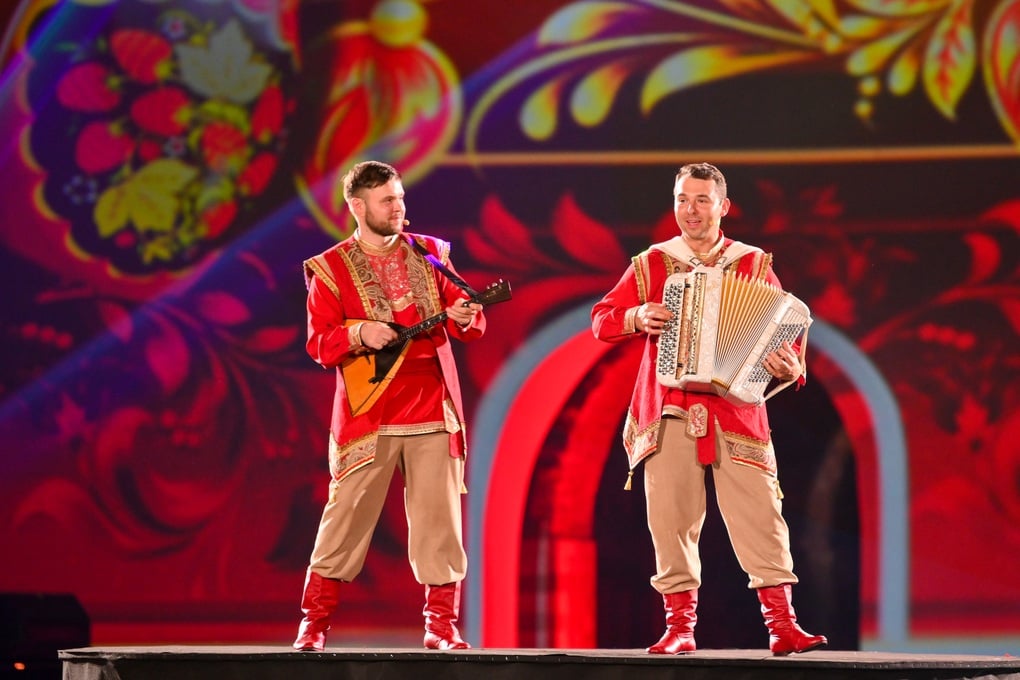
International artists perform at the closing ceremony of the second World Cultural Festival in Hanoi (Photo: The Dai)
Ms. Lam Thi Phuong Thanh believes this is a concrete way to promote the role of cultural industries, transforming creative capacity, identity, and cultural assets into endogenous strength, competitiveness, and national soft power.
The Minister also emphasized that cultural diplomacy is not only about promoting the image of the country but also a method of building friendly relations, enhancing understanding, strengthening trust, and raising the nation's standing.
The spirit of friendship and enhanced understanding was expressed in the closing art program of the World Cultural Festival in Hanoi with two chapters: "Colors of Encounter" and "Greetings from Vietnam".
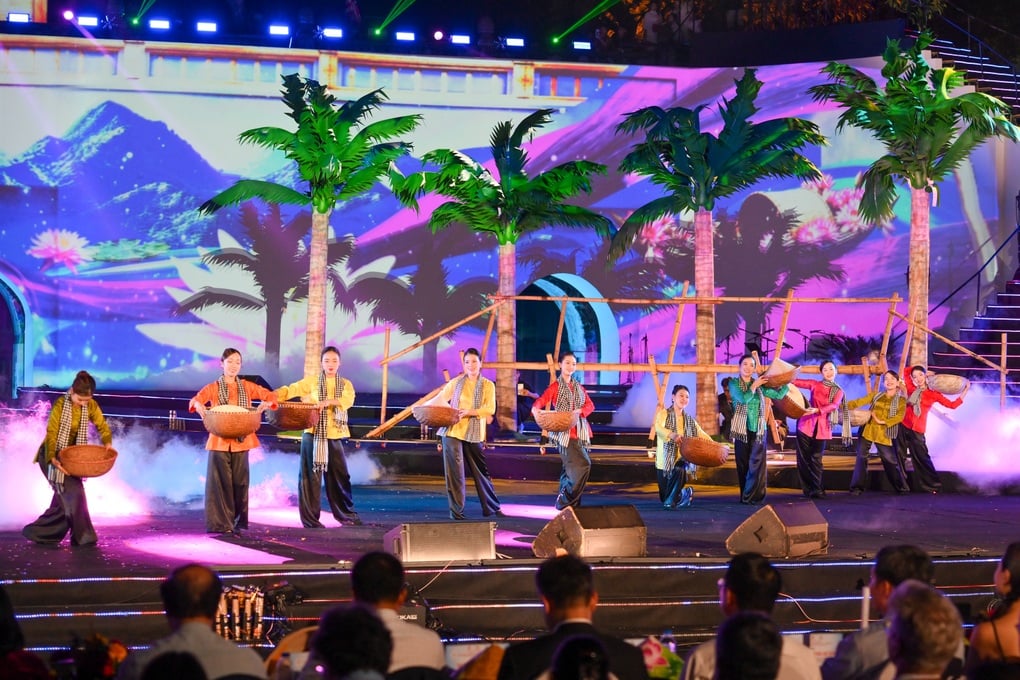
Artists contribute to bringing Vietnamese culture closer to friends around the world (Photo: The Dai).
In the segment "Colors Meet," sounds and dances from Iran, the Russian Federation, Mexico, Myanmar, and Belgium blend with the youthful energy of Vietnamese artists, creating a multifaceted stage.
Each culture brings its own artistic language, but linguistic and traditional differences are placed side-by-side in a spirit of openness, respect, and sharing. The stage becomes a space for Vietnamese and international artists to meet, creating connections that transcend cultural differences.
Following this is "Greetings from Vietnam," which takes the audience from its roots through heritage regions to contemporary Vietnam. Traditional music and art from various regions are placed in a new performance space, connecting values passed down through generations with expressions of today.
Through this program, we introduce to international friends a Vietnam that is rich in identity, dynamic, creative, open, and ready to connect with the world.
Source: https://dantri.com.vn/giai-tri/le-hoi-van-hoa-the-gioi-ha-noi-huong-toi-diem-gap-go-cua-cac-nen-van-hoa-20261005003808586.htm