
Regarding the distance regulations, the geographical area used to determine whether students or trainees cannot travel to and from school within the same day to ensure boarding conditions are as follows: for primary school students, the distance from school must be 4km or more; for secondary school students and trainees in continuing education programs at the secondary school level, the distance must be 7km or more; and for high school students and trainees in continuing education programs at the high school level, the distance must be 10km or more.
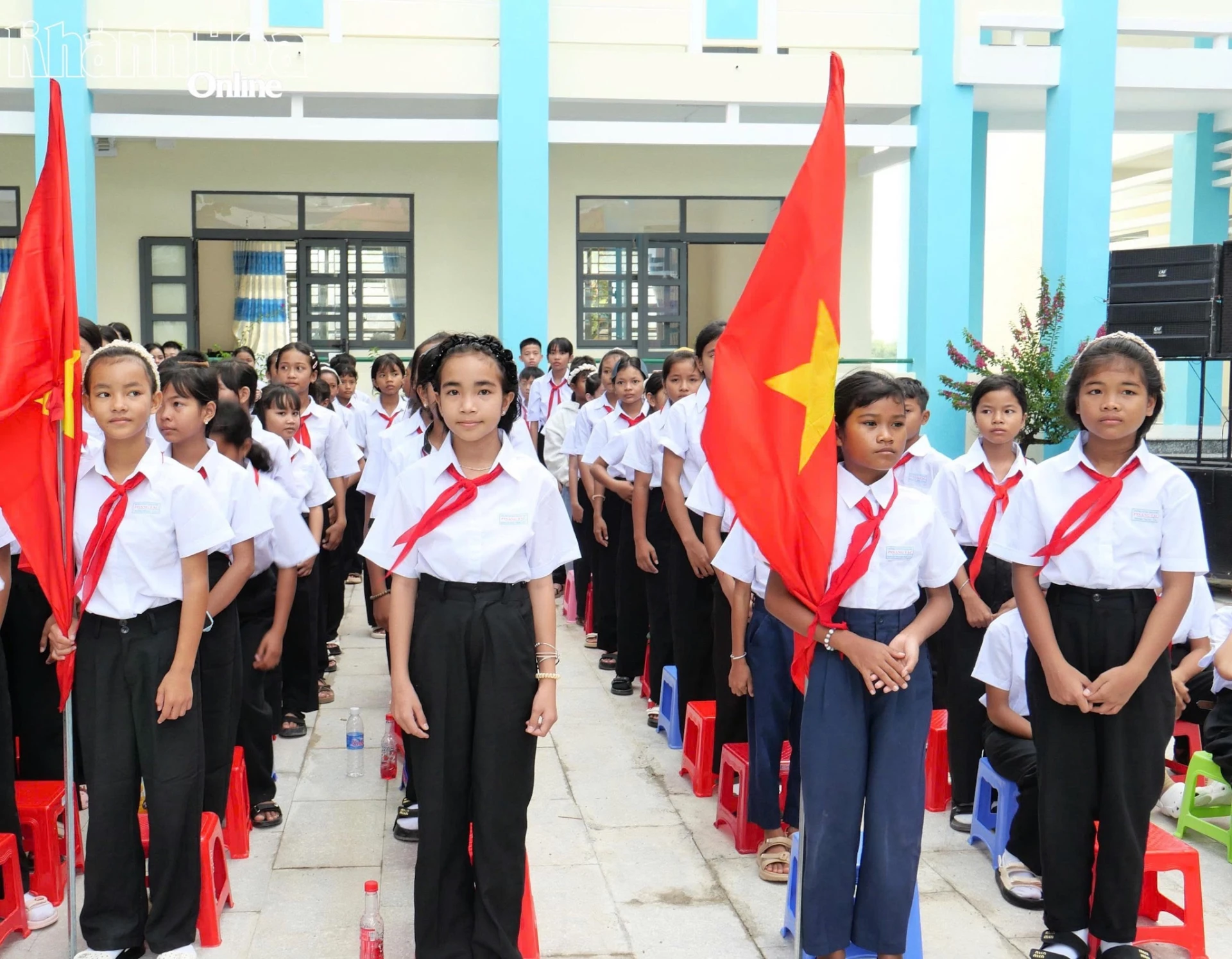 |
| Students of Pi Năng Tắc Ethnic Boarding Secondary and High School (Bác Ái Đông commune). |
In cases where students and trainees travel to school through areas with difficult terrain and transportation, requiring them to cross lakes, rivers, or streams without bridges; over high mountain passes; or through areas prone to landslides, the distance for the aforementioned educational levels is stipulated as 2km, 3km, and 4km or more, respectively. Areas with difficult terrain and transportation include: villages in mountainous regions belonging to communes in areas I, II, and III; particularly difficult villages in ethnic minority and mountainous areas; and particularly difficult communes in coastal and island areas as defined by competent authorities or recognized by the Provincial People's Committee.
In addition, the Provincial People's Committee also stipulates the list of personal items and school supplies provided to ethnic minority boarding students, including: blankets and personal items provided once at each educational level; uniforms and school supplies provided for each school year.
This decision takes effect from October 16, 2026, and supersedes all previous decisions.
H.DUNG
Source: https://baokhanhhoa.vn/xa-hoi/giao-duc/202610/khanh-hoa-ban-hanh-quydinhkhoang-cach-dia-banxac-dinh-hoc-sinh-duoc-huong-chinh-sach-ban-tru-f6c5535/