
From production to distribution, genuine linkages are becoming key to enabling Vietnamese goods to expand their markets, build trust, and achieve sustainable development.
Consistent quality is the foundation for building trust.
On November 13th, the Vietnam Fatherland Front Committee of Hanoi City, in coordination with the Hanoi Press and Broadcasting Agency, organized a seminar titled "Vietnamese Goods Conquer Consumers".
The seminar focused on discussing solutions to improve product quality, apply technology, build brands, and connect with consumer markets, contributing to promoting the development of Vietnamese goods in the context of increasingly fierce competition.

The "Vietnamese people prioritize using Vietnamese goods" campaign has contributed to fostering pride, boosting domestic consumption, and creating opportunities for domestic products to reach buyers. However, the journey from interest and preference to regular choice and long-term trust requires businesses to continuously improve their capabilities. Today's consumers are not only concerned with price but also focus on quality, safety, origin, design, and the true value of the product.
For small and medium-sized enterprises (SMEs), cooperatives, and agricultural production facilities, this requirement poses even greater challenges. Their production scale is small, and their investment in technology and management and marketing capabilities are limited; while modern distribution systems demand consistent product quality, complete legal documentation, and continuous supply. Therefore, enhancing the competitiveness of Vietnamese goods requires a comprehensive approach, from production and brand building to distribution and sales organization.

At the seminar, Ms. Nguyen Thi Kim Dung, Director of Co.opmart Hanoi Supermarket, stated that quality is not only a condition for goods to be included in the distribution system but also determines the ability to maintain a market position. Products may attract customers for the first time thanks to novelty, reasonable prices, or stories of local specialties, but if the quality is inconsistent between batches, consumers are unlikely to return.
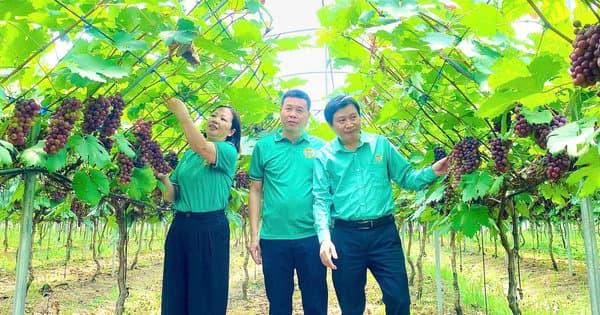
According to Ms. Tran Hong Lan, Vice President and General Secretary of the Vietnam General Association of Agriculture and Rural Development, local agricultural products and specialties have advantages in raw materials, traditional production methods, and flavor. To capitalize on these advantages, producers must ensure consistent quality, clearly differentiate their products, and meet the actual needs of customers.
Traditional values also need to be consistently maintained throughout the production process. Uncontrolled changes in ingredients, processes, or flavors will make it difficult for the product to retain its unique identity. Furthermore, information about the origin, characteristics, and value of the goods must be clear. Branding, packaging, traceability information, and quality assurance need to be developed in a coordinated manner, rather than focusing solely on promotion.
For OCOP products and distinctive agricultural products, the story of the raw material source, the people, and the production methods can add appeal. However, the story is only truly valuable when linked to quality. A brand cannot be built through mere advertising but must be strengthened through the experience and trust of the buyer.
Traceability and production-distribution linkages are key to expanding markets.
In a market increasingly demanding transparency, traceability is no longer merely a promotional tool but has become a crucial part of production and business management. For agricultural products, data needs to reflect the entire process from cultivation, harvesting, preliminary processing, and processing to distribution, enabling consumers to verify information and providing a basis for regulatory agencies to monitor.
Ms. Pham Thi Ly, Chairwoman of the Founding Council and Director of the Center for Enterprise Integration and Development (IDE), argues that it is necessary to distinguish between printing QR codes on packaging and building a genuine traceability system. The value of a traceability code lies in the underlying information system. The data must be updated regularly, accurately reflecting the production, processing, distribution, and consumption processes. When information is fully managed, businesses have a stronger basis for building credibility, consumers can verify the origin of goods, and authorities can more easily monitor food quality and safety.
According to Ms. Pham Thi Ly, digital transformation for agricultural businesses doesn't necessarily have to start with complex technology. Using smartphones to update product information, promote products, and livestream sales can be a suitable step. However, information on the online environment must be accurate, verifiable, and linked to product quality.
Mr. Nguyen Tien Phong, Vice Chairman of the Hanoi City Cooperative Union, said that cooperatives need to reorganize production systematically, focusing on building raw material areas, ensuring traceability and maintaining stable quality; while also improving designs and packaging, enhancing marketing capabilities and building brands. The Hanoi City Cooperative Union is focusing on promoting digital transformation, applying technology in production and business; strengthening trade promotion, regional linkages and directly supporting cooperatives to improve their capacity.
From a professional organization perspective, Ms. Tran Hong Lan believes that if businesses and production facilities face challenges related to preservation, production processes, or quality, they should connect with experts, scientists , and consulting firms to select appropriate solutions. Technology should not be invested indiscriminately but should be based on the needs and capabilities of each facility.
The Vietnam General Association of Agriculture and Rural Development has a network connecting scientists, research institutes, universities, businesses, and cooperatives to support agricultural products and OCOP (One Commune One Product) programs along the value chain. In the most recent round, from 508 applications, the council evaluated and selected 70 products, including 22 OCOP products.
From product quality and traceability to technological innovation and distribution connections, all solutions are geared towards a common goal: Vietnamese goods must meet market demands with genuine capabilities. The "Vietnamese people prioritize using Vietnamese goods" campaign continues to drive domestic consumption, but consumer confidence can only be maintained when products have consistent quality, transparent information, appropriate value, and reliable supply.

For Hanoi – a large consumer market and a hub connecting goods from many localities – promoting production and distribution linkages and supporting cooperatives to enhance their capacity is of practical significance. When the links in the value chain are closely connected, Vietnamese goods will have more opportunities to expand their markets, gradually asserting their position through quality, reputation, and sustainable competitiveness.