
When technology becomes a "launching pad" for traditional art.
Since its premiere on September 25th, the Central Circus has continuously welcomed large audiences to the performances of the circus play "Mountain God and Water Monster". This is not the first time the story of Son Tinh and Thuy Tinh has appeared on the circus stage. Twenty years ago, the Central Circus staged "Son Tinh and Thuy Tinh", with People's Artist Tong Toan Thang playing the role of Son Tinh. After two decades, the story returns, but without repeating what was already done.
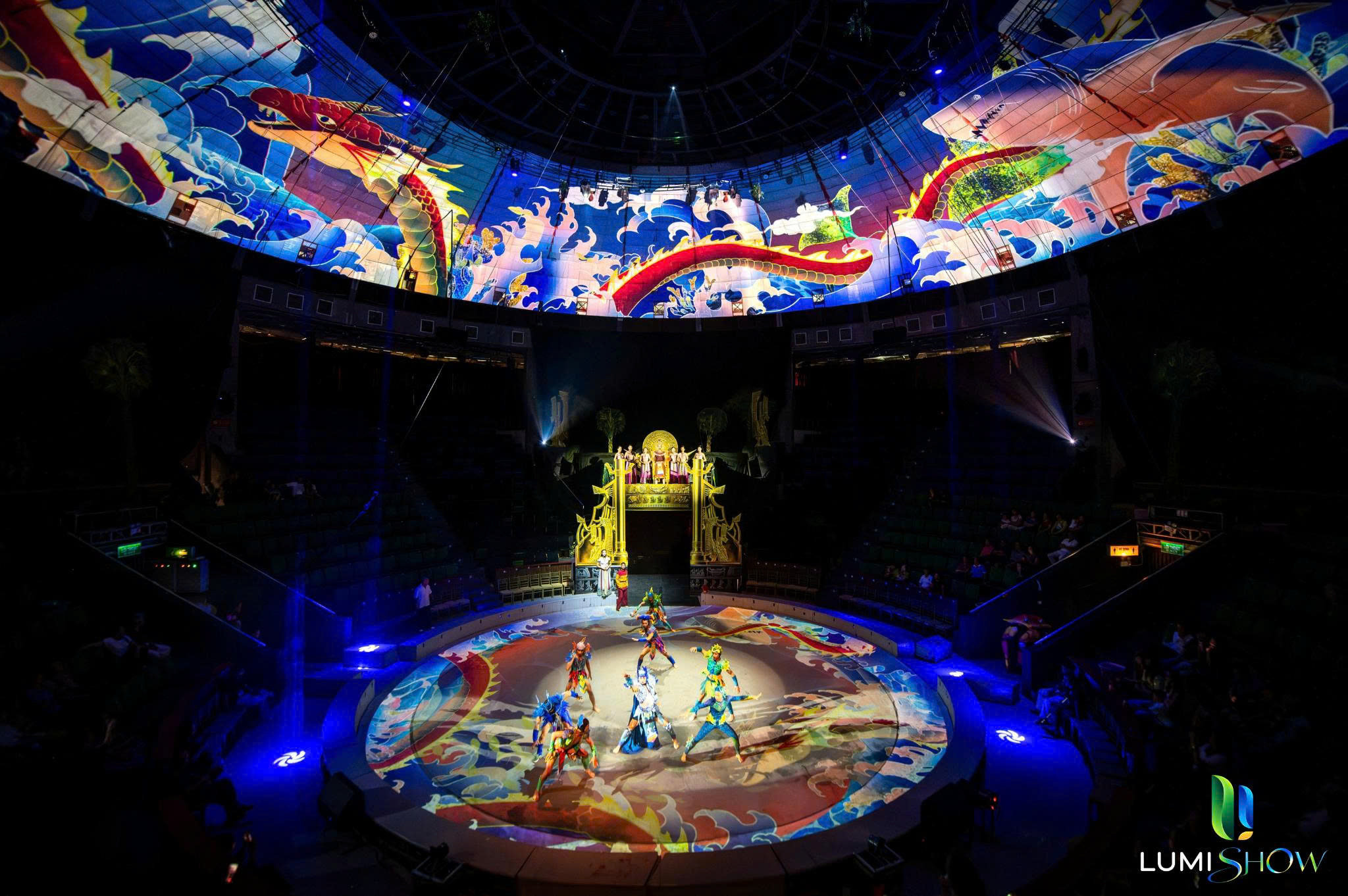
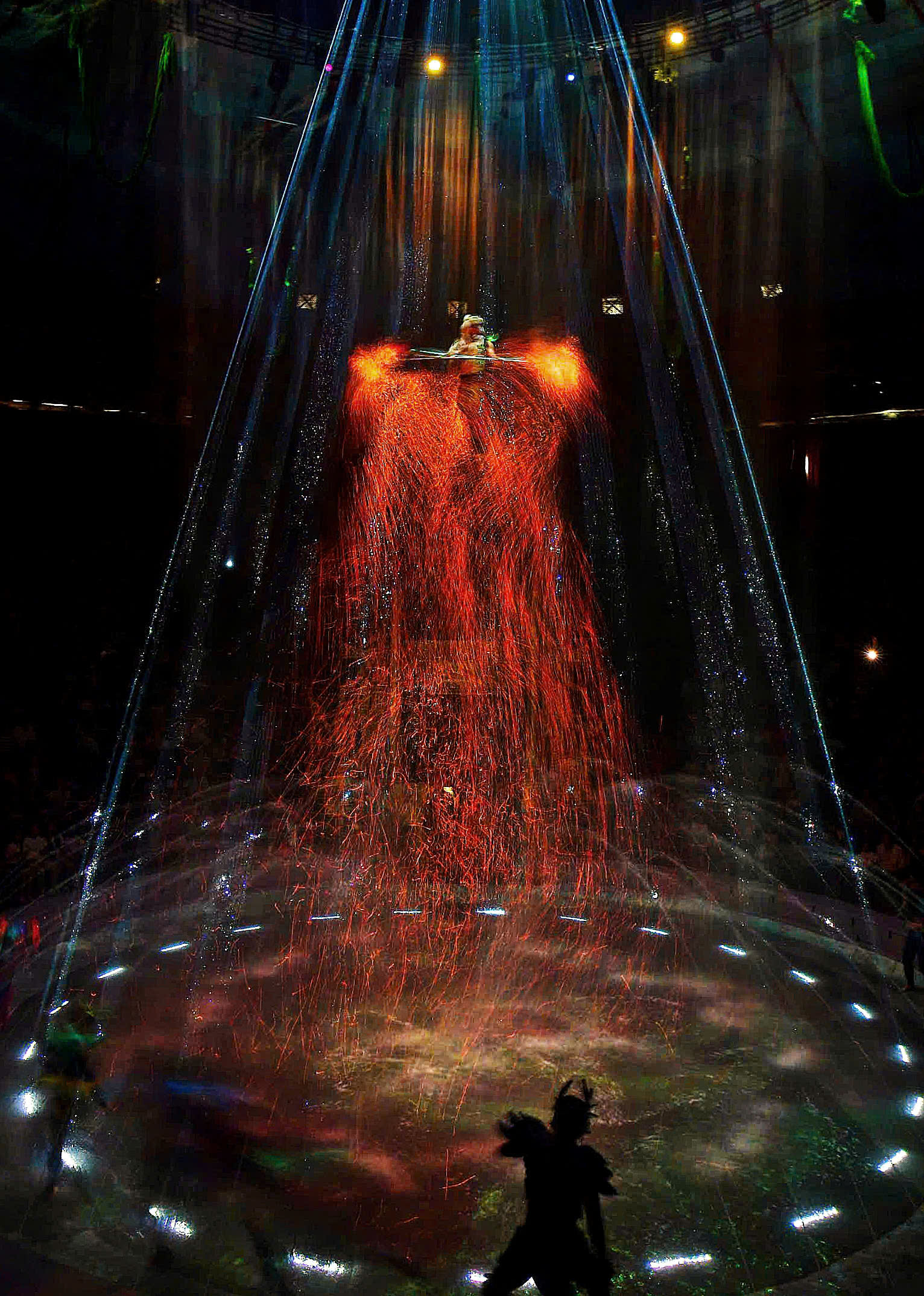
This time, mountains, forests, seas, storms, water, light, music , and digital imagery all participate in the storytelling process. The familiar circular stage of the Central Circus has been transformed into a modern water stage with a system of nearly 300 spray nozzles and super-fast drainage technology.
Approximately 40 artists performed live alongside a technical and logistical team, creating a crew of over 60 people. The artists collaborated with digital technology companies such as LumiShow and VietArt to create a cohesive graphic space throughout the work. The music is a blend of Symphonic Pop, World Music, EDM Cinematic, and traditional Vietnamese instruments.
According to People's Artist Tong Toan Thang, "circus must first and foremost be circus." The artist's technique, rigorous training, precision, strength, and courage are irreplaceable foundations. Technology, music, dance, lighting, or projection only truly matter when they help tell the story better.
“I don’t want Vietnamese circus to blindly follow what the world is doing. I want us to learn how to do the craft from around the world, but tell our own story. This is also a way for Vietnamese circus to transcend borders, not by becoming a version of another country’s stage, but by creating a voice clear enough for audiences to recognize Vietnamese identity,” shared People’s Artist Tong Toan Thang.
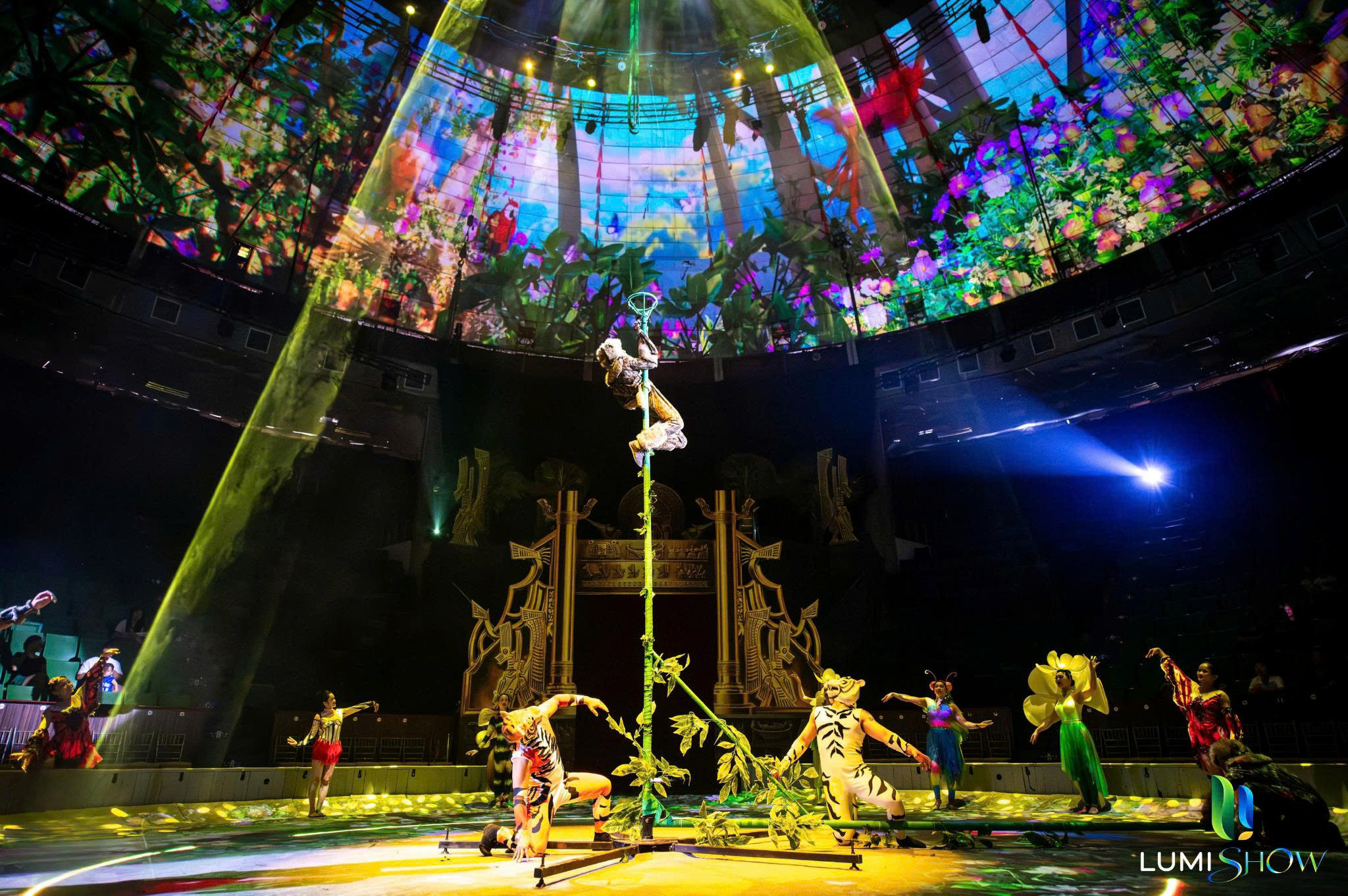
This approach also places new demands on artists. They are not only concerned with how difficult a movement is, but must understand where that movement fits within the overall work, what story it serves, what emotions it evokes, and how it connects with the audience. From a mindset of "performing a piece," artists shift to a mindset of "participating in the creation of a work."
Deputy Minister of Culture, Sports and Tourism Nguyen Huy Dung stated that science, technology, and digital transformation are not about adding new effects to the stage, but about changing the way of thinking, doing, and creating art; using data and technology to create new performance languages, tell stories in new ways, and provide artists with more creative tools.
According to Meritorious Artist Thu Huong, one of the artists performing the trapeze act in the circus play, circus technique remains a vital element. Even with changes in stage design or the application of advanced technology, this foundation cannot be replaced. Technology only helps to enhance and elevate the technical movements to new heights.
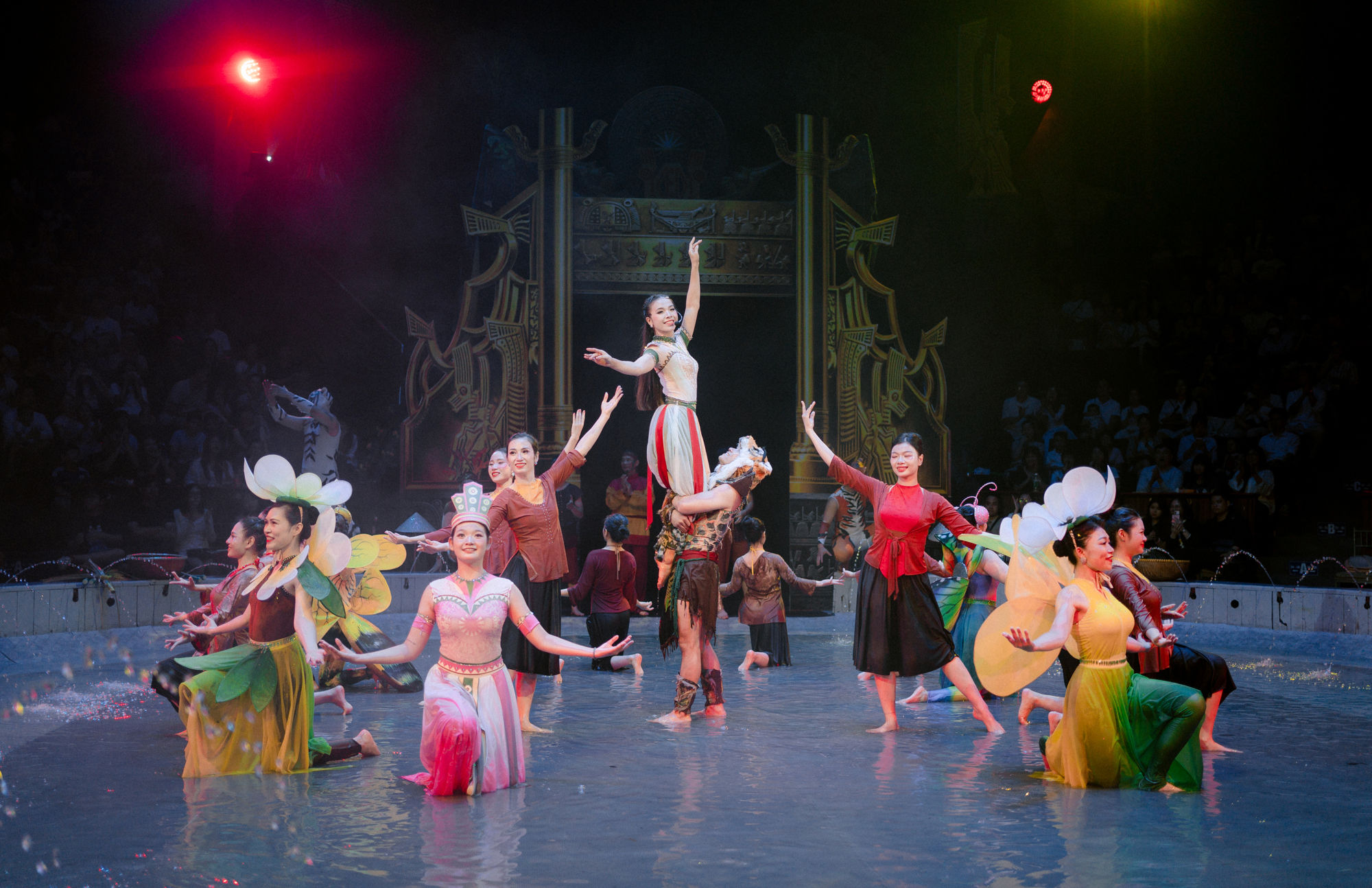
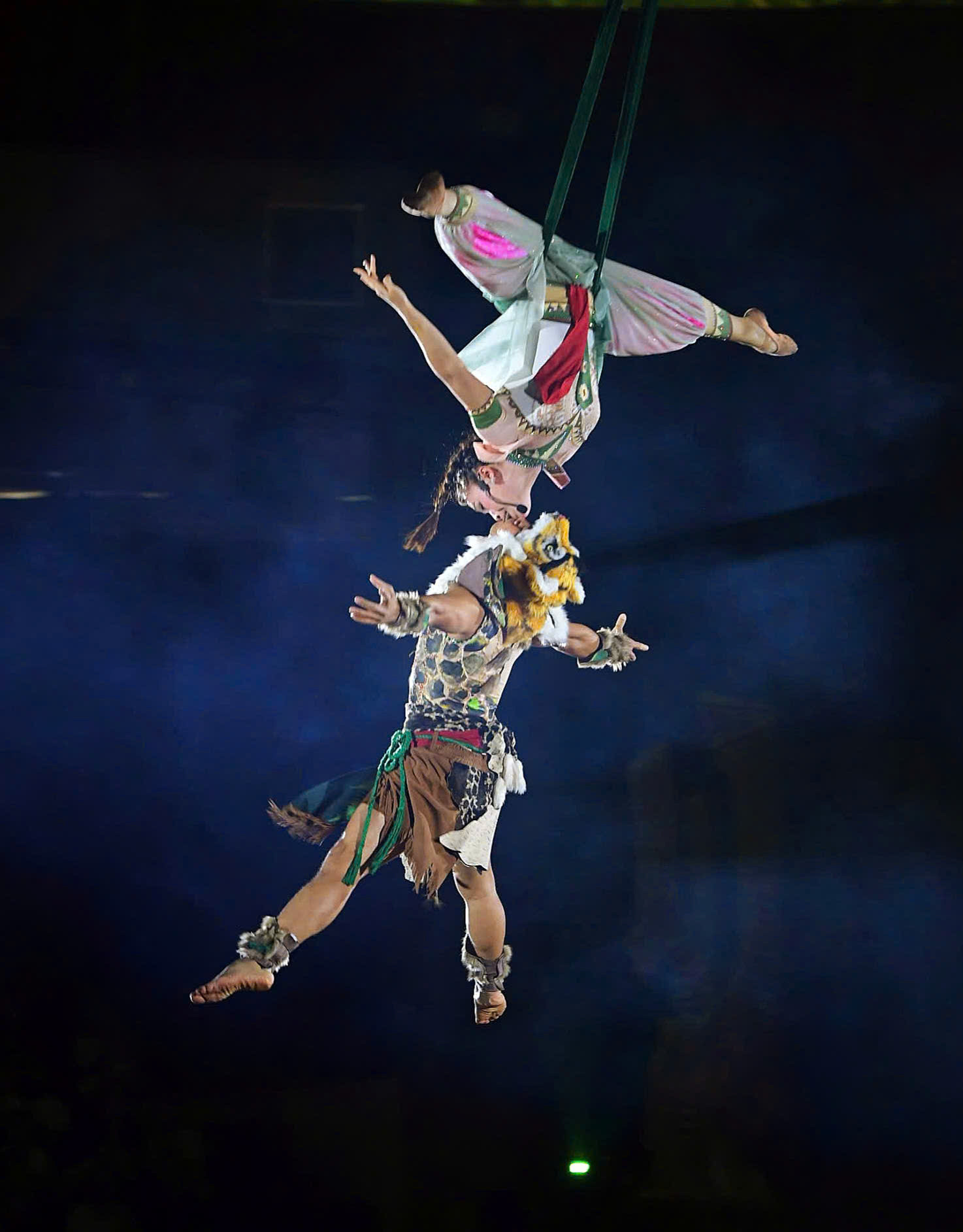
In "Mountain God and Water Monster," the artists don't stand in front of a screen performing predetermined movements. They interact with a constantly changing space created by water, light, images, and music. Behind a rope swing or a moment of the artist flying through the air are hundreds of hours of practice, repeated repetitions of the movements, and an almost absolute demand for precision.
“To bring a complete work to the audience, the production team and artists went through many hardships, sacrificing sweat, blood, and tears. But when we stepped onto the stage, saw the packed auditorium, heard the applause, and met the appreciative eyes of the audience, all the fatigue and pressure seemed to disappear. At that moment, we understood that our efforts had been rewarded and the work truly touched the public,” shared Meritorious Artist Thu Huong.
From the stage to creating a creative ecosystem.
Beyond being just an entertainment phenomenon, "Mountain God and Water Monster" poses a challenge in approaching young audiences. People's Artist Tong Toan Thang shared his creative approach to performances featuring characters and imagery familiar to young people in the world of video games, then transforming them through the language of circus arts. The goal is not to turn the stage into a video game, but to find a "point of contact" where young people realize that traditional art can also enter their worldview.
More notably, the success of the performance demonstrates a sustainable and effective tripartite linkage model: the State (direction, environment creation) - the art organization (expertise, cultural identity) - the enterprise (technology, finance, market).
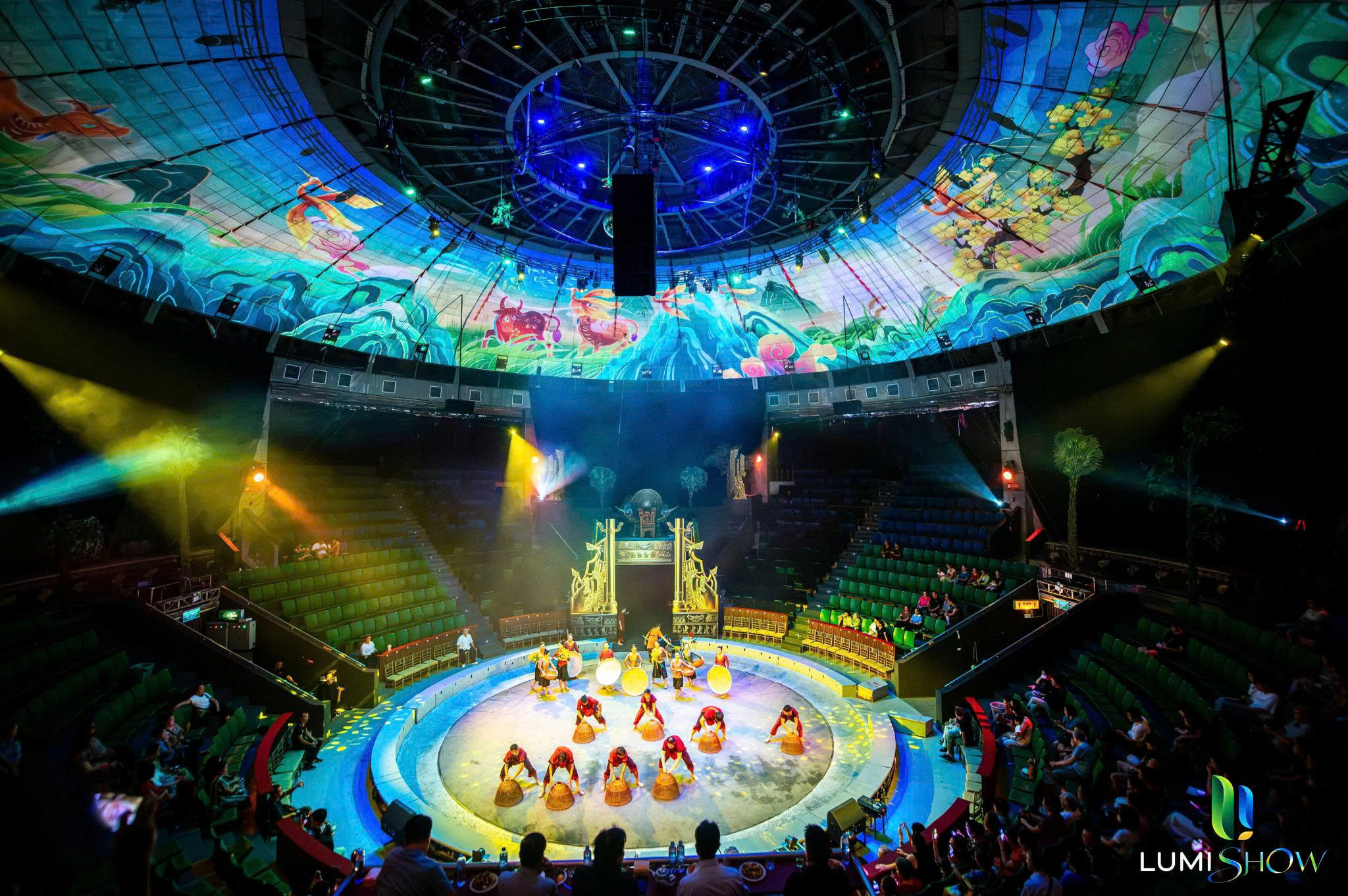
One factor contributing to the performance's success is the online ticketing system. Audiences can proactively check performance schedules, choose seats, and make payments quickly and conveniently. From the creative process to public engagement, technology is gradually becoming more deeply involved in the entire value chain of an artistic product.
This also represents a step towards realizing the spirit of Resolution 80-NQ/TW of the Politburo on the development of Vietnamese culture and Action Program No. 08-CTr/TU of the Hanoi City Party Committee on the development of the capital's culture, which identifies science and technology, innovation, and digital transformation as endogenous driving forces for the formation of a cultural industry ecosystem.
Innovation in the Culture, Sports, and Tourism sector begins with circuses, theaters, museums, and schools, bringing science and technology and digital transformation into life, serving the people, and contributing to the country's economic growth.
Minister of Culture, Sports and Tourism Lam Thi Phuong Thanh
Given the success of the play "Mountain God and Water Monster," the big question is: How can we replicate this model in other art forms?
To avoid becoming a mere temporary "craze," experts believe it's necessary to establish an open mechanism that allows art organizations to proactively collaborate with technology companies. This includes clearly addressing issues related to commissioning, intellectual property protection, data copyright sharing, and digital cultural infrastructure. Simultaneously, there's the challenge of training interdisciplinary human resources – individuals who possess both a deep understanding of traditional art and a firm grasp of modern technology.
The roadmap can begin in three steps: Experimentation - Refinement - Scaling Up. The State creates mechanisms and resources for experimentation; art organizations and businesses work together to refine the product; and models that prove effective continue to receive investment, tour, transfer, and expand to other art forms.
Starting with circus, this approach can be expanded to traditional Vietnamese theater forms like Chèo, Tuồng, Cải Lương, puppetry, folk art, museums, heritage sites, and many other cultural spaces. Each project would then not only create a new product but also contribute to a creative ecosystem, bringing Vietnamese cultural values closer to the public through a modern language.
Source: https://hanoimoi.vn/dua-cong-nghe-vao-xiec-tao-suc-bat-moi-cho-cong-nghiep-van-hoa-1759744.html