
Sketching the appearance of a land
The Hai Van Pass opens up a vast area to the south, the fertile coastal plain of Quang Nam province, followed to the west by a mountainous and hilly region rich in resources, with major sources such as Lo Dong, Vu Gia, and Thu Bon. Looking east, Cu Lao Cham island looms in the distance behind the boundless sea. This land is not only rich in resources and culture of many ethnic groups, but also holds an extremely important strategic position on the north-south and east-west axes. Therefore, throughout history, every power has sought to control this region.
Governing a territory first requires understanding its geography and population. During the medieval and modern periods in Vietnam, when a new dynasty was established, surveying and measuring land and population was often a top priority. Local officials were responsible for compiling population statistics in their respective localities, creating collections called "population registers/bureaus." Surveying and compiling land records were also done, creating collections called "land registers/bureaus."
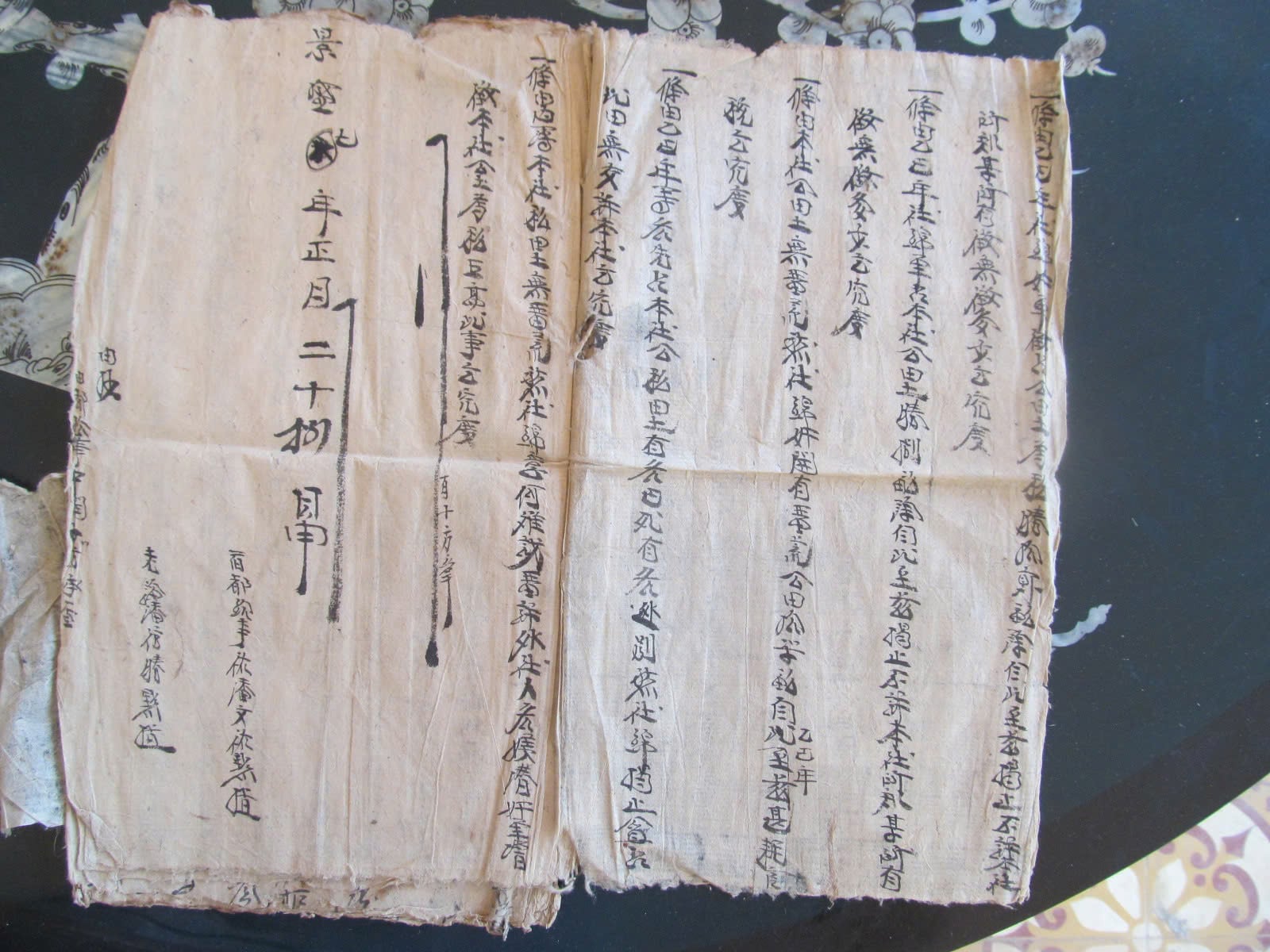
Since its incorporation into Dai Viet, Quang Nam province has undergone numerous surveys, surveys, and land registers. However, due to the vicissitudes of time and harsh natural conditions, today we can only find land registers from the 18th and 19th centuries. These include land registers from the Nguyen Lords' era, the Tay Son era, and the Nguyen Dynasty.
Historical land registers of Quang Nam are currently preserved both among the people and in national archives. The content of these registers typically outlines the reasons for their creation, statistics on the area and boundaries of various types of land: public land; private land; land belonging to temples and pagodas; public fields; private fields; wasteland; sandy land; wetlands, etc. Finally, there is a section for the signatures and seals of the officials responsible for the surveying work.
Thus, this is a reliable type of primary historical document/record, providing us with a different, even more detailed, perspective on the past appearance of a region. Through translation, synthesis, comparison, and contrast, contemporary readers will gain a better understanding of the economic and cultural life of villages in the past. Questions such as: how much public and private land a village owned, whether those lands were good or bad, how many harvests were cultivated each year, how much land, temples, and shrines the village owned, etc., are all recorded in detail in the land register.
Moreover, records of place names, names of lands, streams, alluvial plains, etc., are also important data for studying and better understanding a region. From place names on the islands of Cu Lao Cham: "Bai Bac region," "Khe Chua region," "Bai Ong region,"... to place names in the coastal areas of Hoi An and Duy Hai: "Lang Bang region," "Ha Tom region," "Khe Thuy region,"... to the midland and mountainous regions of Dai Loc: "Eo Gio region," "Phu Sa region,"... no village or commune is without ancient place names chosen by our ancestors.
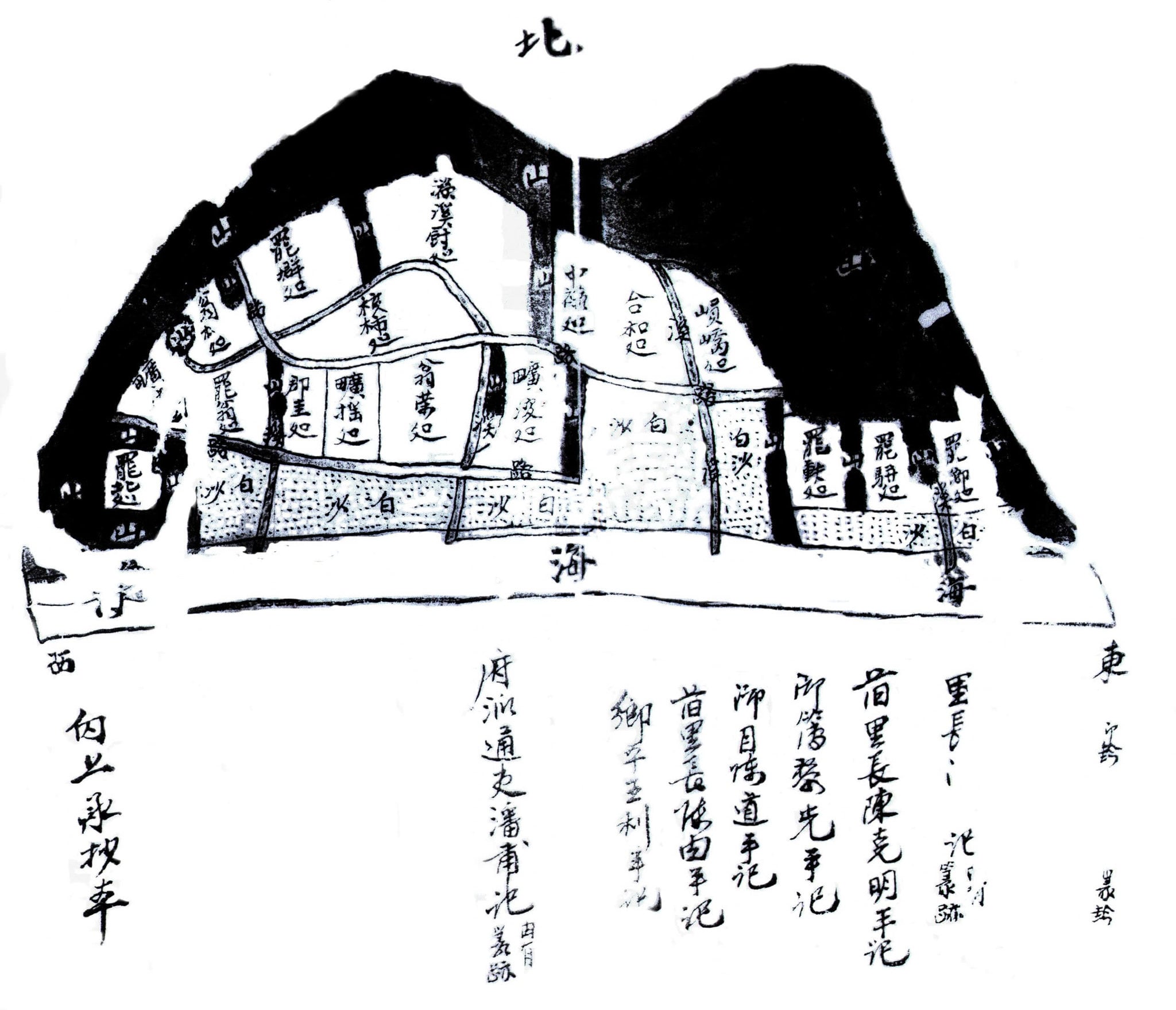
Preserving land ownership in the heart of urbanization.
One strange thing we noticed is that the names of small towns and villages have endured longer than the names of larger administrative levels such as hamlets, communes, districts, and even provinces before administrative reforms. Perhaps it's because they are so small, so insignificant that no one outside the village pays attention to them, that the names of these small towns and villages have survived throughout history to this day.
As urbanization accelerated and became more intense, many natural lands and agricultural areas were converted to other uses. The names of these lands no longer served their original function of communication within villages; they were transformed into cities, industrial zones, and neighborhoods with newer, more fashionable names. The names of these lands gradually faded into history, relegated to the dusty, tattered pages of land registers.
Land registry documents in Quang Nam have long been a subject of interest for organizations and individuals seeking to collect and research them. However, given the enormous volume of documents spanning multiple dynasties, incompleteness and discontinuity are understandable.
The land registers currently stored and managed by the Nguyen Dynasty at the National Archives Center I in Hanoi are, of course, not a complete set of land register documents for Quang Nam province. The land registers stored locally and by current landowners are in extremely critical condition. The materials used for these registers—ink and seals written/stamped on traditional Vietnamese paper—have deteriorated over hundreds of years and are constantly challenged by the hot, humid weather, frequent floods, and insect infestations.
The challenge is to collect and compile a complete and continuous land register of Quang Nam province, followed by issues of preservation, translation, research, display, and exhibition. Regarding the application of linguistic and written data in contemporary life, we believe that the names of geographical areas can be studied and used to name roads, parks, cultural areas, etc., a practice successfully implemented in some localities such as Hoi An, where roads are named after ancient agricultural areas like "Trang Keo Road," "Bau Oc Road," etc.
Thus, the people of Quang Nam today have written a new chapter for their local place names, so that the old beauty does not lie dormant in time-worn land registers, but continues to be present in contemporary life. So that when a son or daughter returns home after being away, he will still recognize, "Ah, this is my hometown."
Source: https://baodanang.vn/dia-ba-soi-hinh-co-quan-3354100.html