
In the evenings at Battalion 15 (Division 2), classes on the Ministry of Defense 's "Digital Literacy System" have become an integral part of the officers' and soldiers' lives. Those proficient in computers guide those who are still struggling, and unclear points are discussed within the unit.
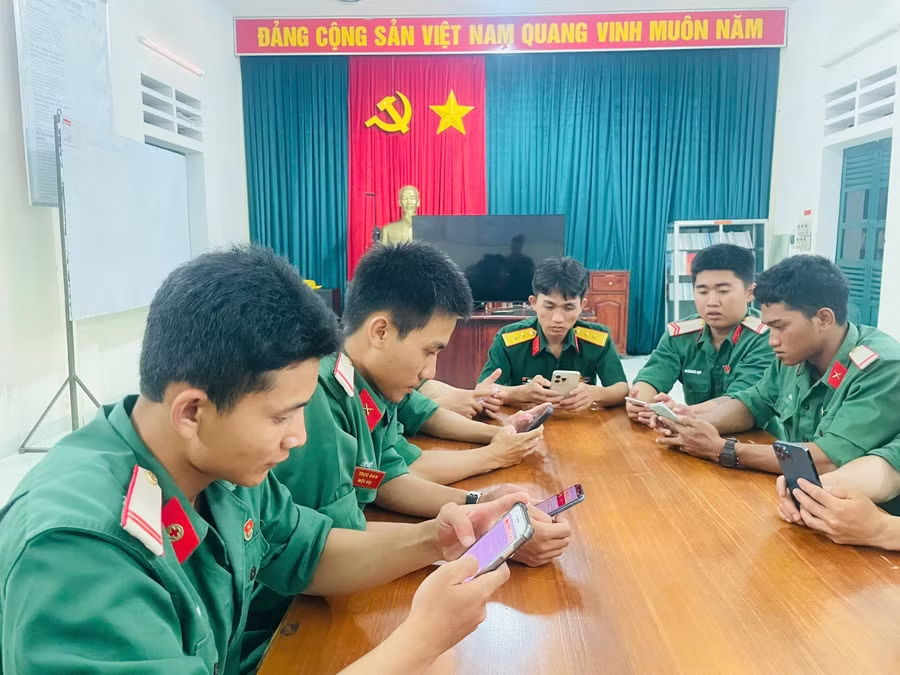
Major Nguyen Chi Trung, Political Officer of Battalion 15, shared: “We established a support team where those with more knowledge guide those with less, and those who are completely unfamiliar receive specific instructions. Learning is conducted regularly, linked to the tasks that officers and soldiers must use in their daily work and life.”
The training content focuses on logging in, accessing lessons, taking tests, searching for information, using the platform, and ensuring safety in the digital environment. Each soldier is provided with 5 accounts, and officers with 20 accounts. To date, all 140 accounts have completed the required training content.
Stationed in an area with a large Bahnar population and with Bahnar officers and soldiers, Battalion 15 focuses its digital skills training on practical needs. Some Bahnar soldiers have researched and used Bahnar language lookup software for daily learning and communication, yielding tangible results. The unit continues to improve its vocabulary system, bringing technology closer to the work and lives of its soldiers.
This approach was also implemented in units of the 34th Army Corps. At the 28th Reconnaissance Battalion (General Staff), a digital literacy team was established to guide, train, and provide materials; the "Party members pioneering digital skills learning" model created a core force to support their comrades.
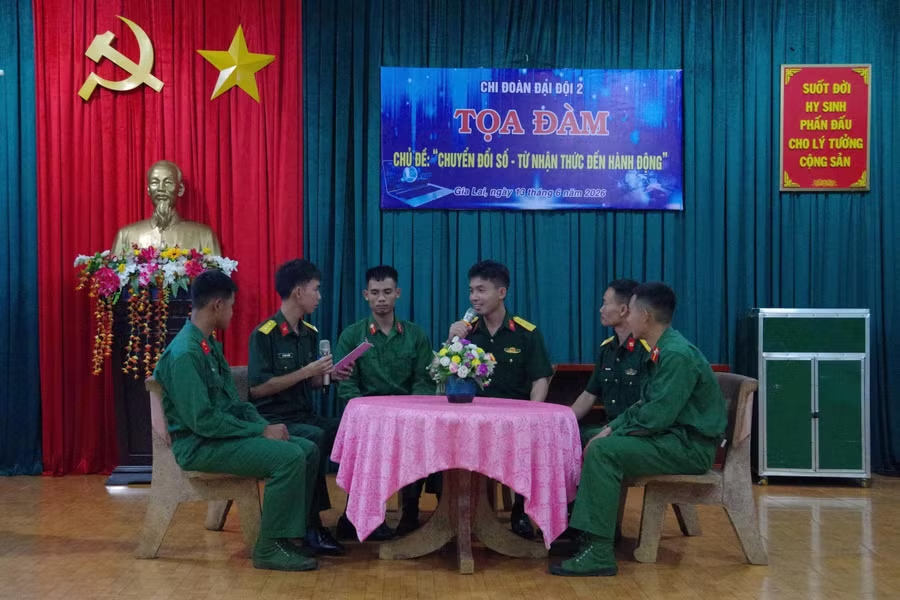
At the 29th Signal Regiment, digital skills support teams guide and answer questions that officers and soldiers encounter while using technology. The unit organizes training courses and tests to assess knowledge and skills relevant to their work.
Along with training, the Regiment focuses on ensuring infrastructure. The data transmission system is connected down to the company level; the unit has invested in 12 desktop computers along with equipment for connection. To date, all 35 computers have connected to the military network.
The investment in technical infrastructure has facilitated the processing of documents in the digital environment. Thousands of regular and confidential documents have been sent and received via military email; 100% of documents subject to processing have been digitally signed.
Along with the application of technology comes the requirement to ensure information security and cybersecurity. Regulations are disseminated through political education, unit activities, professional training, internal broadcasting, bulletin boards, and guidance documents; focusing on the use of the internet, social media, online speech, and the protection of state secrets.
Based on practical needs, units are focusing on equipping soldiers who are new to technology with digital skills. In the 273rd Tank Brigade, the "Digital Literacy Movement" is being implemented in conjunction with popularizing digital knowledge and skills and building a learning society.
Recently, the Brigade organized a training course to update knowledge on digital transformation for officers and soldiers, focusing on the role of information technology and digital platforms in management, operation, and task execution; skills in exploiting digital applications and utilities; data protection; and compliance with regulations when participating in the digital environment.
Colonel Nguyen Dai Hung, Commander of the 273rd Tank Brigade, said: “We focus on helping officers and soldiers, especially new recruits, gradually access digital knowledge and skills, use digital platforms and services to support their work; learn to access information using smart devices and protect themselves in the digital environment. Importantly, the knowledge learned must be applicable in their work and daily lives.”
According to Major General Duong Van Quang, Deputy Commander of the 34th Army Corps, the "Popular Education Movement" contributes to improving the overall quality, strength, and combat readiness of the Army Corps, meeting the requirements of the mission in the new situation.
From the Ministry of Defence's "Digital Literacy System" (QLMS) platform to military email, digital signatures, and data mining, digital skills are being applied to the specific tasks of officers and soldiers, linking the "Digital Literacy System" movement with the requirements of fulfilling the soldier's duties.
Source: https://baogialai.com.vn/day-manh-phong-trao-binh-dan-hoc-vu-so-trong-cac-don-vi-quan-doi-post600929.html