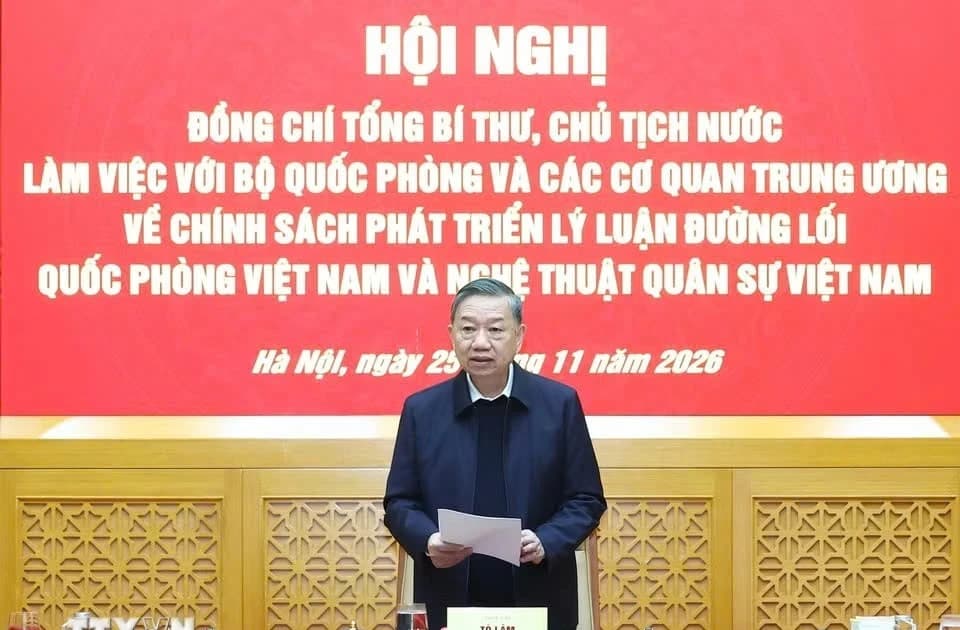
On the afternoon of November 25th, the Department of Anti-Corruption, Waste, and Negative Phenomena (Department IV) of the Government Inspectorate held a conference to summarize its work in 2026 and plan for 2027.
Completed several key tasks.
The report presented at the conference showed that in 2026, Department IV closely followed the work program of the Government Inspectorate. The leadership and staff of Department IV proactively developed plans, assigned tasks, strengthened coordination, and focused resources to carry out the assigned tasks.
Notably, Department IV advised on the drafting of Government Decree No. 164/2026/ND-CP dated May 15, 2026, on controlling assets and income of persons holding positions and authority in agencies, organizations, and units, replacing Decree No. 130/2020/ND-CP.
In addition, the Department issued Circular No. 02/2026/TT-TTCP stipulating the framework of criteria for evaluating the effectiveness of accountability in performing tasks and public duties; and finalized the set of criteria for evaluating the effectiveness of accountability within the scope of state management of the Government Inspectorate.
The Department also developed a set of indicators to assess the work of preventing and combating corruption, waste, and negative practices. It proactively coordinated with relevant agencies, organized consultations, incorporated feedback, refined the draft, submitted it to competent authorities for consideration, and the Prime Minister issued Decision No. 47/2026/QD-TTg on the set of indicators on September 30, 2026.

Mr. Nguyen Van Tuan, Deputy Director of Department IV, chaired the summary conference. Photo: TH
In advising the Inspector General of the Government on the tasks of being a member of the Central Steering Committee on preventing and combating corruption, waste, and negative phenomena, Department IV has advised on the development of work programs and plans; prepared reports and documents for the sessions and meetings of the Steering Committee and its Standing Committee; and monitored and urged the implementation of conclusions and directives.
In particular, the Department advised on the development of the Party Committee's Action Program to implement the Resolution of the Second Plenum of the 14th Central Committee of the Communist Party of Vietnam on continuing to strengthen the Party's leadership over the work of preventing and combating corruption and negative phenomena in the new period…
Focus on inspecting and controlling assets and income.
In the field of inspection, Department IV advised the Inspector General of the Government to issue inspection conclusions on the responsibility for implementing laws on preventing and combating corruption and negative practices at the People's Committee of Ba Ria - Vung Tau province (formerly); the implementation of policies to support people with meritorious services to the revolution in improving their housing in some provinces and cities; and the work of preventing and combating waste in the management and use of housing and land facilities managed and used by State agencies and State-owned enterprises in An Giang and Quang Ngai provinces.
For ongoing inspections, the Department focuses on areas at risk of waste, requiring examination and clarification of responsibility in the management and use of resources.
Specifically, the Department conducted inspections of the Dong Xa New Urban Area Project in Van Don Special Economic Zone, Quang Ninh province; and inspected the prevention and control of waste in the management and use of land and housing facilities, joint ventures, capital contributions, and divestments at the Vietnam Machinery Installation Corporation and the Hanoi Housing Investment and Development Corporation.
Inspection teams are required to maintain a regular meeting schedule, report progress periodically, and promptly report any difficulties or obstacles so that the Department's leadership can provide guidance, ensuring progress and quality.
The work of controlling assets and income continues to be implemented by Department IV on a large scale, with many operational steps requiring coordination with relevant agencies and organizations.
For the 2024 verification plan, the Department has issued verification conclusions for all 56 cases, completing the entire plan.


Officials and staff of Department IV attended the conference. Photo: TH
For the 2025 plan, the Department organized a lottery to select 26 individuals for verification; and issued 15 decisions on asset and income verification. The verification teams are continuing to follow the prescribed procedures, collecting information from tax authorities, banks, land management agencies, and other relevant units to support the verification process.
Along with implementing verification plans, Department IV advised on the development of asset and income verification guidelines for 2026 and drafted guidelines for 2027; and organized the reception and systematization of asset and income declarations under the control of the Government Inspectorate.
Notably, on June 26, 2026, the Government Inspectorate organized a national conference to implement and guide the execution of Decree No. 164/2026/ND-CP.
In the 2025 provincial-level anti-corruption assessment, Department IV guided, urged, and received complete self-assessment reports from all 34 provinces and cities; organized reviews, requested localities to provide explanations and supplementary information, and finalized the assessment results reports for submission to competent authorities.
In the field of international cooperation, Department IV participates in meetings of the APEC Working Group on Anti-Corruption and Transparency (ACTWG), and proactively proposes priority topics and prepares activities to support Vietnam's hosting of the ACTWG in APEC 2027.
The Department also collaborated with the United Nations Office on Drugs and Crime (UNODC) to organize an international workshop on controlling the assets and income of officials and those in positions of power; and participated in activities to implement the United Nations Convention against Corruption.
In particular, Department IV has taken the lead in advising on the preliminary review of the first phase (2023 - 2026) of implementing the National Strategy on preventing and combating corruption and negative practices until 2030.
Prioritize institutional reform and accelerate database development.
In 2027, Department IV aims to continue improving the quality of advisory services, tightening administrative discipline and order, strengthening professional training and the responsibility of heads of departments; focusing on implementing tasks with clear timelines and responsibilities, and ensuring product quality.

Officials and staff of Department IV attended the conference. Photo: TH
The focus is on advising and submitting to the Prime Minister for promulgation the Plan for implementing the National Strategy on preventing and combating corruption and negative practices and the United Nations Convention against Corruption for the period 2026-2030; and researching and proposing amendments to some provisions of the Law on Prevention and Combat of Corruption of 2018 and 2025.
The Department continues to advise the Inspector General of the Government on the implementation of tasks as a member of the Central Steering Committee on preventing and combating corruption, waste, and negative phenomena; deploying inspections according to the 2027 plan; completing transitional inspection tasks; and continuing to verify assets and income and evaluate anti-corruption work at the provincial level.
Promote digital transformation, build national databases on asset and income control; prevent and combat corruption, waste, and negative practices; and ensure accountability.
With an increasing workload and higher demands, improving the quality of advisory services, strengthening discipline and order, and accelerating the development of databases will be crucial factors for Department IV to enhance the effectiveness of state management, contributing to the prevention, detection, and handling of corruption, waste, and negative practices in the future.