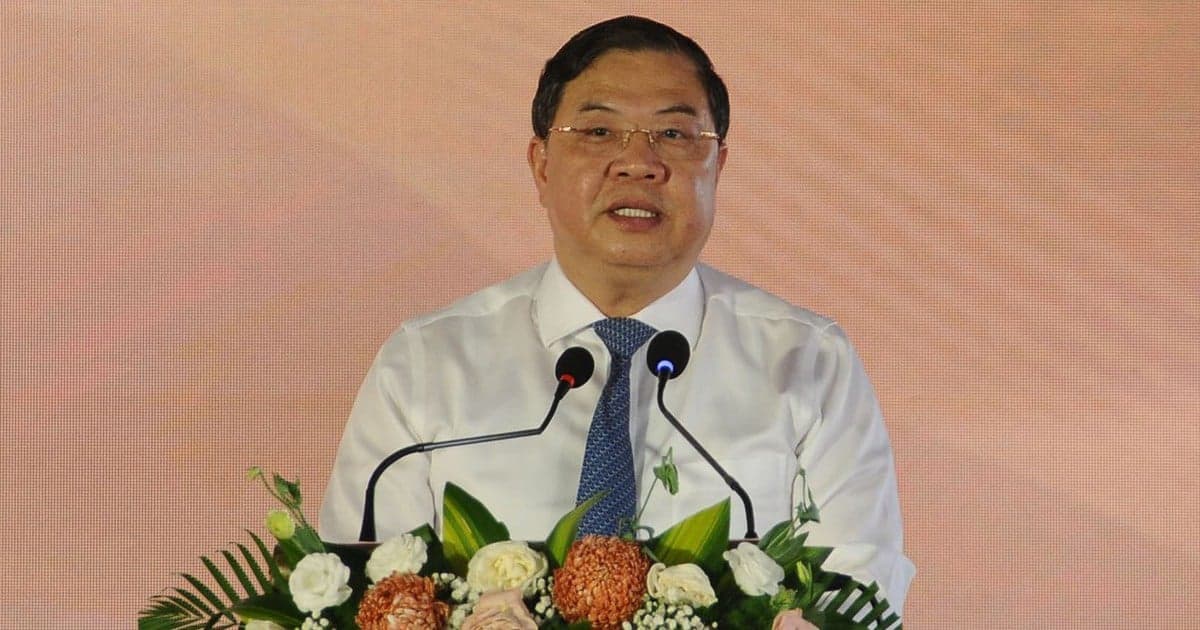

On October 3rd, in Xom Chieu ward, the delegation of National Assembly representatives from constituency No. 7 of Ho Chi Minh City held a meeting with voters from 14 wards and communes before the 2nd session of the 16th National Assembly.
The delegation included Mr. Le Quang Manh, Member of the Central Committee of the Communist Party of Vietnam, Member of the Standing Committee of the National Assembly, Secretary General of the National Assembly, and Head of the National Assembly Office; Mr. Le Van Dong, Member of the City Party Committee and Director of the People's Procuracy of Ho Chi Minh City; Mr. Vo Hoang Ngan, Member of the City Party Committee and Deputy Head of the Ho Chi Minh City National Assembly Delegation; along with representatives from the leadership of various departments, agencies, and 14 wards and communes of Ho Chi Minh City.

Mr. Le Quang Manh delivered a speech at the conference.
PHOTO: UYEN NHI
The effectiveness of flood control projects is not measured solely by the number of kilometers of drainage pipes.
Voter Le Thi Ngoc Trang (Tan Hung ward) stated that when heavy rain combines with high tides, people are significantly affected in terms of their daily lives and property. Businesses may also experience production disruptions, damaged goods, and traffic congestion...
Therefore, Ms. Trang suggested that Ho Chi Minh City should build a data system, flood maps, and early warning system; identifying areas at risk of deep flooding, rapid flooding, and strong currents so that people can proactively take preventive measures.
Voters also suggested that urban planning and investment should take into account ground elevation, drainage capacity, tidal surges, subsidence, and sea level rise...
Notably, voters believe that evaluating the effectiveness of flood control projects should not only be based on the number of kilometers of sewers, roads, or flooded areas addressed; but also on the economic value preserved, the number of accidents prevented, property protected, and traffic flow maintained.
Relocating houses along canals and ditches, combined with drainage solutions.
In their presentation at the conference, representatives from the Ho Chi Minh City Urban Infrastructure Investment and Construction Project Management Board stated that the unit was assigned by the Ho Chi Minh City People's Committee to be the investor for projects related to drainage, climate change adaptation, urban beautification, housing along canals and waterways, and several other technical infrastructure projects.
According to a representative of this unit, Ho Chi Minh City aims to complete the relocation of houses along canals and waterways by 2029 through 78 projects included in the pre-measurement and inventory list. Of these, the Ho Chi Minh City Urban Infrastructure Investment and Construction Project Management Board is the investor for 44 projects.
Currently, the coordinating committees of the wards involved in the project are carrying out preliminary surveying and inventory procedures to serve as a basis for compensation.
Regarding these projects, the committee representative stated that they will integrate drainage requirements and climate change adaptation, ensuring that upon completion and commissioning, they can mitigate flooding caused by tidal surges or rain, while also combining urban beautification and environmental sanitation improvement.

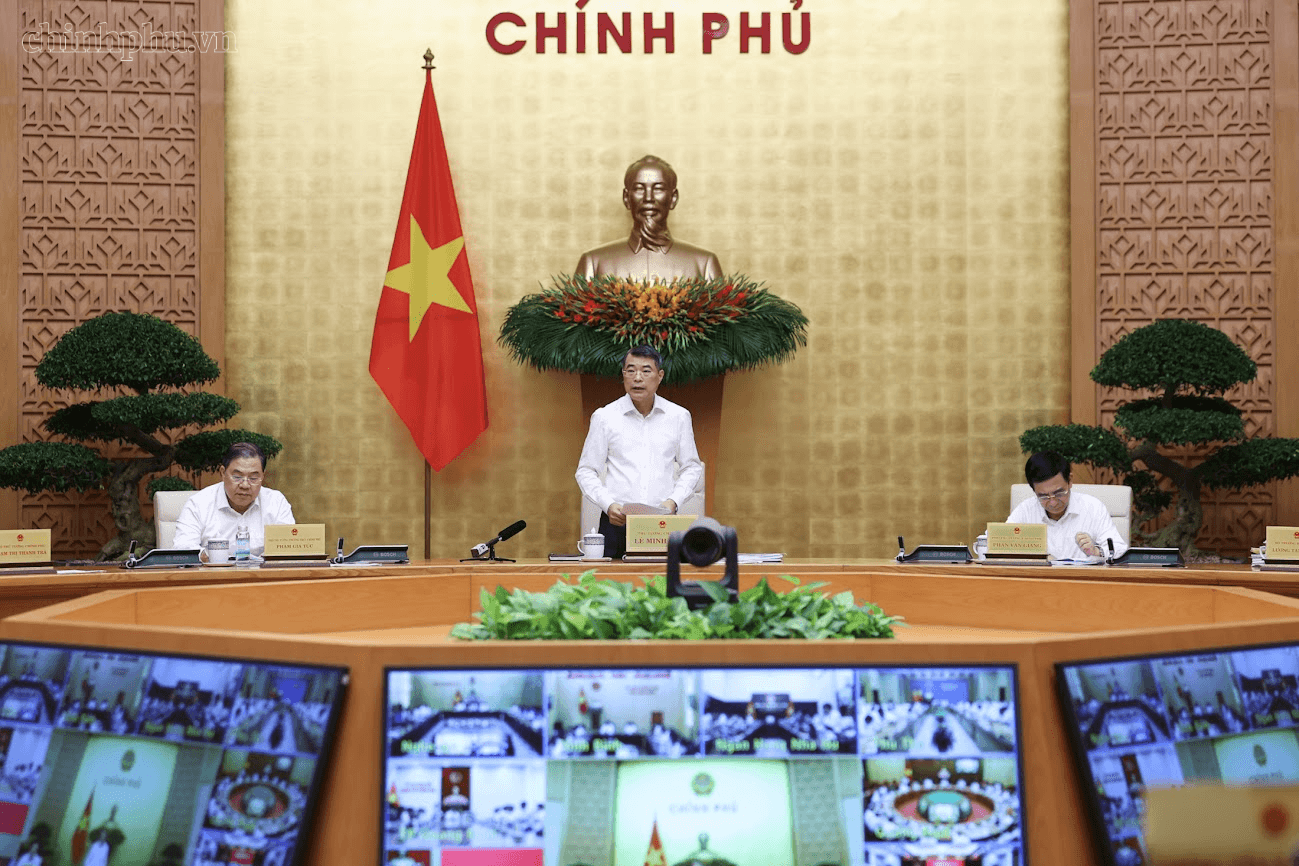
Representatives from the Ho Chi Minh City Urban Infrastructure Investment and Construction Project Management Board stated that they will relocate houses along canals and waterways, combined with drainage solutions.
PHOTO: UYEN NHI
Regarding resettlement, a representative from the Ho Chi Minh City Department of Planning and Architecture stated that resettlement is not just about providing a new place to live, but also about creating conditions for people to stabilize their lives, maintain their livelihoods and jobs, and have an income equal to or better than their previous living situation after relocation.
According to this unit, the conversion from low-rise, dilapidated housing areas along canals to apartment buildings needs to be linked to overall urban renovation. Resettlement housing must ensure a balance between living, working, and transportation, while also being seamlessly connected to neighboring existing residential areas.
During the meeting, in addition to issues related to flood control and resettlement projects, voters also expressed concern about many other issues such as: salary policies, benefits for grassroots officials, healthcare, education, land procedures, etc.
Concluding the conference, Mr. Le Quang Manh stated that the Ho Chi Minh City National Assembly delegation acknowledged the voters' opinions, forwarded them to relevant agencies for consideration and resolution, and monitored the process of responding to voters' requests.
Source: https://thanhnien.vn/cu-tri-tphcm-de-nghi-doi-cach-danh-gia-hieu-qua-cac-du-an-chong-ngap-185261003154849207.htm